
Reviewed · CYCLING TOURS
Barcelona Historical 3-Hour Bike Tour
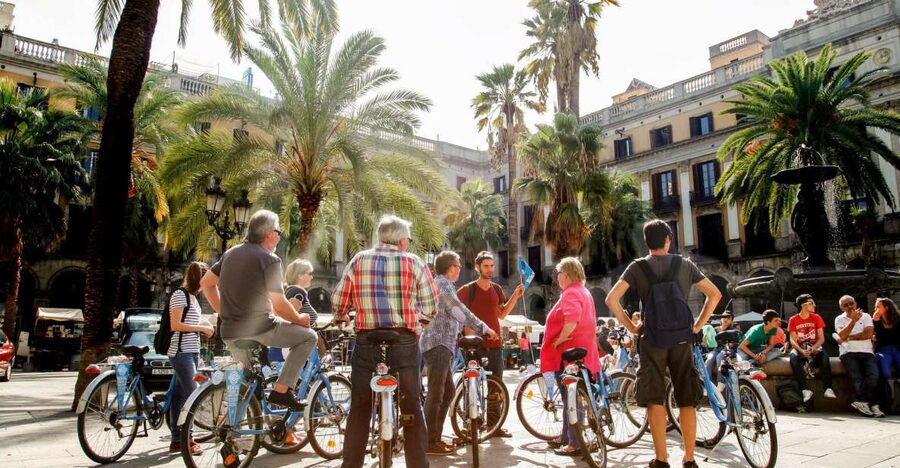
Barcelona’s streets make instant sense by bike. This guided 3-hour historical ride threads together old quarters and Gaudi landmarks at an easy pace, so you get your bearings fast without spending the whole day in lines. The route also mixes big-city sights with small, photo-worthy corners, with multiple stops built in for breaks and pictures.
I especially like two things here. First, you pedal through the historic core you’d normally bounce between by taxi or on foot, including the Gothic Quarter flavor of tight lanes, squares, and churches. Second, you leave with Gaudi context in the real world, not just photos, with stops near Sagrada Familia plus Casa Batlló and Casa Mila (La Pedrera).
One possible drawback: if you hate sharing space, you need to accept a group rhythm. Since the ride includes frequent stops, you might spend a bit more time paused than you would on a self-guided bike loop, even though the overall pace stays relaxed.
In This Review
- Key takeaways before you ride
- How this 3-hour ride fits into a first visit
- Getting oriented around Pla de Palau and the Columbus Monument
- La Rambla, Port Vell, and the sea-side pace change
- El Born and the feel of older Barcelona streets
- Ciutadella Park and Arc de Triomf, where the pace eases
- Sagrada Familia: seeing it as part of a city, not an icon alone
- Casa Mila (La Pedrera) and the rhythm of Gaudi exteriors
- Casa Batlló and the story behind its strange shapes
- Palace of Catalan Music: finishing with a cultural anchor
- Price and what $42 covers in real value
- Bike tour comfort: what matters on a short day
- Who should book this tour, and who should skip it
- Should you book Barcelona Historical 3-Hour Bike Tour?
- FAQ
- How long is the Barcelona Historical 3-Hour Bike Tour?
- Where does the tour start and end?
- What is included with the price?
- Does the tour run in rain?
- What time do tours depart?
- What languages is the live guide available in?
Key takeaways before you ride
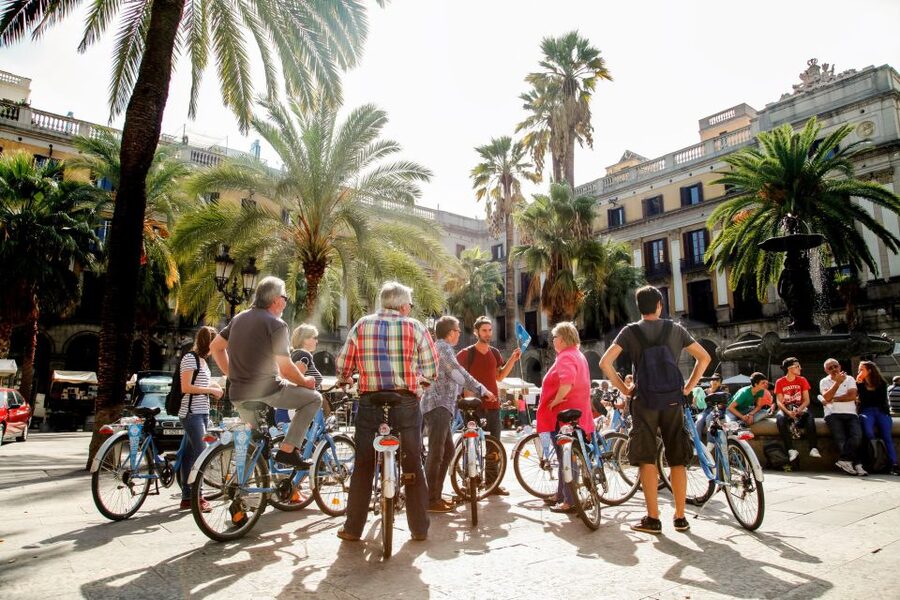
- Flat, bike-lane friendly routing makes this a practical “first day in Barcelona” move.
- Three hours, many eras: port area, Gothic-style streets, and Gaudi architecture in one sweep.
- Guided stops with photo time help you turn landmarks into something you can actually explain later.
- Sagrada Familia plus Gaudi houses means the tour isn’t just exterior sightseeing.
- Helmets and rain gear included so weather and safety stay manageable.
- A drink included keeps you from turning “quick snack later” into “we forgot.”
How this 3-hour ride fits into a first visit
This is the kind of tour I like when I’m trying to understand a city quickly. Barcelona can feel like a puzzle at first, with Roman-era grit, medieval streets, and bold modern architecture all mixed together. In 3 hours, this tour gives you a real sense of the city’s shape, from the seafront side through the old neighborhoods and on to Gaudi territory.
You start at Carrer de la Marquesa, 11B, then head out with a live multilingual guide. Tours run daily at 11:00 and 16:00 (with a few date exceptions on December 25-26 and January 1). The operator asks you to arrive 10 minutes early, which is smart for getting bikes sorted, fitting helmets, and avoiding last-minute scrambling.
The big value is how efficiently the guide stitches meaning to the places. You’re not only seeing landmarks, you’re also getting the “why” behind the change from one neighborhood to the next. And because the terrain is described as flat and the pace is kept relaxed, you can enjoy the stops rather than racing through them.
A few more Barcelona verdicts worth reading
- Highlights & Hidden Spots of Barcelona Bike Tour w/ Local Guide
★ 4.5 · 3,009 reviews - Barcelona 3-hour Bike or E-Bike Tour: Highlights and Hidden Gems
★ 5.0 · 1,429 reviews - Barcelona: Private Group Bike Tour
★ 4.8 · 1,420 reviews - Barcelona: 2.5-Hour Bike or E-Bike Historical Tour
★ 4.5 · 1,262 reviews
Getting oriented around Pla de Palau and the Columbus Monument
The early part of the ride is where the city starts to click. You’ll begin with Pla de Palau, a practical start because it helps you build orientation before you enter the tighter older streets. You get a photo stop and guided context here, which matters because it sets a reference point for how Barcelona grew and where major sights sit relative to each other.
From there you cycle past the Columbus Monument. This is one of those spots that can feel like a quick photo stop if you’re on your own. On a guided bike tour, you’re more likely to understand what you’re seeing in the larger city story, especially since you’re moving along rather than standing still.
Why this matters: by the time you reach the busier areas, you’ll know which direction you’re going and how the route flows. That reduces the “we’re just passing by stuff” feeling that can happen on short tours.
La Rambla, Port Vell, and the sea-side pace change
Next comes a shift in mood. You’ll head toward La Rambla, then continue to Port Vell. This part of the ride is a reminder that Barcelona is both a city and a port. Even if you’re not there for maritime history, cycling through the area gives you scale. You see how streets widen near the water and how the city’s rhythm changes when you move toward the harbor zone.
You also pass through a key landmark area tied to the sea: St. Mary of the Sea Cathedral. The cathedral stop works well on a bike tour because you can pause briefly, look around, and then keep moving. You get the visual hit without losing 45 minutes to getting around on foot and backtracking.
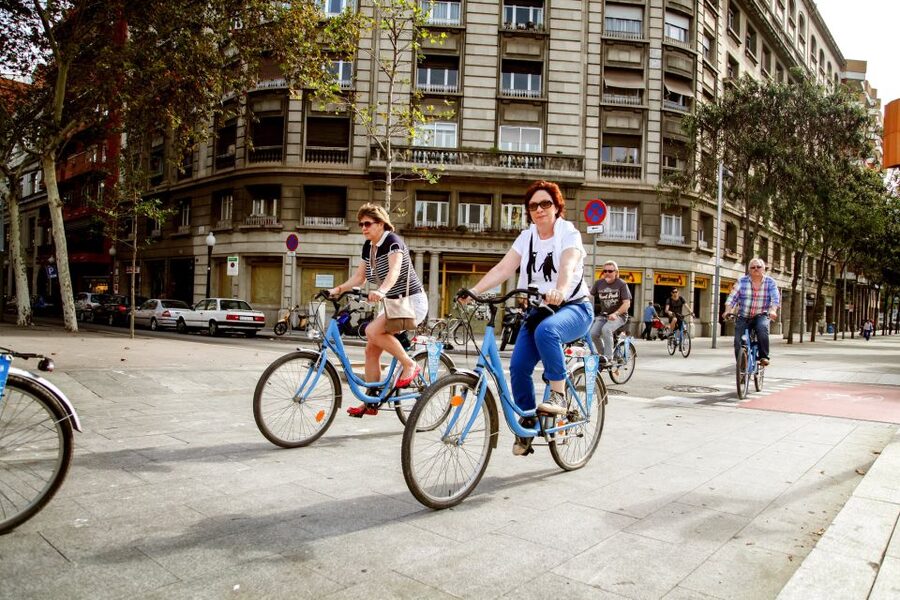
Practical note: near the busiest streets, the bike lane routing matters. The ride is described as safe and supported by bike lanes, and that’s a big deal here. It keeps the focus on sights rather than on constant traffic anxiety.
El Born and the feel of older Barcelona streets
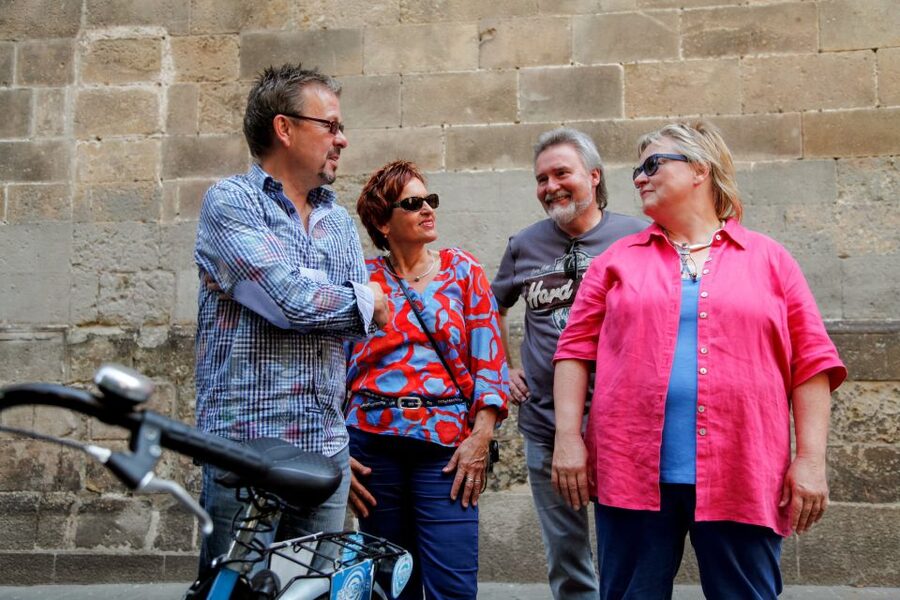
Then you move into El Born, one of the neighborhoods that makes Barcelona feel distinct. This is where you can sense the “street texture” of the city, not just famous buildings. Tight lanes, small squares, and the kind of street life that looks good in any season are a big part of why people fall for Barcelona.
On this tour, El Born isn’t a random stop. It comes after the port and cathedral area, so it reads like a natural transition from seafront Barcelona to older inner-city Barcelona. You also get the added benefit of time to stop and look while still keeping the total tour length on track.
One detail I find useful on bike tours like this: you can watch the city from the seat, then jump off for the guided moment. That gives your brain both overview and detail, instead of only one or the other.
Barcelona, continued down the scoresheet:
- Barcelona: Sagrada Familia Entry Ticket with Audio Guide★ 4.6 · 105,312 reviews
- Barcelona: Park Güell Admission Ticket★ 4.4 · 76,534 reviews
- Barcelona: Casa Batlló Entry with Self-Audioguide Tour★ 4.7 · 25,359 reviews
Ciutadella Park and Arc de Triomf, where the pace eases
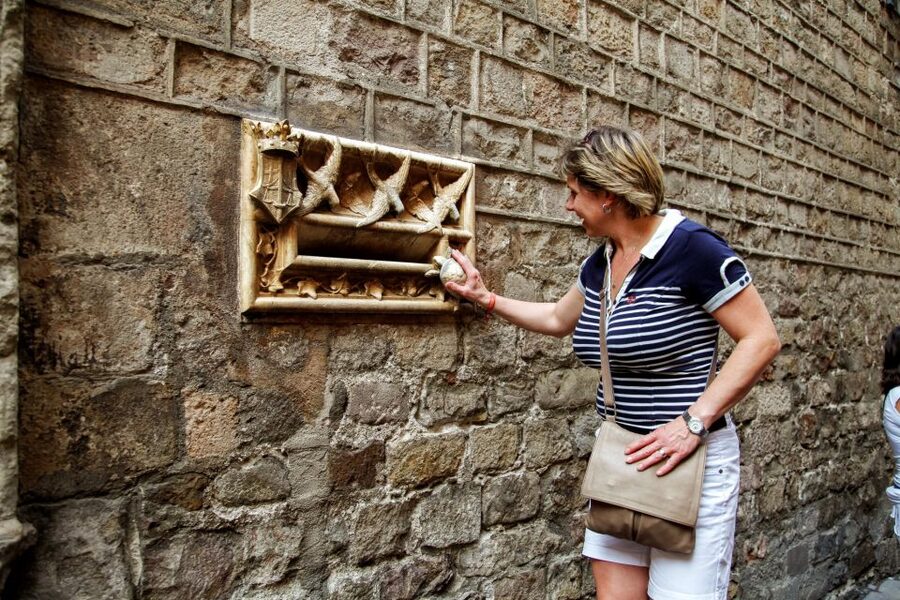
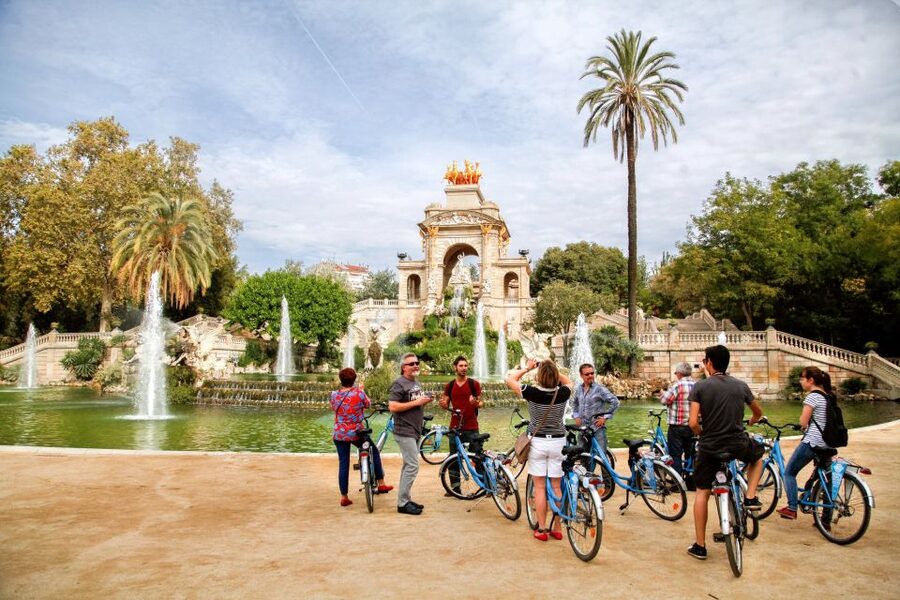
You then reach Parc de la Ciutadella. The park is a break from architecture intensity, and it’s more than just a green patch. You’ll see beautiful flowers and fountains, plus it’s the kind of place where the city’s leisure space and grand urban planning mix.
Ciutadella is also tied to the sense of Barcelona as a showpiece city. Even if you don’t go into any specific attraction inside the park, the setting helps you understand the city’s “public space” personality, the same way museums or plazas do in other capitals.
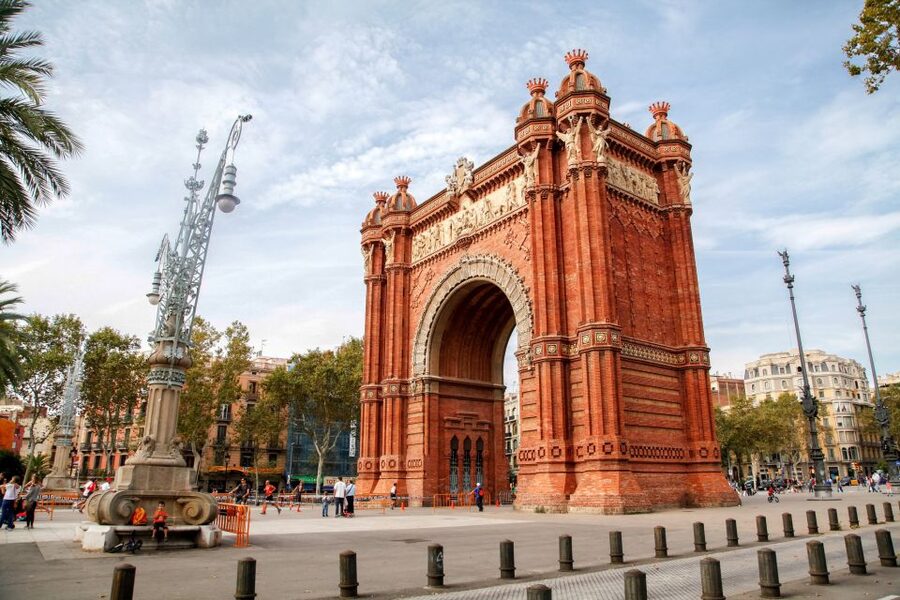
After the park, you cycle by Arc de Triomf. This is a visual cue that Barcelona’s history isn’t only medieval. The arc gives you a clean, memorable landmark to anchor what you’ve already seen. It also works well as a transition moment, because you’re about to move into the part of the tour that most people come for: Gaudi.
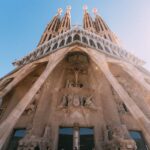
Sagrada Familia: seeing it as part of a city, not an icon alone
When you reach Sagrada Familia, it stops being just a photo background and starts feeling like a place with structure in your mind. The guide keeps it from becoming a “look up and move on” moment by giving context as you bike past and stop.
Even though Sagrada Familia is the headline, what you’re really learning is how Barcelona treats architecture like identity. This stop helps connect the earlier neighborhoods you rode through, especially because the whole day has been about contrasts: old streets, port energy, park space, and then this modern marvel.
If you’re someone who likes religious buildings, this part might land harder than the Gaudi houses for you. If you’re more of an art and design fan, you’ll probably enjoy it as a stepping stone into Gaudi’s imagination.
Casa Mila (La Pedrera) and the rhythm of Gaudi exteriors
Next is Casa Mila, which is also known as La Pedrera. The timing matters: you’ve just seen Sagrada Familia, and now you’re shifting from one kind of mind-bending design to another. Casa Mila is a great counterpoint because it’s architectural drama you can grasp from the street level as you ride.
On a bike tour, these Gaudi stops are valuable because you can compare forms quickly. You might notice how textures, curves, and facade movement play different roles across the buildings. The guide’s job is to keep you from treating them like random cool buildings. You start to see them as pieces of a bigger Barcelona design obsession.
A drawback to be aware of: if you’re expecting lots of time inside buildings, a 3-hour format can only do so much. This tour is set up for exterior viewing, guided context, and photos at stops, not long indoor visits. If you want interior time at multiple sites, you’ll likely add separate tickets later.
Casa Batlló and the story behind its strange shapes
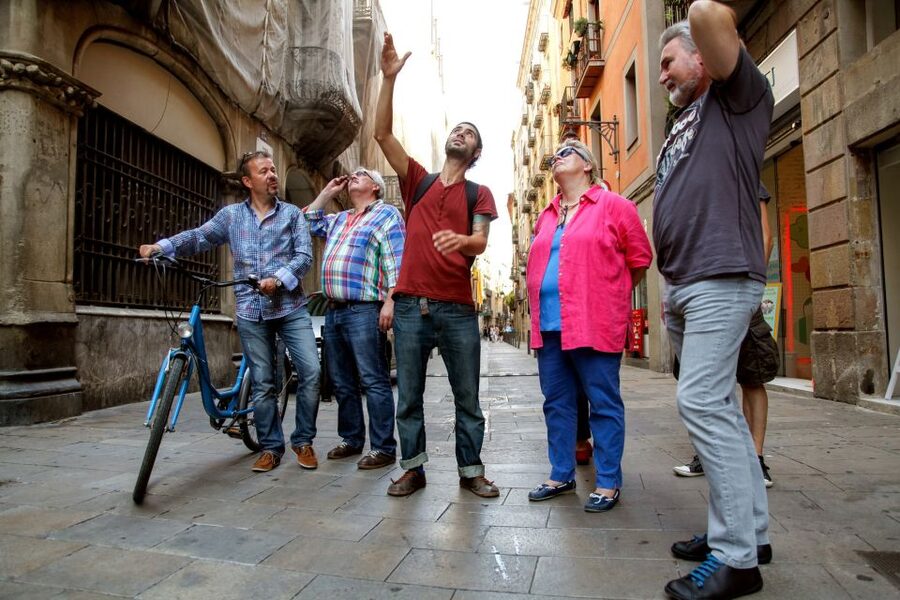
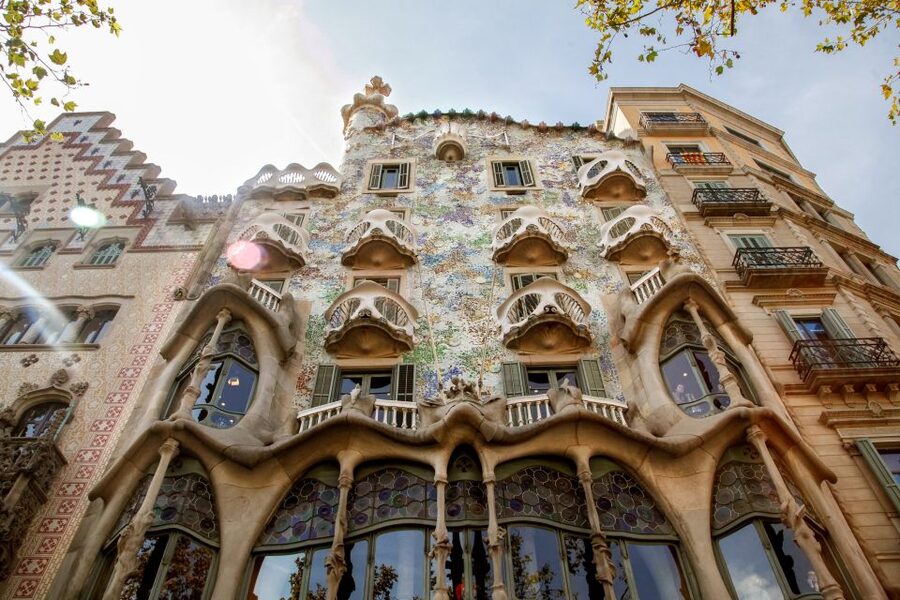
Then comes Casa Batlló, one of the most recognizable Gaudi facades. The tour calls it a house of bones, and the nickname makes sense once you’re looking at the building as a sculptural whole rather than a normal apartment block.
What I like about putting Casa Batlló after Casa Mila is pacing. You go from one dramatic silhouette to another, which keeps your visual brain awake. You also get a quick education in Gaudi’s language: his love of organic forms, stylized materials, and a facade that feels like it has motion even when you’re standing still.
This is one of the stops where you’ll probably take more photos than you expected. The guide’s photo breaks make that feel like part of the experience instead of you rushing to grab a shot between traffic lights.
Palace of Catalan Music: finishing with a cultural anchor
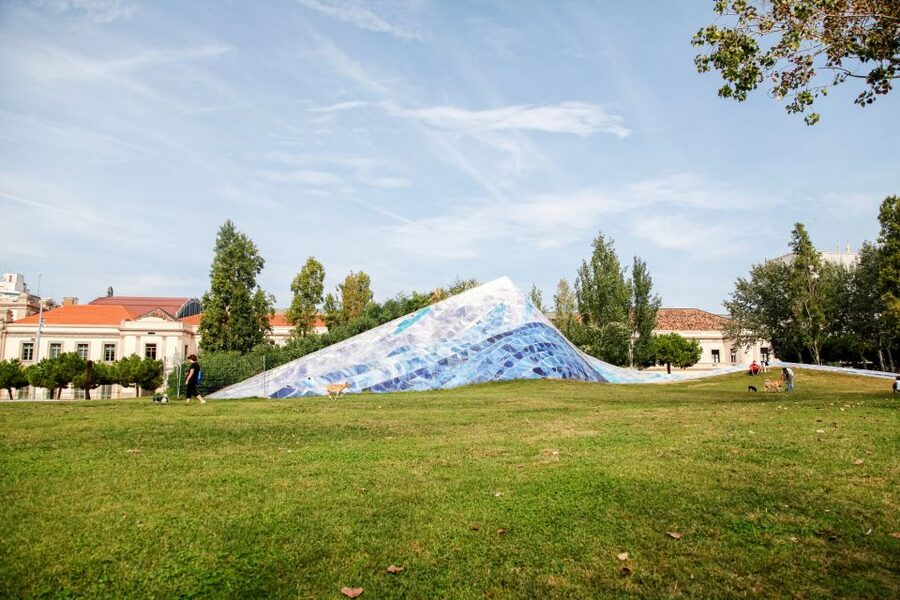
To wrap up, you bike toward the Palace of Catalan Music. Even if you only get an exterior look on a short tour, it’s a strong ending choice because it points you to Barcelona as more than Gaudi. It’s a reminder that Catalonia has its own cultural institutions, and that arts are part of the city’s daily rhythm.
This final stretch also helps with memory. By the time you’re near the finish back at Carrer de la Marquesa, 11B, you’ve seen a logical line: city orientation, port and old streets, a park breather, Gaudi’s big statements, then a cultural landmark that broadens your understanding.
Price and what $42 covers in real value
At $42 per person for a 3-hour guided bike tour, the value depends on what you would otherwise do with your time. If you’re planning to hop between a handful of neighborhoods and landmarks anyway, the guided route can be a time-saver. You get transportation built in, plus a guide who connects the dots so you’re not just collecting buildings.
Also, the inclusions are practical. You get a rented bike, helmets, and a drink. If you’re traveling with kids, child seats are available if desired. And because the tour runs in any weather, rain jackets are supplied, which is a small thing that often makes the difference between a fun half-day and a miserable one.
What you should watch for is expectations. This is not an all-day ticket to major museums. It’s a highlights-focused ride with stops, designed for seeing a lot and getting a clean first-time mental map. If you like the idea of efficiency plus context, the price makes sense.
Bike tour comfort: what matters on a short day
A 3-hour bike tour sounds easy on paper, and the ride here is described as flat with a safe feel because of multiple bike lanes. That’s the right combination for most visitors. You can focus on the sights instead of working your legs nonstop.
Still, plan like it’s a real ride. Bring comfortable clothes, and if you’re sensitive to sitting, wear something you can move in. Helmets remove a lot of stress, especially if you’re not used to biking in a big city. And because the guide keeps a relaxing pace with frequent stops, the tour doesn’t force you into continuous motion.
One more comfort tip: start the day with a light snack. There’s a drink included, but the ride includes photo stops and multiple neighborhoods, and you’ll likely want water and energy to keep things pleasant.
Who should book this tour, and who should skip it
I’d put this tour at the top of the list for three types of travelers:
- First-time visitors who want an efficient orientation to Barcelona.
- Art and architecture fans who want Gaudi context without spending the entire day in transport confusion.
- People who like moving through neighborhoods while still getting guided explanation at the key stops.
I’d think twice if you’re the kind of traveler who wants long indoor time, silent wandering, or a private pace. Also, if your idea of history is mostly written sources and deep museum hours, the bike format might feel too “see it, learn it, move on.”
If you do book it, choose the departure time that matches your rhythm. A 11:00 start can feel smoother for many people, while a 16:00 start can suit travelers who prefer a later day. Either way, arrive early so the start is calm.
Should you book Barcelona Historical 3-Hour Bike Tour?
Yes, if you want a smart first look that mixes old streets, sea-side Barcelona, and Gaudi in one guided loop. For $42, you’re not just paying for wheels, you’re paying for a route that helps you understand how the city fits together. The flat, bike-lane friendly feel plus helmets and rain jackets make it practical even when plans change.
I’d book it early in your trip so you can use what you learn to shape the rest of your days. And if you’re the type who likes asking questions, you’ll probably enjoy engaging with the guide, since multiple past guides associated with this tour, like Mady, Coco, Danny, Oscar, Thomas, Giovanna, and Nick, are linked with strong feedback for keeping people interested.
If your schedule is tight and you want a true “Barcelona snapshot” that doesn’t trap you on a bus seat, this is a very reasonable choice.
FAQ
How long is the Barcelona Historical 3-Hour Bike Tour?
The tour lasts 3 hours.
Where does the tour start and end?
It starts and ends at Carrer de la Marquesa, 11B.
What is included with the price?
The tour includes a rented bike, a tour guide, a drink, helmets, and child seats if desired.
Does the tour run in rain?
Yes. Tours leave in any weather, and rain jackets are supplied.
What time do tours depart?
Tours leave daily at 11:00 and 16:00, except on December 25-26 and January 1.
What languages is the live guide available in?
The live tour guide speaks Italian, Spanish, Catalan, French, and English.
Latest Barcelona reviews into the ledger


Cycling Tours, compared.
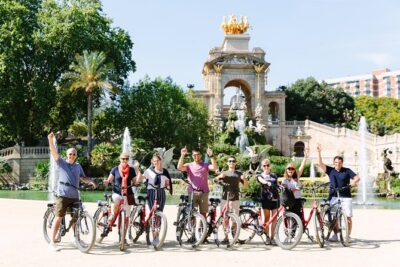
Highlights & Hidden Spots of Barcelona Bike Tour w/ Local Guide
Read our review →
3 h. Guided Highlights Bike Tour with Optional Tapas
Read our review →
Browse the lists this tour appears in