
Reviewed · WALKING TOURS
Barcelona Historical Walking Tour: Gothic Quarter and El Born
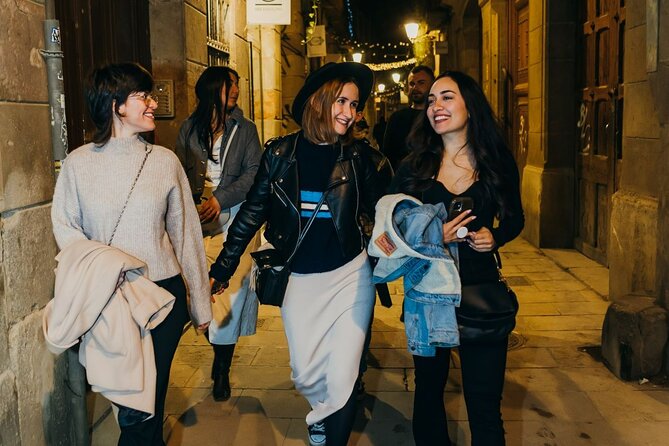
Old streets, big stories, easy pace. This 2-hour walk threads the Gothic Quarter and El Born, with stops like Els 4 Gats and key sites tied to the Picasso and Gaudi era.
I especially like the small group size (max 20), which makes it easier to ask questions and keep up. I also like the practical local angle, guides often share good food and drink ideas at the end, so you leave with a plan, not just photos.
One thing to consider: two major church stops have admission not included, so if you want to go inside, you’ll likely need separate tickets. Also, you’ll be on foot for the whole loop, so bring rain cover if the forecast looks moody.
In This Review
- Key highlights to expect
- Gothic Quarter and El Born in 2 hours, without the bus crowd
- Price and practical logistics that actually matter
- Starting at Plaça del Vuit de Març, then finishing near Santa Maria del Mar
- Stop 1: Els 4 Gats, where the artist talk started
- Stop 2: El Mon Neix En Cada Besada and the meaning of September 11
- Stop 3: Catedral de Barcelona and Eulalia, the city’s patron saint
- Stop 4: Casa de l’Ardiaca, Gothic meets Renaissance angles
- Stop 5: Pont del Bisbe, a neo-Gothic bridge with legend power
- Stop 6: Placa Sant Felip Neri, where history still shows
- Stop 7: MUHBA – El Call, seeing Barcelona’s Jewish quarter
- Stop 8: Plaça de Sant Jaume, government in a historic center
- Stop 9: Plaça del Rei, royal heritage with a darker edge
- Stop 10: Plaça de l’Àngel, the wheat square story and an angel legend
- Stop 11: Basilica de Santa Maria del Mar, a strong finish point
- The guides make or break it, and the feedback points to strong storytelling
- How this tour fits your Barcelona day plan
- Value check: $30.25 and what you actually get
- Practical tips for a smoother walk (especially in rain)
- Should you book this Gothic Quarter and El Born tour?
- FAQ
- How long is the Barcelona Historical Walking Tour: Gothic Quarter and El Born?
- What is the price per person?
- Where does the tour start and where does it end?
- Is the tour in English?
- Are admission tickets included for all stops?
- What is the maximum group size?
- Can most travelers participate?
Key highlights to expect
- Els 4 Gats, tied to the Picasso and Gaudi crowd
- A walk you can’t fully copy from a bus seat
- Two optional church entries you can budget for
- Max 20 people, which keeps the conversation going
- Legend-heavy stops, including Roman-era echoes and Civil War scars
- Guides who share local tips, not just dates
Gothic Quarter and El Born in 2 hours, without the bus crowd
Barcelona’s oldest neighborhoods can feel like a maze on your own. This tour is built for first-time orientation. You get a guided route through the Gothic Quarter, then into El Born, where the streets tighten and the buildings feel like they’ve been holding secrets for centuries.
The value here is not that you hear a lecture. It’s that you walk between story points that bus tours often skip. You also connect dots: Roman Barcino, medieval quarters, and later political memories all sit within a short radius.
And you do it at a comfortable speed. The tour is short enough that your day still has room for wandering, tapas, and a second pass through your favorite streets.
More Walking Tours in Barcelona
- Barcelona Tapas and Wine Experience Small-Group Walking Tour
★ 5.0 · 5,804 reviews - Barcelona: Tapas Walking Tour with Food, Wine, and History
★ 4.8 · 4,261 reviews - Barcelona: Food Walking Tour with Tapas and Wine
★ 4.9 · 2,180 reviews - Barcelona Tapas Walking Tour: Food, Wine & History
★ 4.5 · 1,928 reviews
Price and practical logistics that actually matter
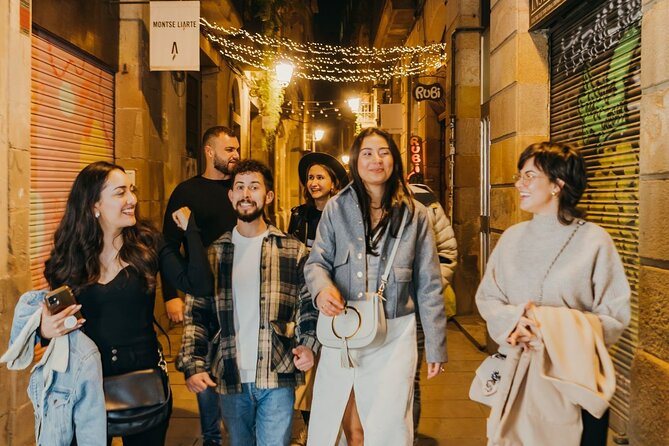
At $30.25 per person for about 2 hours, you’re paying for a guided narrative plus a route through places that are easy to miss. For many people, that’s the sweet spot for a first morning or early afternoon, when you want bearings fast.
A few details that affect your experience:
- Language: English
- Group size: up to 20 travelers, so it feels like a real walk with a guide, not a crowd herded along
- Ticket type: mobile ticket
- Scheduling vibe: it’s commonly booked ahead, averaging around a month in advance, which is a clue it’s a popular “start here” tour
If you travel as a family or with mixed ages, this pacing tends to work. In the feedback I saw, guides like Vanesa and Darren were praised for keeping kids and teens interested, which is not always easy in tight historic streets.
Starting at Plaça del Vuit de Març, then finishing near Santa Maria del Mar
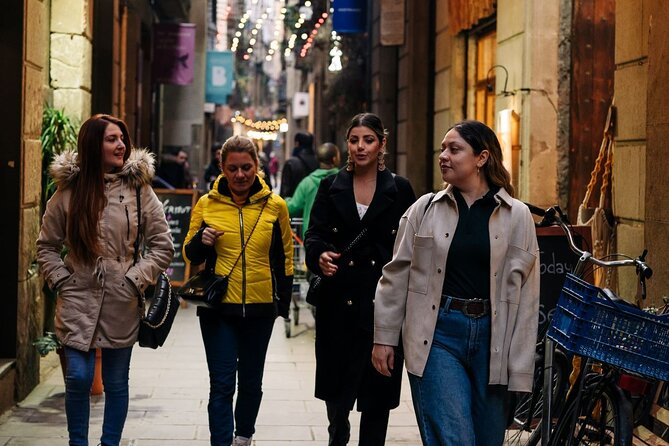
Your tour begins at Plaça del Vuit de Març, Ciutat Vella, and ends at Basílica de Santa Maria del Mar, Plaça de Santa Maria, 1. That end point is a smart choice. It drops you near one of the best places to keep exploring El Born by foot.
Both the start area and the neighborhood are well connected by public transit, which helps if you’re combining this with other sights later. Even if you’re arriving with limited time, the timing is designed so you can still move on afterward without feeling stuck.
Stop 1: Els 4 Gats, where the artist talk started
The walk kicks off at Els 4 Gats, a historic café/restaurant with strong ties to Barcelona’s artistic and intellectual circles. This is where the tour makes the city feel personal and modern, even though the building is old.
What you should look for:
- The Art Nouveau vibe, which gives you a quick visual break from stone-and-street level Gothic views
- The sense of who came here and what kind of conversations it hosted
The big draw is how the guide connects Picasso and Gaudi era culture to real meeting points, not just big-name statues. If you like Barcelona as an art city, this is a great early anchor.
It’s also listed as free entry for the stop, so you’re not forced into extra spending right away.
More Spanish cities taken on foot:
- Barcelona: Gothic Quarter Ghosts and Legends Walking Tour★ 4.7 · 1,443 reviews
- Barcelona Helicopter, Sailboat & Old Town Private Walking Tour★ 5.0 · 1,395 reviews
- Barcelona: Old Town and Gothic Quarter Walking Tour★ 4.8 · 1,393 reviews
Stop 2: El Mon Neix En Cada Besada and the meaning of September 11
Next you’ll pause at El Mon Neix En Cada Besada, a photomosaic installed in 2014. It ties the visual to a specific moment in Catalan memory: September 11, 1714, linked to the War of the Spanish Succession and the start of the La Diada tradition.
Why this stop works:
- It turns a news-event date into something you can actually point at
- You learn how public memory becomes street-level meaning
This is another free stop, and it’s brief on purpose. It gives you context without hijacking the whole walk.
Stop 3: Catedral de Barcelona and Eulalia, the city’s patron saint
Then comes Catedral de Barcelona, a Gothic-style church in the heart of the old city. The story centers on Saint Eulalia, honored through her life and death, including the tradition that she was tortured by the Romans.
Important practical note: admission is not included here. That means the tour can only take you so far depending on access and whether you want to enter. If you’re the type who always pays to go inside churches, you’ll want to plan for that.
Even from outside, the cathedral area helps you understand why the Gothic Quarter feels the way it does. It’s not random. It’s built around devotion, power, and community.
Stop 4: Casa de l’Ardiaca, Gothic meets Renaissance angles

At Casa de l’Ardiaca, you’ll see a blend of Gothic and Renaissance architecture. The stop is also tied to physical layers under the surface: it houses the vertical face of a Roman wall and aqueduct elements.
This is one of those places where the building becomes a history lesson you can touch. You’re looking at different eras trying to share the same space.
It’s listed as free, so it’s a low-cost way to understand the Roman-to-medieval thread of the city.
Stop 5: Pont del Bisbe, a neo-Gothic bridge with legend power
The tour continues at Pont del Bisbe on Carrer de Bisbe, a street that served as a main thoroughfare in the Roman city of Barcino. The bridge is neo-Gothic, and it comes with a superstition legend designed to stick in your brain.
This is one of the stops where the guide’s job really shows. A legend can feel silly if it’s dropped without context. Here, it’s treated like cultural information, not just a spooky story for entertainment.
Entry is free, and it’s a good pause point to get photos and regroup before the next string of squares.
Stop 6: Placa Sant Felip Neri, where history still shows
At Placa Sant Felip Neri, the mood shifts. The square carries a darker link to the Spanish Civil War, and the tour frames it as a place where traces of tragedy remain visible.
This stop can hit harder than you expect because it’s not a museum. It’s a real public space, tucked into the Gothic Quarter fabric.
It’s free, and it’s worth paying attention, even if your brain is still buzzing from earlier Picasso and Gaudi stories.
Stop 7: MUHBA – El Call, seeing Barcelona’s Jewish quarter
Next is MUHBA – El Call, Barcelona’s Jewish quarter area. You’ll walk narrow medieval-style streets and hear how the neighborhood connects to Jewish life, including references to a synagogue and local legends.
If you like cities that show multiple layers of community over time, this stop delivers. It adds texture that you don’t always get when you focus only on grand cathedrals or famous modernists.
This is listed as free for the stop, with the understanding that you’re learning through the street-level layout and what the guide points out.
Stop 8: Plaça de Sant Jaume, government in a historic center
At Plaça de Sant Jaume, the square functions as a hub for government activity, surrounded by significant historic buildings.
This stop is useful because it breaks the pattern of only “old and religious.” It reminds you that power, administration, and civic life have always mattered here too.
It’s free, and it’s a nice shift in tone before the more regal royal atmosphere ahead.
Stop 9: Plaça del Rei, royal heritage with a darker edge
Then you’ll reach Plaça del Rei, described as charming on the surface but tied to Barcelona’s dark past through its link to the Royal Palace.
This is another guide-led moment. The square can look like a postcard, but the story adds friction and makes the place feel real. You learn to read the city as both beautiful and complicated.
This stop is free, and it pairs well with the Santa Maria del Mar ending later, so you can keep comparing the roles of royalty, church, and maritime life.
Stop 10: Plaça de l’Àngel, the wheat square story and an angel legend
At Plaça de l’Àngel, you’re told that it was once the Wheat Square, a center for grain trading. Then the guide brings in an “angel” legend tied to why the square has this name.
I like stops like this because it changes what you notice. Suddenly you’re not just seeing stonework. You’re thinking about what people bought, sold, and believed.
This stop is free, and it’s a great moment to ask your guide any lingering questions, since you’re still in the rhythm of the walk.
Stop 11: Basilica de Santa Maria del Mar, a strong finish point
The tour ends at Basilica de Santa Maria del Mar, a standout example of Catalan Gothic architecture. The tour connects it to Barcelona’s maritime history, which helps explain why this part of town mattered so much.
Like the cathedral earlier, admission is not included. If you want to go inside, you’ll need to plan for it separately. If you don’t, the exterior and the area around the basilica are still a satisfying place to end your walk.
This ending makes sense for practical travel. You’re done with the guided route, but you’re placed where you can keep wandering El Born, grabbing a late drink, or looking for dinner options.
The guides make or break it, and the feedback points to strong storytelling
What repeatedly comes through is the guide quality, and not in a vague way. People praised specific guides and specific skills.
- Juan was highlighted for connecting Spanish history in a way that felt linked, answering questions, and sprinkling in trivia.
- David stood out for Gaudi-focused insights.
- Thami was praised for keeping the tour moving with stories and local traditions.
- Jorge was commended for making Gothic buildings feel alive, and for pacing that still left time for photos.
- Sonia and Petra were credited with energy and turning the “oldest part of the city” into an engaging overview.
- For families, Vanesa was noted as warm and good with kids.
- Lidia was mentioned several times for high energy, humor, and strong on-the-spot explanations.
- Tammy and others also provided end-of-tour food and drink recommendations via text, which is handy when you’re trying to decide where to eat right after.
One practical takeaway for you: choose a time when you can listen closely. This tour works best when you treat it like a guided stroll with stories, not a checklist sprint.
How this tour fits your Barcelona day plan
This is best as an early introduction. Do it before you lock in other plans, so you can later walk through the streets with context. After the tour, you’ll know where to return if something grabbed you, like Roman hints, civil conflict memory points, or the Catalan Day connection.
It’s also a smart choice if you want a compact route. At 2 hours, it’s not a half-day commitment, and you’re not trapped in long museum hours.
If you’re already planning to visit major churches, this tour helps you understand which ones matter and why, so your self-guided time afterward feels more intentional.
Value check: $30.25 and what you actually get
Here’s how I think about the price.
You pay for:
- A local guide who turns street corners into stories
- A route that connects Gothic Quarter and El Born in a way that’s hard to recreate in one shot
- Stops that are short, focused, and photo-friendly
- Small group dynamics, with room for questions
You might pay extra if you choose to enter the two churches with admission not included, but that’s optional. You stay in control.
For many people, the real value is mental. You leave with a “map in your head.” Then, when you wander on your own, you’re not just looking at buildings. You’re reading them.
Practical tips for a smoother walk (especially in rain)
A walking tour in this part of Barcelona is easy, but it’s still old-street walking. Here’s what helps:
- Wear comfortable shoes with decent grip. The streets can be uneven.
- Bring a light rain layer if the forecast is questionable. One guide had to talk through rain, and the walk still continued.
- If you want fewer crowds, mornings can be cooler and calmer. That’s a real advantage for photos and comfort.
- Bring a charged phone. You’ll use a mobile ticket, and you may want to check directions after the tour ends.
Also, since the tour is short, don’t plan a tight appointment right after. Give yourself time to linger at the places you care about most.
Should you book this Gothic Quarter and El Born tour?
I think it’s a strong pick if you want:
- A guided intro to Barcelona’s oldest streets
- A manageable 2-hour commitment
- A route that includes both famous artistic references and lesser-seen squares and quarter corners
- Storytelling that keeps you engaged, including humor and Q and A
I’d skip it or change expectations if you only want museum-grade sights or you expect all church entry to be included. Two big religious stops are admission not included, so you may add cost if you want to go inside.
If you’re looking for your best first step in the Gothic Quarter and El Born, this is the kind of tour that sets up the rest of your Barcelona day in a practical way. You come away with bearings, plus stories you can keep using as you wander.
FAQ
How long is the Barcelona Historical Walking Tour: Gothic Quarter and El Born?
It runs for about 2 hours.
What is the price per person?
The price is $30.25 per person.
Where does the tour start and where does it end?
It starts at Plaça del Vuit de Març, Ciutat Vella, 08002 Barcelona, Spain. It ends at Basílica de Santa Maria del Mar, Plaça de Santa Maria, 1, Ciutat Vella, 08003 Barcelona, Spain.
Is the tour in English?
Yes, it is offered in English.
Are admission tickets included for all stops?
No. Catedral de Barcelona and Basilica de Santa Maria del Mar list admission as not included. The other stops are listed as free for the stop.
What is the maximum group size?
The tour has a maximum of 20 travelers.
Can most travelers participate?
Yes, most travelers can participate.
More Historical Tours in Barcelona
- Barcelona: 2.5-Hour Bike or E-Bike Historical Tour★ 4.5 · 1,262 reviews
- Barcelona Erotic Museum – Explore Art, History & Fun★ 4.4 · 450 reviews
- Private Jewish Heritage Journey by Barcelona Dreaming★ 4.8 · 383 reviews
- Andorra Original History and Sightseeing Tour (Private, Pickup)★ 5.0 · 350 reviews
- Barcelona: Dark History Night Walking Tour★ 4.8 · 344 reviews
Latest Barcelona reviews into the ledger




Walking Tours, compared.
Barcelona Tapas and Wine Experience Small-Group Walking Tour
Read our review →
Tapas Walking Tour with Food, Wine, and History
Read our review →
Madrid Tapas & Wine Tasting Walking Tour – Small Group Local Bars
Read our review →
Albaicín and Sacromonte Guided Sunset Walking Tour
Read our review →
Toledo Tour & Vineyard Walk with Wine Tasting from Madrid
Read our review →
Madrid Walking Tour from Puerta del Sol to Retiro Park
Read our review →
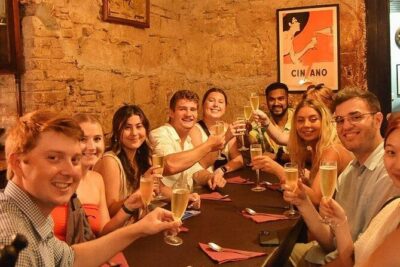
Barcelona Tapas Walking Tour: Food, Wine & History
Read our review →Browse the lists this tour appears in