
Reviewed · AUDIO TOURS
Barcelona: Mies van der Rohe Pavilion Ticket and Audio Guide
Modernism, stripped to essentials. The Mies van der Rohe Pavilion is one of those rare stops where quiet attention pays off, because the building itself does the talking. I like this ticket setup because you get the pavilion experience plus an audio guide in your language, without extra fuss.
Two things I really like: first, the experience is calm and highly visual, so you can slow down and actually notice proportions and materials. Second, the audio guide helps you connect what you see to why it matters, including the pavilion’s original 1929 role and its later reconstruction.
One drawback to keep in mind is that the pavilion is intentionally minimal. If you expect a long, crowded museum-style route or lots of interpretive exhibits, this may feel short and a bit too simple for the time and ticket cost.
In This Review
- Key highlights you should care about
- Entering the Mies van der Rohe Pavilion on your terms
- What you’re seeing: the 1929 pavilion idea, in one compact space
- The design experience: purity, sobriety, and controlled contrasts
- Using the audio guide like a smart shortcut
- A calm visit, even if the site is being used professionally
- One-day value: why a short ticket can still be worth $10
- Practical on-site realities: what’s allowed and what’s not
- Best-fit for different travel styles
- Should you book? My take
- FAQ
- How long does the Mies van der Rohe Pavilion visit take?
- Is the audio guide included?
- What languages are available for the audio guide?
- Does this ticket let me skip the ticket line?
- Is the pavilion wheelchair accessible?
- What’s not allowed during the visit?
- Can I cancel and get a refund?
- Are opening hours guaranteed?
- Can the pavilion look different depending on the day?
Key highlights you should care about
- A modernist lesson you can walk through: pared-down form, strong lines, and a precise interior-exterior relationship.
- Audio guide in 5 languages: Spanish, Catalan, English, French, and German.
- Built for 1929, rebuilt in 1986: you’ll get context for why the pavilion looks the way it does today.
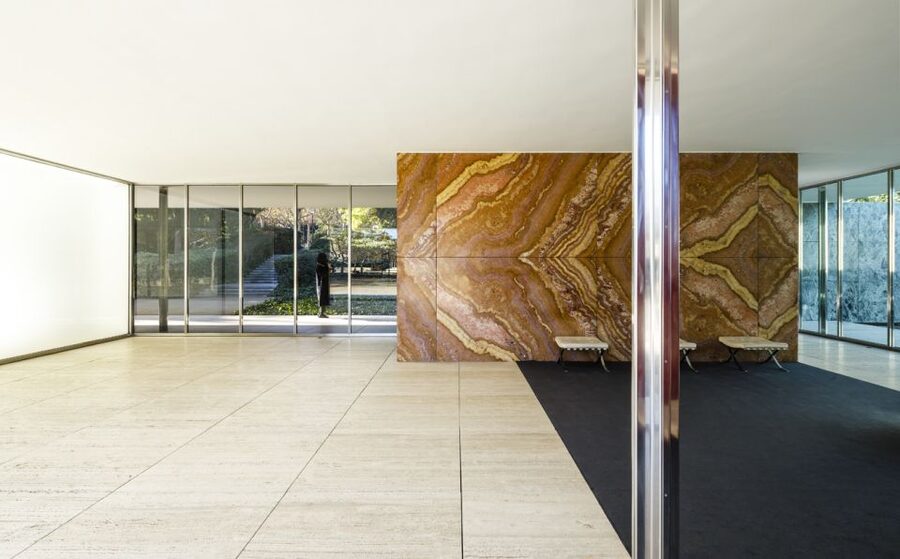
- Material choices with place-based meaning: stone and other materials described as brought from the Alps, Tivoli, Atlas, and Tinos.
- A calmer visit than you’d expect: the site can be used for professional photography and modeling, so you may see people working on set.
- A short outdoor pause near the site: you might find a short nature trail nearby, depending on what’s open during your visit.
Entering the Mies van der Rohe Pavilion on your terms
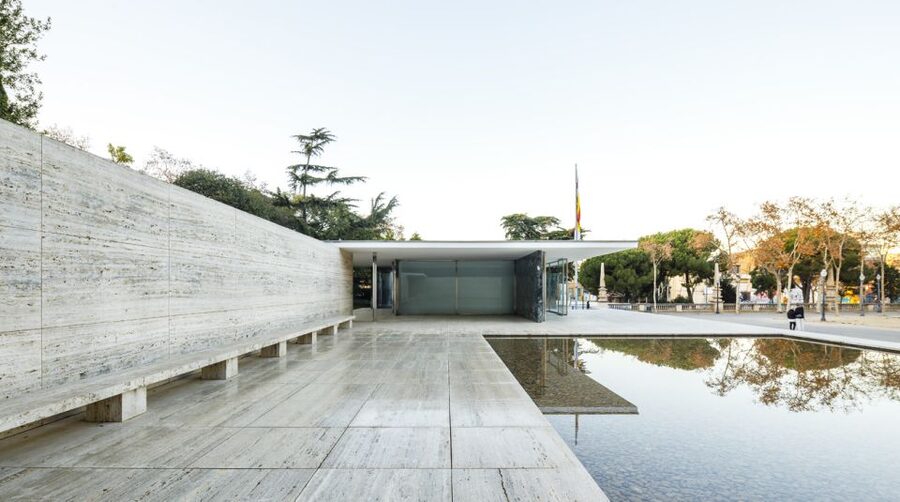
The Mies van der Rohe Pavilion rewards people who like stillness and clarity. This is not a place that overwhelms you with crowds or complicated signage. Instead, you enter and you start seeing how the design controls your eye, from the main planes of the structure to the way light settles across surfaces.
With this ticket and audio guide, you’re not forced into a rigid group pace. You can take your time. You can pause when something clicks. And since the ticket includes skip the ticket line, you waste less time waiting at the front.
The pavilion itself is the point. Plan to give it focused attention rather than rushing through. Even though the visit is short by nature, it can feel surprisingly long in the best way if you keep looking.
A few more Barcelona verdicts worth reading
- Barcelona: Sagrada Familia Entry Ticket with Audio Guide
★ 4.6 · 105,312 reviews - Barcelona: La Pedrera-Casa Milà Ticket & Audio Guide Option
★ 4.7 · 15,099 reviews - Casa Batllo Admission Ticket with Intelligent Audio Guide
★ 4.5 · 3,168 reviews - Barcelona: Montjuïc Cable Car Ticket with Audio Guide
★ 3.9 · 270 reviews
What you’re seeing: the 1929 pavilion idea, in one compact space
This pavilion was originally the German national pavilion for the 1929 Barcelona International Exhibition. That matters because it explains the design mindset: a statement in modern architecture that wanted to show control, order, and restraint.
Once the exhibition ended, the pavilion was dismantled. Later, because of its significance, it was reconstructed and reopened on its original site in 1986. When you visit today, you’re seeing a carefully restored benchmark of the Modern Movement, not a random old building.
Why you should care: the pavilion is a model for how modern architecture tries to simplify. The forms are intentionally pure and the setting is designed to help you notice contrasts. Think of it as a small building that carries a big influence story.
The design experience: purity, sobriety, and controlled contrasts
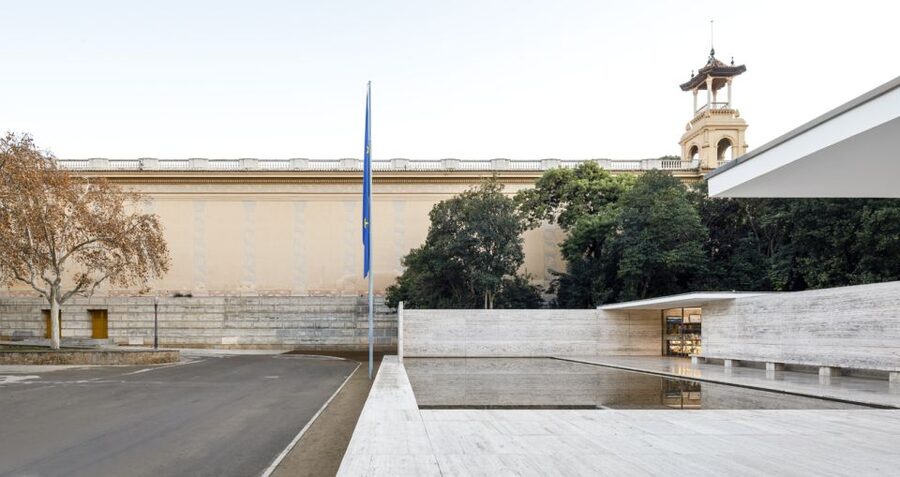
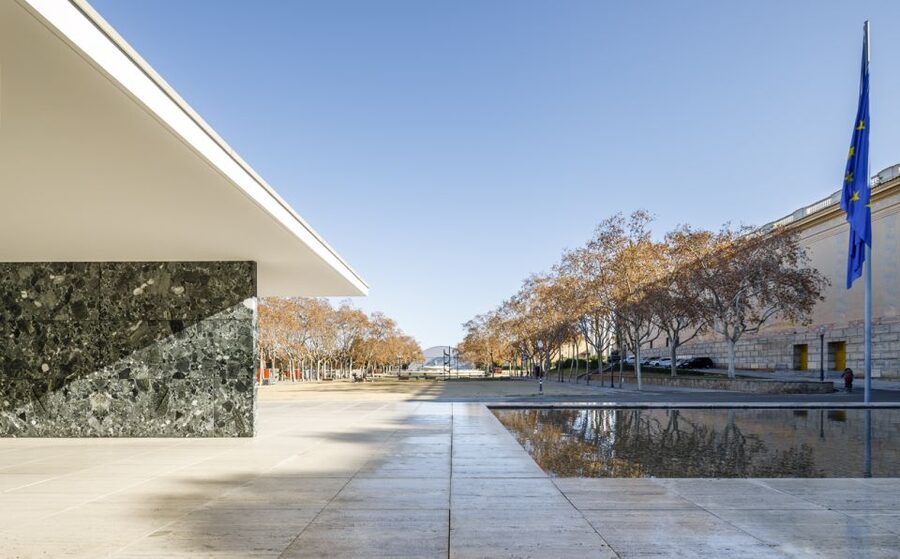
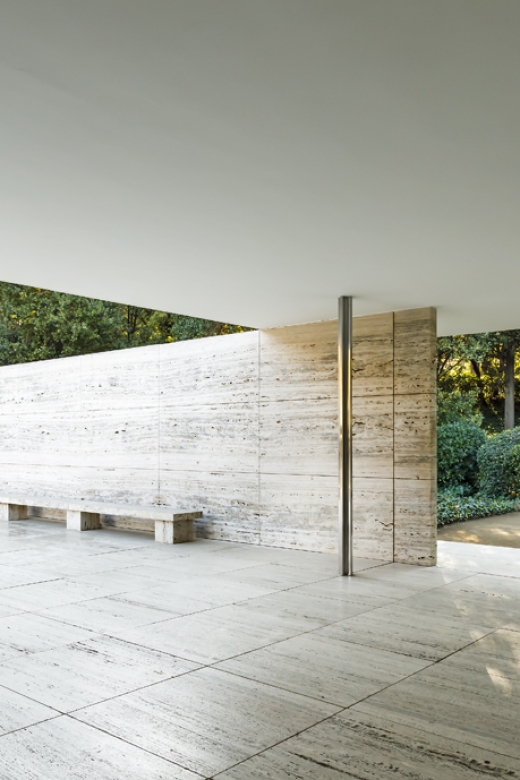
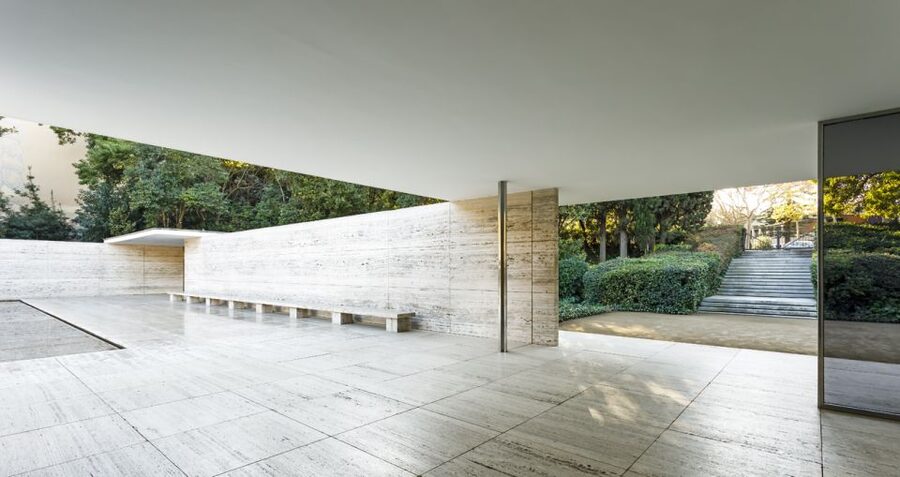
The best way to understand this pavilion is to treat it like a set of visual rules. The building pares architecture down to its essentials. The design emphasizes linear interplay between interiors and exteriors, so the outside doesn’t feel like a separate world. It feels like part of the same composition.
As you move around, look for contrasts in:
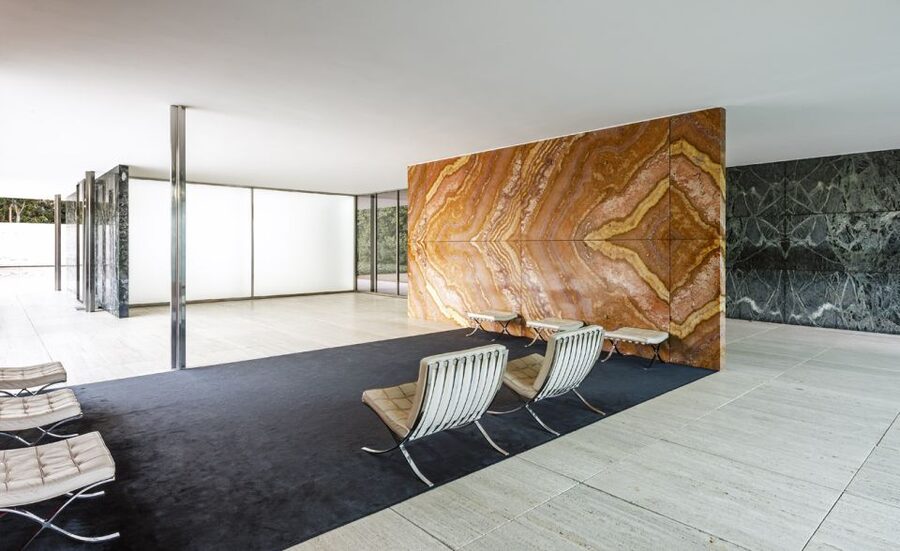
- Material tones and textures
- The way solid planes meet open space
- The balance between enclosed areas and the visible outside environment
The pavilion also highlights materials described as sourced from places including the Alps, Tivoli, Atlas, and Tinos. That might sound like trivia, but it helps you understand why the palette feels deliberate. If you notice the surfaces and their tone, you’ll start to see that the building’s calm look comes from careful choices, not luck.
Using the audio guide like a smart shortcut
The audio guide is included, and it’s available in five languages: Spanish, Catalan, English, French, and German. That’s a big deal here, because the pavilion’s meaning is not always obvious at a glance.
I suggest you start the audio guide right away after you enter. Don’t wait until you’ve already walked a big loop. Early guidance helps you understand what to look for, like the design logic behind the layout and the reason the pavilion became influential.
Here’s a practical tip based on real-world issues people can run into: make sure you actually have the audio guide in your hands before you wander too far. On rare occasions, people report confusion when an audio guide is not provided as expected. If that ever happens to you, fix it immediately at the start rather than losing your visit time.
Plan on listening selectively. You do not need to treat it like an audiobook. If a section talks about a building feature you’re standing in front of, listen. If it’s more background, you can save that for later while you reset your position.
Barcelona, continued down the scoresheet:
- Barcelona: Park Güell Admission Ticket★ 4.4 · 76,534 reviews
- Barcelona: Casa Batlló Entry with Self-Audioguide Tour★ 4.7 · 25,359 reviews
- Barcelona: Montjuïc Cable Car Roundtrip Ticket★ 4.5 · 22,368 reviews
A calm visit, even if the site is being used professionally
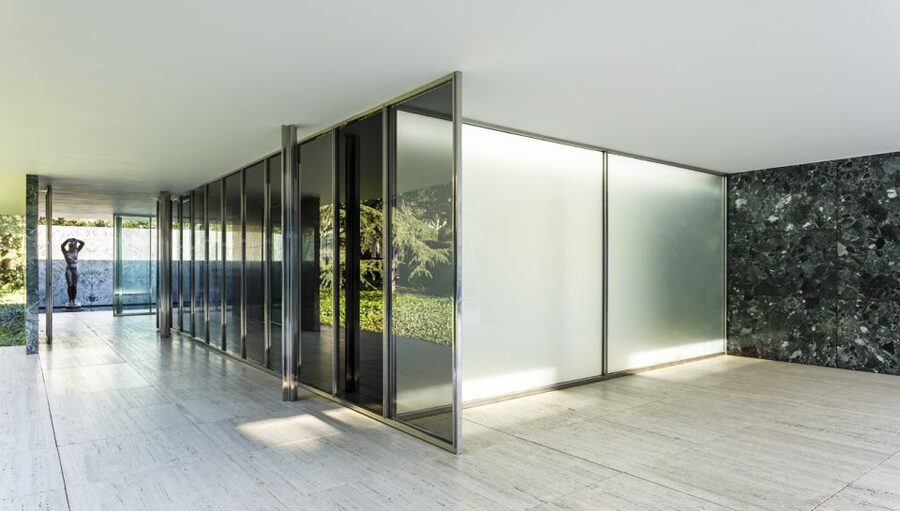
One reason this stop works for many visitors is the overall pace. You get a relatively calm environment where you can focus on design.
That said, it’s not always empty. During a visit, the pavilion can be used by professional photographers and models. In a weirdly cool way, that can make the architecture feel alive, like a stage where the building is the backdrop and the people are part of the scene.
If you’d rather avoid any interruptions, arriving at a sensible time helps. If you prefer to witness how people work with modern spaces, the site’s occasional photo usage can add an unexpected layer.
Also watch for artistic interventions. Occasionally, the pavilion hosts artistic work that can alter its appearance. If you’re someone who loves seeing the building in a strict, original state, expect that your view might be slightly different depending on the day.
One-day value: why a short ticket can still be worth $10
At about $10 per person, this ticket is positioned as an efficient, low-friction way to experience one of the most influential modernist structures in Barcelona. It’s not a full-day museum ticket. It’s closer to a focused architecture visit.
So ask yourself what you want from your day:
- If you want to spend a lot of time in exhibitions, this may not satisfy that itch.
- If you want a high-impact design stop, it can be great value, because the pavilion is the exhibit.
The included audio guide is a key part of the price value. Without it, you might understand the building’s look, but you would miss the why: the 1929 context, the dismantling, and the 1986 reconstruction. Those details help you move from seeing modern architecture to understanding what made this pavilion a benchmark.
And for anyone building an architecture route through Barcelona, this is a clean add-on. It takes time, but it also gives you a concentrated payoff.
Practical on-site realities: what’s allowed and what’s not
The rules here are simple, and they matter because the pavilion is delicate and designed for quiet contemplation. You should expect these restrictions:
- No smoking
- No food or drinks
- No pets (assistance dogs are allowed)
- No tripods
If you’re traveling with a tripod, plan to leave it behind. If you think you might want snacks, also skip that idea, because food and drinks are not allowed inside.
Wheelchair accessibility is available, so you can plan a visit that includes mobility needs. If you rely on accessibility features, it’s worth arriving prepared and allowing a little extra time for orientation inside the site area.
Best-fit for different travel styles
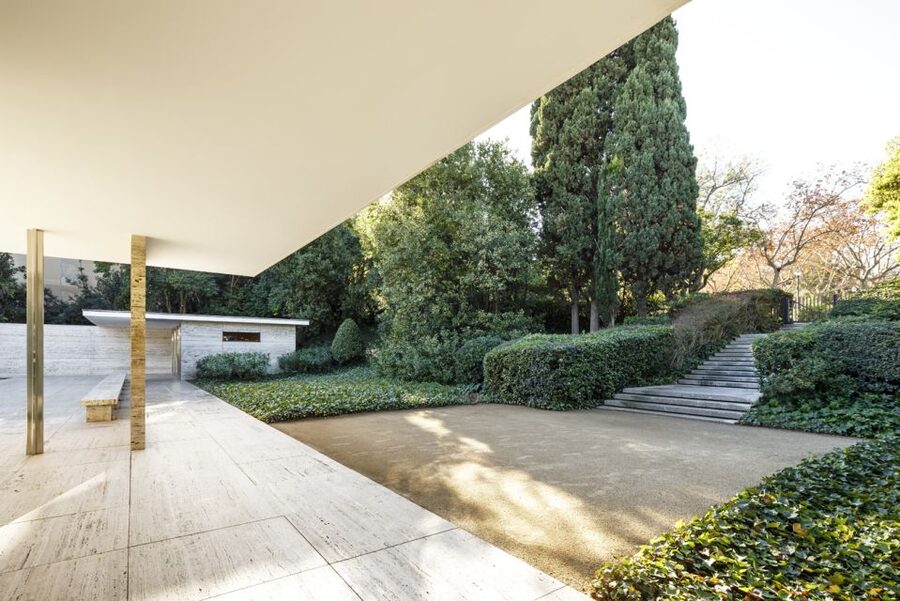
This experience is a strong match if you:
- Like modern architecture and want a building you can read with your eyes
- Prefer calm visits where you can think and look
- Want an audio guide that gives context without turning your trip into a classroom
It’s also a good match for photography lovers, because the pavilion’s composition naturally frames shots. Just remember tripods are not allowed, so you’ll likely shoot handheld.
It might be less satisfying if you’re looking for a long, hands-on museum experience or a “see everything in one building” kind of visit. This is about one powerful space, not a large collection.
Should you book? My take
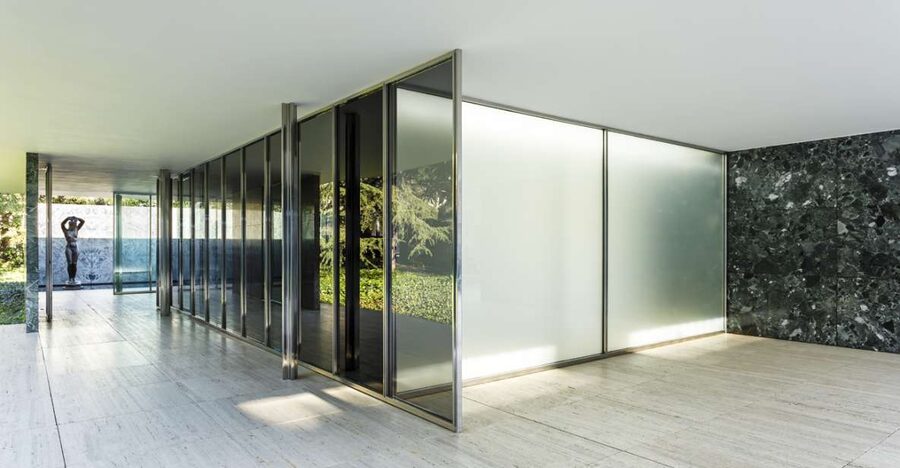
Book it if you want a focused, meaningful architecture stop in Barcelona and you’re willing to slow down. The pavilion’s design is the attraction, and the included audio guide in Spanish, Catalan, English, French, and German helps you actually connect the visuals to the story, including the 1929 exhibition origin and the 1986 reconstruction.
Skip it only if you’re hoping for a full-day museum format or if you’re likely to be frustrated by a minimal site. If you show up expecting lots of activities, the simplicity will feel like too little.
If you do book, come with a calm mindset. Bring curiosity. You’ll get more out of the pavilion by looking carefully than by trying to see everything fast.
FAQ
How long does the Mies van der Rohe Pavilion visit take?
The activity is valid for one day. You can check starting times based on availability.
Is the audio guide included?
Yes. The ticket includes an audio guide.
What languages are available for the audio guide?
The audio guide is available in Spanish, Catalan, English, French, and German.
Does this ticket let me skip the ticket line?
Yes, it includes skip the ticket line.
Is the pavilion wheelchair accessible?
Yes, wheelchair accessibility is available.
What’s not allowed during the visit?
Smoking is not allowed. Food and drinks are not allowed. Pets are not allowed, but assistance dogs are allowed. Tripods are not allowed.
Can I cancel and get a refund?
You can cancel up to 24 hours in advance for a full refund.
Are opening hours guaranteed?
Opening hours may be subject to change, so it’s smart to double-check before you go.
Can the pavilion look different depending on the day?
Yes. The pavilion can host artistic interventions occasionally, which may alter its appearance.
Latest Barcelona reviews into the ledger



Audio Tours, compared.
Sagrada Familia Entry Ticket with Audio Guide
Read our review →La Pedrera-Casa Milà Ticket & Audio Guide Option
Read our review →
Casa Batllo Admission Ticket with Intelligent Audio Guide
Read our review →

Nerja: Caves of Nerja Entry Ticket with Audio Guide
Read our review →
Browse the lists this tour appears in