Reviewed · TICKETS
Barcelona: Palau de la Música Entry Ticket
Stained glass and organ music, in one stop. I love the floral drama of the grand staircase, and I also love how the Concert Hall turns light into colour the moment you step in. It is one of those places where you feel your eyes doing overtime.
This is a self-guided visit, so you can slow down or rush ahead. You start in the foyer, follow an informative brochure through key rooms like the Lluís Millet Hall, then end at the Concert Hall for a live piano or organ recital. It also skips the ticket line, which matters in a busy city center.
My only caution is time and expectations. The full experience can feel shorter than you think, and it is smaller than a big museum, so arrive with a plan to focus on the details rather than trying to fit in everything.
In This Review
- Quick hits before you go
- Why Palau de la Música is worth your time
- Where to start in the foyer, and how to pace the visit
- Grand staircase: floral decorations, flags, and iron-and-glass drama
- Lluís Millet Hall: balcony views and nature-inspired columns
- Concert Hall: colour, light, and the live recital moment
- Ticket value: what $21 buys, and when it feels pricey
- Timing and entry tips that make the visit smoother
- Rules that affect your day (food, bags, and what you can bring)
- How to fit Palau de la Música into a Barcelona day
- Who should book this ticket, and who might skip it
- Should you book Palau de la Música entry?
- FAQ
- How much is the Palau de la Música entry ticket?
- Where do I meet for this self-guided visit?
- Is the audio guide included in the ticket?
- How long is the experience?
- Are food and drinks allowed inside?
- Can I cancel for a full refund?
Quick hits before you go
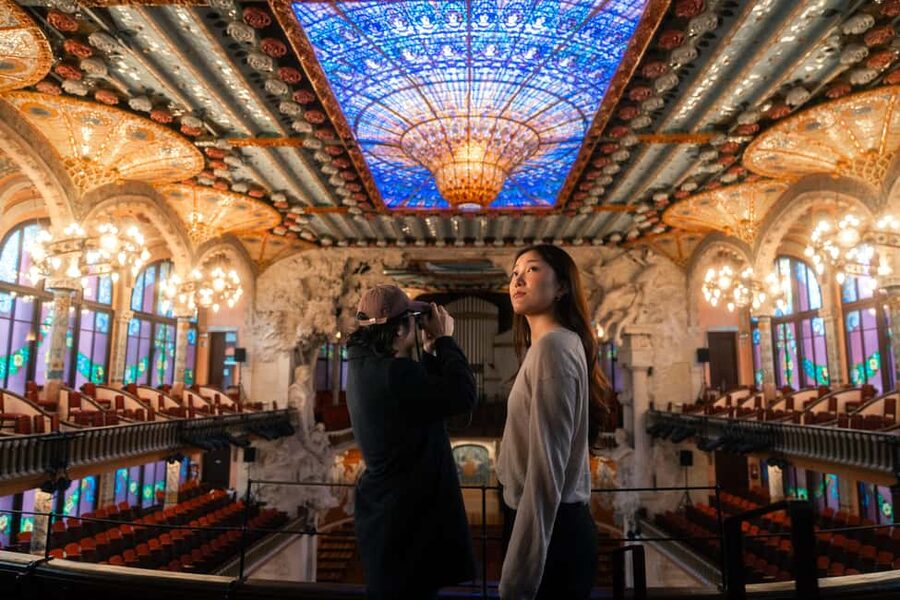
- Start in the foyer (meeting point is in the foyer area by the cafeteria), then follow the brochure at your own pace.
- Grand staircase eye candy: ornate floral decorations, plus a design that uses materials like iron and glass.
- Lluís Millet Hall: look for the balcony area with columns that symbolise nature and flowers.
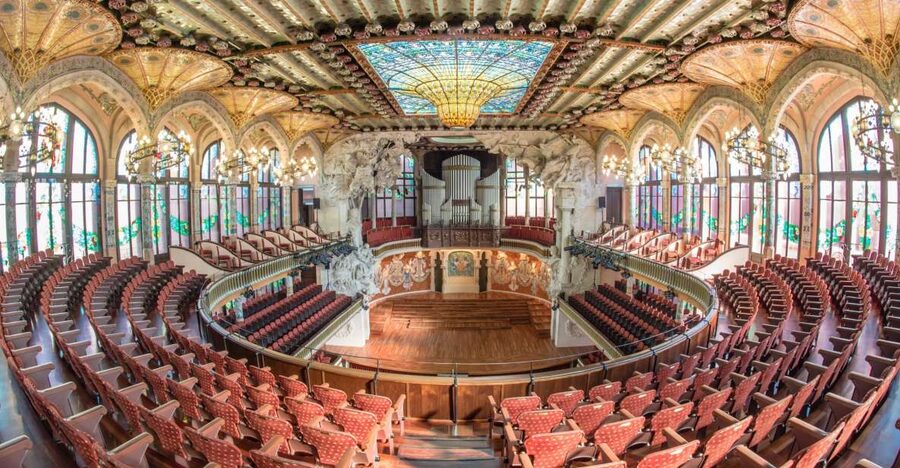
- Concert Hall wow factor: an explosion of colour, shapes, and light when you enter.
- Up-close balcony views: from the second floor, you can see the impressive light source closer than you expect.
- Bonus music moment: your visit wraps with a live piano or organ recital, and sometimes extra short playing happens too.
Why Palau de la Música is worth your time
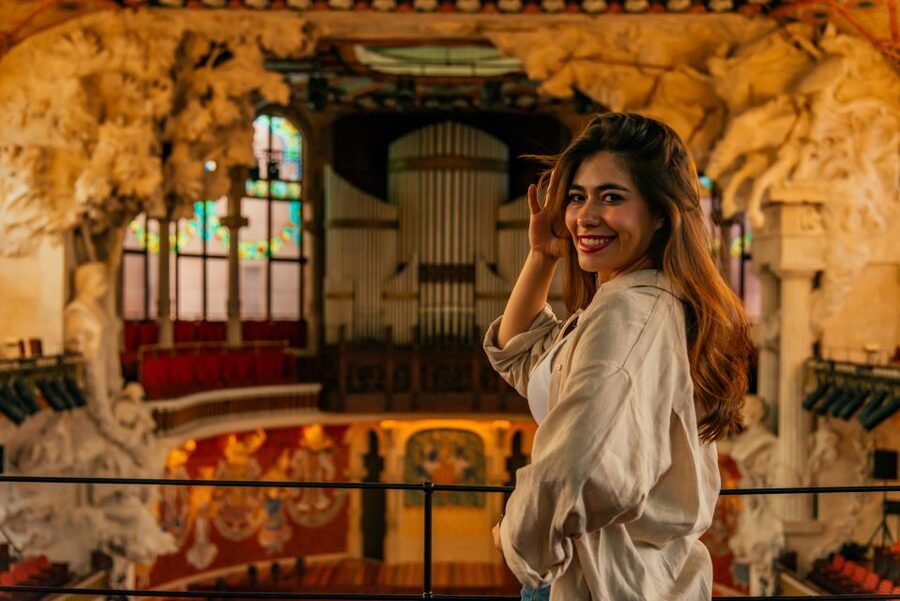
Palau de la Música Catalana is Barcelona Modernisme at its most decorative, with an interior that looks like it was designed for your senses first and your itinerary second. You get the feeling that every surface has a purpose, even when you are just walking around.
What I like most is the contrast between the building’s structure and its ornament. The iron-and-glass elements give it a sense of lightness, while the flowers and colours add drama. You do not need to be a music expert to enjoy it, because the architecture itself tells a story.
The other big reason it works is that it is not a rushed guided tour. This is your pacing. You can stand and stare in the places that catch your eye, then move on when you are ready.
More Things to Do in Barcelona
- Barcelona: Sagrada Familia Entry Ticket with Audio Guide
★ 4.6 · 105,312 reviews - Barcelona: Park Güell Admission Ticket
★ 4.4 · 76,534 reviews - Barcelona: Casa Batlló Entry with Self-Audioguide Tour
★ 4.7 · 25,359 reviews - Barcelona: Montjuïc Cable Car Roundtrip Ticket
★ 4.5 · 22,368 reviews
Where to start in the foyer, and how to pace the visit
Your meeting point is straightforward: meet in the foyer area of Palau de la Música, beside the cafeteria. When you arrive, you will be able to pick up your bearings fast because the visit begins right where the public flow starts.
Before you go deeper, take two minutes just to look around the foyer area. That small pause helps you understand how the building frames everything ahead, especially once you move toward the staircase and the halls.
Then decide how you want to experience it. If you love details, slow down and do a quick loop in your head before you start climbing. If you prefer big “wow” moments, go straight for the grand staircase first, then keep moving toward the Concert Hall.
One practical tip from how the timing tends to work here: if you can, arrive early for your slot. It makes it easier to move through spaces without feeling like you are constantly dodging other people trying to get the same photos and angles.
Grand staircase: floral decorations, flags, and iron-and-glass drama
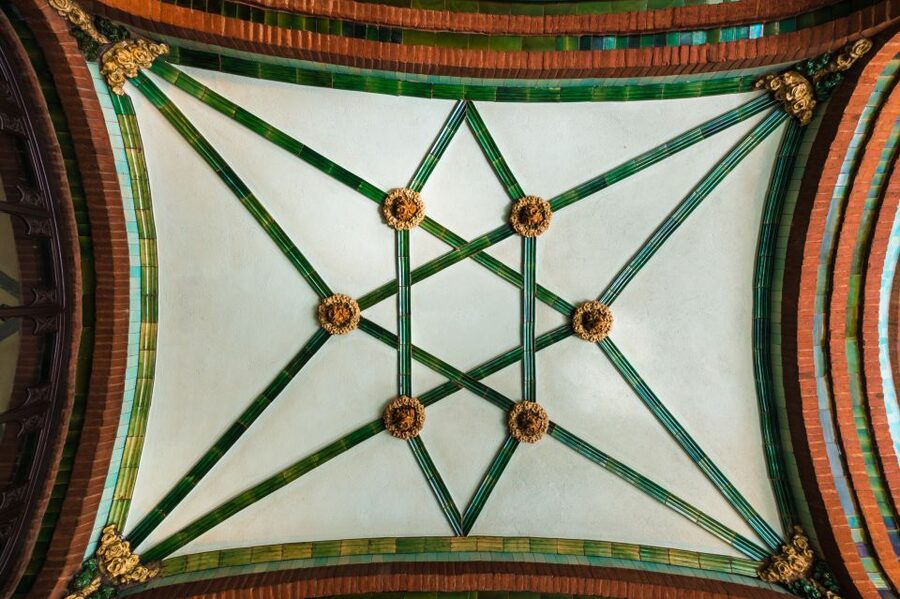
This is the part most people remember first, and for good reason. The grand staircase is where you see the building’s personality at full volume, with ornate flowers and flags decorating the way up.
Look closely at the materials. The space is not just painted decoration. It is built with elements like iron and glass, and that mix is what makes the staircase feel both intricate and airy. Even if you only catch it in pieces, the overall effect lands quickly.
As you climb, try shifting your attention in small steps. At first, scan for the biggest floral clusters and the flags. Then switch to the smaller work, the kinds of details you would miss if you only stare at the center.
If you are the type who likes to take your time, this is where you can. The staircase creates natural “stop points,” so it is easy to slow down without losing your place in the route.
Lluís Millet Hall: balcony views and nature-inspired columns
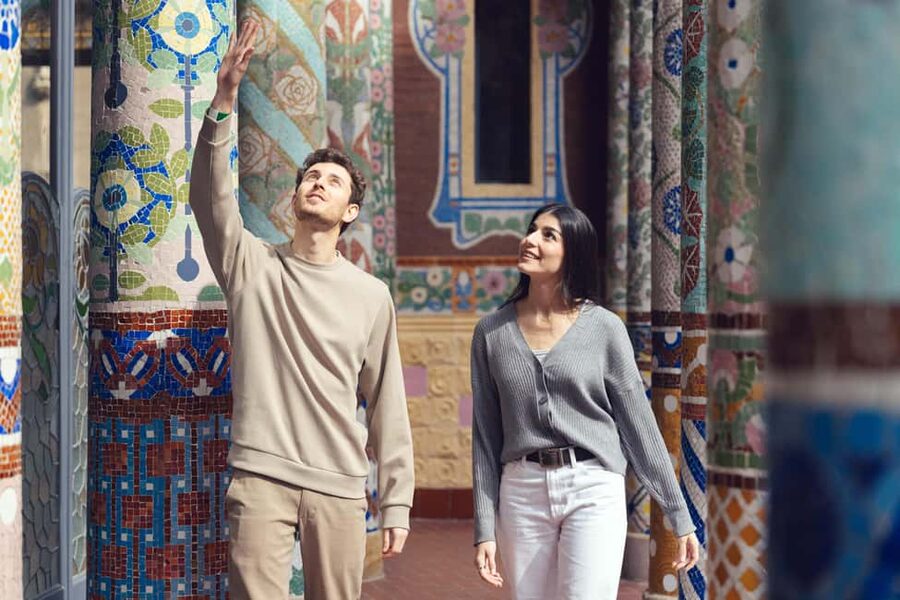
After the staircase, you will reach the Lluís Millet Hall. This is where the decoration changes from bold stair drama to a more architectural, airy feeling.
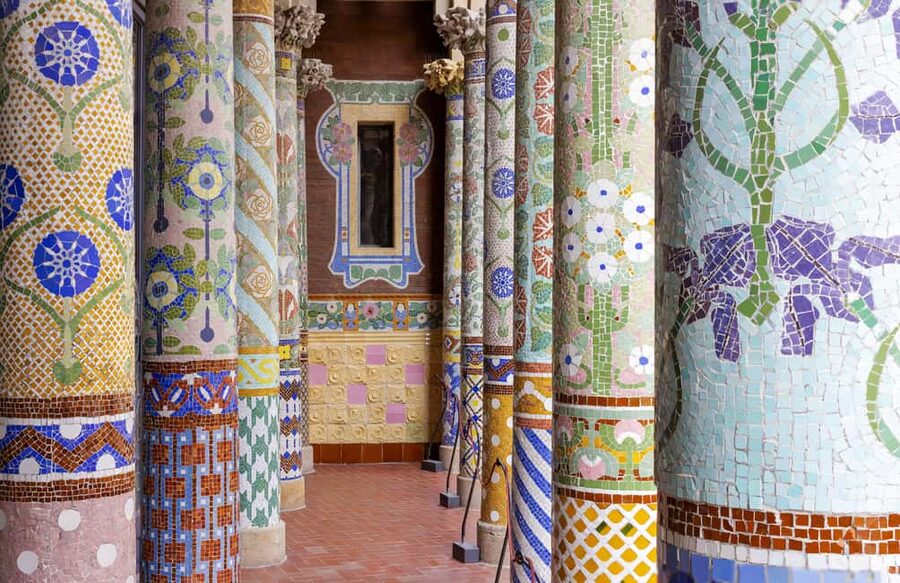
The balcony area is a key moment. Focus on the balcony and the columns around it, because they symbolise nature with flowers of every kind. It is the kind of design that rewards you for looking at it from more than one angle, so give yourself a little time here.
Because this is a self-guided visit, the brochure is your best friend. Use it to connect what you see with why it is there. When you understand what the design is trying to represent, the room stops being just pretty and starts feeling intentional.
One nice thing about this stop is that it breaks up the visit visually. You are not only waiting for the Concert Hall. You get a second “main character” room that helps the visit feel complete, even if you do not stay long.
A few more Barcelona verdicts worth reading
- Barcelona Aquarium: Entry Ticket★ 4.4 · 16,717 reviews
- Barcelona: La Pedrera-Casa Milà Ticket & Audio Guide Option★ 4.7 · 15,099 reviews
- Barcelona: Sagrada Familia Skip-the-Line Entry Ticket & Tour★ 4.8 · 12,789 reviews
Concert Hall: colour, light, and the live recital moment
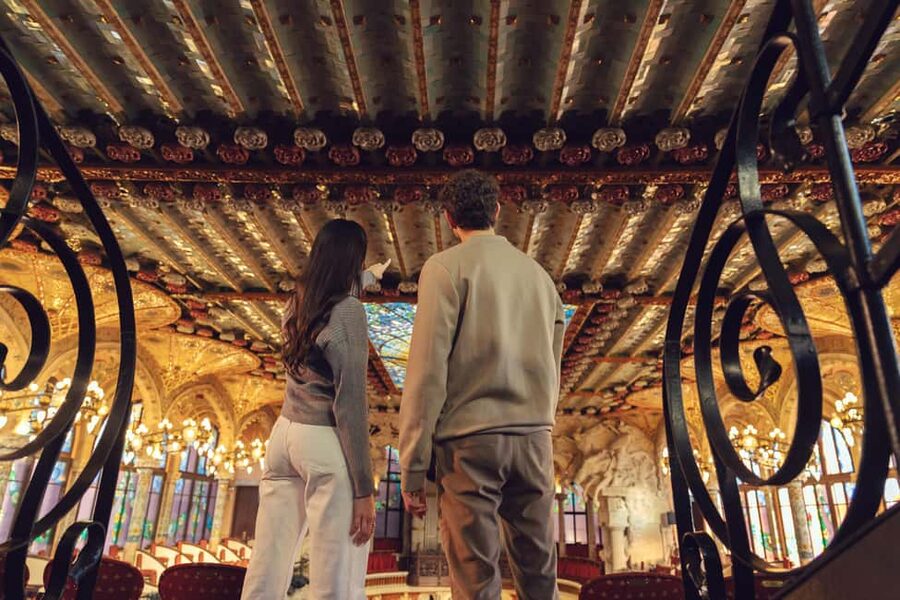
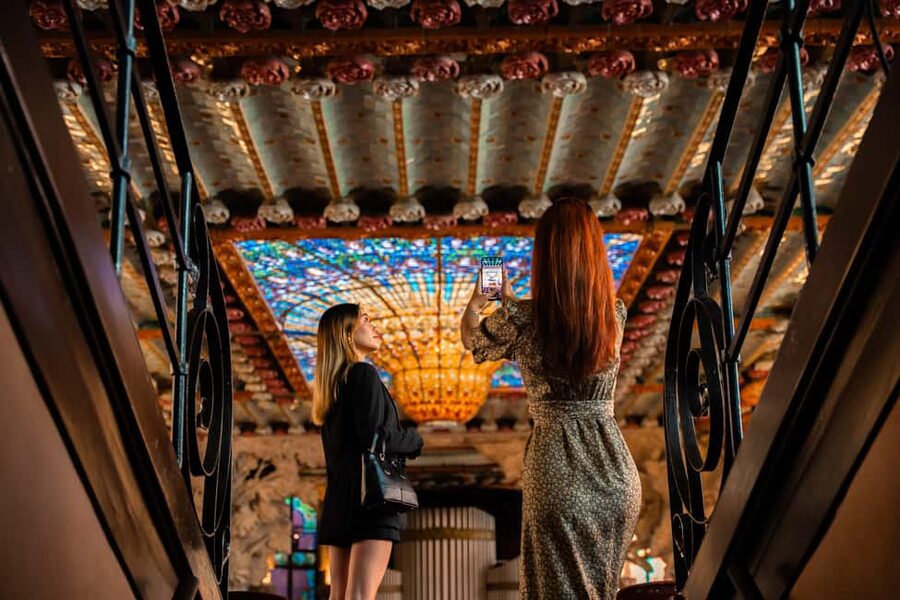
Then comes the big reveal: the Concert Hall. When you enter, you get an explosion of colour, shapes, and light. It can feel like the room is doing something to you, in a good way, not like you are just looking at a building.
Make sure you also check the second-floor views. From there, you can admire the impressive light source up close. This is one of those details that photographs do not fully explain, because you notice texture and how the light interacts with the space.
Your ticket visit also includes a live piano or organ recital to round off your time here. Even if you do not know the music, the setting is so dramatic that it changes the whole experience. The hall was made for sound, and it shows.
If your visit lines up with extra playing or a rehearsal moment, treat it as part of the bonus. Some people get lucky with organ playing happening around their time, and those short flashes can turn the visit into a personal highlight.
Ticket value: what $21 buys, and when it feels pricey
At around $21 per person, the value comes from a simple combo: skip-the-line entry, an included brochure, and access to one of Barcelona’s most famous decorative interiors. Add the live recital factor, and the ticket often feels like more than just paying to look.
This is not a full-day experience in the way a major museum can be. You are usually done in a shorter window, which is good if you want a focused hit of Modernisme without losing your whole day.
Still, one fair caution is price sensitivity. Some people feel the experience is a bit expensive for a self-guided visit that is focused on a few core spaces. If you are expecting a long guided program, this might not match what you want.
My advice: treat it like an architecture stop plus a music setting. If that matches your travel style, the price makes sense. If you only want a deep, hour-by-hour lesson, consider pairing it with another nearby activity so your day feels fuller.
Timing and entry tips that make the visit smoother
Because this is a self-guided ticket with optional audio support, your success comes down to how smoothly you start and how you manage your attention. Aim to arrive with comfortable shoes and a light load, since luggage or large bags are not allowed.
If you are using the audio guide, plan for your phone setup. The languages offered include Catalan, French, German, Italian, Spanish, English, and Korean. Many visitors recommend using headphones so you can hear clearly without bothering anyone near you.
Also, do not get tripped up by the different layers of information. The brochure is included, while the audio guide is optional. If you want the audio, make sure you know you have it ready before you move into the main spaces.
One more small strategy: take advantage of the fact that the building lets you pause. It is easier to enjoy this place when you do not treat it like a checklist. Stand where the details are, then move on when the next room calls.
Rules that affect your day (food, bags, and what you can bring)
This visit is straightforward, but there are a few limits that shape your comfort. Food and drinks are not allowed, and luggage or large bags are also not allowed.
That means you can still enjoy the cafeteria area before or after your route, but you should not plan to eat during the visiting part itself. If you want a snack, plan that as a separate step, not something to carry into the rooms.
If you are coming straight from a walk around Las Ramblas or Plaza Catalunya, keep your day simple. Bring the essentials, then let the building do the heavy lifting.
The visit is wheelchair accessible, so if you need that, you can plan with more confidence than you might at some older sites.
How to fit Palau de la Música into a Barcelona day
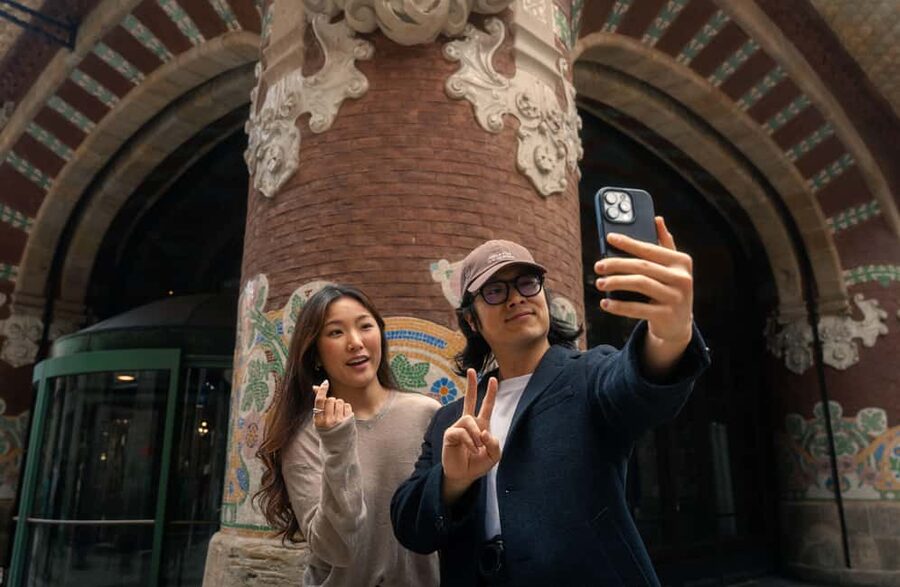
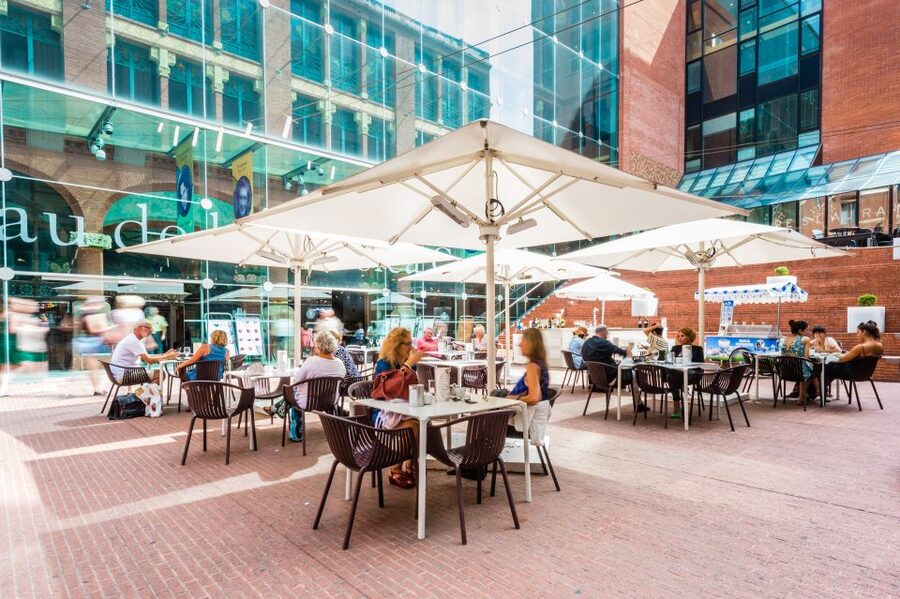
The location is a big help. Palau de la Música sits in the heart of Barcelona, just minutes from Las Ramblas and Plaza Catalunya. That makes it easy to slot in between other sightseeing.
If you are starting your day early, you can pair this with a morning stroll in the center, then use the recital and the interior cool-down as your midday reset. If you arrive later, it still works well because the building is compact, but you might have slightly more crowd energy.
I also like the idea of coming here after you have already seen a bit of the city. Modernisme decorations make more sense after you have walked around and noticed how Barcelona loves form and detail.
Who should book this ticket, and who might skip it
You should book if you love architecture, decorative interiors, and the kind of music atmosphere where the room is part of the performance. It is a strong match for couples, solo travelers, and anyone who wants a high-impact stop without a complicated schedule.
You will also like it if you prefer flexibility. The self-guided format means you can linger at the grand staircase and balcony areas as long as you want, then move on when you feel satisfied.
You might consider skipping if you want a long, deeply structured guided experience. This is focused. The route is about a few signature spaces, and your time in the building is not meant to replace a whole day of museum touring.
Should you book Palau de la Música entry?
Yes, I think it is an easy booking for most first-time Barcelona visitors. The combination of grand staircase detail, the Concert Hall light and colour, and the included live piano or organ recital gives you more than a typical quick stop.
Book it if you want a compact, high-impact experience near the city center. Skip it only if you are expecting a multi-hour guided program or you know you do not enjoy decorative interiors.
If you can, pick a time early enough to move comfortably, and plan to focus on the rooms that matter most to you. Do that, and Palau de la Música will reward your attention fast.
FAQ
How much is the Palau de la Música entry ticket?
The price listed is $21 per person.
Where do I meet for this self-guided visit?
Meet in the foyer area of Palau de la Música Catalana, beside the cafeteria.
Is the audio guide included in the ticket?
No, the audio guide is optional. The included materials are an entrance ticket and an informative brochure.
How long is the experience?
The activity is listed as valid for 1 day, and it is designed as a self-guided visit through the main parts of the building.
Are food and drinks allowed inside?
No. Food and drinks are not allowed.
Can I cancel for a full refund?
Yes. Free cancellation is available up to 24 hours in advance for a full refund.
Latest Barcelona reviews into the ledger




Tickets, compared.
Sagrada Familia Entry Ticket with Audio Guide
Read our review →