
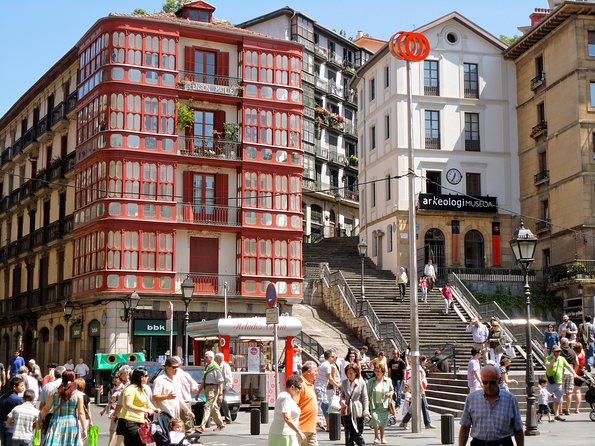
Reviewed · HISTORICAL TOURS
Bilbao Historical Small Group Tour
Bilbao makes more sense on foot. This small-group historical walk threads you through Casco Viejo landmarks and a working market, then ties it all together with clear English storytelling from guides like Samuel.
I especially like the way it gives you a fast orientation to key squares and viewpoints, so the rest of your Bilbao day feels less like guesswork.
Second, I really like the Mercado de la Ribera market stop. You get context for what you’re seeing, plus practical ideas for Basque food without turning it into a loud, all-day tasting marathon.
One possible drawback: because it’s outdoors and walking-based, you’ll want decent weather. If rain is heavy, the experience may be rescheduled or refunded, so plan your schedule with a little cushion.
In This Review
- Key takeaways
- Getting oriented in 2 hours, without feeling rushed
- Starting at Arriaga Plaza, then into Casco Viejo
- Plaza Nueva: Basque language, La Bilbaina, and a myth you can picture
- Plaza Miguel de Unamuno: buildings, literature, and a famous Basque thinker
- The “oldest wall” moment and riverfront breathing room
- Mercado de la Ribera: market culture explained, not just photographed
- Fuente del Perro: traditions like TXIKITEROS
- Cathedral history and Bilbao’s civic backbone
- Bidebarrieta Central Library: architecture with a story behind it
- English guide, small-group Q&A, and the pace that keeps it fun
- Price and value: what $31.03 buys you
- Timing, weather, and how to plan your Bilbao day
- Who this tour suits best
- Should you book this Bilbao Historical Small Group Tour?
- FAQ
- How long is the Bilbao Historical Small Group Tour?
- What language is the tour offered in?
- Where does the tour start?
- How big is the group?
- What is included in the price?
- Is admission included for the sights?
- Does the tour end at the meeting point?
- Does the tour require good weather?
- Can I cancel for a full refund?
Key takeaways

- Max 10 travelers, capped for better questions and smoother pacing
- Two hours is long enough to connect dots, short enough to fit any itinerary
- Market time at Mercado de la Ribera, with local food culture explained
- Casco Viejo highlights from Plaza Nueva to the riverfront, plus churches and bridges
- Guides like Samuel often mix history with personal, easy-to-follow stories
- Stops are listed as free admission, so you can focus on walking and listening
Getting oriented in 2 hours, without feeling rushed
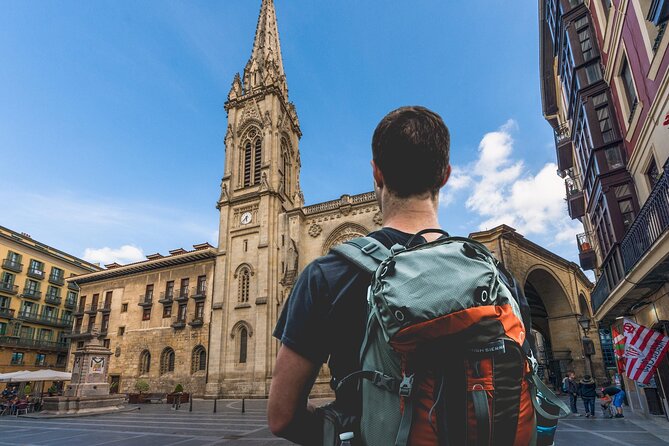
This tour is built for that first-time Bilbao moment when you arrive, see the big modern stuff later, and still want the city’s roots today. The format makes sense: a 2-hour stroll with a professional guide, where each stop adds a piece of the bigger story. You end right where you started, so you are not hunting for a “next meeting point” later.
The pacing also helps. Instead of one giant history lecture, you get short time at each location. That means you can actually look around. You notice details like street corners, building facades, and how people move through the old quarters. And since the guide brings local culture into the story, it’s not just dates and names, it’s why certain places matter.
There is also the small-group advantage. The tour’s group size is capped at 10 travelers, and that tends to create better back-and-forth. You can ask a question and get an answer that fits what you’re looking at, not a generic response meant for a big crowd.
A few more Bilbao verdicts worth reading
- Madrid Essential: Historic Center, Plaza Mayor & Royal Palace
★ 5.0 · 6,416 reviews - Barcelona: Tapas Walking Tour with Food, Wine, and History
★ 4.8 · 4,261 reviews - Sevilla Food Tour: Tapas, Wine, History & Traditions
★ 5.0 · 3,468 reviews - Valencia Old Town Tour with Wine & Tapas in 11th Century Historic Monument
★ 5.0 · 3,234 reviews
Starting at Arriaga Plaza, then into Casco Viejo
The walk begins at Arriaga Theater, at Arriaga Plaza 1. It’s a smart start point because it puts you close to the city center and near public transportation. Also, the theater area is the kind of landmark that helps you orient your bearings quickly. You get a natural “starting reference” before the tour starts weaving into the older streets.
From there, the tour moves into the Casco Viejo zone. This is where Bilbao’s layers show up. You see squares that look like they’ve always been social spaces, plus small streets that feel more human-scale than the museum-or-riverfront viewpoints. The guide’s job is to connect the dots between what you see now and how the city developed into what it is today.
If you like walking tours that feel like a guided walk with stops, not a sprint from photo spot to photo spot, this fits. And because it ends back at the meeting point, it is easy to continue on your own afterward, whether you head toward the river views or pop into a nearby café.
Plaza Nueva: Basque language, La Bilbaina, and a myth you can picture
The tour opens in the Plaza Nueva area. This is a key Casco Viejo stop because it’s one of those squares where you can absorb the vibe right away. The guide connects the space to Bilbao’s history and adds Basque cultural context that helps you understand why certain names and traditions show up over and over.
One of the most interesting elements here is the focus on the Basque language academy. You don’t need to speak Basque to appreciate this part. It’s about seeing language as identity, and understanding how culture gets carried through generations. You also hear about the myth of La Bilbaina, which helps make local storytelling feel less abstract.
Time at Plaza Nueva is brief, around 15 minutes, so you’ll want to listen while also letting your eyes do their job. Look at the way the square frames movement and gathering. That visual matters once the tour starts referencing symbols and local identity again.
Plaza Miguel de Unamuno: buildings, literature, and a famous Basque thinker
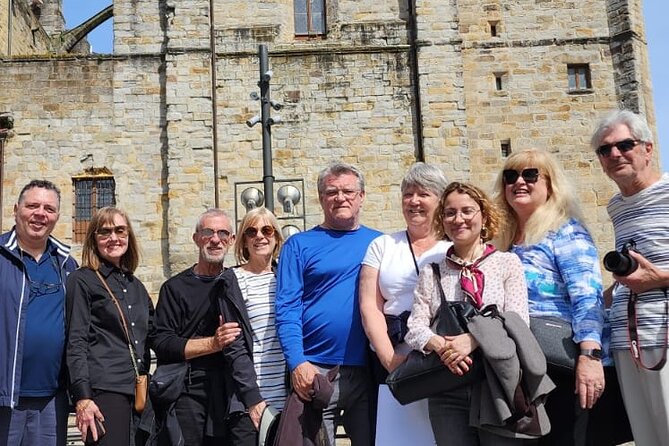
Next comes Plaza Miguel de Unamuno. This stop is shorter, roughly 10 minutes, but it’s packed with context. The guide points out history tied to the buildings around you and brings in the world of Basque literature.
The big name here is Miguel de Unamuno. Even if you do not know his work, the guide’s explanation gives you a reason to remember the name when you see it again around the Basque Country. It’s also a good reminder that the culture of a place is not only food and festivals. It’s also ideas, writing, and the people who shaped public thinking.
If you prefer tours with a little humor and personality, this is often where you feel it. Guides like Samuel are praised for communication in English and for keeping the tone friendly and easy to follow, not stiff or overly academic.
Bilbao, continued down the scoresheet:
- 1-Hour Bilbao city Boat Tour or 2-Hour cruise to Portugalete★ 4.2 · 2,581 reviews
- Bilbao: Gaztelugatxe, Bermeo, Mundaka, Gernika, & Wine Tour★ 4.7 · 2,275 reviews
- From Bilbao: Gaztelugatxe, Mundaka, and Guernica Tour★ 4.8 · 1,711 reviews
The “oldest wall” moment and riverfront breathing room
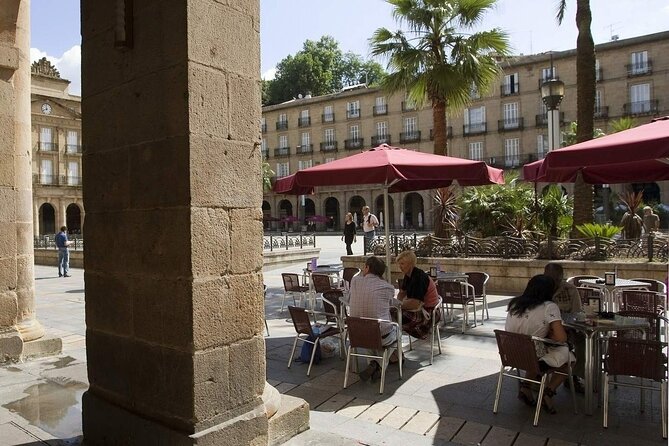
There is a highlight that feels like a mini time machine: the stop where you touch the oldest wall and learn how Bilbao, often referred to as Bilbo, was born. That kind of physical interaction, even if it’s brief, helps the history stick. You’re not only hearing about the past, you’re connecting it to something tangible.
Then you shift to the river views. You’ll take a breath in front of the Ría de Bilbao, and the guide explains how the city evolved along the water. This is a big deal in Bilbao. The river is not just scenery, it’s part of how the city grew.
As part of this stretch, you also see the San Antón Bridge and learn about San Antón Church. These are small targets on a map, but they matter because they show how the city mixes movement, faith, and everyday life. It’s also a nice way to break up the old-stone feel before moving toward the market.
Mercado de la Ribera: market culture explained, not just photographed
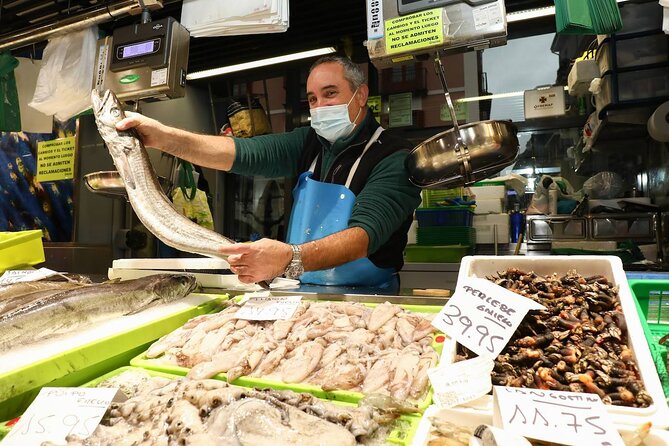
The tour heads to Mercado de la Ribera, with time for a market walk inside the building (about 15 minutes). This is where you start feeling the Basque culture in your body, even if you are not buying everything.
The focus is on popular gastronomy and on learning the market building itself. That means you’re not just being shown stalls. You’re given context for why this place works, how markets fit into local routines, and what foods are commonly associated with the region.
This is a great stop for first-time visitors because it answers a practical question: where do locals go for everyday flavors? Bilbao has modern food experiences, but this market shows you the older, daily rhythm of the city.
If you love food but hate tours that turn into pressure to buy, you’ll likely like the balance here. The market time is short, so it stays focused on education and orientation. You can then decide on your own later if you want a full lunch, a quick snack, or just a coffee stop.
Fuente del Perro: traditions like TXIKITEROS
Next is Fuente del Perro, with around 10 minutes at the fountain. The guide covers the fountain’s history and links it to Bilbao traditions, including the TXIKITEROS. If you have not heard that word before, this is where it becomes real. It’s the kind of local tradition detail that turns a city from landmarks into living culture.
Fountains can feel like background decoration on a travel day, but in a city like Bilbao, they often sit inside social routines. The guide helps you understand how these spots become meeting points and symbol points over time.
This stop is also a useful pause. After walking through squares, a market, and river views, you get a simpler, calmer moment where you can look, listen, and absorb again.
Cathedral history and Bilbao’s civic backbone
Another stop on the walk is tied to the cathedral area. You learn the history of the cathedral and get a clearer sense of the buildings around it. Even if you only catch part of the view, the guide’s explanation helps you read the architecture as a statement about how the city organized itself.
The cathedral stop works well because it connects to the tour’s broader theme. Bilbao is shaped by more than industry or modern design. Religious and civic landmarks show up again and again when locals talk about identity, tradition, and community.
If you’re the type who likes to understand why buildings look the way they do, this part is worth your attention. It also helps you connect the dots when you later wander on your own through the old center.
Bidebarrieta Central Library: architecture with a story behind it
The walk finishes with a stop at Biblioteca Central de Bidebarrieta, typically around 15 minutes. This is a smart choice because libraries are not flashy for tourists, but they matter to locals. The guide highlights the architecture and history of the building, so you see it as part of Bilbao’s civic growth.
There is also mention of the story of Basque sailors and the church. That adds another layer to what you’re seeing. It’s easy to picture maritime life in a city near water, but the tour gives you a cultural reason for why that story survives in places like churches and public buildings.
And since the route starts at Arriaga Plaza, the contrast is interesting. You go from theater presence at the start to civic institutions like libraries later. It helps you understand Bilbao as a city where culture happens across many different kinds of buildings.
English guide, small-group Q&A, and the pace that keeps it fun
This tour is offered in English, and the guide experience is a major part of the value. Guides like Samuel are highlighted for strong English, friendly delivery, and a sense of humor. That matters. If you are trying to learn about Basque culture and city history quickly, the guide’s clarity is what makes the walk worth your time.
The group size cap at 10 travelers is also more than a comfort detail. It often changes how you can participate. You can ask questions that come up while you look at a building or hear a story about a tradition. Then you can move on instead of feeling like your question is lost in the crowd.
The tour is also not too long, so it feels realistic for families or anyone who wants an introduction without a major time commitment. In the mix, the style can lean more historical. If you prefer highly interactive or action-heavy tours, you might find yourself wanting slightly more variety in how the information is presented. Still, the overall tone is approachable and not overly formal.
Price and value: what $31.03 buys you
At $31.03 per person, this is positioned as an accessible “start here” experience. The best value comes from what’s included: a professional guide plus local tax. Also, the tour is structured so you can see multiple major spots in a tight time window, so you are paying for efficiency and interpretation.
Another value point: the stops are listed with free admission. That keeps the cost predictable and avoids the annoying surprise of needing extra tickets for each stop. And since it ends back at the meeting point, you save effort that you would otherwise spend figuring out the route.
If you are visiting only a day or two and want a grounded understanding before you choose what to do next, this price feels fair. It’s less about “one attraction” and more about creating a mental map you can reuse all week.
Timing, weather, and how to plan your Bilbao day
The tour offers multiple time options, which makes it easier to fit into your schedule. That’s useful because Bilbao weather can change quickly, and this walk requires good weather. If conditions are poor, the experience may be canceled and you’ll be offered a different date or a full refund.
Plan your day so this tour is either your early anchor or paired with flexible plans. A two-hour block is easy to reshuffle. It’s also a good way to get oriented before you head out for longer self-guided exploring.
If you are visiting in winter or shoulder seasons, bring a rain layer. If you’re visiting in summer, wear comfortable shoes and expect real walking time in old streets.
Who this tour suits best
I think this works best for:
- First-time visitors who want a quick, guided picture of Bilbao
- People who care about culture, traditions, and context, not just photos
- Anyone who wants a market stop without committing to a full food tour
- Travelers who like small groups and easier conversation with the guide
It may be less ideal if:
- You hate walking tours or need long sitting breaks
- You prefer mostly casual, low-information sightseeing
- You show up expecting modern Bilbao highlights only (this tour focuses on the older city core and cultural stories)
Should you book this Bilbao Historical Small Group Tour?
If you want to understand Bilbao fast, I say book it early in your trip. This is the kind of tour that makes later wandering make sense. You’ll come away with a practical map in your head, plus memorable details like the Basque cultural threads tied to language, literature, and traditions such as TXIKITEROS.
Choose it with confidence if you like guided walking, clear English, and a mix of city squares, churches, and a real market experience. If weather is your concern, pick a time that gives you backup options, and bring the right layer so you can enjoy the walk without fighting the elements.
FAQ
How long is the Bilbao Historical Small Group Tour?
It runs for about 2 hours.
What language is the tour offered in?
The tour is offered in English.
Where does the tour start?
You meet at Arriaga Theater, Arriaga Plaza 1, Ibaiondo, 48005 Bilbao.
How big is the group?
The tour has a maximum group size of 10 travelers.
What is included in the price?
It includes a professional guide and local tax.
Is admission included for the sights?
The tour format lists the stops with admission ticket free, so you should not expect to pay separate admission fees for each stop during the experience.
Does the tour end at the meeting point?
Yes, it ends back at the starting meeting point.
Does the tour require good weather?
Yes. It requires good weather, and if it is canceled due to poor weather, you are offered a different date or a full refund.
Can I cancel for a full refund?
Yes. You can cancel up to 24 hours in advance for a full refund.
Latest Bilbao reviews into the ledger


Historical Tours, compared.
Madrid Essential: Historic Center, Plaza Mayor & Royal Palace
Read our review →
Tapas Walking Tour with Food, Wine, and History
Read our review →
Sevilla Food Tour: Tapas, Wine, History & Traditions
Read our review →
Valencia Old Town Tour with Wine & Tapas in 11th Century Historic Monument
Read our review →
Madrid Tapas & Taverns Small Group Food & History Tour
Read our review →
Barcelona Tapas Walking Tour: Food, Wine & History
Read our review →
Ultimate Seville Tapas, Wine & History Small Group Tour
Read our review →
Skip-the-Line Great Mosque-Cathedral History Tour
Read our review →Browse the lists this tour appears in