Reviewed · GUIDED
Cantabria : El Soplao Cave guided tour
Inside El Soplao, the rock tells stories. On a shared guided tour in Cantabria, I loved the rock formations and the way the guide connects them to mining history.
One catch right now: the mining train is out for maintenance, so you’ll walk about 300 m from the exterior station to the cave entrance. It does not change the tour length, but it’s worth knowing if you prefer to stay off your feet.
In This Review
- Key highlights at a glance
- Why El Soplao Cave is more than a standard “look at rocks” stop
- The 60-minute flow: meeting at the entrance to Gorda Gallery
- Geology that feels physical: karst formations and the miner’s air currents
- Mining archaeology in Cantabria: why the galleries matter
- The Picos de Europa connection: when your eyes get a break
- What to bring (and what to wear) for 12 to 14°C inside
- Getting there, parking, and the on-site cafe
- Wheelchair access and who should plan ahead
- Is it worth around $17? Value for time, content, and guidance
- Who should book this tour?
- Should you book the Cantabria El Soplao Cave guided tour?
Key highlights at a glance
- Gorda Gallery, plus real mining galleries: You’ll move through preserved passageways tied to the cave’s industrial past.
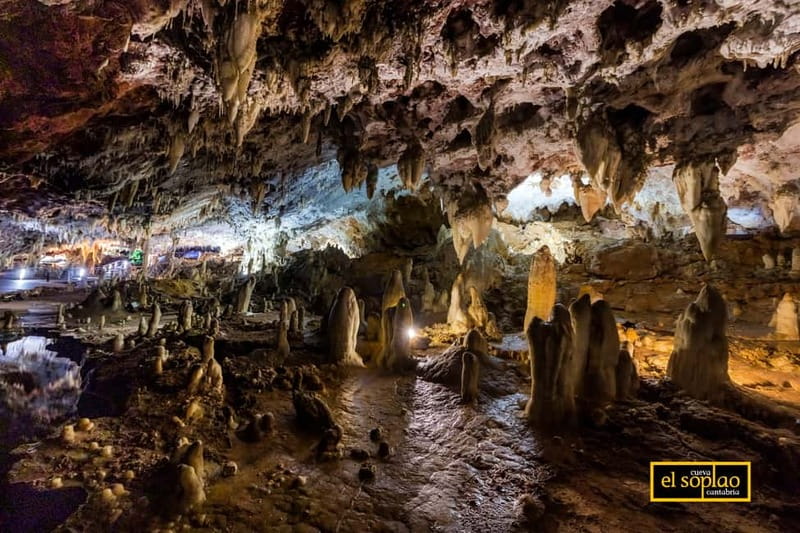
- A strong geological payoff: Expect dramatic shapes and formations that look different at every turn.
- Picos de Europa viewpoints: You get outdoor panorama moments mixed into the experience.
- Spanish live guide: The tour is guided in Spanish, which helps you understand what you’re seeing.
- Short, focused timing: About 1 hour, so it’s an easy add-on without a long day plan.
- Temperature reality check: Inside is around 12 to 14°C, with high humidity, so bring layers.
Why El Soplao Cave is more than a standard “look at rocks” stop
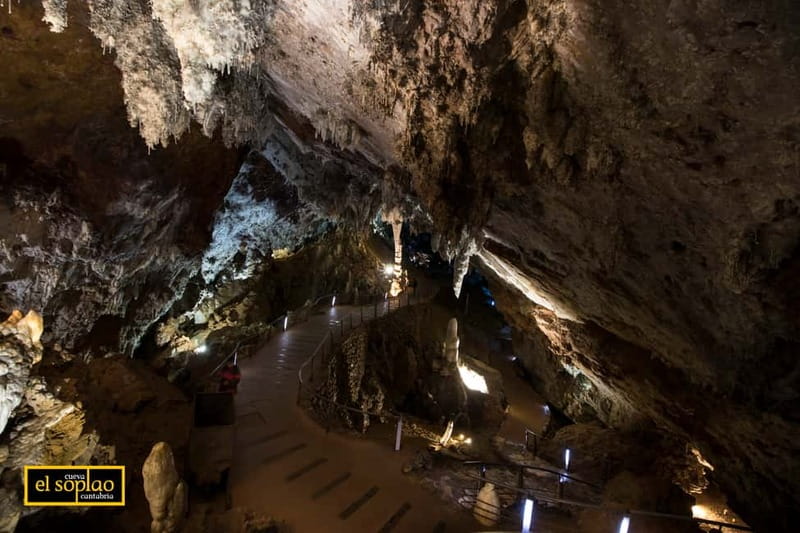
El Soplao Cave, in northern Spain’s Cantabria, has a rare combination. Yes, it’s a cave, so you get spectacular formations. But it’s also a working memory of mining, with galleries that show what people found and how they moved through the earth.
The name alone tells you the story. The cave got its name from los soplaos, a miner term for karstic cavities that produced powerful air currents. So as you walk, you’re not just staring at geology. You’re seeing why miners cared about this place, and why the cave felt alive underfoot, with air that changed as the tunnels opened.
And even though most of your time is underground, the tour includes moments tied to the Picos de Europa scenery above. That mix matters. It keeps the experience from feeling like one long dim corridor, and it gives your eyes a break when you come back out.
The 60-minute flow: meeting at the entrance to Gorda Gallery
Your visit starts with meeting your guide at the cave entrance. You’ll show your TIXALIA voucher at entry, so keep it handy on your phone or printed. No pickup or drop-off is included, so you’ll want to plan your own ride in advance.
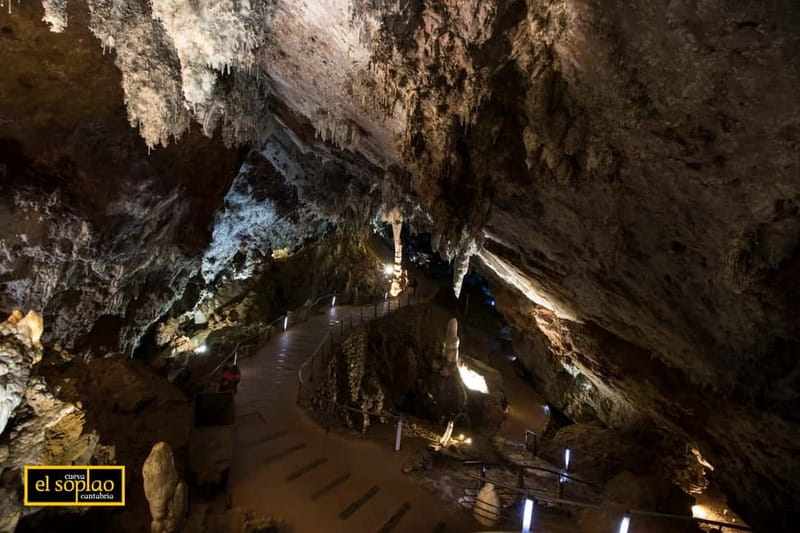
Here is how the route works in practice. The tour covers about 1,500 m of walking terrain in total, with a key indoor stretch that includes a 60 m stroll through old mining galleries leading you into the big chamber known as Gorda Gallery.
You should also know the cave experience is designed around a mining train ride. Normally, it would transport you roughly 400 m into the cave through a fortified tunnel. Right now, that train is out of service for maintenance until further notice, so access shifts. Instead of the train ride, you walk about 300 m from the exterior station to the entrance. The good news: your total cave time and tour duration stay the same.
This format is why I like it for real life. In one hour, you get movement, you get big “wow” rooms, and you don’t spend your whole day commuting and waiting around.
Geology that feels physical: karst formations and the miner’s air currents
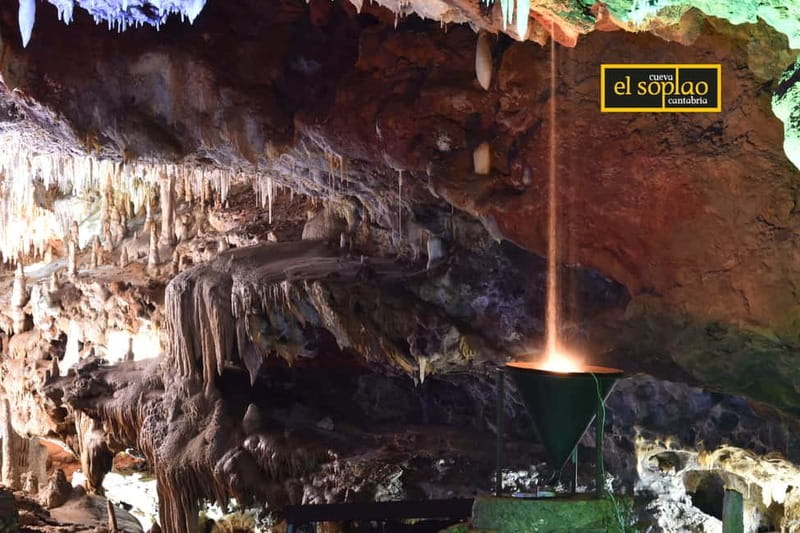
El Soplao isn’t just a pretty cave. It’s a cave with personality, and the geology shows it fast. You’ll see rock formations that look carved, even though they’re the slow result of karst processes over time.
The guide’s explanation helps you read the cave like a map. When the tour frames los soplaos as karstic cavities with strong air currents, it changes how you notice things. You start paying attention to airflow, temperature shifts, and how chambers feel different from tunnel to tunnel. That’s the kind of detail that makes a tour memorable instead of forgettable.
One room you should look forward to is near the end of the visit. In feedback I saw, people singled out the final chamber of stalactites and stalagmites, especially because it’s paired with music. That combo turns basic geology into a mini performance. It’s not just a science stop. It’s also an atmosphere stop.
If you care about photos, keep expectations realistic. One recent note mentioned that taking pictures was not possible for that group. Lighting and rules inside caves can vary, so I’d treat it as a place to watch first, capture second.
Mining archaeology in Cantabria: why the galleries matter
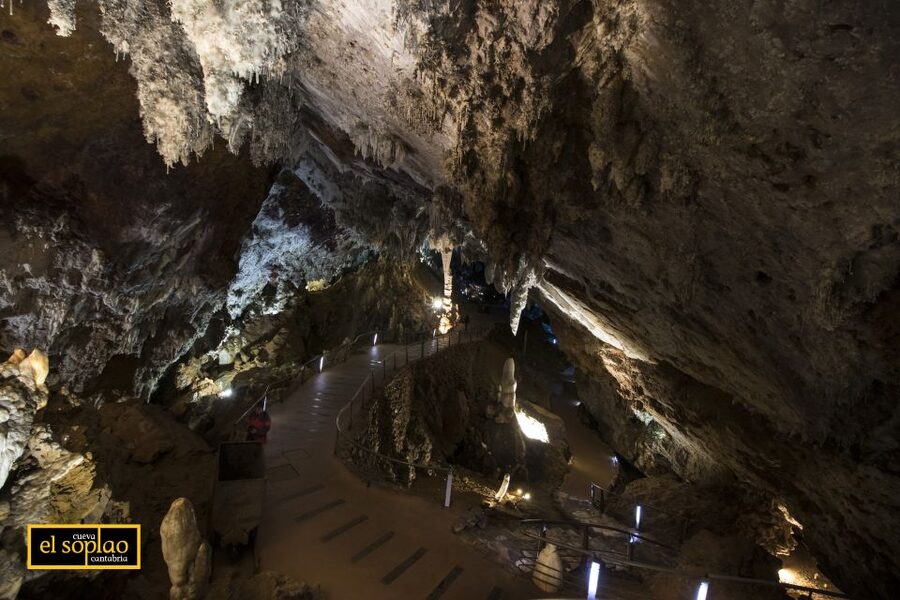
What makes El Soplao different from many cave tours is the mining layer. You’re not walking through a cave that was only discovered and later turned into a tourist attraction. You’re walking through preserved areas shaped by human work.
The tour route includes ancient mining galleries, and the setup connects the geology to the labor that happened there. When miners encountered karst cavities that carried powerful air currents, those features were not just odd science facts. They were practical problems and practical clues.
That mining context is what I’d call the “value multiplier” of this tour. A lot of cave visits stop at explaining formations. Here, you get the how and why. How did people move through the cave system? Why did they keep exploring particular areas? How did the mine’s conditions shape what they encountered?
And that’s why this is a great stop if you like history without the lecture vibe. The guide’s Spanish narration gives you a story while you walk, not after you leave.
The Picos de Europa connection: when your eyes get a break
Even with a strong underground focus, the tour includes panoramic views of the Picos de Europa. That matters more than you might think.
When you’re underground, your eyes adjust to dim light and close walls. Then you come back toward the outdoors, and suddenly the terrain makes sense again. Those viewpoint moments let you re-orient, and they also give you a sense of place. Cantabria is not only caves. It’s big scenery, steep valleys, and mountain silhouettes.
I’d use those outdoor flashes strategically. If the day is clear, that’s your best chance to get a clean view without rushing. If it’s foggy or rainy, at least you’ll have the cave experience doing the heavy lifting.
What to bring (and what to wear) for 12 to 14°C inside
Plan for cave weather. Inside El Soplao the temperature sits around 12 to 14°C, and relative humidity is about 90%. That means it can feel cooler than the number suggests, especially when you’re standing still for a moment while the group gathers.
Bring comfortable shoes you trust on stone. The route includes walking segments and some indoor surfaces that can be uneven. Also pack warm clothing. A light jacket usually does the trick, but in colder months you’ll appreciate something a bit sturdier.
A couple of practical notes that affect your comfort:
- Warm clothing matters even more during the hottest months because the temperature difference is bigger.
- Pets are not allowed, so plan accordingly if you’re traveling with animals.
- The tour is shared, so you’ll likely want to wear something you can move in while staying warm.
Getting there, parking, and the on-site cafe
You’re not getting hotel pickup. The tour expects you at the entrance area, and you’ll use the voucher for entry. The site does offer free outdoor parking, which makes the logistics easier if you’re driving yourself.
There’s also a self-service cafeteria and a terrace with views on the premises. I love this because it gives you a simple “what next” option. You can eat without needing to hunt for a place right after the cave.
If you’re building a Cantabria day plan, think about timing. An hour underground is short enough that you can still fit in other nearby stops. But you might also want to keep the rest of the day mellow, since caves take it out of your legs a bit, especially when you factor in the outdoor walking from the station.
Wheelchair access and who should plan ahead
Accessibility at El Soplao is actively supported. The cave is adapted so that about 90% of the route can be done in a wheelchair.
The accessible route to the entrance to the cave is about 300 m, with sloping areas less than 20 m around 10% inclination. It’s always accompanied by a guide, so you need to notify them before your visit so the team can plan the access properly.
If you or someone in your group uses a wheelchair, I’d treat this as a “yes, but communicate early” situation. The route is designed for it, but the timing and guidance matter.
Also note a small child detail: entry of child seats is not allowed. Babies can go in baby carriers instead.
Is it worth around $17? Value for time, content, and guidance
At about $17 per person, this is priced like a well-run short tour, not a budget gamble and not a premium splurge. The key value is what you’re actually getting in one hour.
You’re paying for:
- an entrance fee to El Soplao Cave
- a live Spanish guide
- a route that combines geological formations, mining galleries, and Picos de Europa views
That mix is not common in one-hour cave tours. Many options focus on scenery only. Here, mining archaeology is part of the package, and it changes how you experience the cave.
The duration is also a big part of the value equation. One hour means it’s realistic even if you’re only in Cantabria for a short trip. And because the cave access is already set up to handle a shared tour experience, you’re not paying for chaos. You’re paying for a guided structure.
Price will feel different depending on whether you’ll enjoy cave history, but if you like geology plus human stories, this is a solid deal.
Who should book this tour?
This tour is a great match if you:
- Want a short guided cave visit that still covers both nature and human history
- Like learning stories while walking, not reading plaques all afternoon
- Enjoy geology, especially when it has context like mining work and air currents
- Need an option that can work for wheelchair users with advance notice
I’d think twice if you:
- Hate cold indoor environments and forget layers
- Have a strict need for continuous train rides. The train is currently out for maintenance, so you should be fine with walking the 300 m approach.
Should you book the Cantabria El Soplao Cave guided tour?
I’d book it if you want a focused hour in Cantabria where geology and mining history talk to each other. The guided Spanish format helps you make sense of what you see, and the route is designed so you get to the major moments without dragging on.
Do it with eyes open about comfort and logistics. Wear good shoes, bring warm layers, and expect that the train ride part of the experience may not be running right now. If music in the final chamber sounds like your thing, that’s an easy reason to say yes.
If you’re trying to choose between a quick stop and a long cavern adventure, this one hits a smart middle ground: lots of wow, minimal time tax.
Guided, compared.
Sagrada Familia Entry Ticket with Audio Guide
Read our review →
Park Guell Guided Tour with Skip The Line Entry
Read our review →
Caminito del Rey Guided Tour & Welcome Pack from Málaga
Read our review →La Pedrera-Casa Milà Ticket & Audio Guide Option
Read our review →
Caminito del Rey: Guided Tour and Entry Ticket
Read our review →
Skip-the-Ticket-Line Mosque-Cathedral Guided Tour
Read our review →