
Reviewed · MUSEUMS
Cartagena : Roman Theatre Museum Entry Ticket
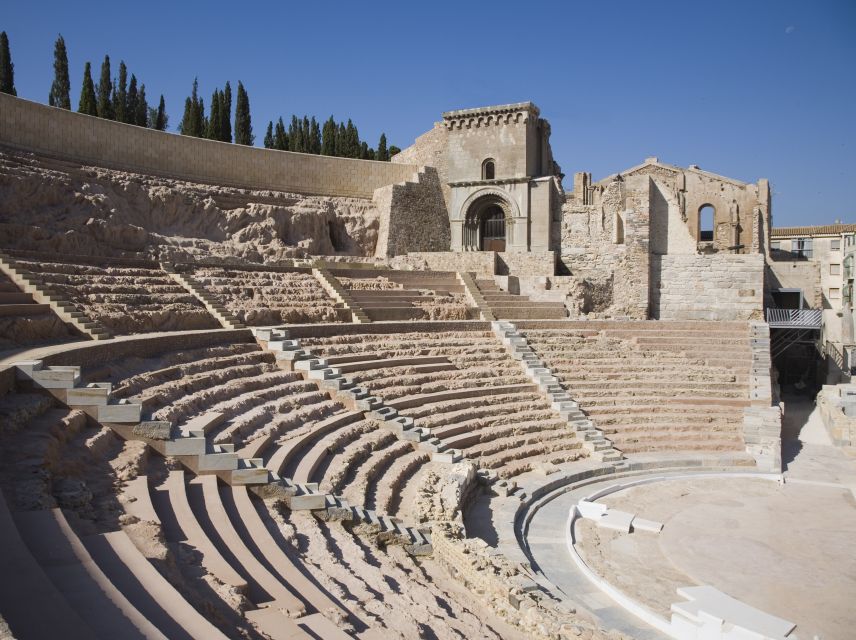
Roman ruins, buried for centuries, still impress. With this Cartagena ticket, I like the Roman Theatre Museum by Rafael Moneo and the chance to stand in a 7,000-spectator theater space that feels bigger than you expect. One thing to plan around is the site has open steps and uneven areas, so comfy shoes matter (and on Sundays the museum closes early).
You’ll get a self-paced walk through the museum first, then head outside to the theater. If you’re into explanation that keeps you moving, adding the optional audioguide is a smart choice, especially since the story runs from late Republican Cartagena into the Roman show of power.
In This Review
- Key highlights and why they matter
- A Roman Theater You Can Walk Through, Plus a Museum by Rafael Moneo
- Ticket Value at About $8: What You Actually Get
- Passageway of History: From 1st-Century BC to Rediscovery
- How Roman Plays Were Performed, and Why Politics Showed Up
- Mosaics and the Roman House Remains: The Cost of Building the Theater
- Inside the Museum, Then Outside to the 7,000-Spectator Stage
- Practical Tips for Smooth Visits (tickets, entrances, Sunday timing)
- Accessibility and Stairs: What You Can and Cannot Access
- Who This Works For (and Who Might Prefer Another Roman Stop)
- Should You Book This Roman Theatre Museum Entry Ticket?
- FAQ
- How much does the Cartagena Roman Theatre Museum ticket cost?
- How long is the visit?
- Is an audioguide included?
- What time does the Roman Theatre Museum close on Sundays?
- Do I need a voucher or QR code?
- Are food and drinks allowed inside?
- Is the site wheelchair accessible?
- Final decision
Key highlights and why they matter
- Rafael Moneo’s museum design: an architectural frame for Roman artifacts, not just a storage room
- Theater capacity and scale: a real sense of how many people once packed in to watch plays
- The Passageway of History: how the theater got buried, then found again
- Mosaics and house remains: see what changed when the theater was built
- Self-paced route with lifts/escalators: flexible pace, easier navigation across floors
A Roman Theater You Can Walk Through, Plus a Museum by Rafael Moneo
Cartagena’s Roman Theatre Museum is one of those places where your brain has to catch up. You start indoors in a museum space, then you walk out and the theater opens up around you in a way photos can’t fully prepare you for.
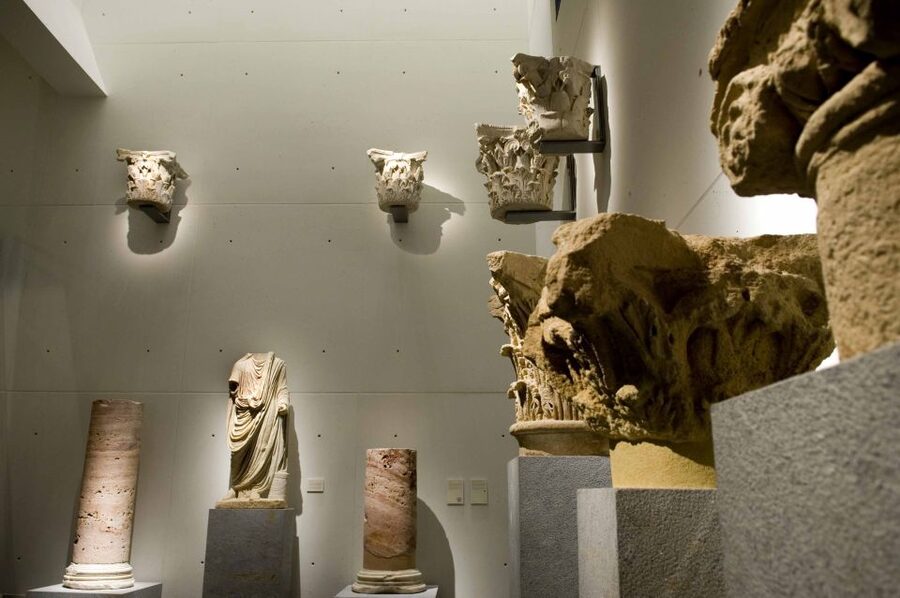
What I like most is that this is not just about stone ruins. The museum side is designed to help you understand what you’re seeing, and the architect most visitors will recognize is Rafael Moneo.
The ticket includes entrance to both the museum and the Roman Theatre site. That matters because the museum helps you connect the artifacts and context, while the outside area lets you feel the theater’s scale.
More Spanish halls of paint and armour:
- Madrid: Prado Museum Entry Ticket
★ 4.6 · 20,699 reviews - Málaga: Museo Picasso Málaga Entry Ticket
★ 4.4 · 11,138 reviews - Barcelona: FC Barcelona Museum “Barça Immersive Tour” Ticket
★ 4.4 · 10,944 reviews
Ticket Value at About $8: What You Actually Get
At about $8 per person for a 1-day ticket, the value is strong if you want a high-impact Roman stop without committing to a long tour. The experience is built around an entry to the museum and theater, plus an optional audioguide.
You should also notice a key practical detail: you can’t expect to fuel up inside with food or drinks, since those aren’t allowed on site. That doesn’t make it less worth it, but it does mean you’ll plan your day like a pro.
The museum closes at 2:00 PM on Sundays, so the timing matters more than you might think. If you’re visiting on a weekend, I’d aim for earlier in the day to avoid feeling rushed.
Passageway of History: From 1st-Century BC to Rediscovery
The heart of this visit is the story of the theater site over time. You’ll learn about the processes that buried the theater after the Roman period, and how it was rediscovered later.
Inside, the museum experience is set up like a historical walk. You move through the “Passageway of History,” which focuses on the development of the theater site dating back to the 1st century B.C. That time marker is important because it frames Cartagena as a place where Roman culture and architecture took hold early.
This is also where you’ll get the context for what you see outside. Without that setup, the exterior can feel like “nice ruins.” With it, it starts to feel like a working stage that once fit into Roman public life.
How Roman Plays Were Performed, and Why Politics Showed Up
One of the best parts of the museum is that it doesn’t treat theater as just entertainment. You learn how plays were performed in Roman times and how Roman art could carry political implications.
That might sound heavy, but the payoff is simple. When you understand the role of public performances, the theater seating and the stage space become more meaningful. You’re not just looking at architecture, you’re picturing how messages, status, and public culture could be staged for an audience.
If you like history that connects to human behavior, you’ll probably enjoy this section. Even if you’re not a theater nerd, the idea that art and power were linked in Roman Spain helps the whole place click.
Mosaics and the Roman House Remains: The Cost of Building the Theater
Roman theaters don’t rise in a vacuum. Here, you can see the “before” and “after” in the physical remains.
The museum includes remains of a Roman house with mosaic tiles, and the story explains that it was destroyed during the construction of the theater. That detail adds bite to the visit, because it reminds you that building big public works has consequences for earlier homes and neighborhoods.
It’s also a good reminder that archaeology is about layers. You’re looking at evidence from multiple moments in time, not one clean snapshot.
Inside the Museum, Then Outside to the 7,000-Spectator Stage
The flow of the visit is straightforward. You start with the museum and its floors of exhibits, then you head outside to walk around the theater area.
A few practical details make a difference here. The site is designed for movement through multiple levels, and you can use lifts or escalators for access between floors. That’s helpful if you don’t love long stair climbs.
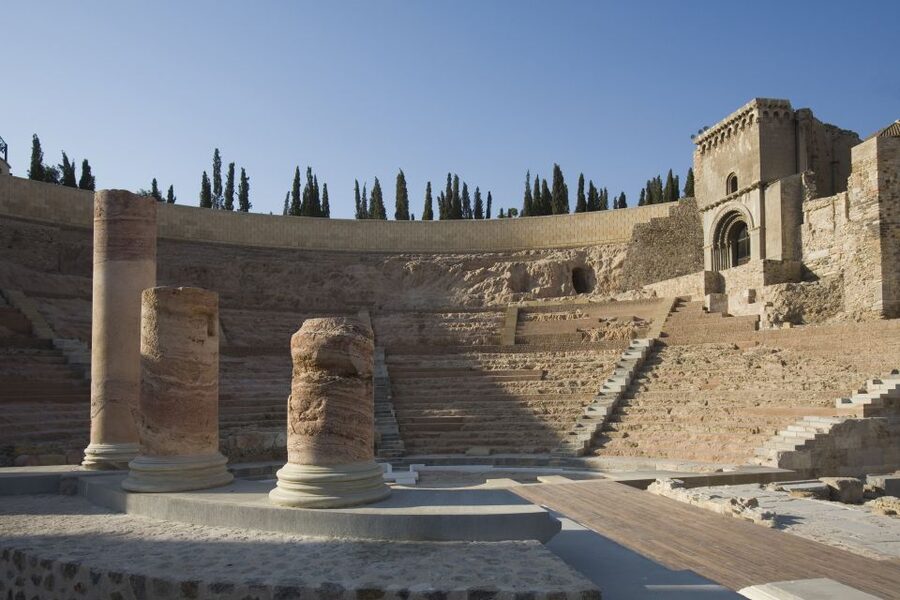
Once outside, you can walk around and take in the space. The theater’s scale is the main event, and the capacity of 7,000 spectators gives you a mental benchmark for how crowded it once was.
If you’re the type who likes photos, you’ll likely spend time near the open areas where views line up best. One note from real-world visits: there’s often a way to get aerial-style photos from outside without paying for additional viewpoints, but that doesn’t replace the full museum and theater access you’re paying for.
Practical Tips for Smooth Visits (tickets, entrances, Sunday timing)
This is one of those attractions where being prepared pays off. The lines can get long when people try to buy on the spot, so it’s a better move to have your ticket lined up before you arrive.
Entrance can also be a little confusing. Some visitors find the directions on mapping apps lead them to the exit area instead of the entry point. My advice: plan a bit of extra time the first time you go, and follow the on-site signs once you’re at the area.
For timing, the most important heads-up is the Sunday early closure at 2:00 PM. If you’re traveling with kids or you like to linger, go in the morning.
Finally, keep expectations realistic about refreshments. Since food and drinks aren’t allowed, you’ll want to handle snacks and water before you enter the museum complex.
Accessibility and Stairs: What You Can and Cannot Access
This site is listed as wheelchair accessible, and that matters. You should also know the limitations. Electric wheelchairs aren’t allowed, so plan for the mobility type you’re bringing.
The open-air areas include steps, and some areas may be harder to access for people who don’t feel steady on stairs. In particular, moving toward the stage area may be limited if you’re not comfortable with step navigation.
If you use a wheelchair, it’s smart to arrive expecting that some viewing areas are best from higher points. That’s not a reason to skip the visit, but it will help you avoid frustration.
Also, it’s a good idea to wear shoes with solid grip. Even when you’re just walking the route inside and outside, the mix of surfaces and outdoor steps can feel uneven.
Who This Works For (and Who Might Prefer Another Roman Stop)
This ticket is a great fit for people who want a focused Roman stop with a clear story. If you love archaeology that explains how a site was buried, found, and turned into a museum, you’ll likely feel satisfied.
I also think it works well for families, since the route is self-paced. Kids can handle “slow history,” especially if you use the audioguide to keep things understandable without constant lecturing.
If you’re visiting Cartagena for only part of a day, this is one of the easier Roman choices to slot in. You get a strong sense of place, and you don’t need to chase around town to assemble the experience.
One caution: if you dislike stairs or open steps, plan your route and pacing carefully. The museum’s layout with lifts helps inside, but the outdoor theater area still has physical steps and open terrain.
Should You Book This Roman Theatre Museum Entry Ticket?
Yes, I’d book it if you want a high-value Roman experience in Cartagena that teaches you what you’re looking at. At about $8 and with a museum designed by Rafael Moneo, it’s a rare combo of architecture, storytelling, and real theater scale in a short visit.
Book early if you’re going on a Sunday, since the museum closes at 2:00 PM. Choose the audioguide if you want the story to stay coherent while you move at your own pace.
Skip it only if you know stairs and open step areas will be a dealbreaker. If not, this is one of the best ways to understand why Roman Cartagena looked and sounded the way it did.
FAQ
How much does the Cartagena Roman Theatre Museum ticket cost?
The price is listed at $8 per person.
How long is the visit?
The activity is listed as lasting 1 day.
Is an audioguide included?
An audioguide is included if you select the option. The basic ticket includes the museum and Roman Theatre site entrance.
What time does the Roman Theatre Museum close on Sundays?
The Roman Theatre Museum closes at 2:00 PM on Sundays.
Do I need a voucher or QR code?
A voucher is mandatory. It is not valid a voucher or QR screenshot.
Are food and drinks allowed inside?
No, food and drinks are not allowed.
Is the site wheelchair accessible?
Yes, it is wheelchair accessible. Electric wheelchairs are not allowed.
Final decision
Book this if you want the best mix of Roman theater scale and clear museum storytelling in Cartagena, with an easy self-paced route. Plan ahead for Sunday hours and wear shoes for the outdoor steps, and you’ll get a satisfying stop without wasting time.
Latest Cartagena Spain reviews into the ledger


Museums, compared.

FC Barcelona Museum “Barça Immersive Tour” Ticket
Read our review →

Park Güell and Gaudí House Museum Entry Ticket
Read our review →
Puro Flamenco Show with Optional Museum Ticket
Read our review →
Moco Museum Barcelona: Modern & Contemporary Art
Read our review →Browse the lists this tour appears in