
Reviewed · SPAIN
Cuenca: Medieval Old Town
Cuenca feels like a medieval secret. This guided stroll through one of Spain’s best preserved old towns lets you see why the city is nicknamed the Eagle’s Nest, with hanging architecture above the gorges and panoramic views over the Júcar and Huécar. I like that you get a real local guide speaking Spanish as you move through the streets, not just a self guided wander. One thing to watch for: the tour is only conducted in Spanish, so plan accordingly if Spanish is not your comfort zone.
I also appreciate how the route is built around Cuenca’s drama. The city sits on a natural rock, then drops off into deep river gorges, so the walk keeps giving you new angles and small surprises. If you are hoping for a totally flat stroll, expect some uneven ground and slopes, which is why this tour is not suitable for mobility impairments or wheelchair users.
Good to know up front: it is a 2-hour experience with a local guide, no pick up. You meet just below the arches of Cuenca City Hall, next to the tourist office, and you look for guides in a red uniform.
In This Review
- Key Things I’d Put on Your Cuenca Checklist
- Cuenca on a Rock: Why the Eagle’s Nest Feels So Unusual
- Meeting Under the City Hall Arches and Starting on Time
- Walking the Medieval Streets and Getting to the Best Views
- Hanging Architecture Above the Gorges: What You’ll Actually See
- Ecclesiastical Buildings and the 1500s 12-Story Apartments
- Guide Quality, Humor, and How to Get the Most in Spanish
- Price and Value: Is About $10 Really Enough?
- Who This Cuenca Medieval Old Town Tour Suits Best
- Should You Book This Cuenca Medieval Old Town Tour?
- FAQ
- How long is the Cuenca medieval old town guided tour?
- What is the meeting point for the tour?
- Is the tour in English?
- What is included in the price?
- Is pickup included?
- Can I cancel for a refund?
- Is this tour suitable for wheelchair users or mobility impairments?
- Is there a way to book without paying right away?
Key Things I’d Put on Your Cuenca Checklist
- The Eagle’s Nest setting: the city’s rock perch and cliffside streets make every turn feel dramatic.
- Hanging architecture at close range: you will see the implausible construction up close while your guide explains how it works.
- Júcar and Huécar gorge viewpoints: expect stops where you can look down into the deep river cuts.
- A UNESCO World Heritage old town walk: Cuenca was designated in 1996, and the guide ties sights to why it matters.
- Church architecture plus civic storytelling: the guide connects ecclesiastical buildings to daily life in the city.
- The 1500s 12-story apartments: a standout historic detail that changes how you think about how people lived here.
Cuenca on a Rock: Why the Eagle’s Nest Feels So Unusual
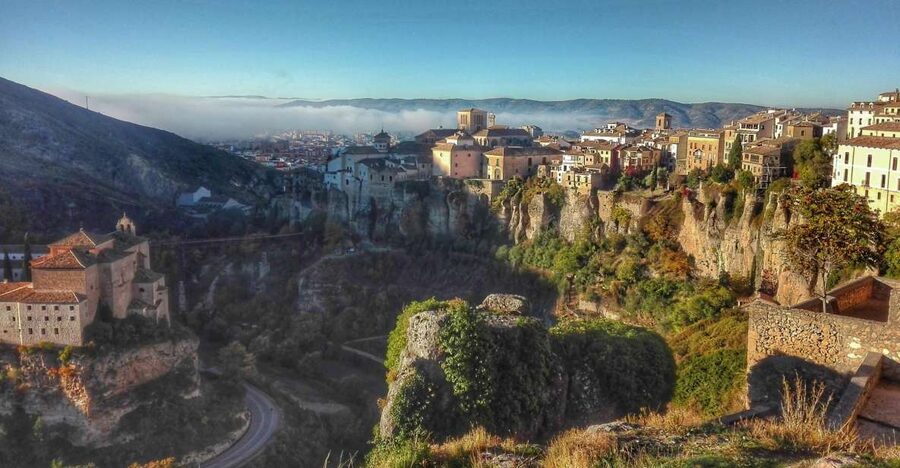
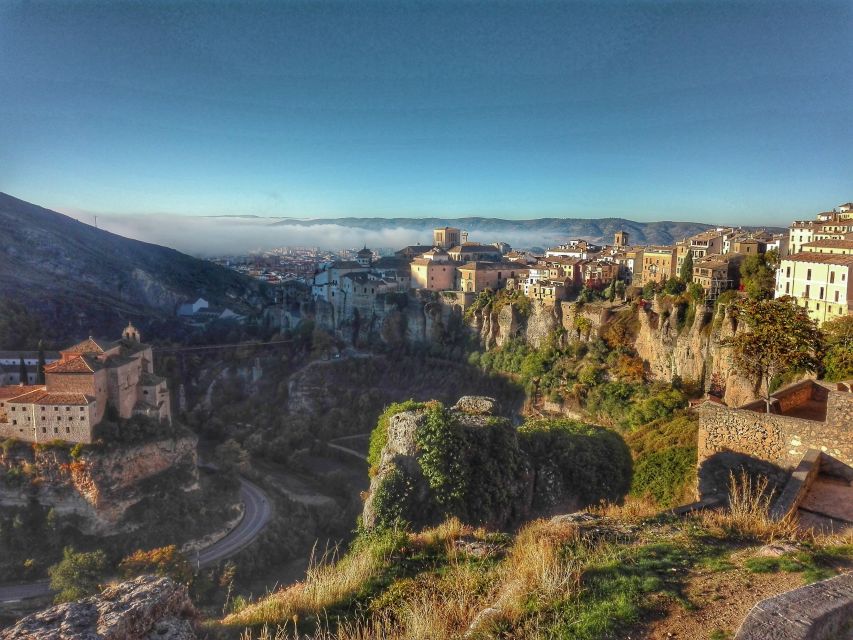
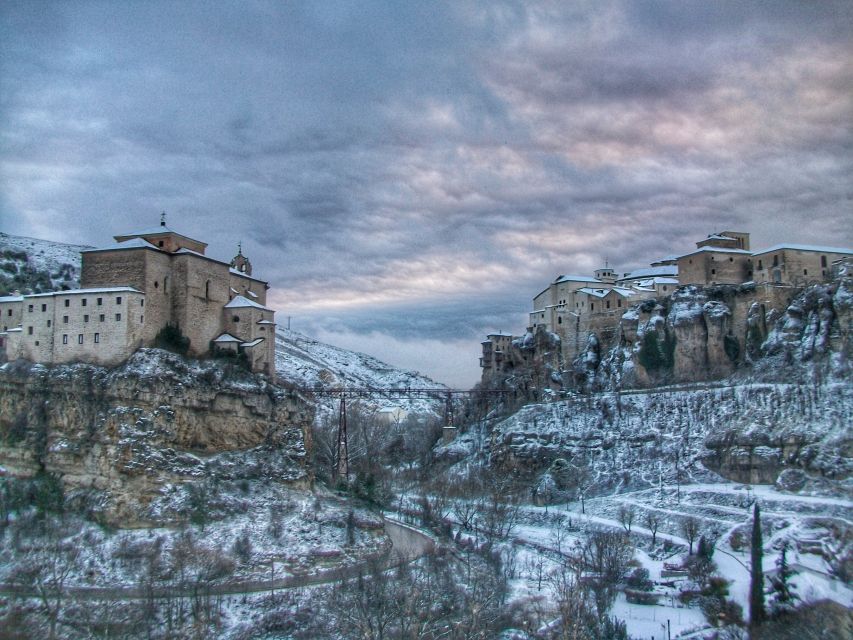
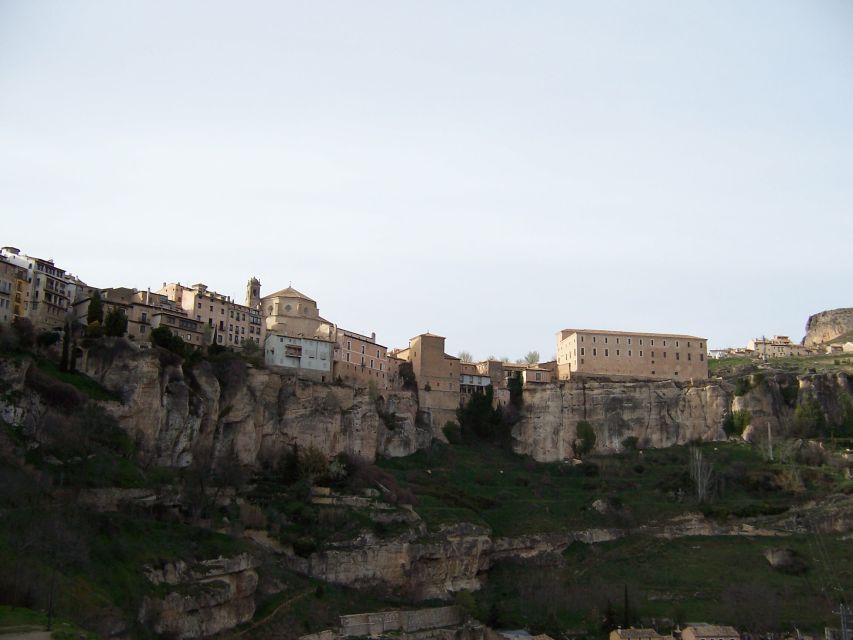
Cuenca is one of those places where the geography does half the work for you. The old town sits perched on a natural rock, and the slopes drop into the deep gorges carved by the Júcar and Huécar rivers. That physical setup is exactly why the city earns dramatic nicknames, and why even a short walk can feel like you are traveling through different layers of time.
As you move through the medieval streets, you start to understand that Cuenca is not “pretty” in a generic way. It is engineered by stone, height, and gravity. You get close to architecture that looks like it might be stuck there by magic, then you realize it was built to survive, centuries at a time.
This is also a UNESCO World Heritage Site, designated in 1996. The value of a guided visit is not just saying that word, it is using your time to connect monuments, street layout, and cliffside building choices to the bigger story of the city. With a good Spanish-speaking guide, the old town stops being a collection of buildings and starts feeling like a place people actually lived.
Meeting Under the City Hall Arches and Starting on Time
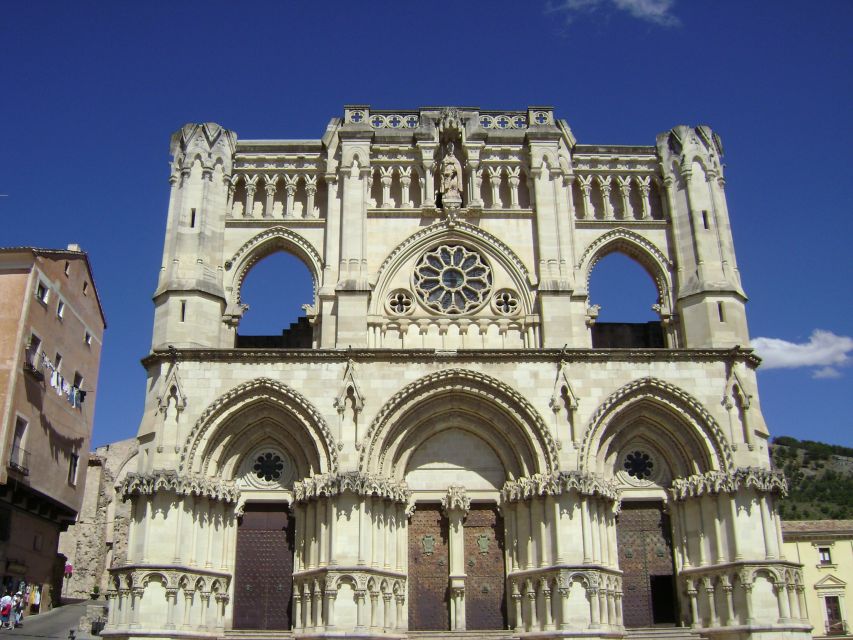
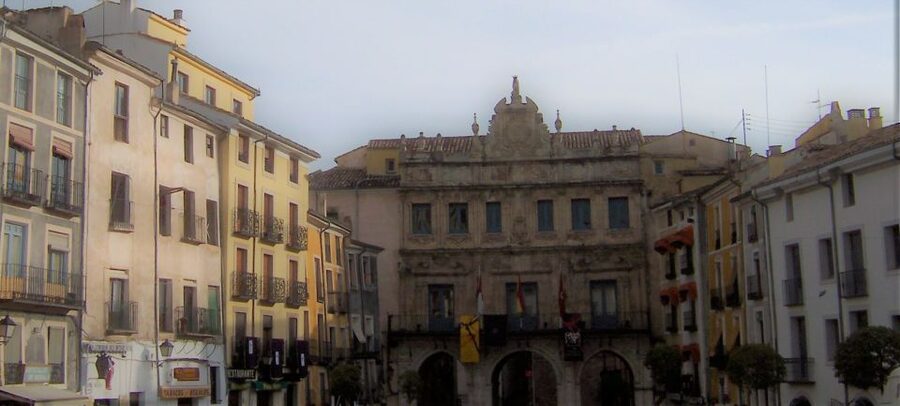
Your first practical win with this tour is clarity. You meet just below the arches of Cuenca City Hall, next to the tourist office. Then you look for guides wearing a red uniform, and plan to arrive about 5 minutes early so you are not rushing or standing around.
There is no pick-up service, so think of this as a “show up and start walking” format. That is usually best for travelers who want an efficient use of their day. If you are coming from a nearby hotel, you can generally make it work with normal city strolling, but if you are traveling far, give yourself extra buffer for getting to the city center.
The tour runs about 2 hours, and it is conducted in Spanish. That matters for your expectations: you are not just learning facts, you are following a narrative while you walk. If your Spanish is basic, you may still enjoy the views and architecture, but you will get more out of it if you can catch the story beats.
Walking the Medieval Streets and Getting to the Best Views
Once the group is formed, you start moving through narrow lanes and medieval street corners where Cuenca’s architecture shows its personality fast. Even before you reach the most famous cliffside features, you feel the city’s vertical character. Streets that look like they should be tight lead to sudden openings where you can see the gorges below.
This is where your guide earns their keep. A local guide helps you pace the walk so you do not spend the whole time staring at the floor. You get timely stops for viewpoints over the Júcar and Huécar rivers, and you learn how to look at the city from the angles locals use.
One small practical point: the best photos and the most dramatic panoramas tend to be at spots that require attention, not speed. With a big enough group, you may need to shift slightly to keep up. If you want the view that really sells Cuenca, stay near the front of the group when a stop is coming, and be ready to move quickly at transitions.
Also, keep in mind that the experience is not designed as a museum lineup. It is a walking tour of a living old town, which means the “stops” happen when you can see something worth seeing. If you prefer long, sit-down explanations, the format may feel more active than you expect.
Hanging Architecture Above the Gorges: What You’ll Actually See
The headline draw is the hanging architecture, the cliffside buildings that seem to defy physics. Cuenca has those signature structures that project outward over the drop, and the effect is immediate even when you are seeing it for the first time on a guided walk.
What you should expect is not just pictures. The guide shows you the buildings and explains the logic behind how they were set up for a city shaped by rock and river valleys. That context is what turns the sight from wow to I get it.
The experience works because the views and the architecture go together. As you look out over the gorges, you understand why building outward made sense here. The city’s edges are not empty space, they are part of the built environment. So the hanging houses are not an isolated spectacle, they are a clue to how Cuenca adapted to its setting.
There is also a good reminder from past visitors that the route includes chances to cross for better angles. If your guide offers an option to cross a bridge for a more beautiful view of the old town, follow along rather than assuming you can skip it and still get the same perspective. In other words, do not get overly attached to the current viewpoint, because the best one may require a short move.
Ecclesiastical Buildings and the 1500s 12-Story Apartments
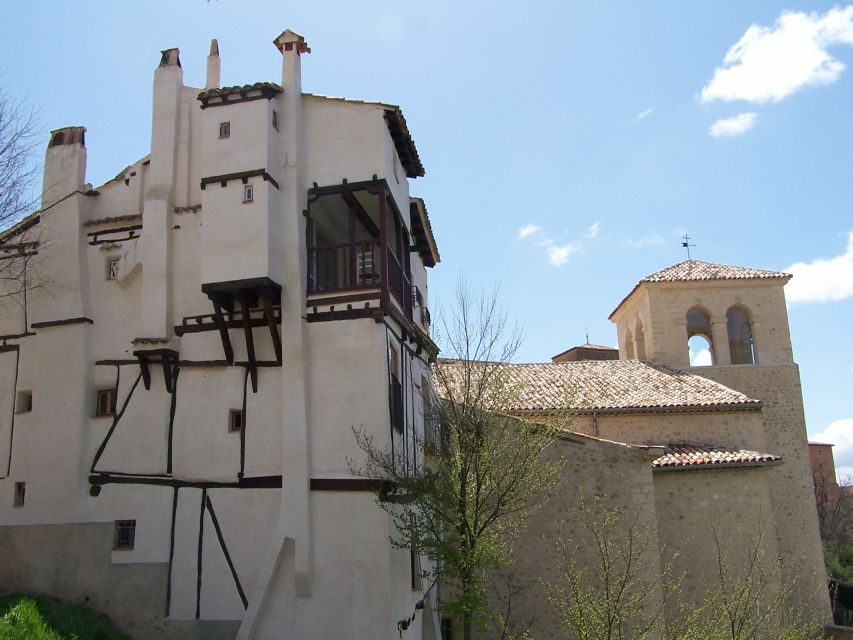
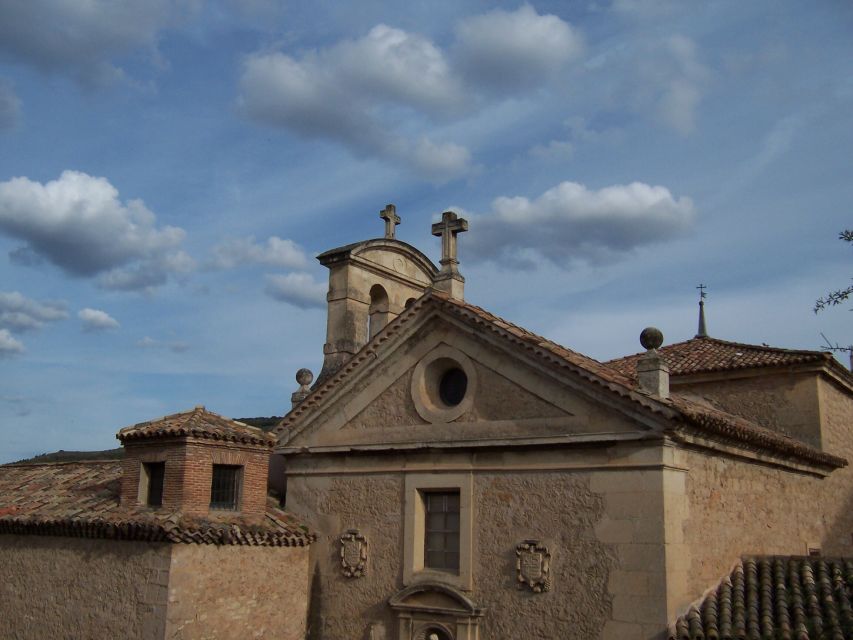
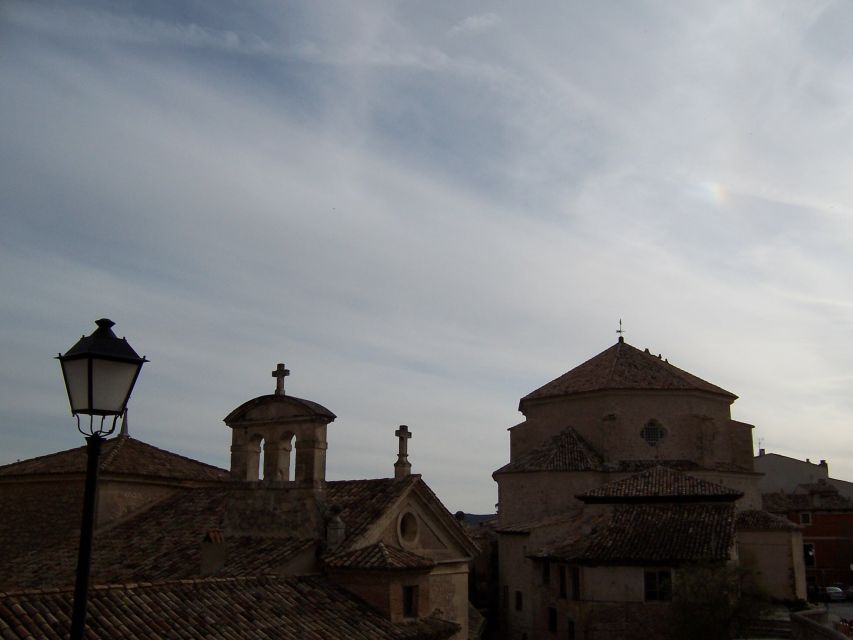
Cuenca’s medieval identity is not only civic and defensive. You also get splendid ecclesiastical architecture along the way. That means church related structures and religious landmarks show up as part of the story, not as random photo stops.
The “why” matters: in a city built on rock and shaped by trade and risk, religious buildings and their surrounding areas helped organize daily life. A guide can point out details that you might miss on your own, like how the buildings relate to the street plan and how the city’s physical constraints influenced what could be built and where.
One of the most memorable pieces of history on this tour is the mention of the highest apartments in Europe in the 1500s, described as 12 stories tall. Even if you have never pictured that kind of vertical living for the period, this detail changes the feel of the city. It suggests Cuenca was not only clinging to the medieval past, it was actively building upward in response to space and location.
For you, this means the tour is not only about admiring architecture. It is about understanding the daily reality behind it. When the guide connects that 12-story apartment history to the city’s cliffside layout, you start to visualize living conditions instead of just seeing stone.
Guide Quality, Humor, and How to Get the Most in Spanish
The guide is the engine of this tour. From the strongest feedback, the best sessions feel both professional and fun. People have mentioned guides like Ángela for being professional and kind, and Raúl for handling larger groups well and staying flexible through the old town’s tricky streets.
There is also praise for humor, including one guide noted for a dry sense of humor. That matters more than you might think. With a walking tour, it is easy for the story to become repetitive. When the guide keeps it lively, you actually remember what you saw, not just that you saw hanging houses.
Pace is the other big variable. One visitor felt the group spent too much time standing still while the guide told stories that did not add much. That is the sort of thing that can happen when a group is large or when the guide is trying to keep everyone together. Your best defense is simple: stay engaged. When you reach a viewpoint or a key sight, ask yourself what you want to notice next: building materials, street alignment, or why the location is where it is. If something feels slow, you can often regain momentum by paying closer attention to what is around you, not just what is being said.
Also remember: the tour is Spanish only. If you are working on your language skills, this format can be a win, because you will hear real Cuenca context, not textbook phrases. If Spanish is not your strength, consider arriving with a few simple questions in mind, like what the hanging architecture was used for or how the gorges influenced building choices. Even partial understanding will help you connect the visuals to the story.
Price and Value: Is About $10 Really Enough?
At around $10 per person for a 2-hour guided walk with a local guide, this tour is priced in a way that is hard to beat for the setting. You are not paying for a ride or a long day. You are paying for time on the streets with someone who can interpret Cuenca’s most important features, including the hanging architecture, major monuments, and the river gorge viewpoints.
Value here comes from three things:
- UNESCO old town access without confusion: you do not have to figure out what matters first.
- Viewpoints with context: seeing the Júcar and Huécar gorges is impressive, but it gets better when you know what you are looking at.
- A tight time window: 2 hours is long enough to feel like a real walk, short enough to fit into a busy day.
A small caution on value, based on feedback: if you are someone who hates “pause and listen” time, you might want to manage expectations. Some people felt portions could be faster, especially when the guide’s storytelling did not feel tied to what they were seeing. That is not necessarily a deal breaker, but it means the tour is best for visitors who enjoy a narrative as they walk.
Who This Cuenca Medieval Old Town Tour Suits Best
This is a strong pick if you want a structured, local explanation of Cuenca’s medieval core without spending hours wandering with no plan. It is also a good fit for people who love dramatic architecture and are excited by viewpoints, not just indoor sights.
I would lean toward booking if:
- You are comfortable with Spanish, or you at least can follow a guided story in Spanish.
- You enjoy walking tours where the city shape matters.
- You want the hanging houses and gorge views, plus clear context about the city’s medieval and ecclesiastical landmarks.
- You like humor in guides, since feedback highlights that some guides keep it entertaining.
I would skip it if:
- You use a wheelchair or need mobility support, because the tour is not suitable for mobility impairments.
- You want a fully level, slow pace with lots of stops to sit down.
- Spanish is a hard stop for you, because the tour does not run in other languages.
Should You Book This Cuenca Medieval Old Town Tour?
If you are visiting Cuenca for the first time and you want the highlights explained in a human, street-level way, I think this is worth your time. For about $10 for 2 hours with a local guide, you are getting a concentrated dose of UNESCO old town sights, hanging architecture, and gorge panoramas, all tied together with a Spanish narrative.
Book it if Spanish is workable and you are ready for an active walk through narrow medieval streets. Skip it if accessibility is an issue or if Spanish is a deal breaker, because the tour runs in Spanish only and the whole experience depends on following the guide’s story as you go.
FAQ
How long is the Cuenca medieval old town guided tour?
The tour lasts about 2 hours.
What is the meeting point for the tour?
Meet just below the arches of Cuenca City Hall, next to the tourist office. Look for the guides wearing a red uniform.
Is the tour in English?
No. The tour is only conducted in Spanish.
What is included in the price?
The local guide is included.
Is pickup included?
No, pickup service is not included.
Can I cancel for a refund?
Yes. You can cancel up to 24 hours in advance for a full refund.
Is this tour suitable for wheelchair users or mobility impairments?
No. It is not suitable for people with mobility impairments or for wheelchair users.
Is there a way to book without paying right away?
Yes. You can reserve now and pay later, keeping your travel plans flexible.