
Reviewed · NATIONAL PARKS
From Seville: Doñana National Park Day Trip
Doñana feels like a whole other Spain. This long day trip from Seville strings together marshlands, dunes, and beach with serious wildlife searching, and it’s built for bird lovers, including Spanish imperial eagles and the flamingo hunt. The catch is simple: sightings like lynx are never guaranteed, even with top guides.
I like the way this trip keeps moving north to south through Doñana’s different habitats, because each stop has its own “look.” I’m also a fan of the guide style, with named pros like José and Sergio praised for repositioning the group for birds and slowing down for the best views. One consideration: you’ll spend most of the day on roads and photo stops, with only some trail walking, so it may not scratch the same itch as a long hike.
In This Review
- Quick take: key moments you’ll remember
- From Seville to Doñana: what this 10-hour format gets right
- The ride out of Seville, and why the first stops matter
- Dehesa de Abajo: pine forests, marsh edges, and the birding game plan
- The rice fields and storks, a detail that explains Doñana
- El Rocío: chapel and observatory, plus a village pause
- La Rocina walking trails: the calmer side of the park
- Matalascanas after lunch: beach time and the biggest dunes
- Asperillo sunset: pine forest light, and why it’s not just pretty
- Wildlife odds: flamingos, eagles, and the lynx reality check
- Birdwatching gear and how to use it without fuss
- Price and value: what you get for about $105
- Private or small-group options: when that choice matters
- What to pack for Doñana, not just for Seville
- Best timing: when the day feels greener or more bird-heavy
- Who this day trip is for
- Should you book this Doñana day trip from Seville?
- FAQ
- How long is the Doñana National Park day trip from Seville?
- Does the tour include hotel pickup and drop-off in Seville?
- What is included in the price?
- Are meals included during the trip?
- What languages is the live guide available in?
- Is the tour only shared, or can I book a private experience?
- Is there any age or child seating information?
- Is it allowed to bring pets?
- What should I bring for the day?
Quick take: key moments you’ll remember
- Dehesa de Abajo visitor center for the first real hit of Doñana marsh and pine landscape
- Bird-focused stops where guides aim for close views of storks, herons, and birds of prey
- El Rocío for the chapel and observatory vibe in a small, iconic village
- La Rocina trails for a calmer walk near the water while watching habitat edges
- Matalascanas beach and huge dune system after lunch for sea air and big sand views
- Asperillo sunset for that “golden light through pines” feeling, plus more wildlife chances
From Seville to Doñana: what this 10-hour format gets right
This tour works because it treats Doñana like a chain of worlds, not one single viewpoint. You start early in Seville and head out with hotel pickup, which matters because getting to Doñana on your own can be a bit of a chore. Then the day becomes a series of habitats: marsh and pine, rice fields, village life in El Rocío, forest and trails near La Rocina, and finally beach and sand dunes.
What makes it good for value is that your ticket covers transport, a live guide, and prismatics (the binocular-style gear). Since meals are not included, you have a clear budgeting piece to plan around, but you also get flexibility in how you handle lunch.
The biggest “consideration” is how Doñana behaves. The park is enormous, and some animals stay hidden. Even the best guides can only do so much. If you go expecting certainty, you’ll be disappointed. If you go expecting a day built around odds, it’s a great match.
A few more Seville verdicts worth reading
- Donana National Park: Guided Day Tour from Seville
★ 4.5 · 372 reviews - Donana National Park and El Rocío: Guided Tour from Seville
★ 4.5 · 240 reviews - Teide National Park Sunset & Stargazing with Dinner (Star Safari)
★ 5.0 · 2,601 reviews - Tenerife: Teide National Park Full-Day Tour with Pickup
★ 4.5 · 1,613 reviews
The ride out of Seville, and why the first stops matter
You’ll depart Seville and pass through Coria del Río, on the banks of the River Guadalquivir. This isn’t a “big tourist photo moment,” but it helps set expectations: Doñana is tied to water and flat terrain, so the scenery keeps opening up as you go.
There’s also a practical benefit. You’ll be with a guide from the start, which means you’re not just commuting, you’re learning how to read the landscape. That pays off later when you see birds appear because you know what habitat you’re actually looking at.
And yes, you should plan for a long day in a van. One review flagged that the vehicle was comfortable and modern, though full, with all seven seats occupied. So bring patience, and settle in. Wildlife spotting gets better when you can relax enough to watch quietly.
Dehesa de Abajo: pine forests, marsh edges, and the birding game plan
The first major wildlife chapter is the visitor center at Dehesa de Abajo, in the northern area of the marshes. This is where the day’s tone locks in: pine forests, marsh habitat, and a guide-led approach to finding birds where they feed and move.
The park is described as home to around 200,000 inhabitants of various kinds, and you’re told to expect huge numbers of birds, including flamingos and Spanish imperial eagles. In practice, what you’ll feel is this: Doñana is not just scenery. It’s a living system, and your guide treats it like one.
One thing I appreciate is how the best guides work the timing. People praised guides like José and Sergio for spotting wildlife quickly and then adjusting the plan with small detours. That makes a real difference because birds can vanish from a spot if you arrive at the wrong minute.
The rice fields and storks, a detail that explains Doñana
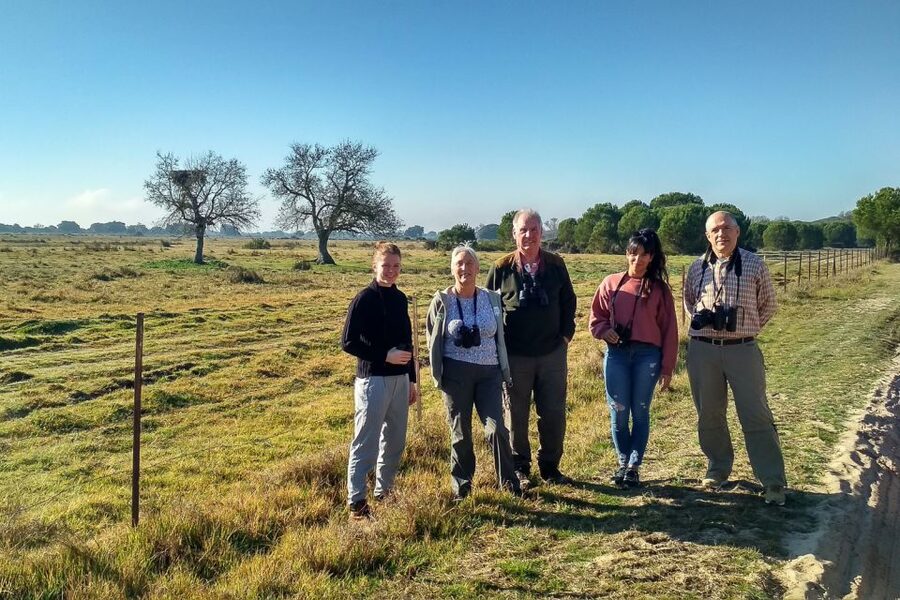
Between the visitor area and deeper park time, you pass a rice field known for Europe’s largest stork colony. It’s a very “ordinary-looking” landscape until you realize what it’s doing ecologically. Food, water, and safe nesting areas pull birds in, and then predators and scavengers follow.
For you, that means the tour is not just saying “spot wildlife.” It’s showing you why it’s there. When you understand that rice fields attract storks, and storks share the stage with herons and other wetland birds, you start noticing patterns instead of random luck.
This is also where having prismatics matters. Some guided setups include binoccular use more than others, but the tour at least provides the gear, so you don’t have to travel with your own. If you are a bird watcher, though, you’ll likely want to bring your own binoculars too, since you’ll get more comfortable using them early rather than waiting for a stop.
More Things to Do in Seville
- Seville: Royal Alcázar Entry Ticket★ 4.6 · 28,378 reviews
- Seville: Live Flamenco Dancing Show Ticket at the Theater★ 4.7 · 16,396 reviews
- Seville: Alcázar, Cathedral & Giralda Skip-the-Line Tour★ 4.8 · 11,525 reviews
El Rocío: chapel and observatory, plus a village pause
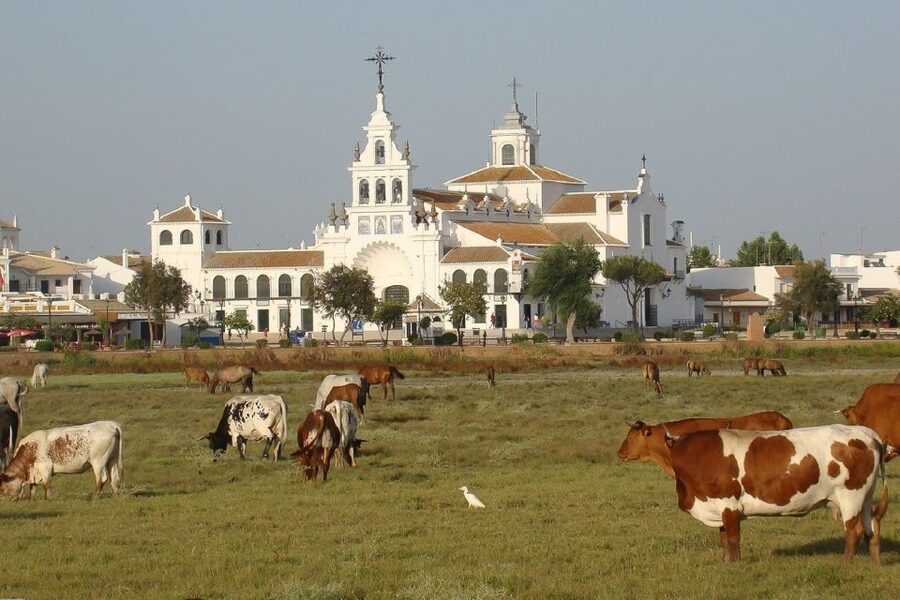
After the northern marsh touring, the day shifts to El Rocío, a famed village connected to Doñana. You’ll get a photo stop plus a guided look of about an hour, focused on the chapel and an observatory.
This is a smart break. Doñana can feel wide-open and “same-ish” if you’re only staring at habitats from a moving vehicle. El Rocío gives you a different kind of information: culture, landmarks, and how people live on the edge of a huge protected area.
A couple of guides got specific praise for how they handle this portion. People loved the knowledge and passion shared by guides like Diego and Patricia, and they also noted that extra time to wander around would be nice. So here’s my practical take: if El Rocío is a top priority for you, don’t expect a long slow stroll. It’s a focused village visit, then back out into nature.
La Rocina walking trails: the calmer side of the park
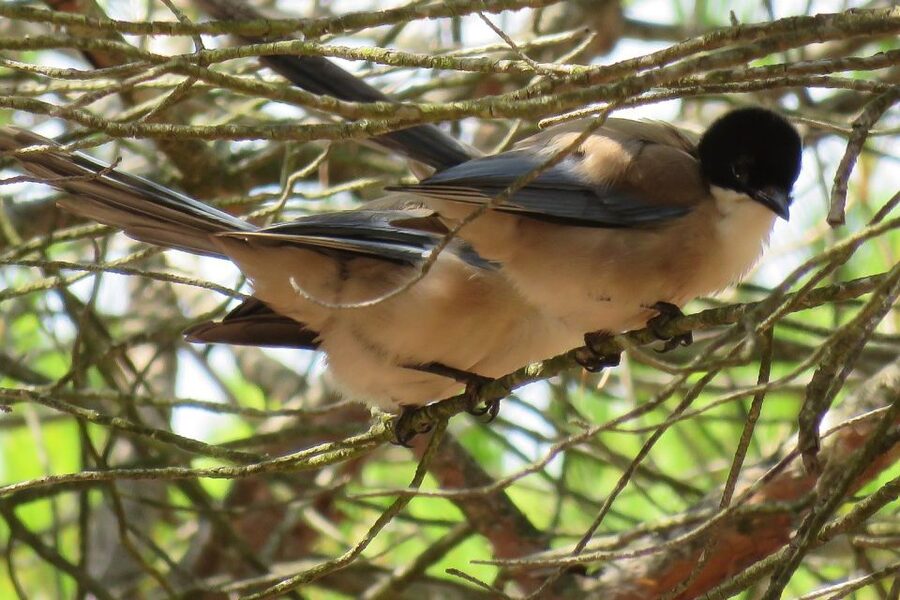
One of the most interesting parts is the walk along trails near the stream of La Rocina. This is where Doñana turns more intimate. When you’re on foot, you notice tiny shifts, water edges, and the bird activity that can be missed from the road.
Based on how the day is described, you’re not doing a huge trek, but you are getting time to see the park closer up. That matters because it changes your rhythm. Sitting in a van all morning can make the landscape blur. Walking a trail resets you.
Also, this is a good moment to switch from “big animal radar” to “bird and insect watching.” Several people pointed out seeing insects and birds along the journey, and La Rocina-type areas are exactly where that kind of observation pays off.
Matalascanas after lunch: beach time and the biggest dunes
After El Rocío, you’ll head toward Matalascanas, with a guided stretch of about two and a half hours. This is where you get the classic Doñana contrast: desert-like dunes mixed with Atlantic beach air.
The tour includes a chance to explore Spain’s largest dune system after lunch, plus a photo stop and guided time around Matalascanas. And yes, if you’re going in summer, you can hop into the Atlantic for a dip, because the day is designed to include that sort of break.
Then there’s the beach itself. One guide-led experience was described as a pristine beach with a true swim feel, and that’s exactly what you want after hours in marsh and pine. It turns the day into more than wildlife hunting. You get to enjoy the contrast.
Asperillo sunset: pine forest light, and why it’s not just pretty
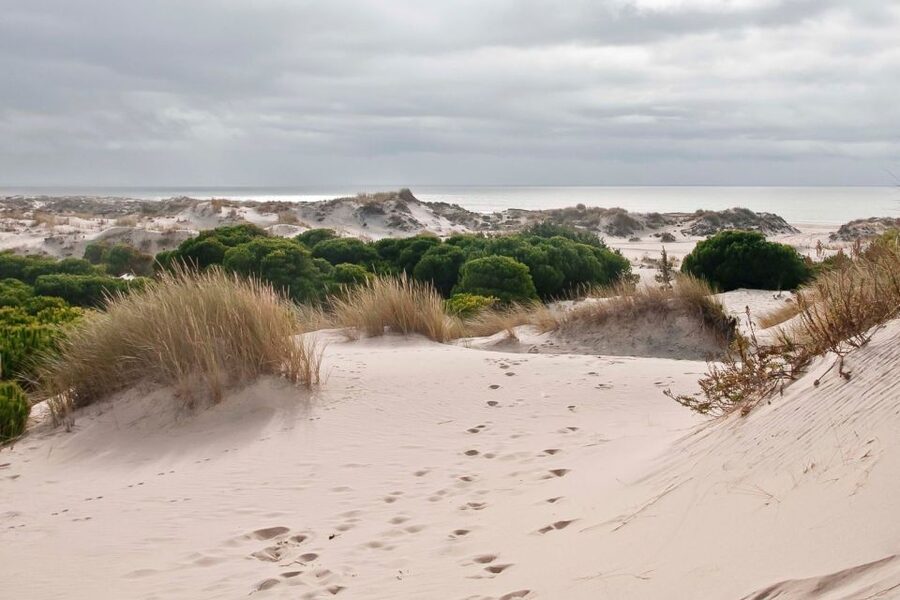
In the later part of the day, you take advantage of a beautiful sunset through the pine forest in the Asperillo area. This stop is more than a photo op. Light changes animal behavior and your ability to spot them, especially birds that move along edges.
It also gives the day a natural arc. The first half is for building habitat context and chasing sightings. The second half finishes with calmer viewing and that slow, end-of-day atmosphere.
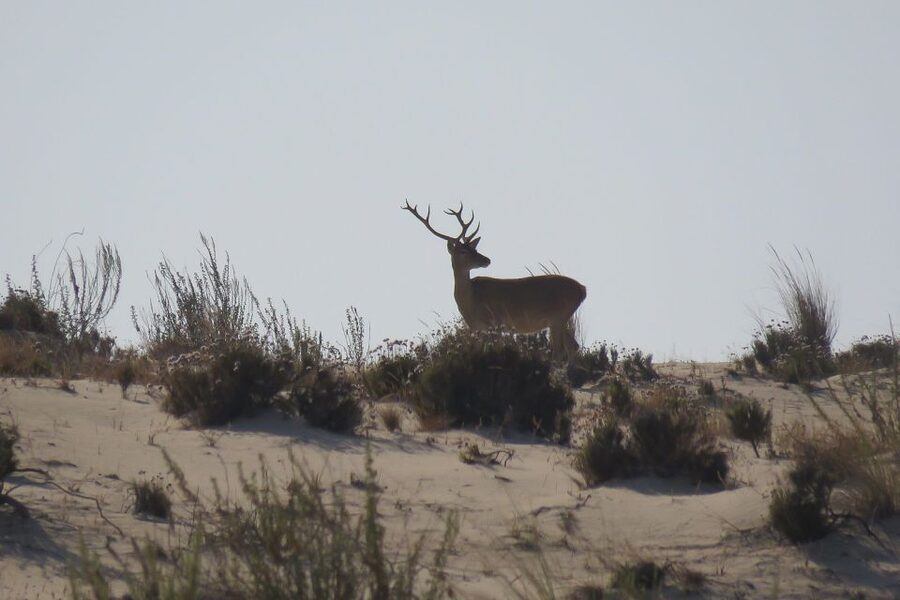
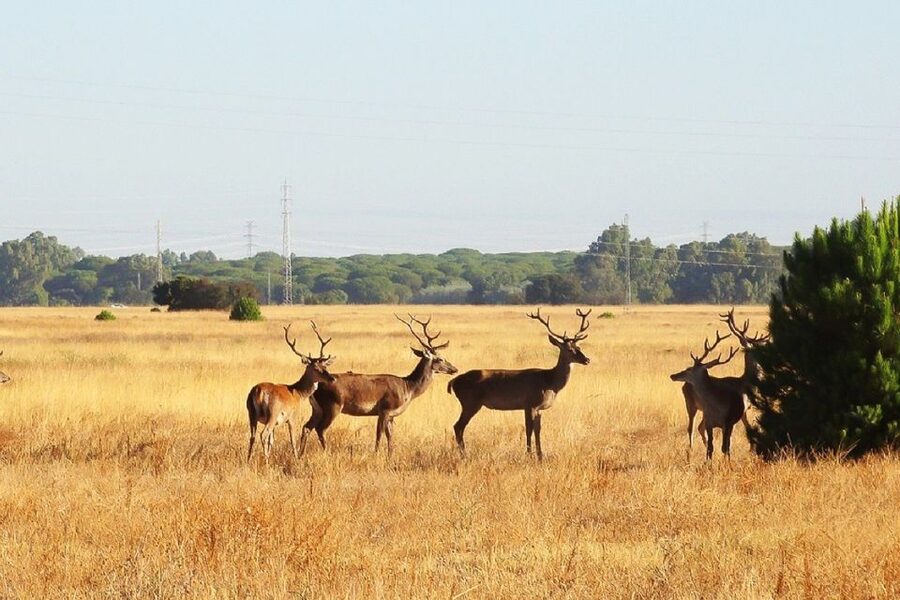
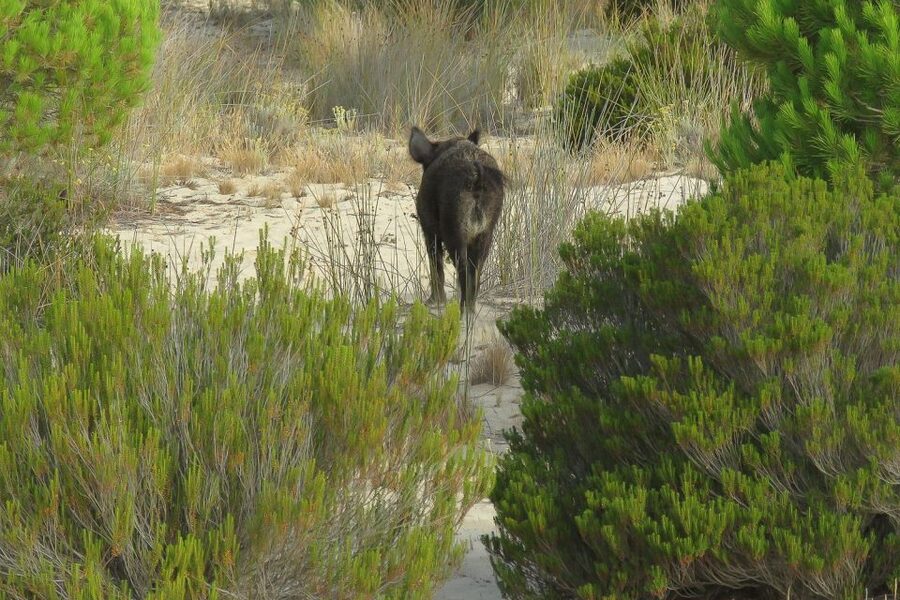
If you care about wildlife, you’ll want to stay alert here. A few people highlighted deer, wild boar, and even signs linked to lynx. Even when big cats do not show themselves, the environment still holds activity late in the day.
Wildlife odds: flamingos, eagles, and the lynx reality check
Let’s talk honestly about the big targets.
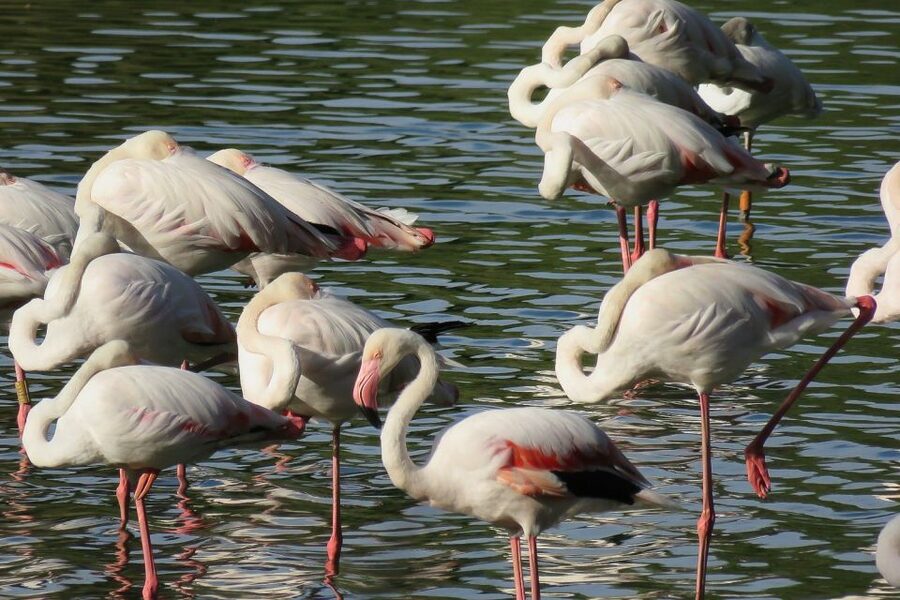
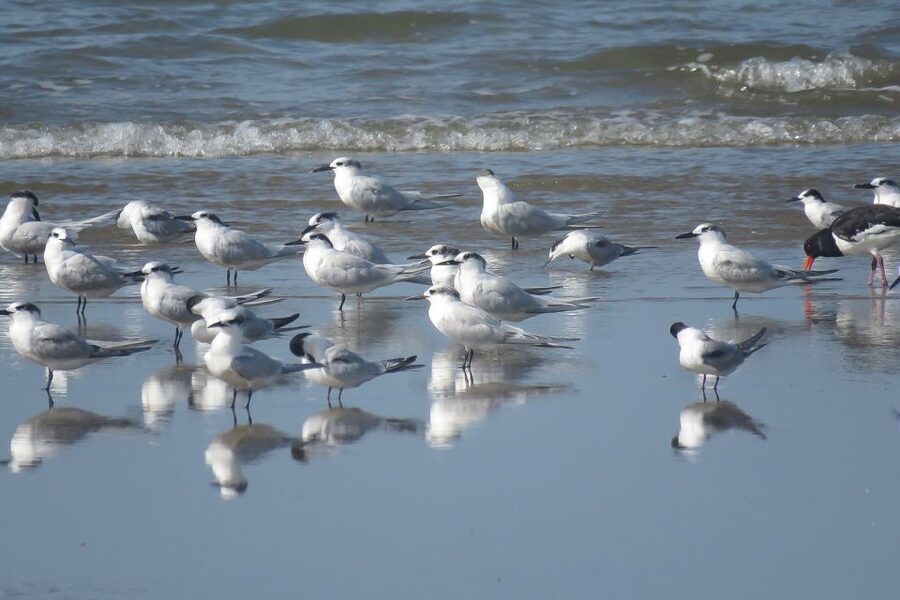
Flamingos and imperial eagles are on the wish list for a reason, and guides are often credited with going the extra mile to raise your odds. One example given was a guide ensuring flamingos were seen in a reserve portion when the day’s luck could have gone the other way. Another guide was praised for driving slowly and making detours to help everyone get views.
But lynx is different. The tour describes chances to spot large mammals, including lynx, yet you should treat lynx as a bonus, not a promise. There were also comments about seeing lynx pawprints instead of the animal itself. That’s still meaningful because it tells you you’re in the right habitat and the species is active, even if it stays hidden.
So my advice is to go for the whole spectrum, not just the headline. Deer, wild boar, and birds are far more reliable than a fleeting lynx sighting. If you can accept that, you’ll enjoy the day much more.
Birdwatching gear and how to use it without fuss
The tour includes prismatics, which helps if you don’t own binoculars. That said, the birding style depends on your guide and how the group moves.
A few people highlighted seeing an impressive number of bird species, including glossy ibis, blue heron, little egret, western egret, storks, flamingos, and raptors. One detailed list included birds like osprey and barn owl, and another mentioned around 70 species over the day.
Here’s how you can take advantage of that: keep your eyes on where water meets land. Marsh birds like edges. Then, when the guide stops, don’t rush. Give yourself time to scan. Birds often pop in and out of view.
Also, bring your own sunglasses and sun hat. One reason birding days feel harder than they look is glare. You want comfort so you can keep watching for long minutes.
Price and value: what you get for about $105
At $105 per person for a roughly 10-hour day from Seville, the value comes from three things you’d otherwise pay for separately: hotel pickup and drop-off, transportation, and a live guide.
Meals and drinks are not included. That’s typical, but it matters for how you plan your budget. Since lunch is part of the day, I’d treat snack and drink planning as part of your prep, not a last-minute scramble.
Also, this price becomes better if you pick the right match for yourself. If you love birds, want a guide to interpret habitats, and don’t want to deal with driving and navigation, the guide-led format is a win. If you want nonstop walking or you dislike vehicle time, you may feel the day is more “scenic safari” than hike.
Private or small-group options: when that choice matters
This tour offers shared experiences, with private or small groups also available. In plain terms, the smaller the group, the easier it is for the guide to get everyone in position for views.
Some people noted limits like the van being full, so if you’re sensitive to tight seating or want maximum flexibility for stopping quickly, the private setup is often worth considering.
Language options are also a big deal. The live guide can run in English, French, Italian, or Spanish. One practical detail: for a specific language, there’s a minimum group size of four, and there’s a possibility of cancellation after confirmation if the minimum is not met. If language is important to you, choose carefully when you book.
What to pack for Doñana, not just for Seville
This is a sun-and-dirt day, even when everything looks calm on the brochure. Bring comfortable shoes because you’ll have some walking on trails. Bring sunglasses, sunscreen, and a sun hat, especially for beach and dune time.
If you’re bird focused, consider extra gear. The tour provides prismatics, but your own binoculars can make the experience smoother, especially when birds are distant or when a guide wants everyone to scan systematically.
And one more practical note: pets are not allowed, so plan around that if you’re traveling with animals.
Best timing: when the day feels greener or more bird-heavy
You can’t fully control wildlife, but you can choose conditions. People specifically suggested spring as a better season for seeing more nature, while others recommended winter for lots of birds around nearby lakes.
One person also mentioned that in November the area felt greener with fewer crowds, like a quieter version of the same huge ecosystem. That lines up with how wetlands respond to seasons.
So if you’re flexible, think about what you want most:
- More bird activity, often tied to cooler months
- More overall “stuff” moving around, often tied to spring
- Beach and warm water, tied to summer trips
Who this day trip is for
This is a strong pick if you want an easy one-day window into one of Europe’s most famous natural areas, and you want your guide doing the work of habitat reading.
It’s especially good for:
- Birdwatchers who enjoy guided scanning and habitat logic
- People who want a taste of multiple Doñana zones in one day
- First-time visitors to Seville who don’t want to rent a car and figure it all out
It may be less ideal if:
- You want a long hike with big elevation or constant on-foot time
- You only care about one animal and can’t handle not seeing it
- You hate being in a vehicle for much of the day
Should you book this Doñana day trip from Seville?
If you’re choosing between doing Doñana on your own and taking a guided circuit, I’d book this style of tour. The combination of habitat coverage and guide-led wildlife searching is the core value, and it’s built for people who want to see more than just one viewpoint.
My simple decision rule: book it if birds, dunes, and a full-day nature reset from Seville sound like your kind of day. Skip it if you want a slow, mostly walking experience or you’re only interested in the one headline animal like lynx.
Either way, go with the mindset of odds and habitats, not guarantees. Doñana rewards patience, and with guides like José and Sergio working the stops, you’re setting yourself up for a seriously memorable day in the wild.
FAQ
How long is the Doñana National Park day trip from Seville?
The duration is 10 hours.
Does the tour include hotel pickup and drop-off in Seville?
Yes. Hotel pickup and drop-off are included.
What is included in the price?
Included: hotel pickup and drop-off, transportation, a guide, and prismatics. (Meals and drinks are not included.)
Are meals included during the trip?
No. Meals and drinks are not included.
What languages is the live guide available in?
The guide is available in English, French, Italian, and Spanish.
Is the tour only shared, or can I book a private experience?
You can choose between shared or private experience (including small groups).
Is there any age or child seating information?
Infant seats are available if requested in advance.
Is it allowed to bring pets?
No. Pets are not allowed.
What should I bring for the day?
Bring comfortable shoes, sunglasses, a sun hat, and sunscreen.
Latest Seville reviews into the ledger
National Parks, compared.

Teide National Park Sunset & Stargazing with Dinner (Star Safari)
Read our review →
Teide National Park Full-Day Tour with Pickup
Read our review →
Jávea: Cala Tango and San Antonio Nature Reserve Kayak Tour
Read our review →
Small Group Teide National Park Volcanic and Forest Wonders
Read our review →Browse the lists this tour appears in