
Reviewed · WALKING TOURS
Granada: Historic Center and Lower Albaicin Walking Tour
Alhambra photos start early. This Granada walking tour threads you through the historic center and down into the lower Albaicín, with a guide who turns key monuments into real stories about Islamic Granada and the Reconquista. You also get a standout Alhambra viewpoint from the Albaicín side, which feels like cheating because it is so close to the action.
What I love most is the way the guide connects the big-name sights to everyday Granada life. I especially liked stopping at places like the Corral del Carbón and the Alcaicería, then learning what they were for and why they mattered. Another strong point is the pacing: guides like Pablo, Jaime, and Anna made time for questions and kept things moving without turning the tour into a race.
One possible drawback is the walking effort. The lower Albaicín is charming, but it is also narrow and hilly, and the tour is not suitable for people with mobility impairments. If knees or stamina are an issue, plan on slow steps and a few breaks.
In This Review
- Key Takeaways
- Where You Meet and How This Walk Gets Moving Fast
- Historic Center Core: Corral del Carbón, the Alcaicería, and Market-Era Granada
- Plaza Bib Rambla: Giants Fountain and the City’s Social Center
- Church of Saint Ana, the Madraza, and the Granada That Educated Itself
- Cathedral Area and Royal Institutions: Royal High Court to Royal Chancillería
- Royal Jail Stop: Why the Tour Includes the Harder Parts
- Lower Albaicín: Narrow Streets, Moorish Memories, and the Alhambra View
- Guide Power: Pablo, Jaime, Anna, and the Extra Touches That Make It Feel Worth More
- Price and Value: What $16 Buys You in Granada
- Who Should Book This Granada Historic Center and Albaicín Tour
- Should You Book It?
- FAQ
- How long is the Granada Historic Center and Lower Albaicín walking tour?
- What is the price per person?
- Where do I meet the guide?
- What do you see on the tour?
- Do I get a viewpoint of the Alhambra?
- What language is the tour guide?
- What should I bring?
- Is the tour suitable for people with mobility impairments?
- Are there refunds if I cancel?
- Is it possible to reserve without paying right away?
Key Takeaways
- You meet at Isabel La Católica and Cristóbal Colón, right in the city core.
- Historic center highlights include Corral del Carbón, the Alcaicería, Plaza Bib Rambla, and major civic sites.
- Lower Albaicín streets help you feel the Moorish past through the way the neighborhood is laid out.
- A dedicated Alhambra viewpoint stop gives you great photo angles with less legwork than you might expect.
- Guides often add extras like a short flamenco explanation and useful follow-up suggestions.
Where You Meet and How This Walk Gets Moving Fast
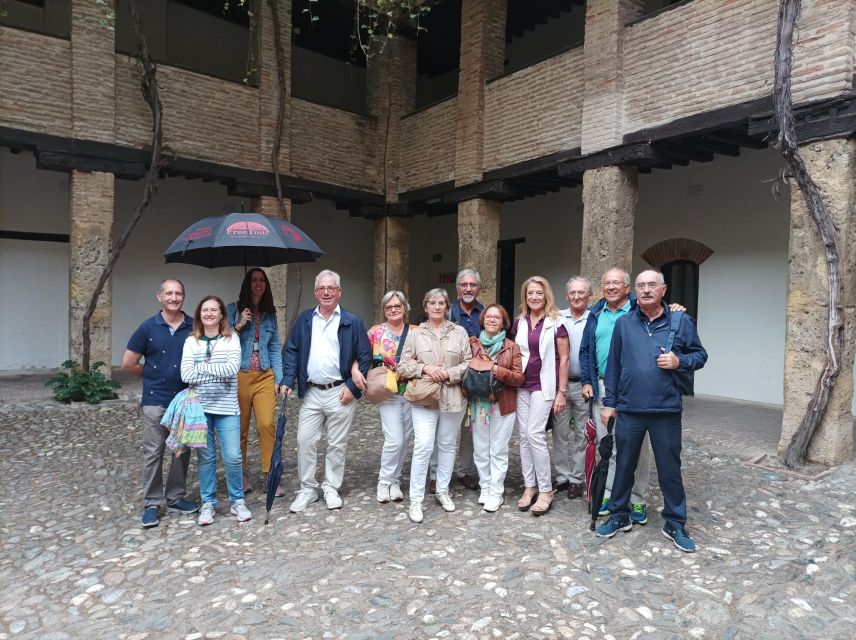
Meet your guide in the heart of Granada, in front of the monument to Isabel La Católica and Cristóbal Colón. That location matters because you start near the oldest, most walkable parts of town, so you are not burning time crossing the city just to get to the first real sight.
From there, the tour follows a simple idea: you hit major landmarks in a logical order, then you shift into the Albaicín neighborhood for the narrow-street experience and the best views. It is designed for first-time visitors who want context as they walk, not after the fact from guidebooks.
The tour runs about 2.5 hours, so you will cover a lot without it turning into an all-day marathon. This is also why I think it works well early in your visit. You leave knowing where things are, which makes your later self-guided exploring far less stressful.
More Spanish cities taken on foot:
- Granada: Albaicín and Sacromonte Guided Sunset Walking Tour
★ 4.9 · 2,962 reviews - Guided Walking Tour of the Alhambra in Granada
★ 4.0 · 863 reviews - Granada: Albaicín and Sacromonte Walking Tour
★ 4.5 · 665 reviews - Granada’s Hidden Treasures: Albayzin and Sacromonte Walking Tour
★ 4.5 · 575 reviews
Historic Center Core: Corral del Carbón, the Alcaicería, and Market-Era Granada
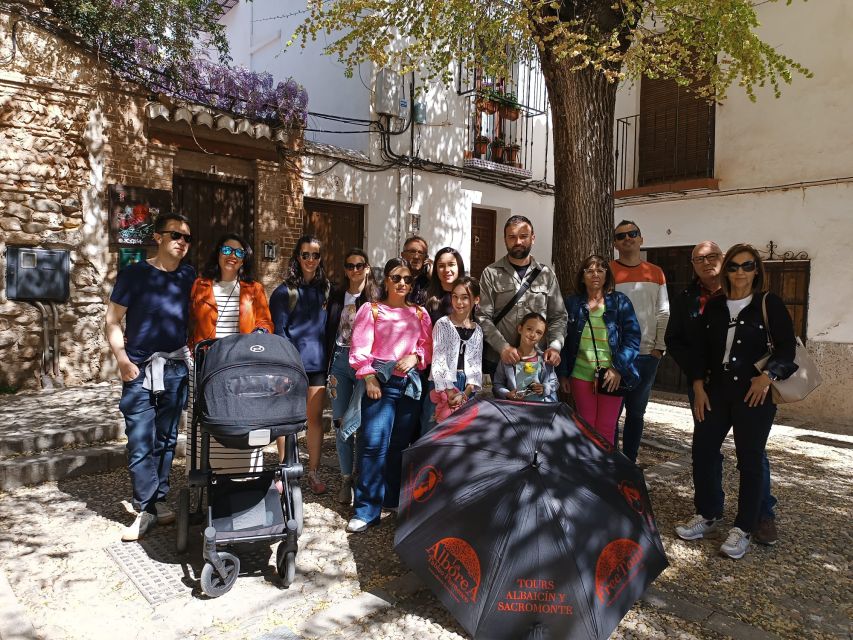
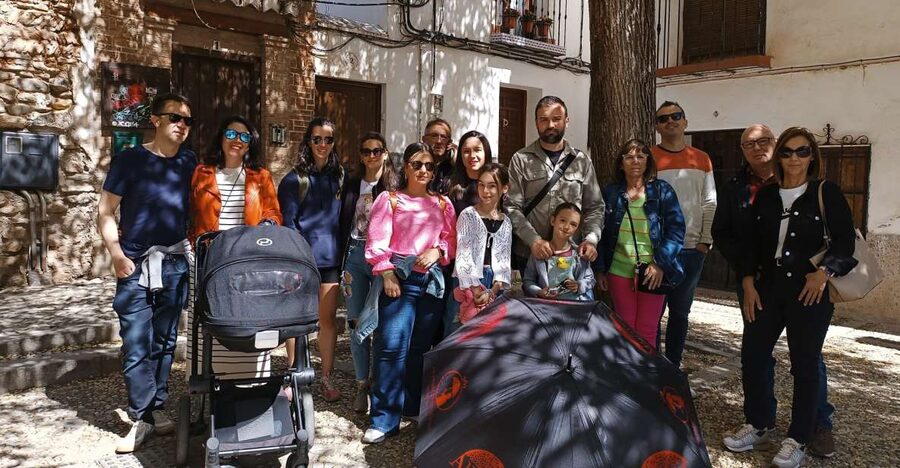
The historic center portion is where the tour gives you the best mental map of Granada. You are not just looking at stonework. You are learning how different parts of the city functioned, especially during Granada’s Islamic period and afterward.
One early highlight is Corral del Carbón, a site that connects to the commercial and storage life of the city. The guide’s job here is crucial: they explain what you are seeing, then tie it to how Granada worked when trade and crafts were central to the economy. It is one of those stops where the building clicks into place once you know its purpose.
Then you move toward the Alcaicería, Granada’s old silk market area. Even if you only catch a glimpse of the surrounding architecture, the tour frames it so you understand why the Alcaicería is a big deal. You get a sense of how Granada attracted wealth and talent, and how that influence left visible marks in the streets and buildings.
If you care about the practical side of history, this section is a win. It helps you spot patterns while you walk, like civic buildings versus commercial spaces, and religious sites versus institutions of power.
Plaza Bib Rambla: Giants Fountain and the City’s Social Center
Next comes Plaza Bib Rambla, and yes, the Giants Fountain is there, but the real value is the context. A big square like this is never just decorative. It is where people gathered, where the city’s public life happened, and where power and commerce brushed shoulders.
This is also one of the easiest places to reset your bearings. You get a clear sense of direction, then the tour continues into the stretch of buildings tied to Granada’s administration and education. If you have ever felt lost in a historic city, this is the kind of organized pause that helps you keep up.
The guide also uses these central landmarks to explain the multicultural layers of Granada. You will hear about Granada’s Islamic heritage and the political changes tied to the Reconquista, which concluded in Granada in 1492. Those dates can feel far away on a map, but hearing them in the actual city spaces makes them feel more real.
Church of Saint Ana, the Madraza, and the Granada That Educated Itself
As the tour shifts from the open square toward the surrounding monumental streets, you get stops like Church of Saint Ana and the Madraza. The Madraza in particular helps you understand that this was not only a city of monuments. It was a place that organized learning and scholarly life.
The way the guide explains these stops is what makes them worth your time. Instead of tossing architectural terms at you, they focus on the role a site played and why it still matters today. That is how you can tell the difference between a religious building, an educational institution, and a civic headquarters, even when you are just walking by.
This is also a good moment for questions. Multiple guides highlighted in past departures, including Pablo and Jaime, were the type to stay responsive when people asked about architecture, street design, or what you should look for next. If you like to ask random-but-valid questions, this tour usually feels friendly, not rigid.
A few more Granada verdicts worth reading
- Segway Your Way Through Granada’s History: The Ultimate Ride★ 5.0 · 334 reviews
- Albayzín y Sacromonte, Unesco Heritage Neighborhoods★ 5.0 · 250 reviews
- Granada: 3-hour Historical Tour by Segway★ 5.0 · 104 reviews
Cathedral Area and Royal Institutions: Royal High Court to Royal Chancillería
From there, the tour moves through major power centers, including the Royal High Court and the Royal Chancillería. These are the kinds of places where you can almost feel the machinery of government. They signal how the city organized law, authority, and administration once political control shifted.
Even if you are not a legal-history person, I think these stops work because the guide frames them in plain language. You learn what each institution did and how that connects back to the broader story of Granada’s transformation.
You also have a major religious centerpiece stop at the Cathedral area. The tour does not treat it as a standalone photo stop. It places it inside the larger arc of change across centuries, so you understand why these buildings sit where they do and why people cared about them.
Royal Jail Stop: Why the Tour Includes the Harder Parts
The walk also includes the Royal Jail, which is not the kind of stop you expect on every scenic city tour. I like that it is included because it rounds out the picture. Granada was not only culture and beauty. It was also governance, enforcement, and the systems that shaped daily life.
When a guide includes a stop like this, it usually means they want you to understand the city as a whole, not just the postcard view. It also helps you avoid the common mistake of leaving Granada with a one-note story.
If you prefer lighter vibes only, this part might feel heavier. But if you like history that includes the full human picture, it is a strong addition.
Lower Albaicín: Narrow Streets, Moorish Memories, and the Alhambra View
Now you get to the part people book for in the first place, the lower Albaicín. This neighborhood is defined by narrow streets and a layout that still echoes its Moorish past. You are walking through space that feels designed for foot travel and slow wandering, not cars and wide avenues.
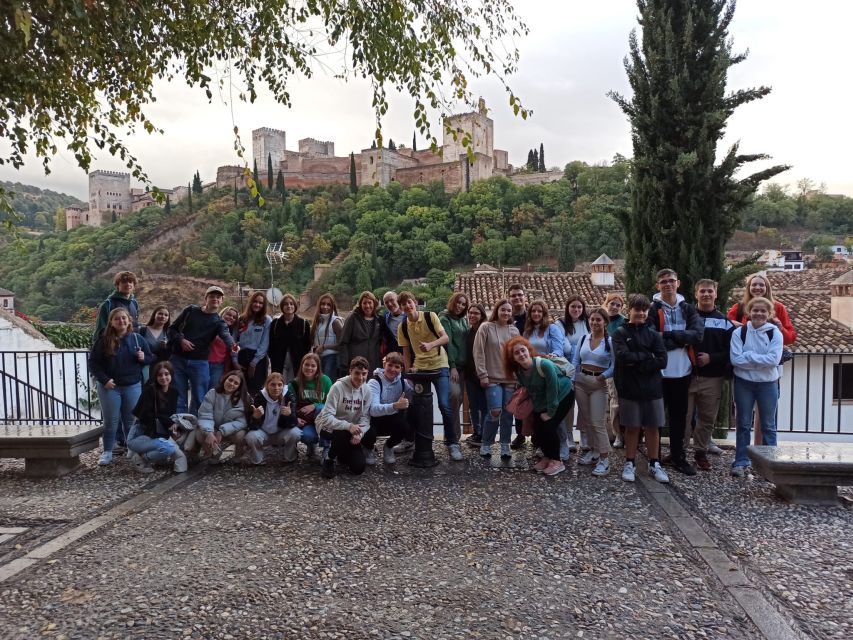
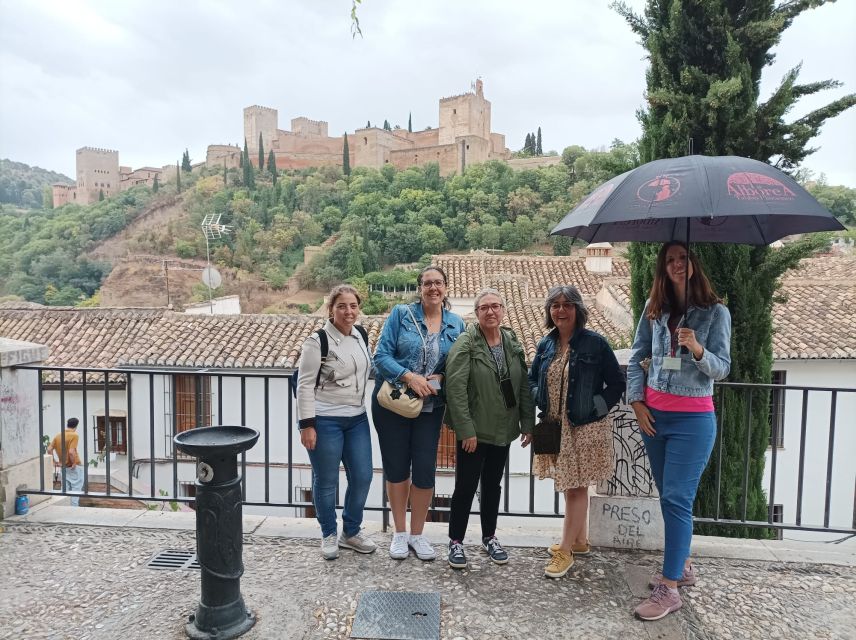
One of the highest-value moments is the viewpoint stop for the Alhambra. You get a photo angle that feels personal and close, the kind where you understand why the Alhambra dominates the city’s imagination. It also gives you a different perspective than what you might see from the monument crowds.
Just be honest with yourself about the walking. The Albaicín terrain includes slopes, and cobblestones can be a little tricky. Some visitors in past departures had health issues and needed to slow down, and guides were patient with breaks. So if you have knee or stamina concerns, bring a realistic pace and go slow. Your calves will survive, but only if you let them.
Guide Power: Pablo, Jaime, Anna, and the Extra Touches That Make It Feel Worth More
The biggest reason this tour earns strong ratings is the guide experience. Names that show up often include Pablo, Jaime, and Anna, and the consistent theme is how they mix storytelling, humor, and practical suggestions.
A few specifics that matter for your enjoyment:
- Guides were described as friendly and responsive, especially when asked questions.
- Many departures were organized well, with good stop points and comfort points on busy days.
- Some guides add small extras, like a peaceful interlude explaining flamenco, which connects Granada’s history to its living culture.
I also like that you do not just hear facts. You get recommendations for what to follow up on afterward. That turns the tour into a tool you can use, not just a standalone hour count.
One fair caution: in at least one case, an English speaker found the guide harder to understand due to accent. If you know you are sensitive to accent clarity, you might want to pick a departure time when you feel freshest for listening.
Price and Value: What $16 Buys You in Granada
At around $16 per person for a 2.5-hour guided walk, the value is hard to ignore. You are paying for a trained guide to connect multiple stops you might otherwise chase separately. Instead of jumping from site to site with vague notes, you get an organized story that links Islamic heritage, civic institutions, and the post-1492 shifts.
This is also good value because you are covering a dense area. Granada’s center is built for walking, but it is easy to miss the “why” without guidance. The tour gives you that why at budget-friendly prices.
Important detail: the tour includes the guide and the walking tour, but there is no indication in the provided info that it includes paid museum admissions. So think of it as orientation plus context. That is exactly where the price feels fair.
Who Should Book This Granada Historic Center and Albaicín Tour
This tour is ideal if you want:
- A first-day overview with real context for key landmarks
- A mix of historic center monuments and a neighborhood feel in the Albaicín
- A planned Alhambra viewpoint rather than hoping you stumble onto the right angle
It is also a solid choice if you enjoy Q and A during the walk. Several guides were praised for answering questions about cobblestones, architecture, and what to do next.
Skip it if you have mobility impairments, since it is not suitable. If you have mild mobility limitations, you might still want to consider it with caution, but you should be ready for the uphill feel and tight street sections.
Should You Book It?
Yes, I would book it if you want to understand Granada quickly and walk away with a clearer map of what matters. For the money, you get a lot of important stops, including iconic names like Corral del Carbón, the Alcaicería, Plaza Bib Rambla, and the Alhambra viewpoint from the Albaicín side.
It is also the kind of tour where the guide can make or break your experience, and here you have plenty of evidence of guides like Pablo, Jaime, and Anna delivering engaging explanations and handling questions well. If you can manage the walking, this is a smart way to start your trip and make the rest of your Granada days more fun.
FAQ
How long is the Granada Historic Center and Lower Albaicín walking tour?
It lasts about 2.5 hours.
What is the price per person?
The price is $16 per person.
Where do I meet the guide?
Meet in front of the monument of Isabel La Católica and Cristobal Colón.
What do you see on the tour?
You walk through Granada’s historic center and the lower Albaicín, with stops that can include Corral del Carbón, the Alcaicería, Plaza Bib Rambla (including the Giants Fountain), Church of Saint Ana, the Royal High Court, the Madraza, the Cathedral, the Royal Chancillería, the Royal Jail, and a viewpoint of the Alhambra.
Do I get a viewpoint of the Alhambra?
Yes. The tour includes a stop at a stunning viewpoint of the Alhambra for photos.
What language is the tour guide?
The tour is available in Spanish and English.
What should I bring?
Wear comfortable shoes.
Is the tour suitable for people with mobility impairments?
No, it is not suitable for people with mobility impairments.
Are there refunds if I cancel?
Yes. The tour offers free cancellation up to 24 hours in advance for a full refund.
Is it possible to reserve without paying right away?
Yes. You can reserve now and pay later.
Latest Granada reviews into the ledger




Walking Tours, compared.
Barcelona Tapas and Wine Experience Small-Group Walking Tour
Read our review →
Tapas Walking Tour with Food, Wine, and History
Read our review →
Madrid Tapas & Wine Tasting Walking Tour – Small Group Local Bars
Read our review →
Albaicín and Sacromonte Guided Sunset Walking Tour
Read our review →
Toledo Tour & Vineyard Walk with Wine Tasting from Madrid
Read our review →
Madrid Walking Tour from Puerta del Sol to Retiro Park
Read our review →

Barcelona Tapas Walking Tour: Food, Wine & History
Read our review →Browse the lists this tour appears in