
Reviewed · MUSEUMS
Guided Tour of the Factory + Anchovy Museum
Santoña tells its story in salt, metal, and sirens. This guided combo tour pairs live factory production (when running) with the Santoña Anchovy Museum experience, so you see how Cantabrian anchovies go from workbench to your plate. One thing to consider: the live portion only runs in the morning on weekdays, based on the artisans’ working calendar.
I really like two parts of this stop. First, the hands-on feel of the cannery visit and what you can watch as the process unfolds. Second, the museum’s all-senses approach, from the seabed setting to the tasting at the end. If you do not speak Spanish, you may find it harder to follow the explanations since the guide runs in Spanish only.
In This Review
- Key highlights to plan around
- Santoña anchovies, explained by people who make them
- Finding Ana María Anchovy Art Gallery at C. Baldomero Villegas 38
- Live factory production, only Mon to Fri morning slots
- The museum built like the seabed, with sirens and a shipwreck
- Old tools, modern guidance: what you see on the museum path
- The projection room and the octavillo craft demonstration
- Tastings plus a wine pintxo, the payoff at the end
- Buying conservas after the tour, how to spend wisely
- Language and pacing: the one possible drawback to plan for
- Price and value: why $8 is a strong deal here
- Who should book this and who should think twice
- Should you book the Factory + Anchovy Museum tour?
- FAQ
- How long is the guided experience?
- When is the live factory visit available?
- Where do we meet for the tour?
- Is there tasting during the tour?
- What language is the tour guide?
- Is the tour wheelchair accessible?
Key highlights to plan around
- Live factory visit (Mon to Fri mornings only): the live production portion depends on the working schedule.
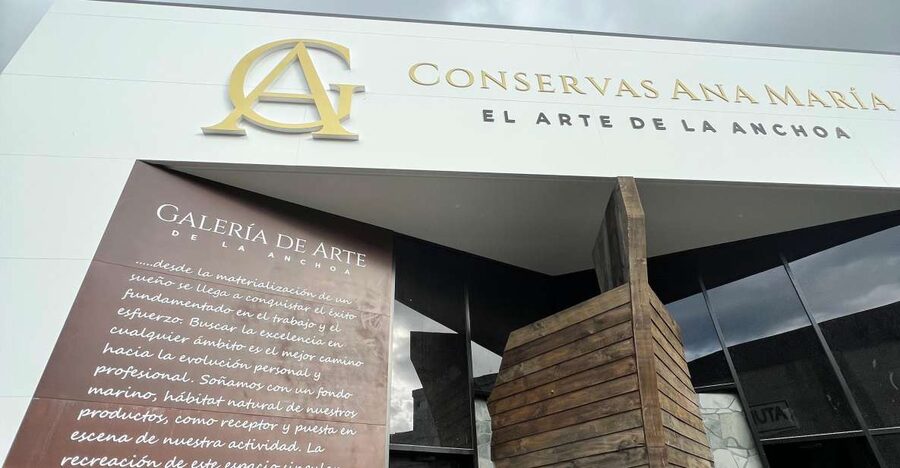
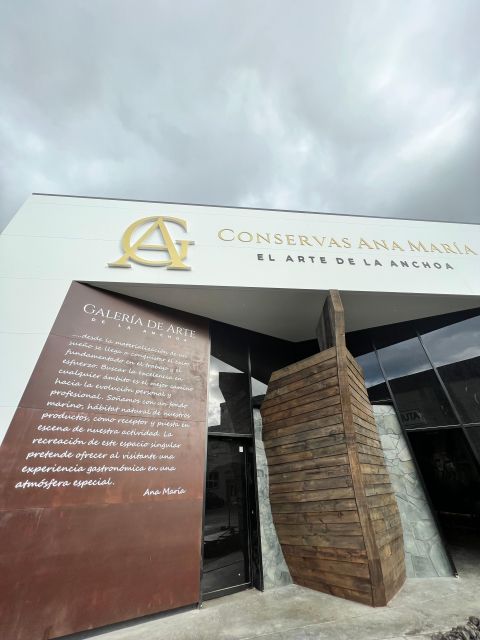
- Meet at Ana María Canned Food Anchovy Art Gallery: the tour starts at the entrance of this Santoña museum site.
- A sensory museum, built like the seabed: you can hear, see, smell, taste, and touch your way through the story.
- Sirens from the Santoña fish market set the tone: the tour begins with an auction-like sound marked by three sirens.
- Video + live craft demo: you’ll see a process film and watch an octavillo tin container being made.
- Included tastings and a wine pintxo: the experience ends with Conservas Ana María tastings plus an anchovy and wine pintxo.
Santoña anchovies, explained by people who make them
Cantabria’s coastline is not just scenery in this part of Spain. It is work, rhythm, and tradition. This tour keeps that in the foreground by focusing on one product, the anchovy, and the human steps needed to preserve it.
You start with the culture of the Santoña fish market. In the museum, the tour begins with the sound of an auction, marked by three sirens that indicate the fish is going to be sold. It is a smart start because it reminds you that this is not a museum project about food, it is tied to real daily commerce and real timing.
Two big reasons I think this works well for you: the visit is short, and it is structured. Even in about 45 minutes, you get production context plus a tasting finish. That is excellent value for $8, especially if you like learning how a specialty food is actually made.
Finding Ana María Anchovy Art Gallery at C. Baldomero Villegas 38
The meeting point is at C. Baldomero Villegas, 38, at the entrance of the Ana María Canned Food Anchovy Art Gallery. This is also known as the Santoña Anchovy Museum, so you can anchor your search on that name.
Here’s a practical note that matters on foot. Sometimes street numbering can be inconsistent or easy to miss. So I’d recommend arriving a touch early, and using the museum name as your main target rather than relying only on the number on the wall.
This matters because the flow depends on your time slot. The tour can shift slightly depending on whether the live factory portion is available that day, and the guide wants everyone together at the start.
Live factory production, only Mon to Fri morning slots
If you catch the live version, this is the part you will remember. The tour’s live factory visit is only available in the morning, Monday to Friday. The time mentioned is 12:30 p.m., and it also says it is subject to the artisans’ working calendar.
That means you should plan like this:
- Check your day carefully. Weekends may not have the live production step.
- Expect the schedule to follow the workshop’s actual operations, not a fixed tourist fantasy.
What you’ll get when it runs is a guided look at cannery work and the observation of the anchovy or bonito production process. You are not just hearing a lecture. You are watching the steps that lead into preservation.
Even without getting into technical details, the factory portion tells you something important: these products take effort long before they ever reach a shelf. The tours’ structure helps you connect the dots later in the museum, where the story is told through tools, a video, and hands-on craft work.
The museum built like the seabed, with sirens and a shipwreck
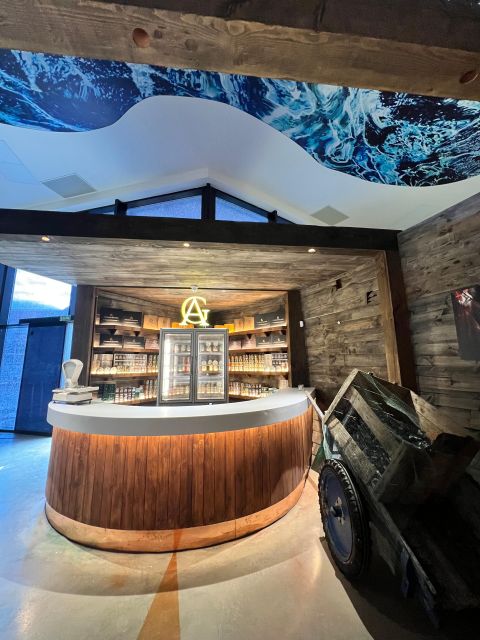
After the factory visit (when included for your slot), the group heads to the museum. The museum is designed as a seabed-themed building, and it leans hard into the idea that you learn better with more than sight.
You are meant to use multiple senses during the experience. You can hear, see, smell, taste, and touch as you move through the exhibits. That is not just a gimmick. In a food story like this, smell and touch help you understand preservation and handling, not only the final product.
One of the most distinctive details is the setting. The building recreates the seabed, and you can even see the remains of a stranded ship. If you like atmosphere, this is the kind of place where you feel like you are walking through the ocean’s story rather than passing through display cases.
Then the tour begins in a dramatic way. You listen to the sound of an auction tied to the Santoña fish market. Those three sirens are a key part of the opening, because they mark the moment when fish is going to be sold. It helps you picture the timing pressure behind the whole process.
Old tools, modern guidance: what you see on the museum path
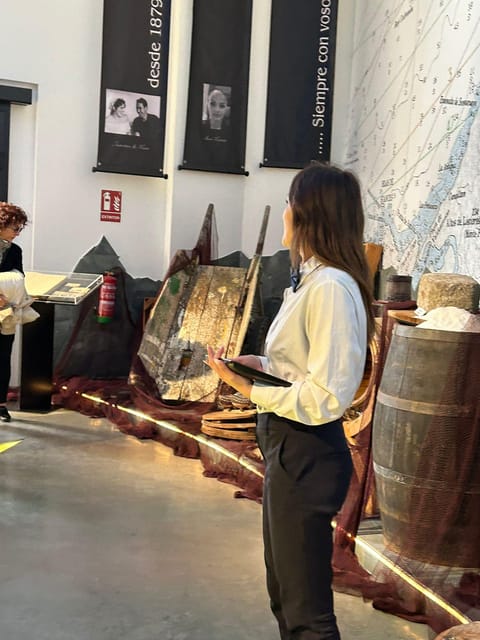
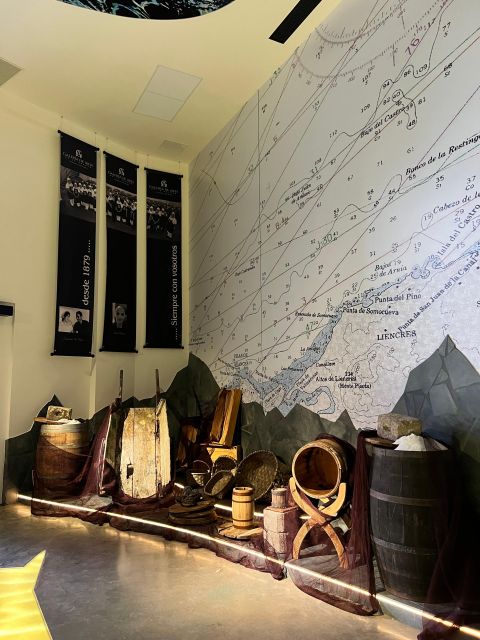
Once you move into the seabed exhibition area, you’ll encounter utensils from the last century. These are tied to fishing and preserving anchovies from the Cantabrian Sea.
This is where the museum does useful work for you. It takes something that can feel abstract, a jar of anchovies, and grounds it in tools and routines people used before modern shortcuts. Even if you do not speak deep food-tech vocabulary, you can still grasp the idea: this was practical work done with the gear available at the time.
The museum also avoids making it only about nostalgia. It includes a step-by-step explanation of the overall process through other formats, which brings us to the next room.
The projection room and the octavillo craft demonstration
After the seabed exhibits, you move into a projection room. Here, you’ll watch a video that explains the process anchovies follow, starting from fishing at sea and ending with their preservation in a jar or can.
This video piece is helpful because it organizes the story. Your brain stops being a collection of scenes and becomes a sequence. That makes it easier to interpret what you saw in the factory (if your morning slot includes it) and what you’re about to taste.
Then comes a live craft moment. A craftswoman demonstrates how an octavillo is made. An octavillo is the tin container used to preserve anchovies.
I like this segment because it is tangible. You can picture the container not as packaging, but as a functional part of preservation. And since you’re watching someone create the item live, it feels less like a static display and more like a living skill.
Tastings plus a wine pintxo, the payoff at the end
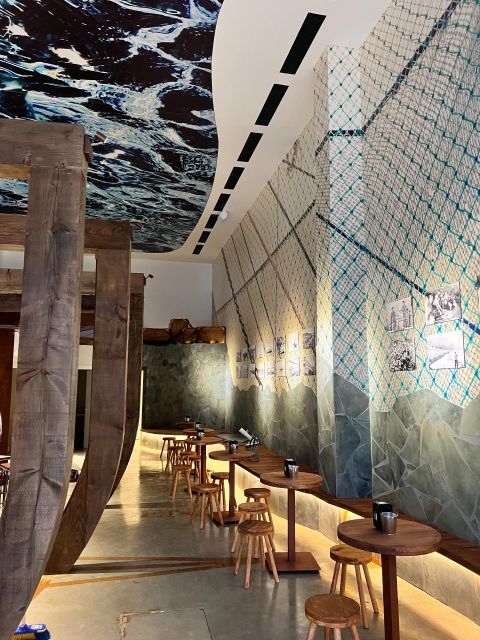
The tour ends with a tasting from Conservas Ana María. This includes the anchovies you came for, and it is presented as the perfect finishing note to everything you just saw.
You should also know that an anchovy and wine pintxo is included as part of the guided experience. So you get a small food pairing as well as a focused tasting.
What I think you should do during the tastings:
- Pay attention to how the guide frames the product. They connect the tasting back to the steps you watched.
- Keep your expectations realistic. This is a tasting in a short tour, not a long multi-course meal.
It helps that the company’s anchovies have earned national and international prizes for best anchovy in the Cantabrian Sea in recent years. You do not need to treat that as marketing noise. It tells you the tasting is backed by real competition and real standards.
Buying conservas after the tour, how to spend wisely
A major perk is that you can purchase products at the end of your visit. That matters because it turns the experience into something you can take home, not just photos and memories.
But you still want to buy smart. A tiny rule that saves money and stress: check what you can carry comfortably on your route. Conservas are food, so storage and transport are your reality.
Also, use the story you learned. If you understand the process, you can make choices more confidently. For example, if a product is presented in the same style you saw in the factory steps and the museum explanations, you’ll likely feel better about your purchase because it matches what the tour emphasized.
Language and pacing: the one possible drawback to plan for
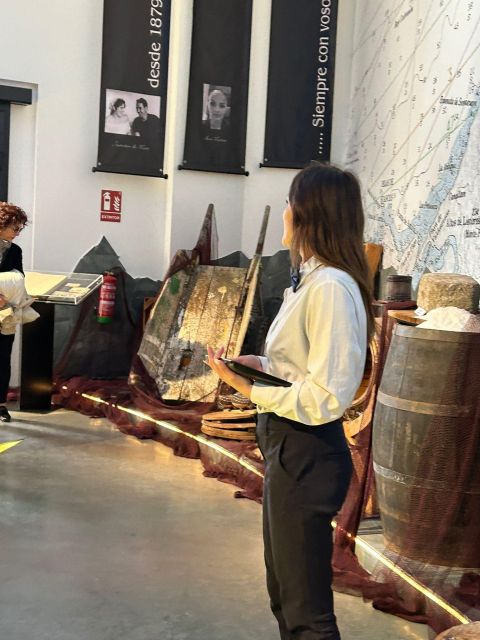
The guide is Spanish. That is stated clearly, and it is the biggest practical constraint.
If your Spanish is limited, you can still enjoy the sights and the live craft work. But you might miss some of the finer explanations. If you want your tour experience to be more than a visual walk, consider brushing up on food basics in Spanish or pairing this with another English-friendly stop nearby.
Pacing is also something to factor in. The overall duration is listed as 45 minutes. At the same time, the museum visit inside the description is noted as lasting approximately 1 hour. In real life, that difference usually comes down to how quickly your group moves and how your time slot runs. The takeaway for you: plan for a quick but dense visit.
Price and value: why $8 is a strong deal here
At about $8 per person for 45 minutes, this is priced like a practical local experience, not a premium themed show. And you’re not paying only for entry to a museum.
You get:
- A guided cannery visit when the live factory portion is available for your time slot.
- A tasting of Conservas Ana María anchovies.
- An anchovy and wine pintxo included in the experience.
- The museum’s structured explanations, including a video and a live octavillo-making demo.
- The option to shop after learning the process.
For many travelers, food tours fail because they are either too long or too expensive, so you end up skipping the tasting. Here, the timing and cost are aligned. You can fit it into a day in Santoña without it eating your schedule.
If you like value, this one makes sense because the learning is built into the ticket price through multiple formats: guided talk, live production observation (when available), sensory exhibits, and food at the end.
Who should book this and who should think twice
This is a great fit if:
- You enjoy practical food history and want to connect a label to real steps.
- You like short tours with a tasting payoff.
- You want a sensory museum experience, not just a quiet slideshow.
It may be less ideal if:
- You do not speak Spanish and want every part of the explanation. The guide runs in Spanish only.
- You are counting on the live factory production every time. The live visit is only available in the morning Monday to Friday and depends on working schedules.
On the good news side, it is wheelchair accessible. So if mobility is a concern, this is worth considering.
Should you book the Factory + Anchovy Museum tour?
Yes, I think you should book it if you’re in Santoña and you want a fast, focused look at anchovy making plus a real tasting. The price is hard to beat, and the museum setting gives you atmosphere right away, especially with the seabed theme and the siren-style opening.
My main decision tip for you is scheduling. If live factory production matters most, aim for the morning Monday to Friday slot at 12:30 p.m., and remember it is subject to the artisans’ working calendar. If your timing is flexible and you can’t guarantee the live factory visit, the museum portion and tasting still make the tour worthwhile because they are the core of the story.
FAQ
How long is the guided experience?
The duration is listed as 45 minutes.
When is the live factory visit available?
The live visit to the factory is only available in the morning, from Monday to Friday, at 12:30 p.m., and it is subject to the working calendar.
Where do we meet for the tour?
You meet at the entrance to the Ana María Canned Food Anchovy Art Gallery, located at C. Baldomero Villegas, 38.
Is there tasting during the tour?
Yes. The experience ends with a tasting of anchovies from Conservas Ana María, and an anchovy and wine pintxo are included.
What language is the tour guide?
The live tour guide speaks Spanish.
Is the tour wheelchair accessible?
Yes, it is listed as wheelchair accessible.
Paint & Armour
- Madrid: Prado Museum Entry Ticket★ 4.6 · 20,699 reviews
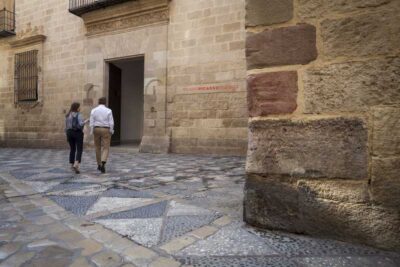
- Málaga: Museo Picasso Málaga Entry Ticket★ 4.4 · 11,138 reviews
- Barcelona: FC Barcelona Museum “Barça Immersive Tour” Ticket★ 4.4 · 10,944 reviews
- Madrid: Reina Sofía Museum Entrance Ticket★ 4.5 · 8,788 reviews
- Barcelona: Park Güell and Gaudí House Museum Entry Ticket★ 4.5 · 6,326 reviews
Museums, compared.
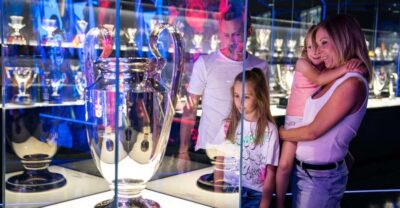
FC Barcelona Museum “Barça Immersive Tour” Ticket
Read our review →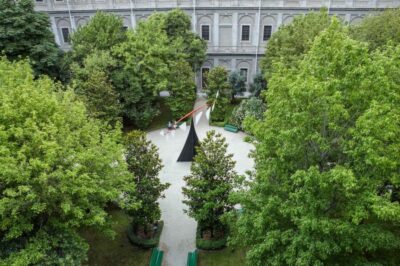
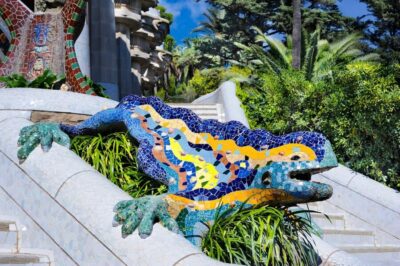
Park Güell and Gaudí House Museum Entry Ticket
Read our review →
Puro Flamenco Show with Optional Museum Ticket
Read our review →
Moco Museum Barcelona: Modern & Contemporary Art
Read our review →Browse the lists this tour appears in