
Reviewed · ALHAMBRA TICKETS & TOURS
Guided visit to the Alhambra, Nasrid Palaces and Generalife
Granada hits hard when you walk inside the Alhambra. This guided visit strings together the Nasrid Palaces and Generalife so you see the key spaces and understand what you are looking at, from stucco craft to garden water systems. I love how the route is built around specific palaces and patios, not random wandering, and I also like the clear, site-by-site explanations that help the place make sense fast. One possible drawback: it is not recommended for people with reduced mobility, because you are doing real walking through a historic complex.
What makes this experience feel especially worthwhile is that you get a tight 3-hour plan that still covers major highlights, including scenic viewpoints from the Alcazaba and the famous Palace of the Lions. The guide style can make or break this kind of visit, and the strong feedback here points to guides who explain details clearly and stay attentive, which matters when you are trying to follow motifs, rooms, and changing cultural influences. If you are visiting with someone who hates walking uphill or expects fully accessible paths, plan extra care.
In This Review
- Key moments that make this tour worth it
- Seeing the Alhambra faster, and better, with a guided route
- Nasrid Palaces: the rooms, patios, and craft clues that make it click
- Comares Palace and Mexuar, the admin and the ambience
- Palace of the Lions and the rooms beside the fountain
- Partal area and Torre de las Damas
- Alcazaba: defensive design plus panoramic payoff
- Jardín de los Adarves and Puerta de las Armas
- Palace of Carlos V: why this 16th-century building belongs in the story
- Calle Real de la Alhambra: the public street that connects cultures
- Ruins of the Palacio de los Abencerrajes
- Medina workshop ruins and the making of decoration
- Generalife on Cerro del Sol: orchards, labyrinth gardens, and palace patios
- Generalife Palace and the palace-to-city connection
- Patio de Polo, Patio de la Guardia, and Patio de la Acequia
- Patio de la Sultana and the final exit
- How the 3-hour timing works, and what it feels like on your feet
- Price and ticket value: what $66.42 gets you
- Who this Alhambra and Generalife tour is best for
- A quick note on guides and reliability
- Should you book this guided Alhambra and Generalife visit?
- FAQ
- How long is the Alhambra, Nasrid Palaces, and Generalife guided visit?
- Is this tour offered in English?
- About how many people are in the group?
- What admissions are included?
- Where do I meet, and where does it end?
- Can I change or get a refund if my plans change?
Key moments that make this tour worth it
- Nasrid Palaces stop-by-stop clarity: Comares Palace, Mexuar, Patio de los Arrayanes, Comares Tower, Palace of the Lions, and more.
- Craft details you can actually see: stucco construction techniques and preserved wood ceiling methods in the Throne Room area.
- Alcazaba for big views: you climb up to Torre de la Vela for panorama over Granada, Albaicín, and the Vega de Granada.
- Generalife gardens with a purpose: orchards on Cerro del Sol plus the Christian labyrinth-style garden areas and palace patios.
- A city layout you can walk: Calle Real de la Alhambra connects public spaces, Christian modifications, and the Medina workshop ruins.
Seeing the Alhambra faster, and better, with a guided route
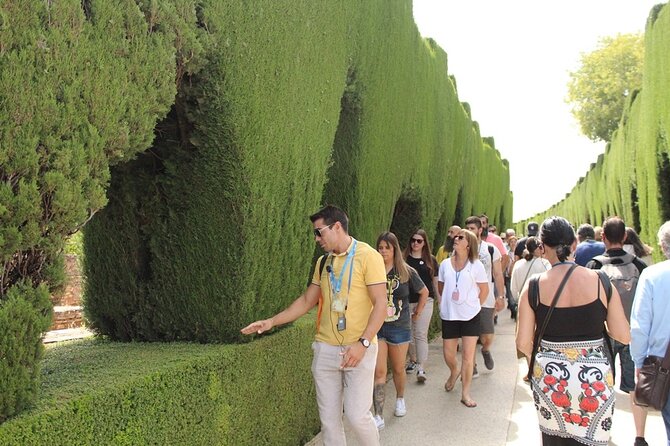
The Alhambra is stunning, but it is also easy to feel overwhelmed. The complex is huge, the entrances can be confusing, and the details move fast once you are inside. This guided visit fixes that by guiding you through a focused loop that hits the places people actually photograph, while also explaining what is going on behind the scenes.
You get a balanced mix of palace rooms, outdoor courtyards, military space, and garden design. That matters because the Alhambra was not just a pretty building. It was a whole functioning palatine city with administration, defenses, craft spaces, and water management. In about 3 hours, you get enough structure to turn your first-time impressions into a clear mental map you can carry even after you leave.
The group is capped at 30 travelers, which helps you move without feeling like a stampede. And because it is offered in English, you are not stuck doing interpretive guesswork for key rooms where the explanation truly helps.
More paths into the Alhambra:
- Granada: Alhambra & Nasrid Palaces Tour with Tickets
★ 4.7 · 19,801 reviews - Granada: Alhambra and Nasrid Palaces Entry Ticket
★ 4.6 · 15,130 reviews - Granada: Alhambra & Generalife Fast-Track Guided Tour
★ 4.7 · 8,313 reviews - Granada: Alhambra & Gardens Tour w/Nasrid Palaces Option
★ 4.2 · 7,022 reviews
Nasrid Palaces: the rooms, patios, and craft clues that make it click
This is the heart of the experience, and it is set up to be memorable in a practical way. You start with the Nasrid Palaces, and the tour walks you through the spaces in the order that helps you understand how the royal complex worked.
Comares Palace and Mexuar, the admin and the ambience
First up is the Comares Palace, including the administrative area called Mexuar. Even if you only half-pay attention, the change from everyday function to ceremonial grandeur is visible. Then you move to Patio de los Arrayanes, known for its porticos and pool. When the guide points out what you are seeing, the patio stops being only a pretty picture. It becomes a clue to how the Nasrid court used shade, water, and symmetry to shape mood.
You also reach the Comares Tower, where the tour highlights the Throne Room area. This is where the craft details matter. The guide explains the stucco construction techniques and the wood techniques used to create the original ceiling, and notes that parts of that ceiling work are still preserved. That kind of information is not academic. It helps you notice why the surfaces feel so precise and why the room reads as both light and architectural, not heavy and random.
Palace of the Lions and the rooms beside the fountain
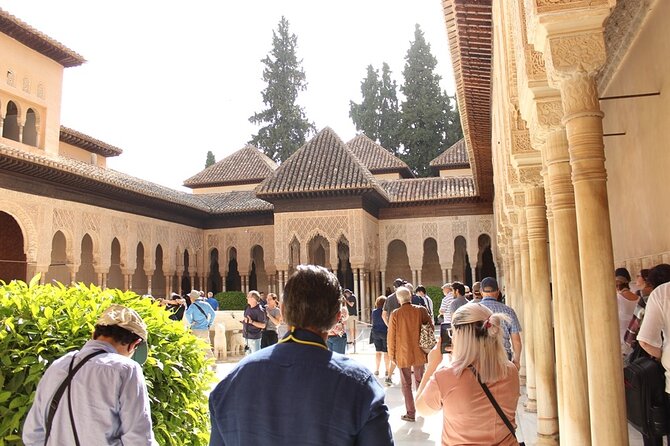
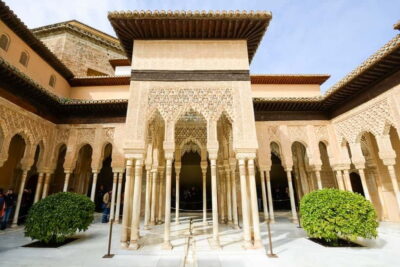
Next is the Palace of the Lions, described as a majestic work of Sultan Mohammed V. The focus naturally lands on the patio with the famous fountain. But the tour does not treat that fountain as the whole story. You continue into annexed rooms, including the Room of Two Sisters and the Room of the Kings.
This is a good moment to slow down mentally. The Alhambra can feel like patterns piled on patterns, so it helps to know what rooms sit beside what and why the space changes. The guide’s run-through helps you spot how decorative systems connect to room identity, instead of seeing everything as one giant blur.
More Things to Do in Granada
- Granada: Alhambra Entry Ticket with Audio Guide★ 4.1 · 5,950 reviews
- Fast-Track Alhambra & Nasrid Palaces Guided Tour★ 4.6 · 5,014 reviews
- Skip The Line Alhambra and Generalife Guided Tour★ 4.0 · 3,825 reviews
Partal area and Torre de las Damas
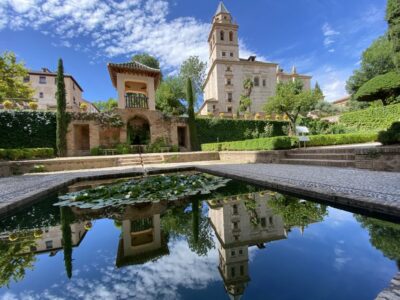
You wrap this palace segment in the Partal area and up to the Torre de las Damas. This portion gives you a breather after the most famous rooms. It is also a smart transition because it moves you from the densest palace interiors toward views and outdoor structure.
If you love architecture, this stop is where you start thinking like a designer. You notice geometry, water placement, and how sightlines guide you from one scene to the next.
Alcazaba: defensive design plus panoramic payoff
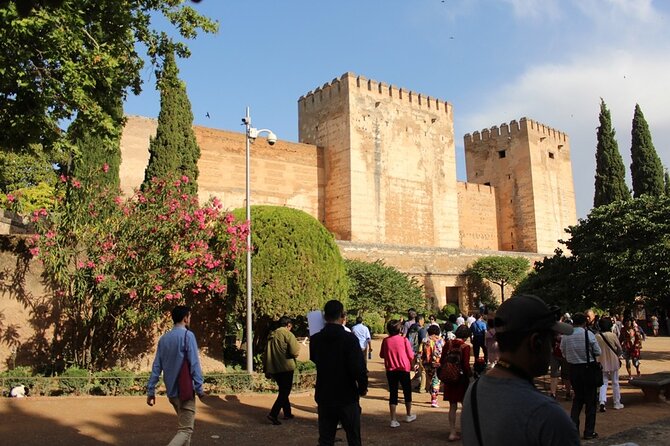
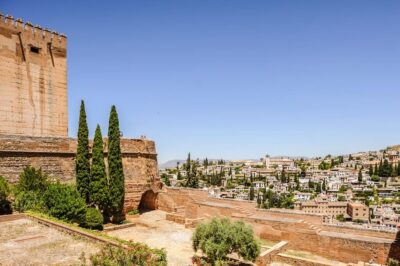
After the Nasrid palaces, you shift gears to the Alcazaba, the military part of the Alhambra. This change keeps the tour from feeling like a repeat of the same vibe. You are still inside the same overall world, but now you are seeing how the palatine city defended itself and managed movement.
You get explanations of the defensive structure, then you go up to the Torre de la Vela. This is one of the biggest “worth the climb” moments. From the tower, you enjoy spectacular views over Granada, Albaicín, and the Vega de Granada. The guide also explains the tower’s function and what changed during the Christian conquest, which helps you understand the shift in control without needing a separate history lesson.
Jardín de los Adarves and Puerta de las Armas
You continue with the Jardín de los Adarves and the Puerta de las Armas. Even though these sound like side stops, they help complete the military story. The garden area gives you a sense of how space was managed inside a defensive setting. And the gate area helps you visualize how people would enter, exit, and coordinate inside walls meant to protect a city.
If you want the Alhambra to feel like a living system instead of a museum, this segment is a key part of why.
Palace of Carlos V: why this 16th-century building belongs in the story
Next comes the Palace of Carlos V, a 16th-century building placed within the Alhambra complex. This stop is short, but it is designed for understanding. You get an explanation of the facades and the main courtyard, plus commentary on construction and symbols.
The most useful part is where the guide points you to the location of the museums housed here. Even though you may not have time for museum browsing in a 3-hour format, knowing what is inside and where it sits helps you plan a return visit. It also prevents Carlos V from feeling like a random interruption.
For visitors who assume the Alhambra is only Nasrid, this stop is a reminder that Granada’s layers changed over time.
Calle Real de la Alhambra: the public street that connects cultures
Calle Real de la Alhambra is the part that feels like you are walking through the city, not just through palaces. You cover the public area with the guide explaining the structure of the city and commenting on Christian modifications.
This is where you hear about places like the church of Santa María de la Alhambra and the convent of San Francisco, now converted into a national hostel. The guide notes that the convent was the burial place of Queen Elizabeth, which adds a human anchor to the big historical shifts happening around you.
Ruins of the Palacio de los Abencerrajes
You also visit the area of the dry land where the ruins of the Palacio de los Abencerrajes are located. This matters because ruins can feel like dead space unless someone helps you connect them to what they were. The guide frames this family as a prominent part of the Nasrid court, so the ruins become readable rather than vague.
Medina workshop ruins and the making of decoration
Finally, you see the area of the Medina, including ruins of workshops and ovens used to build decorations. This is a powerful reminder that you are looking at finished splendor made by real labor. If you care about craft, it is the perfect counterweight to all the decorative beauty, because it brings you back to production.
This segment also keeps the flow moving. Even if your legs are starting to complain, the city-walk vibe helps you keep going without feeling stuck in one room too long.
Generalife on Cerro del Sol: orchards, labyrinth gardens, and palace patios
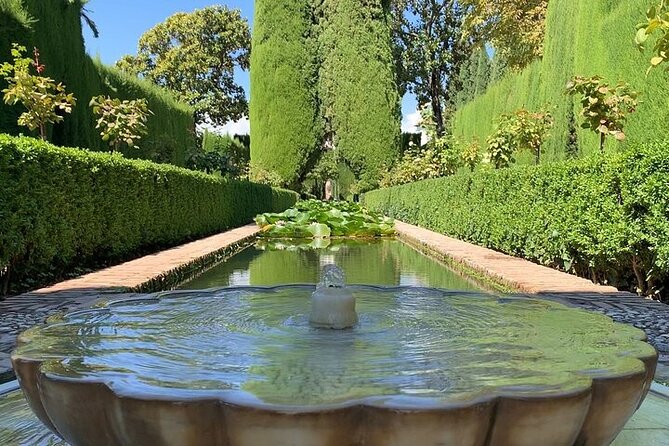
The tour ends with the Generalife, set on the Cerro del Sol hill. The Generalife is the Alhambra’s garden and retreat side, and it changes the atmosphere fast. Instead of palace interiors and stone corridors, you focus on orchards and garden layouts.
You start with the hill area, where you see the Nasrid orchards and the Christian labyrinth gardens. The guide explains the flora of the gardens and the fruits produced in the orchards. That detail makes this part feel practical, not just pretty. You start noticing how plants and garden structure were used as part of the experience of the space.
Generalife Palace and the palace-to-city connection
Next is the Generalife Palace, where you get an explanation of its physical communication with the city of the Alhambra. This is a great detail because it tells you the garden was not a separate dream world. It had a real connection to the palace complex.
Patio de Polo, Patio de la Guardia, and Patio de la Acequia
You visit Patio de Polo, Patio de la Guardia, and Patio de la Acequia. The tour mentions the summer house of the Sultan in this area. Even without extra time inside, you get a guided sense of where leisure and seasonal retreat fit into the property.
Patio de la Sultana and the final exit
The tour continues to Patio de la Sultana, with its cypress and tall gardens. Then you exit through the Paseo de las Adelfas.
Ending here works for most people. It is less about museum facts and more about how the garden looks and feels when you step into it. If you take photos, the light often cooperates here, and the views help you remember what you just saw upstairs in the palace complex.
How the 3-hour timing works, and what it feels like on your feet
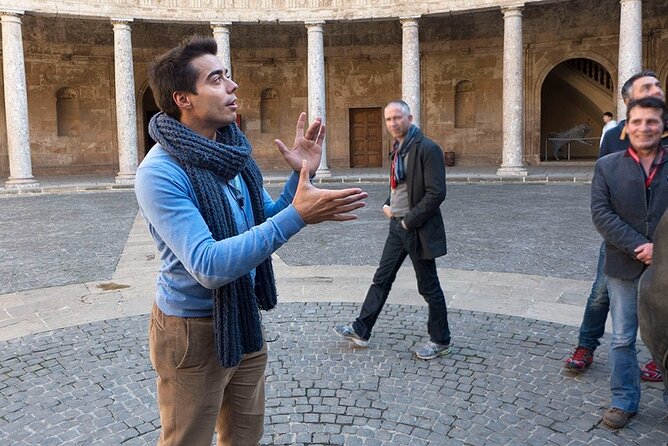
A tour that includes Nasrid Palaces, Alcazaba, Carlos V, Calle Real, and Generalife could easily turn into a rushed sprint. Here, the pacing is built around shorter, meaningful blocks at each stop.
You spend about:
- 1 hour in the Nasrid Palaces
- 25 minutes in the Alcazaba
- 15 minutes at Carlos V
- 25 minutes on Calle Real de la Alhambra
- 45 minutes in the Generalife
That distribution helps you get a real highlight payoff at each location without losing the thread. It also means you should plan for walking and standing. Even with a guide, you will be moving through outdoor sections and transitioning between buildings and viewpoint areas.
Also note the tour has a maximum of 30 travelers. That is large enough to be social, but small enough for most people to hear explanations without constant shouting.
If you are trying to fit the Alhambra into a tight Granada schedule, this structure makes it realistic.
Price and ticket value: what $66.42 gets you
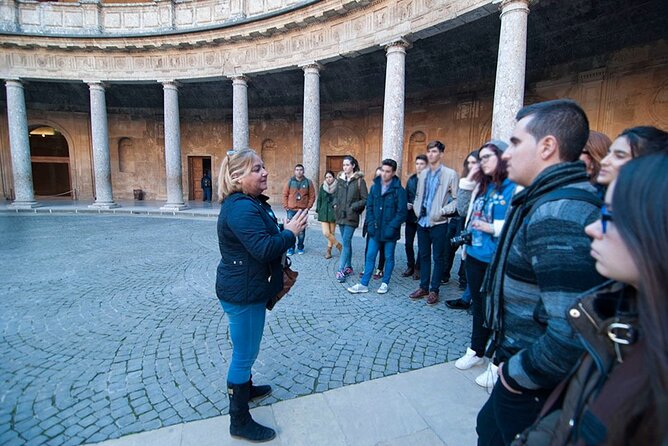
At $66.42 per person for about 3 hours, you are not paying just for a guide’s voice. You are paying for a guided route through high-demand spaces, and several admissions are included.
Here is the practical value breakdown based on what the tour includes:
- Nasrid Palaces admission is included
- Alcazaba admission is included
- Palace of Carlos V admission is included
- Generalife admission is included
- Calle Real de la Alhambra admission is free for this tour segment
So the money is going toward getting you into multiple major zones that can each be time-consuming to handle on your own. In other words, the value is not only the guide, it is the saved stress and the smooth progression between sites.
One more value point: this is booked on average 60 days in advance, which tells you you should plan early. When popular tours sell out, you end up scrambling for smaller time slots or less complete experiences.
Who this Alhambra and Generalife tour is best for
You will likely love this tour if:
- you want a first-timer-friendly route that still covers the core icons
- you enjoy architecture details like stucco construction methods and ceiling craftsmanship
- you like mixed pacing, palace rooms plus military viewpoints plus gardens
- you want an English guide and a group capped at 30
This tour is less ideal if:
- you have reduced mobility, since it is not recommended for that
- you expect a long museum-style visit with slow time inside Carlos V or deeper exploration of every ruin
If you are traveling with service animals, service animals are allowed, which is useful to know ahead.
A quick note on guides and reliability
The standout praise in the feedback ties closely to guide clarity and attentiveness. People specifically highlight guides such as Noelia for explaining things well and being attentive, and Victoria for clear commentary that made the time feel enjoyable and useful. That matters here, because this tour depends on you understanding what you are looking at, not just where you are standing.
There is also an important caution to keep in mind. One negative experience described a last-minute schedule change after choosing a specific time, which forced the visitor to cancel and book another company. That looks like an isolated issue, but it is still worth being proactive: keep your confirmation details handy and double-check your start time as your visit approaches.
Should you book this guided Alhambra and Generalife visit?
Yes, I think you should book it if you want your Alhambra day to feel organized, meaningful, and high value for your time. The itinerary covers the big hits, but it also adds the kind of small explanations that turn the Alhambra from impressive scenery into a place you actually understand.
Book it especially if you are visiting Granada for the first time and you want a route that balances Nasrid splendor, defensive city design, and garden retreat in one go. If mobility is a concern, or if you prefer slow independent exploring, you might want a different format.
If your goal is to see a lot without feeling lost, this is a strong fit.
FAQ
How long is the Alhambra, Nasrid Palaces, and Generalife guided visit?
The tour is about 3 hours.
Is this tour offered in English?
Yes, the experience is offered in English.
About how many people are in the group?
The tour has a maximum of 30 travelers.
What admissions are included?
Admission tickets are included for the Nasrid Palaces, Alcazaba, Palace of Carlos V, and Generalife. The Calle Real de la Alhambra segment is listed as admission free for this experience.
Where do I meet, and where does it end?
You start at the Alhambra Meeting Point, Tienda de Souvenirs y Alhambra tours, P.º de la Sabica, 1, Local, Centro, 18009 Granada, Spain. The activity ends in a different location (the exact end details are provided separately at booking).
Can I change or get a refund if my plans change?
No. This experience is non-refundable and cannot be changed for any reason.
Latest Granada reviews into the ledger




Alhambra Tickets & Tours, compared.

Alhambra & Gardens Tour w/Nasrid Palaces Option
Read our review →
Fast-Track Alhambra & Nasrid Palaces Guided Tour
Read our review →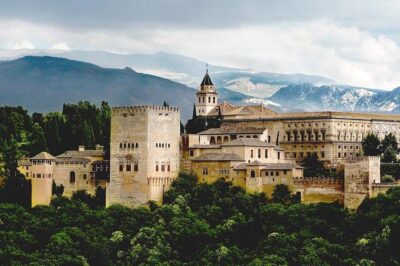
Skip The Line Alhambra and Generalife Guided Tour
Read our review →
Alhambra Ticket and Guided Tour with Nasrid Palaces
Read our review →Browse the lists this tour appears in