
Reviewed · HISTORICAL TOURS
Historical Italica: Half-Day Guided Tour from Seville
Roman ruins near Seville, with real drama.
This half-day guided trip takes you to Italica, an ancient Roman city often described as the first major Roman settlement on the Iberian Peninsula, then adds a stop at the nearby Monasterio de San Isidoro del Campo. I like that it is structured, not rushed sightseeing, and I also like that the main tickets are handled, so you can focus on the ruins and artwork instead of logistics. One thing to consider, especially if you are on a tight schedule, is that some people report late timing, including late pickup or a return that can shorten the visit.
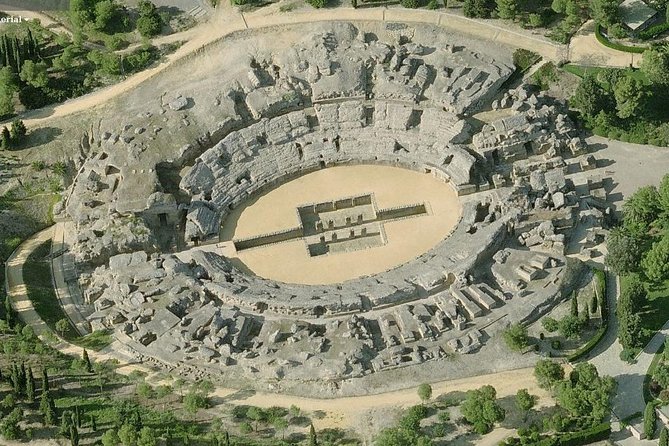
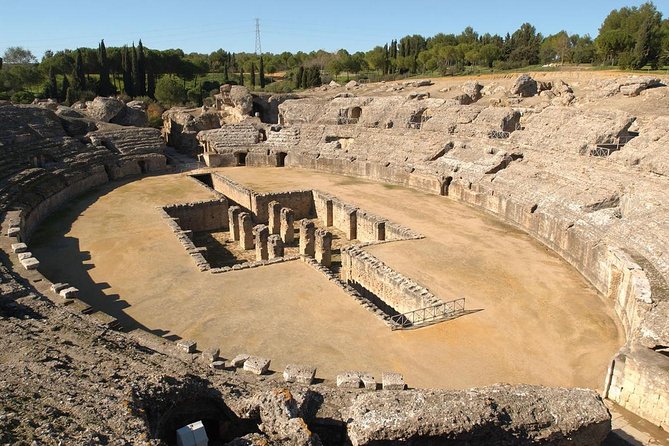
You’ll really feel the scale at Anfiteatro de Italica, where the Roman theatre could hold about 25,000 spectators at its peak. The mosaics and the exposed homes of the upper classes (the domus area) are the kind of details you miss if you show up without a guide. I also appreciate the monastery stop because it is not just a church photo-op, it is tied into what you see in Italica, and your guide can explain why it sits there and what it represents.
The only drawback I’d plan around is pacing and language consistency. If you get a guide who speaks English less clearly, or if your group moves slower because of timing issues, you may end up feeling like you saw less than you expected (like not reaching every advertised area). If you want a no-stress visit, build in buffer time and bring your own water for the heat.
In This Review
- Quick hits you should know
- Italica from Seville, the Roman story you can actually walk
- Stop 1: The Anfiteatro de Italica and what to look for
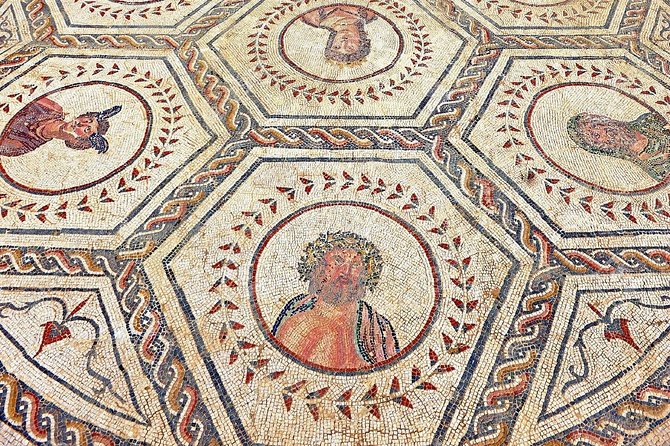
- The mosaics and domus angle, why it matters
- Stop 2: Monasterio de San Isidoro del Campo on the way back
- Guided by real people, and why English quality matters
- Transfers, group size, and why you should keep your evening open
- Price and value: is $47 a smart way to see Italica?
- What to bring, especially in the heat
- How to get the most from Italica, even if you like your own pace
- The monastery stop: worth it if you like art and layered history
- Who this tour fits best
- Should you book Historical Italica from Seville?
- FAQ
- How long is the Historical Italica half-day guided tour?
- Is the tour offered in English?
- What are the main stops during the tour?
- What is included in the price?
- Are food and drinks included?
- What is the group size limit?
- Is there a cancellation deadline for a full refund?
Quick hits you should know
- Two included admissions: you get entry to the Italica archaeological area and to the monastery stop.
- Roman theatre plus mosaics: the theatre is the headline, but the mosaic floors and domus remains do a lot of the storytelling.
- Short day, real value: at about four hours total, it’s a smart way to add archaeology without losing a whole day.
- Small-group feel for a big site: maximum group size is listed as 60, and the day runs as a guided walk with transfers.
- Monastery can be hit or miss: if you love art and history, it tends to land well, but if you want only Roman ruins, you might find it extra.
- Plan for timing risk: a few past outings ran late, so keep your evening plans flexible.
Italica from Seville, the Roman story you can actually walk
Seville is beautiful, but Italica is the kind of site that changes how you picture Roman Spain. It sits close enough that this feels like a true half-day escape, not a long, exhausting transfer day. You’re going to a place where the ground level is history, not just a museum display.
The tour is designed around two ideas. First, you see the major set pieces of Italica, especially the Roman theatre/amphitheatre complex and the surviving mosaics. Second, you learn the human scale behind it, including what daily life looked like for the wealthier residents through domus houses. Then the monastery stop adds a later layer of history, so the ruins don’t feel like they were abandoned and left behind. They were re-used, re-interpreted, and built over by later generations.
A few more Seville verdicts worth reading
- Sevilla Food Tour: Tapas, Wine, History & Traditions
★ 5.0 · 3,468 reviews - Ultimate Seville Tapas, Wine & History Small Group Tour
★ 5.0 · 1,766 reviews - Seville: Tapas, Taverns, and History Walking Tour
★ 4.9 · 676 reviews - Seville Evening Historical Tour with Haunted History
★ 5.0 · 626 reviews
Stop 1: The Anfiteatro de Italica and what to look for
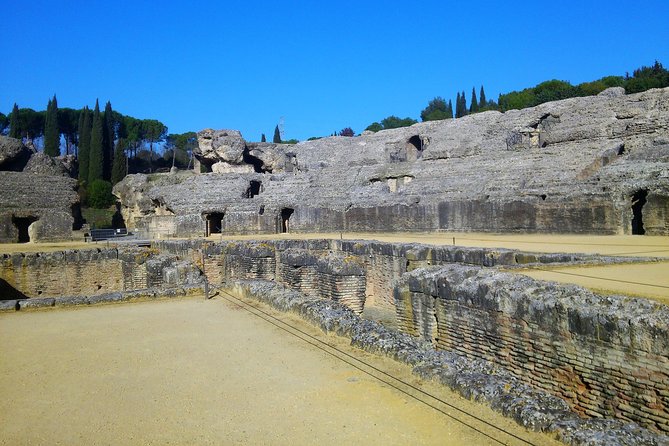
This is where the tour earns its reputation. The Anfiteatro de Italica is one of the largest Roman theatres in the empire, with seating capacity sometimes given as around 25,000. Even if you’ve seen famous Roman sites before, Italica hits differently because it is outdoors and close enough to explore at walking speed.
At this stop, I’d focus on three things while your guide talks:
- The seating geometry and size. Roman theatres are not just “big buildings.” They were engineered for crowds, sightlines, and acoustics. When your guide points out the design logic, you start reading the site instead of just looking at it.
- The mosaic work. Italica is especially known for mosaics, and the remains can look surprisingly intact. The point is not only the decoration, it is what those floors signaled about status and wealth.
- The connection to the broader site. You’re not just in front of a single landmark. You’re in a full archaeological ensemble, including areas that help explain the city layout.
One useful practical detail: there is more to see than the obvious “main stage view.” You may find access to tunneled or under-structure areas in the complex, and those spaces tend to make the theatre feel more complete, like you’re seeing how the building functioned, not just how it looked.
The mosaics and domus angle, why it matters
The domus houses, the more upscale homes, are a big reason this tour works for archaeology fans. Mosaics were not random floor art. They were branding. They showed wealth, taste, and cultural connections.
If you like learning while you walk, guides often turn this into a mini lesson on Roman domestic life, including how the rich lived differently from common residents. Even if you only remember a few details, it helps you stop treating Italica as a pile of stones and start treating it as a city.
Stop 2: Monasterio de San Isidoro del Campo on the way back
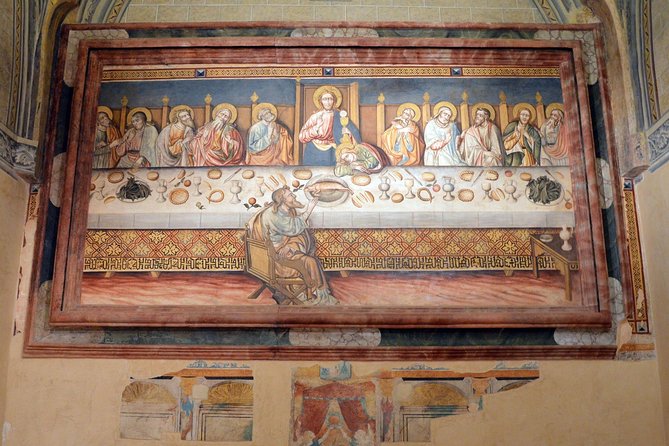
The monastery stop is listed as one hour, and it comes as a “see it on the way” companion to the Italica visit. The best thing about this stop is how it changes the rhythm of the day. You go from Roman stone and artwork to religious architecture and later history, and your guide can tie them together.
The monastery, the Monasterio de San Isidoro del Campo, is beautiful, and it can feel more personal than you expect. A common pattern I’d plan for: the first part of the tour builds excitement through the Roman ruins, and then the monastery shifts to slower storytelling and art details. If you love churches, art, or monastic history, that shift is usually a win. If you only want Roman archaeology and nothing else, it can feel like time you’d rather spend in Italica.
Either way, it is included and it is ticketed, so you are not paying extra for it. I also recommend you treat it as a contrast, not as a second “main event.”
More Things to Do in Seville
- Seville: Royal Alcázar Entry Ticket★ 4.6 · 28,378 reviews
- Seville: Live Flamenco Dancing Show Ticket at the Theater★ 4.7 · 16,396 reviews
- Seville: Alcázar, Cathedral & Giralda Skip-the-Line Tour★ 4.8 · 11,525 reviews
Guided by real people, and why English quality matters
This is an English tour, and for many people the guide experience is the highlight. Names that show up with strong praise include Jesús, Rebecca, Juanra, Alberto, Inez, Miguel, Leon, and Catherine. When a guide is on form, they do two important things: they explain what you’re seeing in plain language, and they add context without turning the tour into a lecture.
Here’s what I’d watch for:
- Timing of the guide start. A late pickup can shrink the visit, and the site is big enough that less time can mean less you get to see.
- English clarity for site terms. Some guides use familiar English names, while others may default to French terms or speak in a way that can be harder to follow if you want exact vocabulary.
- Story accuracy vs oversimplified history. A few accounts point out that some explanations can be simplified, especially around complicated historical conflicts. If you care about nuance, keep it in mind and ask questions when something feels too clean.
If you are picky about historical phrasing, bring curiosity, not frustration. A good guide will welcome questions and adjust. And if your guide is still finding the right words, you can still get a lot from what they point out physically on the ground.
Transfers, group size, and why you should keep your evening open
The day includes round-trip shared transfer, and the total duration is about four hours. Maximum group size is 60, which is not tiny, but it is manageable if the guides keep you moving at a steady walking pace.
Comfort-wise, the bus is often described as clean and comfortable, and the tour typically feels efficient because Seville to Italica is short. One key decision point: if you have a train to catch later that same day, plan extra buffer time. There have been reports of late buses and late returns, and timing slips can be annoying when you are on a schedule.
I’d also do one more practical thing. When you arrive, locate your group and follow your guide’s timing calls closely. This tour works best when you trust the plan and stay flexible with small pacing changes.
Price and value: is $47 a smart way to see Italica?
At $47.18 per person for a guided half-day, this tour can be good value, mainly because the major costs are already included. You get:
- A driver and professional guide
- Round-trip shared transfer
- Admission tickets for the main archaeological stop and the monastery stop
- Taxes
That matters because Italica is not a “quick stroll and done” kind of place. A guide helps you read the mosaics and domus remains, and you avoid losing time sorting out entry and routing.
Is it perfect value? It depends on what you want. If you are the type who will enjoy a guided walk and you want both Roman and monastery context, it is a strong deal for the time. If you only want Roman ruins and you dislike monastery stops, you might find another option that keeps you strictly in Italica.
What to bring, especially in the heat
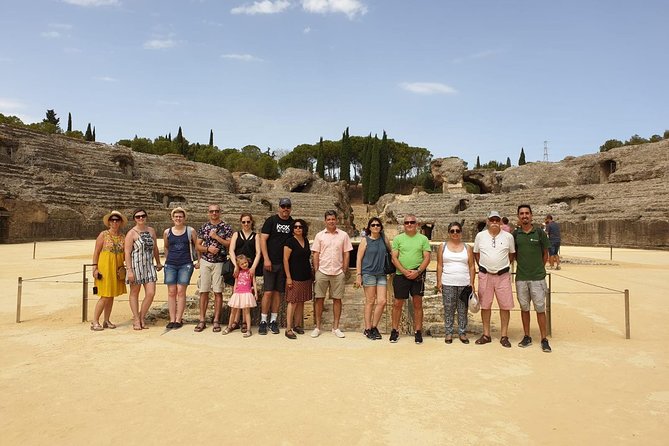
This tour is partly outdoors at an archaeological site, and you will walk. Even if you are used to Spanish sun, plan for it.
Bring:
- Water, because food and drinks are not included
- Sun protection (hat, sunscreen)
- Comfortable shoes for uneven stone and museum-style walking terrain
- A light layer if you get chilled in shade transitions
One reason this matters is simple: people have reported feeling dehydrated on hot days when water wasn’t clearly planned. The tour is short, but the sun can still hit hard.
How to get the most from Italica, even if you like your own pace
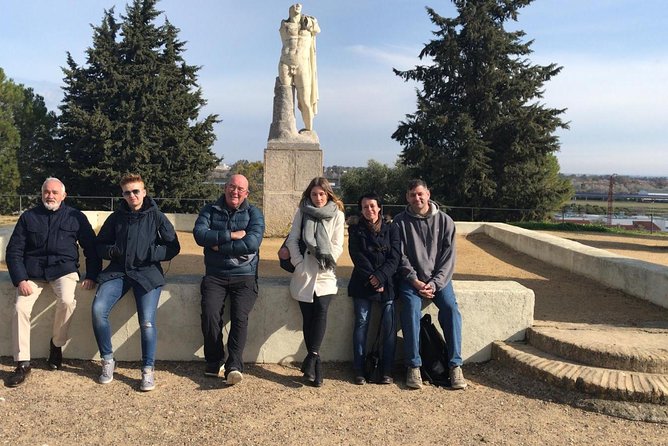
The guided structure helps, but you can still steer how you experience the site. Use the guide’s stop points as your “map,” then spend a few minutes longer on whatever grabs you.
If mosaics are your thing, linger at the best floor survivals and compare what you see with what your guide explains. If the theatre is your thing, pay attention to the building’s scale and what it suggests about public life in Roman times. If you want photos, remember that the best pictures are often not the widest angles, they are the details that show craftsmanship.
A small trick: ask your guide one simple question when you’re standing in front of something specific. Even one answer can change how you see the whole area.
The monastery stop: worth it if you like art and layered history
San Isidoro del Campo tends to divide people by interest level. If you like religious art, architectural details, or you enjoy how later Spanish history interacts with earlier Roman spaces, you will likely enjoy this hour. If you feel “cathedrals out” by mid-tour, you may treat it as a breather and move through it at a lighter pace.
Either way, I’d go in with the right attitude. This stop is not competing with the Roman site. It is explaining how a landscape keeps changing while still keeping its historical DNA.
Also, bring a photo ID just in case. One past experience noted that ID expectations at the monastery were not communicated well, and having a passport accessible solved it.
Who this tour fits best
This is a great match if you want:
- A guided walk through Italica without spending your time figuring out logistics
- A deep focus on the Roman theatre and mosaics, plus domus houses for the upper-class side of daily life
- A half-day plan that keeps Seville in your schedule
It also works well for solo travelers because the day is guided and social, and you are not stuck wandering a large site alone.
If you hate structured group movement, or you only want one type of history, you might find the monastery stop a stretch. But if you enjoy contrasts, Roman and medieval layered time is exactly what makes the day interesting.
Should you book Historical Italica from Seville?
Yes, if you want an efficient Roman archaeology hit with strong interpretation and you value having admissions handled. The theatre scale, the mosaics, and the domus context make this more than a “look at ruins” outing.
Hold off or book with caution if:
- You have a strict train or flight and cannot tolerate delays
- You strongly prefer strictly Roman content and would rather spend every minute in Italica
- You want extremely precise English naming for every detail and you are sensitive to language clarity
My best advice is simple: book it if you can keep your evening flexible, show up with water and sun protection, and be ready to ask one question while standing in front of a mosaic or a major ruin.
FAQ
How long is the Historical Italica half-day guided tour?
The tour lasts about four hours.
Is the tour offered in English?
Yes, it is offered in English.
What are the main stops during the tour?
You visit the Anfiteatro de Italica archaeological ensemble (including mosaics and a medieval monastery setting) and then the Monasterio de San Isidoro del Campo.
What is included in the price?
The price includes a driver or professional guide, round-trip shared transfer, and all taxes, plus admission tickets for the listed stops.
Are food and drinks included?
No. Food and drinks are not included.
What is the group size limit?
The tour has a maximum of 60 travelers.
Is there a cancellation deadline for a full refund?
Yes. You can cancel up to 24 hours in advance for a full refund. If you cancel less than 24 hours before the start time, the amount paid is not refunded.
Latest Seville reviews into the ledger

Historical Tours, compared.
Madrid Essential: Historic Center, Plaza Mayor & Royal Palace
Read our review →
Tapas Walking Tour with Food, Wine, and History
Read our review →
Sevilla Food Tour: Tapas, Wine, History & Traditions
Read our review →
Valencia Old Town Tour with Wine & Tapas in 11th Century Historic Monument
Read our review →
Madrid Tapas & Taverns Small Group Food & History Tour
Read our review →
Barcelona Tapas Walking Tour: Food, Wine & History
Read our review →
Ultimate Seville Tapas, Wine & History Small Group Tour
Read our review →
Skip-the-Line Great Mosque-Cathedral History Tour
Read our review →Browse the lists this tour appears in