
Reviewed · WALKING TOURS
Jewish Walking Tour Barcelona by Expert Jewish Guide 2h
Follow the alleys of ancient Jewish Barcelona. This 2-hour walking tour connects Catalonia’s political heart to the El Call lanes, and I really like the way expert local storytelling makes plain streets feel historically specific. I also love that you get to focus on the Major Synagogue and what still survives in the neighborhood. A possible drawback: entrance fees are not included, and there is a small onsite donation request at the synagogue.
I like that it’s a private experience for your group, not a crowded herd. Guides such as Ella and Dina have been praised for strong narrative skills, and Dina in particular has been noted as living in the area for over 40 years, which helps the stories feel grounded.
You’ll start at Conesa Entrepans near the Gòtic, then walk for about two hours and return to the meeting point. Bring comfortable shoes and a plan for extra synagogue costs, since tickets and the €5 per person onsite donation request are on you.
In This Review
- Key takeaways before you walk
- Walking the Jewish Quarter’s story in a tight two hours
- Placa de Sant Jaume, political Barcelona at the story’s start
- Major Synagogue stop: seeing age, not just dates
- MUHBA El Call: the alley maze where life left traces
- Placa del Rei: where leaders, kings, and fate intersect
- Price and value: why $96.79 can make sense here
- How the guide style affects your experience (and what to expect)
- Timing, weather, and what to bring for a comfortable walk
- Who should book this Jewish Quarter walk in Barcelona
- Should you book this Jewish Walking Tour of Barcelona?
- FAQ
- How long is the Jewish Walking Tour Barcelona?
- What does the tour price include?
- Are entrance tickets included?
- Is there a donation requested at the synagogue?
- Where is the meeting point?
- Is hotel pickup or drop-off included?
- Is this tour private?
- What language is the tour offered in?
- Can I cancel for a full refund?
Key takeaways before you walk
- Private, English-language guide: just your group, led by a professional local.
- Built around the Jewish spine of Barcelona: Sant Jaume, the synagogue area, El Call, and Placa del Rei.
- Stop-by-stop timing: about 15 minutes at Placa de Sant Jaume, then longer pauses in the key Jewish sites.
- Budget for the synagogue: entrance tickets are not included, and the synagogue requests a €5 per person donation onsite.
- Street-level history with practical context: you’ll learn what to notice in the narrow alleys, not just facts on a sign.
Walking the Jewish Quarter’s story in a tight two hours
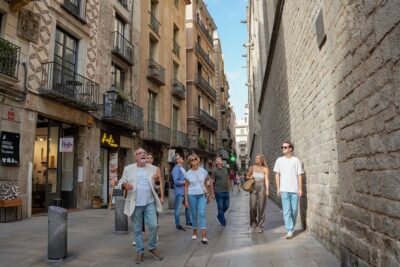
If you only have a couple hours in Barcelona’s Gòtic Quarter, this tour is a strong way to use them. It’s designed like a focused route: you’re not trying to see the whole city, you’re tracing one thread, the Jewish presence in medieval and early modern Barcelona, as it connects to power, faith, and survival.
The best part is how the walk turns “old buildings” into clues. You’ll hear why certain places matter, what changed over time, and what the neighborhood layout can suggest about everyday life. I also like that it’s not only about big-picture chronology. You pause in specific squares and alleys long enough to look closely, which makes the story easier to hold in your head.
This is also a good format for first-time visitors. The meeting point is easy to find in Ciutat Vella, and the route stays within the old core of the city. You do need to be comfortable walking, because the whole experience is a walking tour, about two hours total. Most people can do it, but if you’re sensitive to cobblestones or uneven pavement, plan accordingly and take your time.
More Walking Tours in Barcelona
- Barcelona Tapas and Wine Experience Small-Group Walking Tour
★ 5.0 · 5,804 reviews - Barcelona: Tapas Walking Tour with Food, Wine, and History
★ 4.8 · 4,261 reviews - Barcelona: Food Walking Tour with Tapas and Wine
★ 4.9 · 2,180 reviews - Barcelona Tapas Walking Tour: Food, Wine & History
★ 4.5 · 1,928 reviews
Placa de Sant Jaume, political Barcelona at the story’s start
The walk begins at Placa de Sant Jaume, the political heart of Catalonia. This stop is short, around 15 minutes, but it sets the stage in a smart way. You’re not starting with the synagogue. You’re starting with the context: where authority sat, how governance shaped city life, and how that matters when you’re talking about minority communities.
What I like here is the symbolic gateway idea. Even if you’re not a politics nerd, it helps to know where power was centered. When you later hear about Jewish leaders, legal limits, and the way the neighborhood was affected by broader events, your brain connects the dots faster.
In practice, arrive ready to look around. This square gives you a sense of the city’s layout, and it helps you understand why the Jewish Quarter was positioned the way it was. If you tend to skim squares on other tours, slow down here. The story starts early, and the guide’s job is to make that first place feel like more than scenery.
Major Synagogue stop: seeing age, not just dates
Next comes the Major Synagogue, with about 30 minutes for this stop. This is one of the emotional anchors of the tour, because the synagogue is described as being among the oldest in Europe. Even when exact details of early structures are complex, the key for you as a visitor is this: the place matters because it represents continuity, community organization, and the long arc of life here.
Because admission is not included, plan for what you can actually access onsite. The tour is set up so you learn the meaning of what’s visible, and you’re given a route through the neighborhood that makes it easy to connect the synagogue site to surrounding streets. If your goal is to spend extra time inside specific areas, you’ll want to factor in that the synagogue may require an onsite donation, and tickets are not part of the tour price.
I also value how the guide helps you read the building rather than treating it like a museum exhibit. Expect architecture talk, plus guidance on what to pay attention to in the setting around it. This is where guides with strong personal connection, like those described as living locally for decades, can be a real advantage. You’re more likely to hear practical, place-based insight instead of only broad history.
MUHBA El Call: the alley maze where life left traces
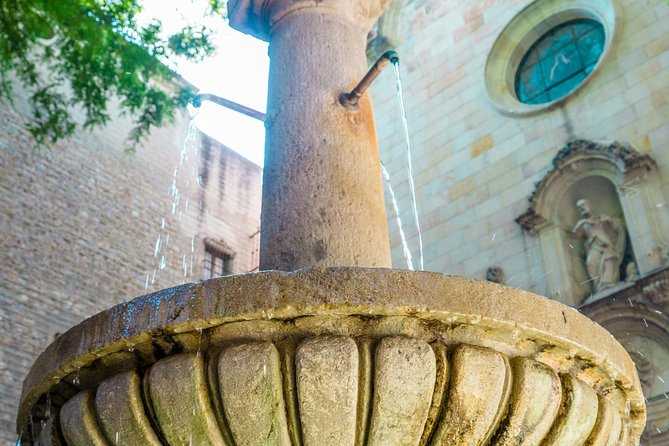
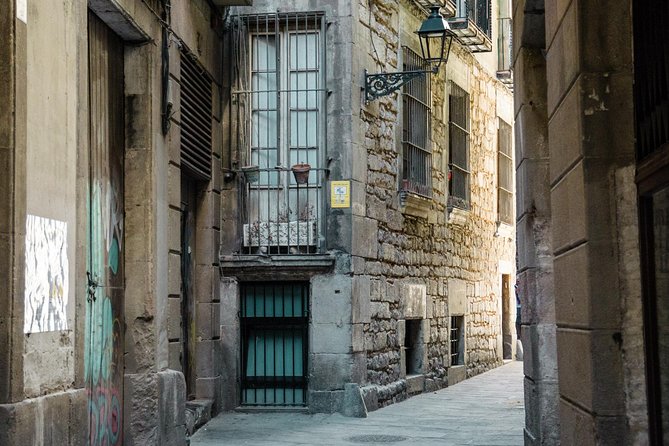
The heart of the tour for many people is MUHBA – El Call, where you’ll spend about 30 minutes. El Call is the medieval Jewish quarter area, and the key here is atmosphere plus understanding. The winding lanes aren’t just pretty. They reflect how a community lived, how movement worked, and how the city’s social reality could be felt on foot.
What makes this stop worth your attention is the way the guide guides your eyes. You’ll get pointers so you can notice details you would almost certainly miss on your own. In one example from past experiences, a guide used visual aids and maps while walking the Call, which is a smart technique here. When you’re surrounded by narrow streets, a quick mental map helps you keep from getting lost in the experience.
Expect the conversation to cover both everyday life and the darker turns of history. The tour framing doesn’t treat the area as purely tragic or purely nostalgic. It aims for a balanced sense of what Jewish life looked like in Barcelona, plus how historical pressures shaped what happened later. That’s the kind of context that turns a walk into a real understanding.
One practical note: this part of Barcelona can feel tight and busy on busy days. If you want to maximize the stop, keep moving with your group and don’t let the sidewalks slow you down too much. The guide’s timing matters because the story is built for a walking rhythm.
More Spanish cities taken on foot:
- Barcelona: Gothic Quarter Ghosts and Legends Walking Tour★ 4.7 · 1,443 reviews
- Barcelona Helicopter, Sailboat & Old Town Private Walking Tour★ 5.0 · 1,395 reviews
- Barcelona: Old Town and Gothic Quarter Walking Tour★ 4.8 · 1,393 reviews
Placa del Rei: where leaders, kings, and fate intersect
The final major stop is Placa del Rei, another place connected to authority. You’ll spend about 30 minutes here, and the focus shifts from neighborhood life to how Jewish leaders and community roles related to the broader machinery of the city and its rulers.
I like this stop because it changes the mental gear. Earlier, you’re walking with a sense of community space. Here, you’re asked to think about service, influence, and how political change can reshape lives. When the tour connects this square to the people who served kings and the way history changed forever, the story feels more human than abstract. It’s not only about what buildings became. It’s about what relationships meant day to day, and how quickly they could change.
As with the other stops, entrance fees are not part of the tour for this segment. So your value comes from interpretation: what the guide helps you see, what the setting suggests, and how the story line closes. If you’re the type who likes to ask questions, this is a good place to do it. The square setting supports discussion, and the guide can link what you just saw in El Call to the political and social pressures that were operating in the background.
Price and value: why $96.79 can make sense here
At $96.79 per person for about two hours, the price is not the cheapest way to walk around Barcelona. But the value can be strong if you care about getting context, not just photos.
Here’s what you’re buying:
- A professional local guide who stays with your group for the full two hours.
- A route that hits the most story-rich points in the Jewish Quarter core.
- A format that’s private for your group, which usually means more Q and A time and less waiting around.
Your main “extra cost” consideration is that entrance fees are not included, plus the synagogue requests a €5 per person donation onsite. When you budget for those, you’ll get a clearer idea of the real total. If you plan to pay onsite costs anyway, the guide fee becomes easier to justify.
Another value angle: this tour has a clear theme and a tight duration. That’s helpful if you want a structured experience without spending half your day on logistics. You get a concentrated hit of Jewish Barcelona storytelling, and you still have plenty of time left to explore the rest of the city on your own.
If you’re on a super tight budget and only want to wander independently, you might skip the guide. But if you want the neighborhood’s details translated into meaning, this price often feels fair.
How the guide style affects your experience (and what to expect)
This tour lives or dies by the guide. The strongest praise focuses on a few consistent traits: warmth, energy, and the ability to explain architecture and history in a way that sticks. Many guides, including Ella and Lilac in past experiences, have been described as being enthusiastic and attentive, with a focus on small details that bring the area to life.
You’ll also see a pattern in guide approach:
- They connect street corners to big events without turning it into a lecture.
- They point out things you’d miss if you were just scanning for landmarks.
- They answer questions and adjust as you react.
This matters because Barcelona’s Gothic Quarter can be visually busy. Without interpretation, you might see stone and alleys and feel like you’re watching history pass by. With a strong guide, you learn what to look for and why it matters.
If you want to get the most out of your tour, come ready with 1 or 2 prompts. For example: ask how the neighborhood layout shaped daily life, or ask what kind of community roles Jewish leaders held in the city’s power structure. It’s the kind of question a guide can use to connect Placa del Rei to what you just walked through in El Call.
Timing, weather, and what to bring for a comfortable walk
The tour lasts about 2 hours. With stop times set around 15 minutes to 30 minutes each, it’s not a rushed sprint, but it’s also not a slow museum crawl. You’ll move between squares and then spend focused time at each key point.
Because the route is walking-based, wear shoes that handle uneven pavement. In heavy rain, you may still walk, since at least one past experience noted that the guide kept storytelling going during a torrential downpour. Don’t count on a perfect forecast. Pack a compact umbrella or a light rain layer so you can stay comfortable and keep listening.
For your own enjoyment, bring a phone with enough battery for the walk. Even if you’re not using a navigation app, a quick reference can help you track where you are as the story shifts between squares and alleyways.
Finally, plan your day so this doesn’t become your last stop when you’re exhausted. This tour works best when you have the mental space to follow the timeline and the geography.
Who should book this Jewish Quarter walk in Barcelona
This is a good fit if you want:
- A focused, theme-based experience in the Barcelona’s Gòtic Quarter
- Jewish history tied to real places, including El Call and key synagogue-related sites
- A guide who can explain architecture and context, not just list stops
- A private group format, so you can ask questions and move at your group’s pace
It’s also a solid pick for couples and small groups who like walking tours but dislike feeling herded. If you’re traveling with someone who gets bored by generic city highlights, this tour tends to hold attention because it has a clear storyline and specific locations.
If you’re not interested in Jewish history specifically, you might still enjoy the architecture and the setting, but the tour’s value will depend on your interest in what these places represent.
Should you book this Jewish Walking Tour of Barcelona?
I’d book it if you want Jewish Barcelona to make sense in your head, not just look good in photos. The stop sequence connects power, synagogue life, the El Call alley experience, and Placa del Rei in a way that creates a coherent arc.
Book it with clear expectations about costs. Entrance tickets are not included, and the synagogue requests a €5 per person donation onsite. If you budget for that, the guide-led context becomes the real main value.
Skip it only if you want a low-cost wander with no interpretation, or if walking on old-stone streets is a hard no for you. For most people who enjoy history and place-based stories, this is a smart use of time in Barcelona.
FAQ
How long is the Jewish Walking Tour Barcelona?
It’s approximately 2 hours walking time.
What does the tour price include?
The tour includes a professional local guide and a 2-hour walking tour of Jewish monuments.
Are entrance tickets included?
No. Admission tickets are not included.
Is there a donation requested at the synagogue?
Yes. A €5 per person donation is kindly requested onsite at the synagogue.
Where is the meeting point?
The tour starts at Conesa Entrepans | Gòtic, Carrer de la Llibreteria, 1, Ciutat Vella, 08002 Barcelona, Spain.
Is hotel pickup or drop-off included?
No. Hotel pickup and drop-off are not included.
Is this tour private?
Yes. It is private, so only your group participates.
What language is the tour offered in?
The tour is offered in English.
Can I cancel for a full refund?
You can cancel for a full refund if you cancel at least 24 hours in advance of the experience start time.
Latest Barcelona reviews into the ledger





Walking Tours, compared.
Barcelona Tapas and Wine Experience Small-Group Walking Tour
Read our review →
Tapas Walking Tour with Food, Wine, and History
Read our review →
Madrid Tapas & Wine Tasting Walking Tour – Small Group Local Bars
Read our review →
Albaicín and Sacromonte Guided Sunset Walking Tour
Read our review →
Toledo Tour & Vineyard Walk with Wine Tasting from Madrid
Read our review →
Madrid Walking Tour from Puerta del Sol to Retiro Park
Read our review →

Barcelona Tapas Walking Tour: Food, Wine & History
Read our review →Browse the lists this tour appears in