
Reviewed · WORKSHOPS
Lanzarote’s First Surf School – 2-hour or 4-hour classes
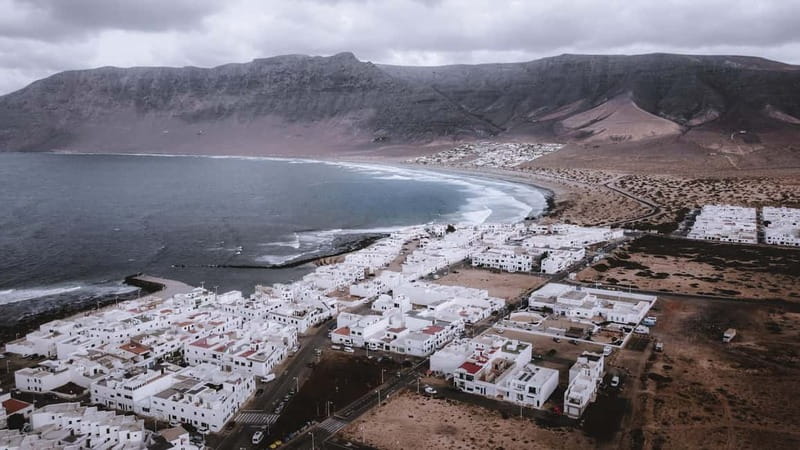
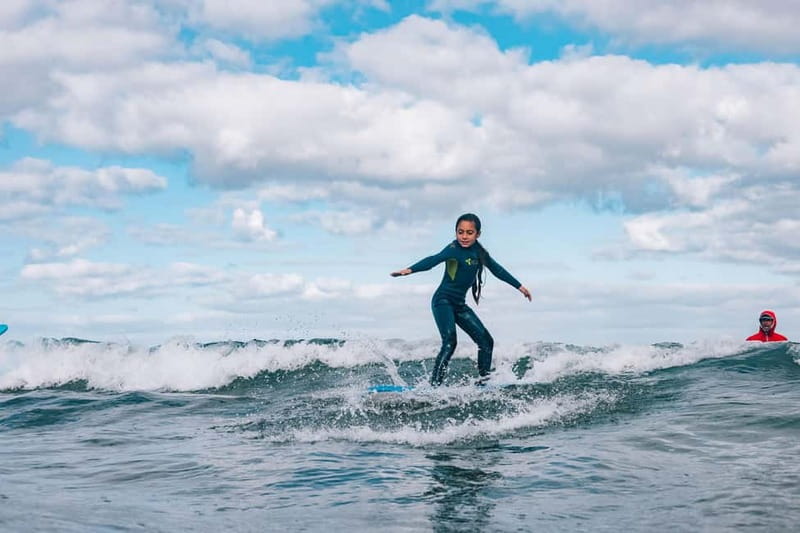
Famara Beach makes learning to surf feel effortless. I love how Lanzarote’s First Surf School puts you at Famara Beach with safety-first coaching from instructors with 30 years of experience.
You get two great advantages fast: small-group lessons capped at 8 people, and the option to switch to private coaching if you want more direct attention. You also travel light, since surfboard, wetsuit, and transport to the beach are included.
One consideration: this lesson is not suitable for non-swimmers or people with heart problems, so only book if you feel confident in the water.
In This Review
- Key points to know before you go
- Why Famara Beach is ideal for surfing classes in Lanzarote
- Getting to the surf school and gearing up the easy way
- What the 2-hour vs 4-hour lesson actually gives you
- On-land coaching: safety, paddling, and pop-up fundamentals
- In the water: catching waves with patient, watchful instructors
- Group lessons up to 8: the sweet spot for learning fast
- Private lessons: when you want speed, focus, and fewer variables
- Equipment, wetsuits, and comfort in the Canaries
- Languages: instructor support across English, Spanish, Italian, and French
- Practical timing and what to bring so the day stays smooth
- Price and value: is $59 a good deal for Lanzarote surfing?
- Who should book this surf school, and who should skip it
- Little things that make your first lesson better
- Should you book Lanzarote’s First Surf School surf classes?
Key points to know before you go
- Famara Beach location: iconic Lanzarote surf terrain, with instructors working from a proven surf-school setup
- Certified coaching: ISA instructor plus RLSS instructor for structured safety and technique
- Small groups up to 8: more time for you in the water and clearer feedback on the basics
- Choose group or private: faster improvement if you opt for one-on-one, or a social vibe with a small crew
- Gear and transport included: surfboard, wetsuit, and beach transport help keep your day simple
Why Famara Beach is ideal for surfing classes in Lanzarote
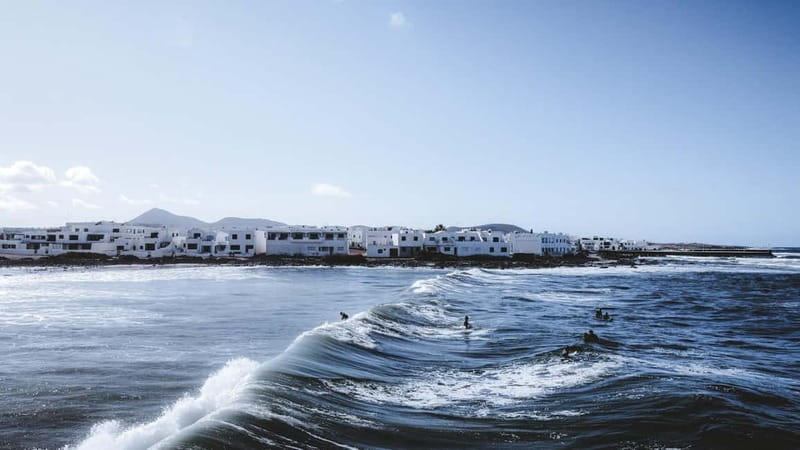
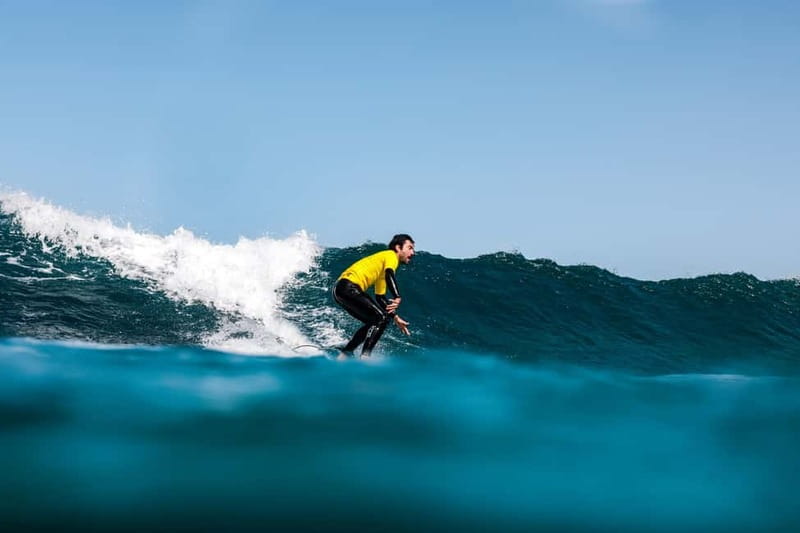
Famara Beach is the kind of place where you can tell people actually surf here, not just pose with boards. For a lesson, that matters. You’re learning on real water with real wind and real waves, but with instructors who know how to match the lesson to conditions.
This school runs classes for both first-timers and people who already tried surfing before. That flexibility is valuable because it keeps the lesson from turning into either a slow crawl for intermediates or a confusing jumble for total beginners.
The big thing I like is that you’re not just dropped into the ocean with a random board. You get guided steps that start on land and then translate into the waves. If you’ve ever tried to learn from videos, you already know how much faster it feels with a human correcting your paddle, your stance, and your timing.
More surf lessons marked up:
- Surf class in Famara 9:15-12:00 or 11:45-14:30 (2h class)
★ 5.0 · 199 reviews - Surf lessons in Famara 9:15-14:30h (4 hours of class)
★ 5.0 · 173 reviews - Full Day Surf Lesson for Beginners in Famara, Spain
★ 5.0 · 109 reviews - Tenerife: Surfing Lesson for All Levels, Photos included
★ 4.9 · 1,314 reviews
Getting to the surf school and gearing up the easy way
Your day starts with meeting your instructor at the surf school. From there, you get transported to the beach. That may sound minor, but it’s actually a comfort factor, especially if you’re arriving from a hotel where you don’t want to carry extra gear or troubleshoot local parking.
You’ll also be provided with the surfboard and wetsuit, so you’re not stuck renting equipment last minute or spending extra money on the basics. You do still need to bring the human stuff: swimwear, a towel, sunscreen, and water.
A simple prep tip for you: sunscreen and water become your best friends here. Lanzarote sun can bite, and you’re in the outdoors for a couple hours learning where your body should be, then where it should be a moment later. Bring enough water so you can rehydrate between practice sets.
What the 2-hour vs 4-hour lesson actually gives you
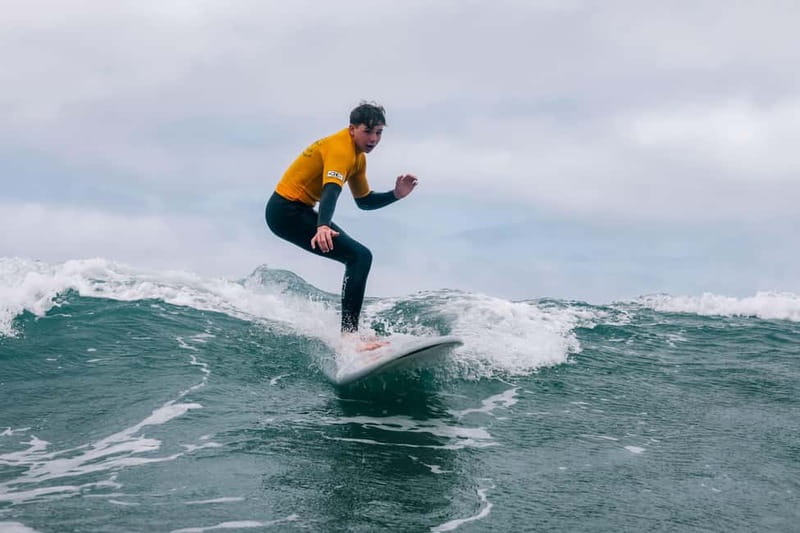
The program comes in durations from 2 to 4 hours. The exact split can vary by starting times and surf conditions, but the lesson style stays consistent: you build the skills in sequence, then you practice them right away in the water.
Here’s how to think about it for your planning:
- 2-hour class: best if you want a focused first session, or if you’ve surfed before and just need technique correction and confidence-building
- 4-hour class: best if you want more repetition, more time to reset between tries, and a better chance to go from practicing pop-up movements to actually catching waves comfortably
If you choose the longer option, plan for a break around lunch time. The school notes that for the full-day style option there’s a break for lunch around 12, so bring your own snack or lunch if you’ll be there through that window.
On-land coaching: safety, paddling, and pop-up fundamentals
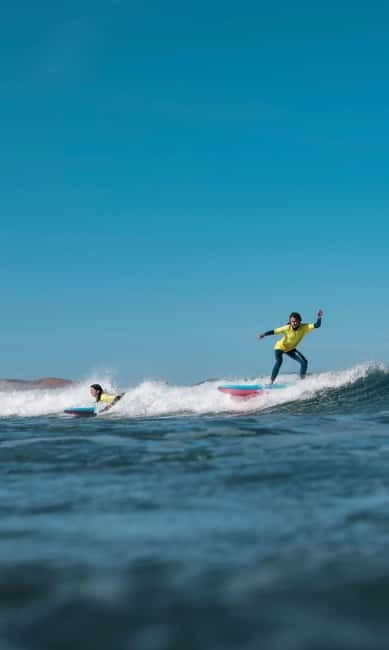
The lesson structure usually starts on land. This part is not filler. It’s where you learn the movements that make the water section feel possible.
For first-timers, expect the basics covered in a calm, step-by-step way. You’ll learn ocean safety, how paddling works with your board, how to position yourself to catch waves, and how the pop-up feels before you do it at speed.
What makes this school’s on-land coaching feel effective is the way instructors explain things clearly, then you can use that explanation immediately in the water. One review highlighted how the land instructions were understandable and made it easier to apply what was taught while you were actually surfing.
And yes, your legs may feel like they need a new instruction manual for about ten minutes. That’s normal. The pop-up is a skill, not a vibe, and good coaching helps you learn it without panic.
A few more Lanzarote verdicts worth reading
- Barcelona Paella Cooking Class with Market Visit, Tapas & Sangria★ 5.0 · 2,531 reviews
- Seville: Flamenco Dance Class with Optional Costume★ 4.9 · 1,350 reviews
- Spanish Cooking Class Paella Tapas and Sangria in Madrid★ 5.0 · 1,340 reviews
In the water: catching waves with patient, watchful instructors
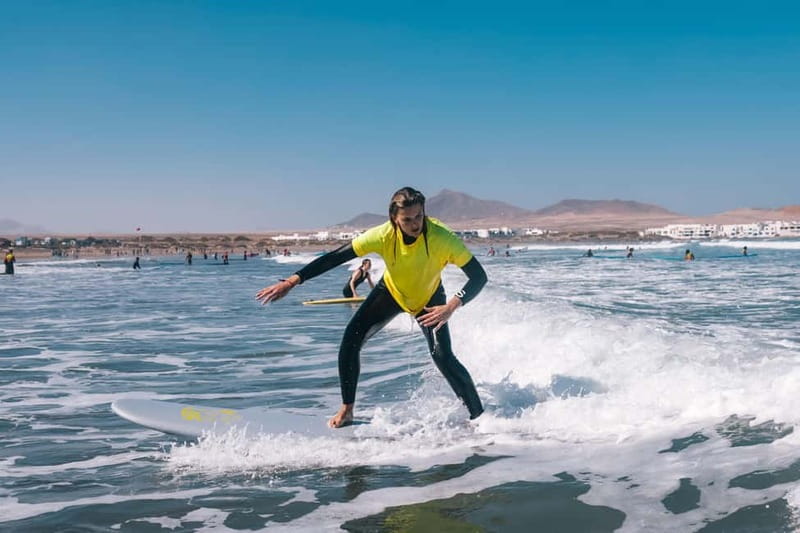
Once you hit the water, the difference between a good lesson and a chaotic one shows up quickly. Here, instructors stay engaged. They guide you, watch your form, and help you adjust without letting you feel lost.
Instructors also handle different ability levels in the same general setting, which is handy if your group includes both brand-new surfers and people who want a skills tune-up. Several comments praised how the instructors stayed attentive even when conditions felt challenging.
One example from the feedback: there was a day with pretty strong currents, and the instructor did not leave the group alone, providing continuous guidance through the session. Another comment praised an instructor’s patience when anxiety kicked in during the waves. That combination, calm guidance plus real attention, is exactly what you need if you want to progress instead of just endure.
You’ll also notice how coaching focuses on technique details that matter, like improving paddling timing, standing up more smoothly, and learning which waves to aim for rather than grabbing the first thing that comes along.
Group lessons up to 8: the sweet spot for learning fast
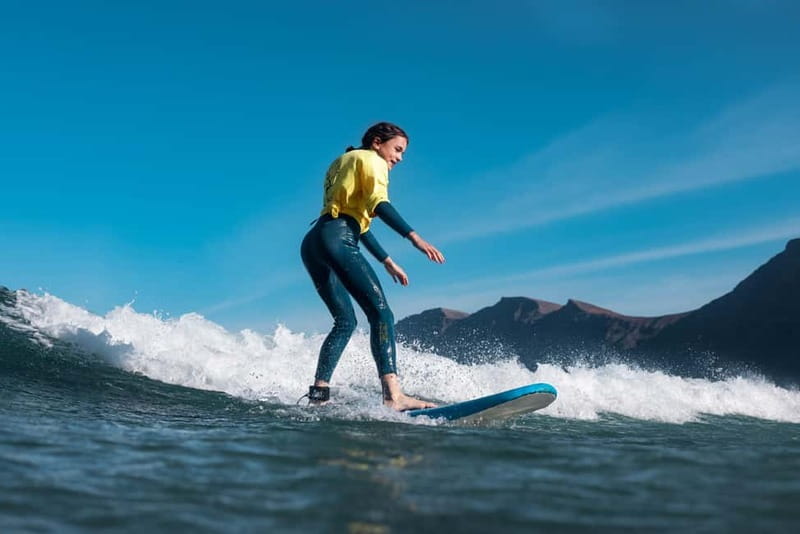
This school keeps group sizes small, limited to 8 participants. That’s not just a number for marketing. In practice, it means you’re less likely to be waiting around while the instructor deals with someone else’s issue.
A smaller group also changes the vibe. You still get a social element, but it feels more like team coaching than a crowded tour group. You can learn from watching others too, especially if you see how someone else is fixing the same problem you’re having.
If you’re the type who learns best by doing with a bit of encouragement, group lessons are a strong match. One review specifically mentioned the group being very small, which allowed guides to give individual help, and that made the learning feel faster.
Private lessons: when you want speed, focus, and fewer variables
If you want more direct correction, private lessons are the way to go. One-on-one coaching lets the instructor tailor the focus to your exact goals. Maybe you want confidence in the pop-up. Maybe you want to refine wave selection. Maybe you just need the instructor’s eye on your paddling.
Private lessons can be a great choice if:
- you get nervous in the surf and want one instructor dedicated to you
- you’re improving technique and want faster feedback
- your schedule is easier with a personalized format
The main trade-off is simple: private lessons usually mean paying for more focused attention. If you’re traveling with friends and you all want to learn together, a small group can still feel personalized thanks to the cap of 8.
Equipment, wetsuits, and comfort in the Canaries
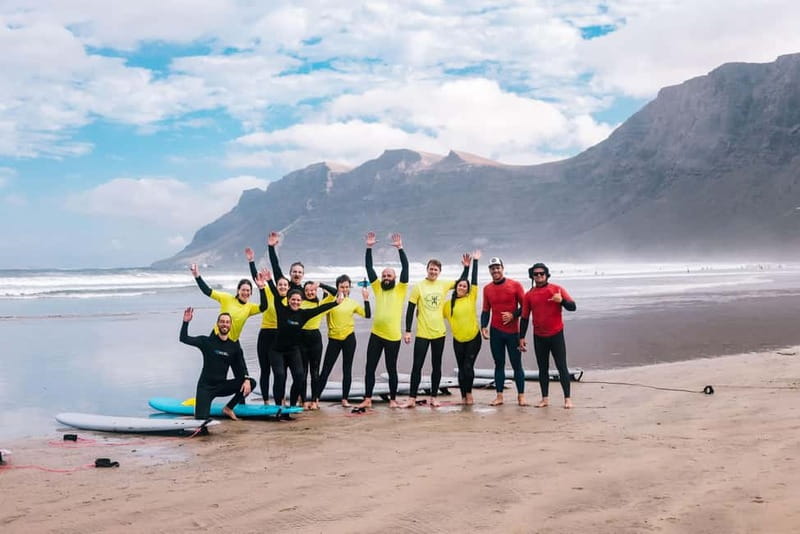
The school includes a surfboard and wetsuit, which is a real value add. Wetsuits help a lot with comfort and patience. If you get cold early, your focus drops and your technique suffers.
You bring swimwear, and the wetsuit handles the rest. Add a towel for drying off, and sunscreen because you’ll be exposed between sessions and during transport.
Also, follow the rules: smoking is not allowed, and alcohol and drugs are not allowed. It’s standard surf-day logic, but it matters for safety and for keeping instructors confident in managing everyone responsibly.
Languages: instructor support across English, Spanish, Italian, and French
If you don’t speak Spanish, don’t worry. The instructors work in English, Spanish, Italian, and French. That helps you understand the key safety points and technique explanations without you having to guess.
Clear communication matters most when you’re learning basics. The ocean does enough without confusing instructions layered on top. When your brain understands what to do, your body can actually try it in the water.
Practical timing and what to bring so the day stays smooth
Here’s your practical checklist based on what you’re told to bring:
- swimwear
- towel
- sunscreen
- water
And if you’re doing the longer, full-day style option, bring your own snack or lunch for the break around 12. Even if you’re not starving, having food ready helps you avoid the slow crash that can happen mid-lesson when energy dips.
One more tip: wear gear you can rinse off easily. You’ll likely be changing into and out of swimwear and wetsuit, and you want the rest of your day to feel easy afterward.
Price and value: is $59 a good deal for Lanzarote surfing?
At around $59 per person, this class is priced in a way that makes sense once you factor in what’s included. You’re not paying extra for equipment. You get a wetsuit and surfboard, plus transport to the beach, plus instruction from certified professionals.
That’s the difference between a “rent a board” experience and an actual learning session. You’re paying for coaching that helps you stand up sooner, paddle smarter, and surf more safely. If you’re traveling without surf gear and without a local who can guide you, the value jumps.
The best way to judge it for yourself: think about what you’d spend if you rented equipment, found a beach spot, and then tried to learn from practice alone. This lesson saves you time, confusion, and trial-and-error.
Who should book this surf school, and who should skip it
This is a strong fit if you want:
- a first surf experience with clear safety and technique coaching
- a course that also supports people with some surfing experience
- small-group energy with up to 8 people, plus the option for private lessons
It is not suitable for:
- people with heart problems
- non-swimmers
Be honest with yourself about water comfort. Even with excellent instructors, you need to be able to handle the basics of being in the ocean for a few hours.
Little things that make your first lesson better
Based on the way instructors are described in feedback, a calm mindset helps. If you feel anxious in the waves, that doesn’t mean you’re doing it wrong. The better lesson will coach you through it patiently. Look for an instructor who keeps guiding you and who gives you the next step without rushing you.
Also, pay attention during the on-land part. The session works best when you treat that guidance as a set of instructions you will apply immediately, not as lecture content you can ignore. Your progress will feel smoother when you try what you learned right away.
And finally, don’t compare yourself to faster surfers in your group. Your goal is clean basics, not instant tricks.
Should you book Lanzarote’s First Surf School surf classes?
Book it if you want a structured surf lesson at Famara Beach with certified instruction, small group sizes, and equipment included. This is the kind of setup that helps beginners feel comfortable and gives returning surfers practical feedback.
Skip it if you are a non-swimmer or if you have heart-related concerns. Otherwise, if you’re ready to learn the basics and trust your instructor’s safety and technique guidance, this is a smart, good-value way to experience Lanzarote surfing without turning the day into chaos.
If you tell me your level (true beginner or you’ve caught a few waves before), I can suggest whether the 2-hour or 4-hour format fits you better.
Latest Lanzarote reviews into the ledger


Workshops, compared.

Barcelona Paella Cooking Class with Market Visit, Tapas & Sangria
Read our review →

Spanish Cooking Class Paella Tapas and Sangria in Madrid
Read our review →
Surfing Lesson for All Levels, Photos included
Read our review →
Paella and Sangria Workshop in the City Center
Read our review →
Paella Cooking Class, Wine Tasting & Central Market in Valencia
Read our review →
Group Surfing Lesson at Playa de las Américas, Tenerife
Read our review →
Paella Cooking Class in Madrid with Bottomless Wine Pairing
Read our review →Browse the lists this tour appears in