
Reviewed · WALKING TOURS
Madrid Best Walking Tour: Old city and Royal sites
Madrid can feel like a puzzle you solve on foot. This walking tour strings together Debod Temple, royal-area monuments, and classic old-town squares, so you get a fast, street-level feel for how Madrid ticks. I especially liked the small group format, which keeps questions from getting lost, and the guide style that turns big landmarks into stories you can remember.
You’ll also get practical guidance for what to do next, including food and drink ideas along the way. One thing to consider: it is an active walk through plazas and some uneven ground, so you’ll want sturdy shoes and a plan for stairs.
In This Review
- Key Highlights You’ll Feel Right Away
- A Short Walk That Gives You Madrid Bearings Fast
- Debod Temple, Where Egypt Lives in the Middle of Madrid
- Parque del Oeste Panoramas and the IX-Century Clue
- Plaza de España to Plaza de Oriente, Cervantes Meets Royal Power
- Outside Almudena Cathedral and Royal Palace, What You Can Expect
- Calle Mayor’s Old Stone Streets and Plaza de la Villa’s Political Echoes
- San Miguel Market Stop, How to Use It Without Getting Lost
- Plaza Mayor, Where Old Madrid Still Performs
- $36.30 Value, Small-Group Pace, and the Real Work of Walking
- Who This Tour Fits Best (and Who Might Prefer Something Else)
- Should You Book This Madrid Walking Tour?
- FAQ
- How long is the Madrid Best Walking Tour?
- What does the tour cost?
- What language is the tour offered in?
- Where does the tour start and where does it end?
- Are inside visits to buildings or museums included?
- What’s included in the tour price?
- How many people are in the group?
Key Highlights You’ll Feel Right Away
- Debod Temple, moved stone-by-stone from Egypt gives Madrid a rare Nile-region connection you won’t see elsewhere.
- Parque del Oeste panoramas help you understand where the city grew from.
- Plaza de España’s Don Quixote statue plus Cervantes context makes the square more than a photo stop.
- Plaza de Oriente royal viewing area links garden sculptures to the power story of the Spanish monarchy.
- Calle Mayor and Plaza de la Villa old-stone streets show you how “Old Madrid” really feels under your feet.
- San Miguel Market timing lets you browse and grab a snack without derailing the day.
A Short Walk That Gives You Madrid Bearings Fast
This tour is built for the moment you land in Madrid and want your brain to stop spinning. You cover a lot of ground in about 2 hours 30 minutes, and you do it in a straight line through the areas most people struggle to connect on their own.
You start in Moncloa-Aravaca, at C. de Ferraz, 22, and you finish back in the center at Plaza Mayor (Pl. Mayor, 2-22). The official guide leads the whole thing in English, and you get a mobile ticket, so you are not scrambling at check-in. There is also a refund option if you are not 100% satisfied, which is a nice safety net when you are trying to plan a first trip.
The big value here is the pacing. It is a small-group experience (up to 18 people), and several guests highlight that the guide manages the flow well, with helpful audio gear (ear pieces) when street noise gets loud. In plain terms, you can actually hear what matters.
More Walking Tours in Madrid
- Madrid Tapas & Wine Tasting Walking Tour – Small Group Local Bars
★ 5.0 · 3,644 reviews - Toledo Tour & Vineyard Walk with Wine Tasting from Madrid
★ 5.0 · 2,546 reviews - Madrid Walking Tour from Puerta del Sol to Retiro Park
★ 5.0 · 2,285 reviews - Madrid Old Town & Royal Palace Walking Tour Skip the Line Ticket
★ 4.5 · 1,829 reviews
Debod Temple, Where Egypt Lives in the Middle of Madrid
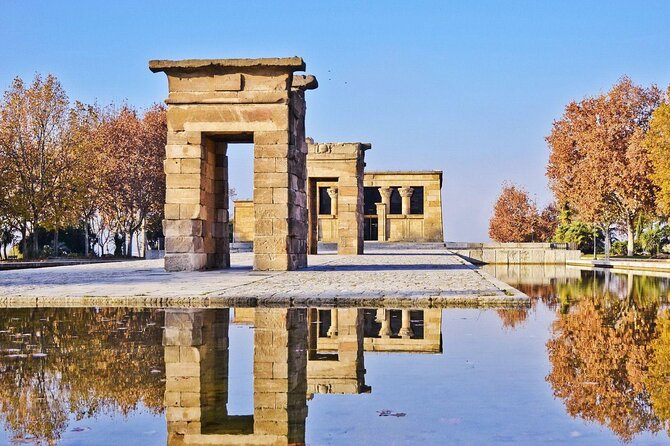
The morning begins at the Templo de Debod, one of Madrid’s most unusual cultural crossovers. This is an Egyptian temple that was taken apart and rebuilt stone by stone in Madrid after it was saved from being submerged by the Aswan Dam project. It is more than 2,220 years old, and it was consecrated to the god Amon.
Here’s why this stop hits so well. It reframes Madrid’s identity for you. You are still in Spain, but you’re standing inside a piece of ancient Nile history, set into a modern city park. That contrast makes the details stick, even if you’re not a hardcore Egypt fan.
Look for the temple’s quiet seriousness, the kind of place where the stonework and layout feel deliberate. The admission ticket is included for this stop, so you do not have to figure out extra entry tickets on the fly. It is also a good first checkpoint for your tour rhythm, you start grounded, then Madrid’s “royal and old-city” theme starts to make even more sense.
Parque del Oeste Panoramas and the IX-Century Clue
Next up is Parque del Oeste, where the views do half the storytelling for you. This is described as the most impressive panoramic look over Madrid, and it matters because you get a sense of where the city began.
The guide places this viewpoint in the context of Madrid’s early origins, noting that the city was born on the site in the IX century, connected back to the Debod Temple area. It’s the kind of framing that helps you stop seeing Madrid as a set of disconnected sights and start seeing it as a place that grew from specific positions.
Practical note: park viewpoints can mean some walking on uneven surfaces. Take it slow here, especially if you’re traveling with anyone who has mobility limits. One review praised a guide for being accommodating for a wheelchair user, but another mentioned that there are stairs to climb during the overall walk. So bring the mindset that this is not a flat stroll.
Plaza de España to Plaza de Oriente, Cervantes Meets Royal Power
Plaza de España is a quick but meaningful stop. The highlight is the statue tribute to Don Quixote and Miguel de Cervantes. It’s an instantly recognizable scene, but what the guide does well is link it to why Cervantes matters in Spanish culture beyond literature trivia.
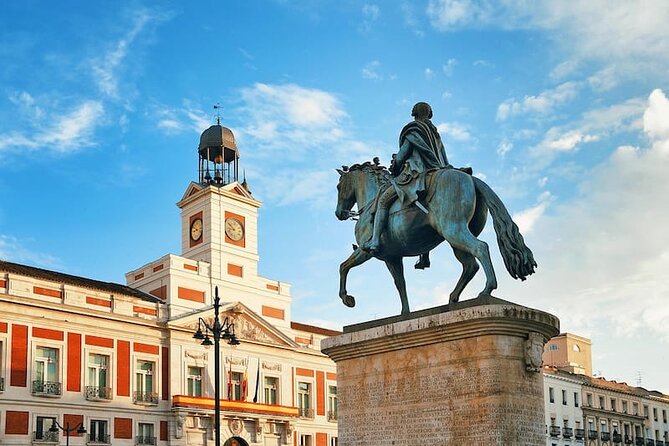
Then the route moves into the Plaza de Oriente area, where the tour leans into monarchy and art. Plaza de Oriente is a monumental garden square with 20 stone sculptures of ancient Visigoth kings, plus the Royal Opera House and the Royal Palace nearby. At the center, you’ll see an equestrian bronze sculpture of King Philip IV. The details here are the kind that make you stop thinking “royal palace” and start thinking about the long web of art, politics, and patronage in Spain. The design is attributed to Galileo Galilei and Velázquez.
This is also where you get some of the best “what am I looking at” value. The guide can explain what those sculptures represent and how the garden space is tied to royal imagery. If you like architecture and symbolism, this is a strong stretch of the tour.
A small consideration: plaza areas often get busy, and you’ll want to pause for photos without holding up the group too long. The small-group size helps, but it’s still a scheduled walking flow.
More Spanish cities taken on foot:
- Madrid: Welcome to Madrid Guided Walking Tour★ 4.9 · 1,738 reviews
- Madrid: Spanish Inquisition and Legends Evening Walking Tour★ 4.7 · 1,396 reviews
- Majestic Madrid Walking Tour★ 5.0 · 1,274 reviews
Outside Almudena Cathedral and Royal Palace, What You Can Expect
The tour keeps the focus practical, with exterior viewing of two major landmarks.
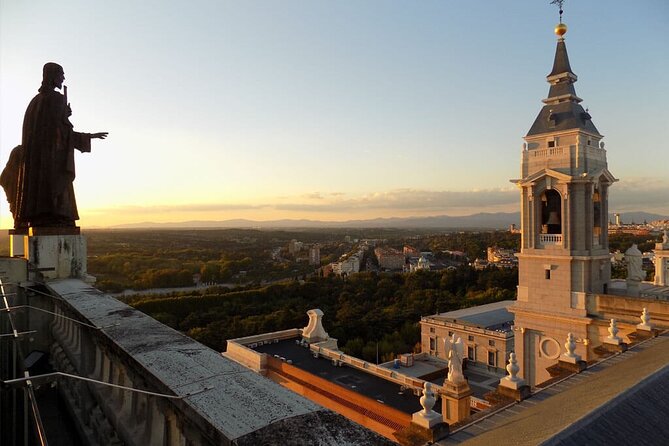
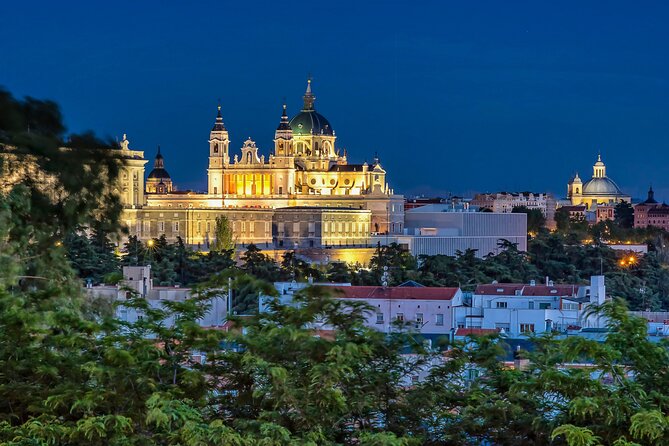
At Catedral de Sta Maria la Real de la Almudena, the guide describes the majestic Neogothic cathedral and the surrounding area from the outside. There is no promise of an interior visit here. That actually makes sense for a 2.5-hour itinerary because the tour aims to connect multiple big sights and neighborhoods rather than locking into one long museum-style stop.
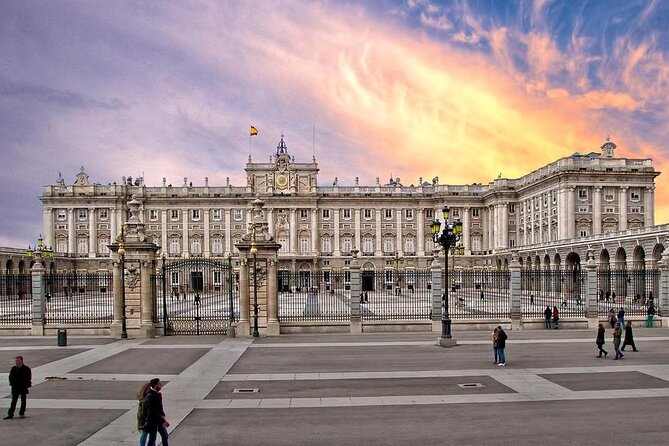
Then you reach the Royal Palace of Madrid. Again, you’re seeing the palace from outside. The Royal Palace is the official residence of the Spanish kings, and the guide explains the historical and artistic heritage associated with the building, but you are not going inside on this experience.
If you want palace interiors, you’ll need another ticket or a separate visit. But don’t treat “outside only” like a downgrade. From the outside, you still get context, especially if your guide explains what parts of the building matter and how royal power is expressed through architecture and space.
Photo tip: stand a few steps back for full-building shots, then walk closer for façade details. The guide’s storytelling helps you know what to look for instead of just snapping and hoping.
Calle Mayor’s Old Stone Streets and Plaza de la Villa’s Political Echoes
Calle Mayor is where Madrid starts to feel like a lived-in history lesson. This section is described as a historical walk down old Madrid’s main street, through old stone pavement, squares, and narrow alleys connected to the XV century Habsburg quarter. You’ll feel the difference from the big civic spaces, because streets here are tighter and more human-scaled.
Then the walk flows into Plaza de la Villa, described as the heart of ancient Madrid. This square includes the city hall, Plaza de la Villa, and a statue of Álvaro de Bazán, the Grand Admiral of the Spanish Armada.
This stop is valuable because it shifts your attention from famous monuments to the kind of local civic power that makes cities run. It helps you understand that Madrid was not only kings and cathedrals, it was also administration, decision-making, and public life.
And since this is a guided walk, you’re not left translating things on your own. Several guests praised guides for answering questions clearly, and you can use this portion to ask about what neighborhoods feel best for your interests, food preferences, and pacing.
San Miguel Market Stop, How to Use It Without Getting Lost
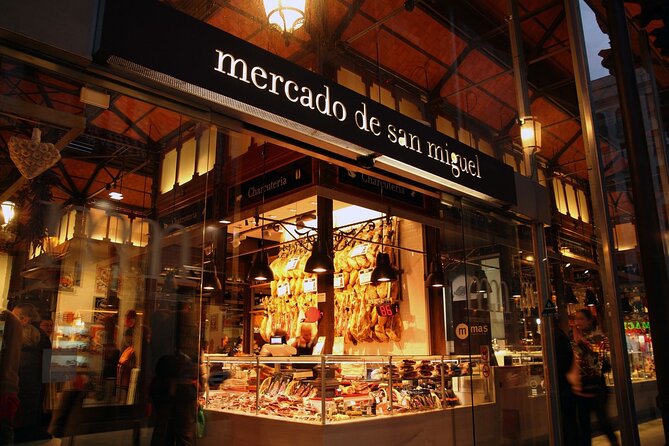
At Mercado San Miguel, you get a quick taste of Madrid’s food culture. It is famous for tapas and delicatessen stores, and the stop is short, about 10 minutes.
Here’s how I recommend you use your time. Treat it as a browse-and-choose moment, not a sit-and-stare. Walk the aisles, look at what’s easiest to grab, and decide whether you want a snack now or come back later when your feet are less tired. If you’re with a group, this is also a good moment to coordinate so you do not split and spend the rest of the day searching.
The tour includes an admission ticket for this stop too, so you should be able to get in without extra hassle. Just remember: the tour does not promise a formal tasting. You will likely need to pay for what you want to eat and drink inside.
One practical benefit mentioned in reviews: guests liked that the guide can build in small comfort moments, like a bathroom stop. Even if that’s not guaranteed every time, it’s a good sign that the guide is paying attention to real traveler needs.
Plaza Mayor, Where Old Madrid Still Performs
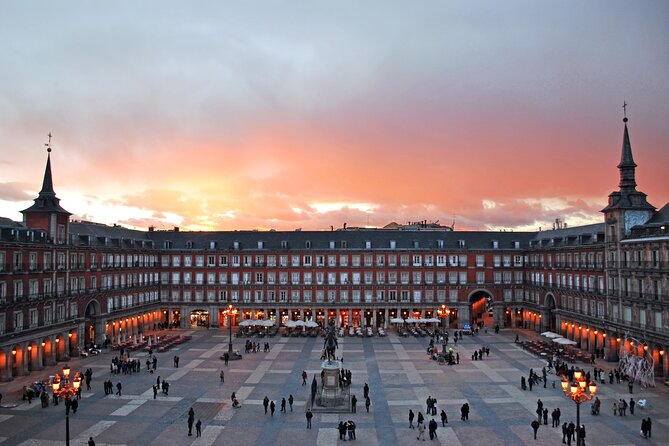
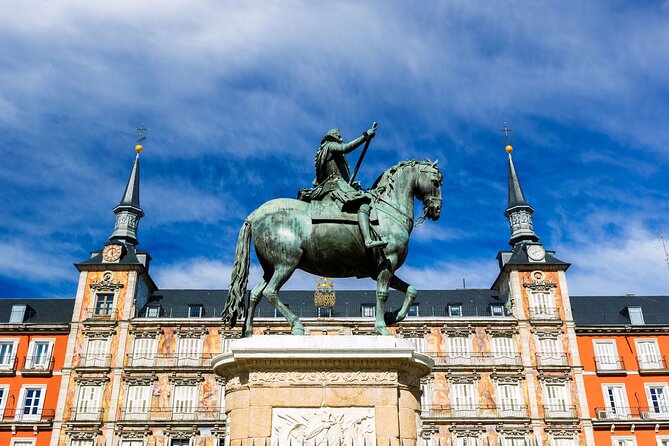
You finish with Plaza Mayor, the iconic center of old Madrid. This is the main square of the old city, remembered for medieval tournaments, inquisition trials, and even bullfights. At its center is an equestrian statue of Philip III of Spain, and the square is surrounded by restaurants and tapas bars, including some of the oldest taverns of the world.
This stop is more than sightseeing because it gives you a practical landing zone. When the tour ends, you’re right where it makes sense to keep exploring, whether that means shopping, people-watching, or heading for your next meal.
If you’re planning your day after the tour, Plaza Mayor is a smart base. You’ll find plenty of places to sit, compare notes, and decide your next neighborhood. And because it is very central, it is also convenient for getting back to your hotel.
$36.30 Value, Small-Group Pace, and the Real Work of Walking
The price is $36.30 per person, and for what you get, it is fairly strong value. You’re paying for an official local guide, a guided route across major landmarks, and admission tickets tied to multiple stops, all within about 2 hours 30 minutes.
The real cost you’re paying is time on your feet. Most people can participate, but this is still a walking tour with multiple plazas and some steps involved. One review even flagged that there are lots of stairs. Another noted that the guide helped make things easier for someone using a wheelchair. That tells me the route may not feel the same for everyone, so I recommend you judge based on your own comfort with stairs and uneven ground.
A practical money-saving angle: rather than piecing together separate entries and guessing what order makes sense, you get one planned arc from Debod to Royal areas and down into Old Madrid. It is a fast orientation that can help you plan later days more efficiently.
And if you’re wondering about listening quality, multiple guests praised that audio was helpful when traffic noise got loud. That is not glamorous, but it matters, because a history tour falls apart if you can’t hear.
Who This Tour Fits Best (and Who Might Prefer Something Else)
This experience is a great fit if you:
- Want an English-guided walk that helps you orient fast
- Like art, architecture, and the symbolism of Spanish monuments
- Prefer a small group where questions get handled
- Enjoy a short market stop for food browsing
It may be less ideal if you:
- Want inside museum-style visits, because this focuses on exteriors and street-level viewing
- Are traveling with very young kids, since this style leans heavily on history and details
- Have limited comfort with stairs or sustained walking, because parts of the route involve steps
If your group includes someone with accessibility needs, the best move is to tell the guide ahead of time when you book. One guest praised Maria for being accommodating for a wheelchair user, and that kind of responsiveness is exactly what you want to count on for a smooth experience.
Should You Book This Madrid Walking Tour?
I think you should book if you’re aiming to understand Madrid quickly without bouncing between random spots. Debod Temple alone is worth the route, and pairing it with royal-area viewpoints and old-town squares gives you a clear mental map of the city.
If you hate walking, hate stairs, or require interior museum time, you might want a different kind of tour with fewer stops and more indoor content. But if you want the practical combo of landmark seeing plus guide-led context, this one is a smart start.
If you book, wear comfortable shoes, keep an eye on your messages, and go in ready to ask questions. Guides like Maria and Ignacio are repeatedly singled out for pacing, storytelling, and helpful recommendations. With the right shoes, this tour does what a great walking tour should do: it gets you oriented, entertained, and ready to explore on your own.
FAQ
How long is the Madrid Best Walking Tour?
The tour lasts about 2 hours 30 minutes.
What does the tour cost?
The price is $36.30 per person.
What language is the tour offered in?
The tour is offered in English.
Where does the tour start and where does it end?
It starts at C. de Ferraz, 22, Moncloa – Aravaca, 28008 Madrid, Spain, and ends at Pl. Mayor, 2-22, Centro, 28012 Madrid, Spain.
Are inside visits to buildings or museums included?
No. The tour notes that inside visits to buildings or museums are not included.
What’s included in the tour price?
You get an official local guide, and admission tickets are included for the listed stops.
How many people are in the group?
The tour has a maximum of 18 travelers.
Latest Madrid reviews into the ledger





Walking Tours, compared.
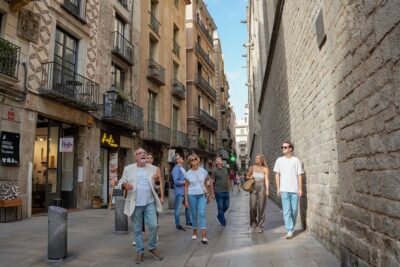
Barcelona Tapas and Wine Experience Small-Group Walking Tour
Read our review →
Tapas Walking Tour with Food, Wine, and History
Read our review →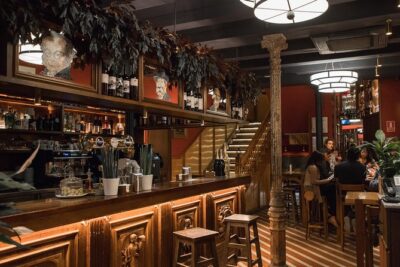
Madrid Tapas & Wine Tasting Walking Tour – Small Group Local Bars
Read our review →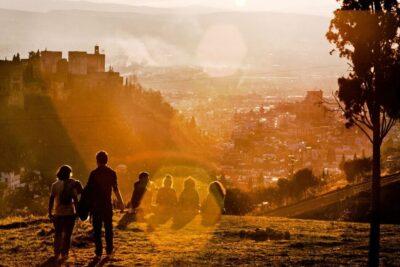
Albaicín and Sacromonte Guided Sunset Walking Tour
Read our review →
Toledo Tour & Vineyard Walk with Wine Tasting from Madrid
Read our review →
Madrid Walking Tour from Puerta del Sol to Retiro Park
Read our review →

Barcelona Tapas Walking Tour: Food, Wine & History
Read our review →Browse the lists this tour appears in