
Reviewed · WALKING TOURS
Madrid: City Highlights Guided Walking Tour
Madrid’s best shortcuts run through its old squares. In just 2.5 hours, an English-speaking guide leads you through the historical core, tying together big landmarks like Debod Temple and the Royal Palace with the kind of street-level stories that make the city feel legible.
I love the Temple of Debod stop, because it is not just a postcard scene, it is a real cultural link to Egypt that you understand as you stand there. I also like the easy-going pace, plus guides such as Maria, Ignacio, and Dani getting repeated praise for clear, funny explanations and for making time for questions.
One consideration: this is a walking tour on older streets, so it is not suitable for people with mobility impairments, and you will want grippy shoes for uneven cobblestones and frequent stops.
In This Review
- Key highlights worth your attention
- Meeting at El Aleph and getting oriented fast
- Plaza de España, Cervantes, and the city’s formal side
- Parque del Oeste panoramas you can actually use
- Debod Temple, the 2200-year-old “stone-by-stone” story
- Plaza de Oriente and the sculptures of Spain’s kings
- Almudena Cathedral and the Royal Palace exterior: what to look for
- Calle Mayor’s cobblestones and a 15th-century feeling
- Plaza de la Villa and City Hall as the old Madrid heart
- Mercado de San Miguel for tapas and a sensible food break
- Finishing at Plaza Mayor: oldest tavern atmosphere, full-circle
- Price and value: what $30 gets you in 2.5 hours
- Who should book this, and who should skip it
- Quick practical tips before you go
- Should you book this Madrid city highlights tour?
Key highlights worth your attention
- Debod Temple with real context: a 2200-year-old Egyptian temple moved to Madrid stone by stone.
- Royal symbolism in public art: the King Philip IV equestrian bronze sculpture links art and science through Galileo and Velázquez.
- Gothic architecture without the scramble: you see the outside of Catedral de la Almudena in a smart, guided walk.
- Old Madrid by foot: Calle Mayor’s cobblestones and narrow alleys give you a 15th-century feeling.
- Practical tapas timing: Mercado de San Miguel is part of the route, so you have an easy food option near the middle or end.
- Guides that manage the group well: repeated mentions of attentive, question-friendly hosting like Maria and Ignacio.
Meeting at El Aleph and getting oriented fast
You start at C. de Ferraz, 22, in front of the bookstore El Aleph. It is a simple meeting point, and that matters more than people think. Madrid’s center is easy to get lost in, and a smooth start sets the tone for the whole walk.
From there, the route is built like a conversation: you move from major squares into tighter streets, then back out to viewpoints. The rhythm helps you learn the city’s “shape,” not just its monuments. You will also get photo stops along the way, so it is not a nonstop march.
What I like for first-day planning is that this tour reads like a framework. Afterward, you can connect the dots faster when you explore on your own, because you already understand where each district energy comes from.
More Walking Tours in Madrid
- Madrid Tapas & Wine Tasting Walking Tour – Small Group Local Bars
★ 5.0 · 3,644 reviews - Toledo Tour & Vineyard Walk with Wine Tasting from Madrid
★ 5.0 · 2,546 reviews - Madrid Walking Tour from Puerta del Sol to Retiro Park
★ 5.0 · 2,285 reviews - Madrid Old Town & Royal Palace Walking Tour Skip the Line Ticket
★ 4.5 · 1,829 reviews
Plaza de España, Cervantes, and the city’s formal side
One of the first “public face” stops is Plaza de España. You get time here to take in the big open space, but the payoff is in what surrounds it. The walk includes the statue of Cervantes, the writer behind Don Quixote, which gives you a literary anchor early on.
Plaza de España also works as a reset point. You are still walking, but you are not trapped in narrow lanes. That open-air moment helps you mentally regroup before you move toward the grand royal and cathedral zone.
If you are someone who likes to understand why a statue matters, this stop is worth your attention. It is not only about seeing the landmark, it is about learning how Madrid projects identity through names, art, and power.
Parque del Oeste panoramas you can actually use
Next comes Parque del Oeste, with photo stops and guided context. Even if you only get a quick look, a viewpoint visit does two useful things. First, it confirms where you are in relation to the rest of the center. Second, it gives you a sense of Madrid’s scale, especially after you have been walking through tighter streets.
A viewpoint stop on a short tour is smart. You are not stuck guessing what a neighborhood looks like from above later. You can remember the shapes and streets you saw, and that helps when you plan your next walk, museum visit, or evening stroll.
Debod Temple, the 2200-year-old “stone-by-stone” story
Templo de Debod is one of the most distinctive stops on the route. You are not just looking at an Egyptian-style temple sitting in Madrid. You learn that it is 2200 years old, and that Spain received it as a gift and moved it to Madrid stone by stone.
That detail changes how you see the place. It is easy to treat Debod as a novelty, but the guided explanation makes it a chapter in international history. The temple becomes a physical reminder that cultures travel, even when the centuries are far apart.
Also, Debod is a good “photo with meaning” stop. You can frame shots with fewer distractions, because the story gives you something to look for, not only something to snap. This is where the tour often earns its most emotional reaction, because it feels unexpected in the best way.
More Spanish cities taken on foot:
- Madrid: Welcome to Madrid Guided Walking Tour★ 4.9 · 1,738 reviews
- Madrid: Spanish Inquisition and Legends Evening Walking Tour★ 4.7 · 1,396 reviews
- Majestic Madrid Walking Tour★ 5.0 · 1,274 reviews
Plaza de Oriente and the sculptures of Spain’s kings
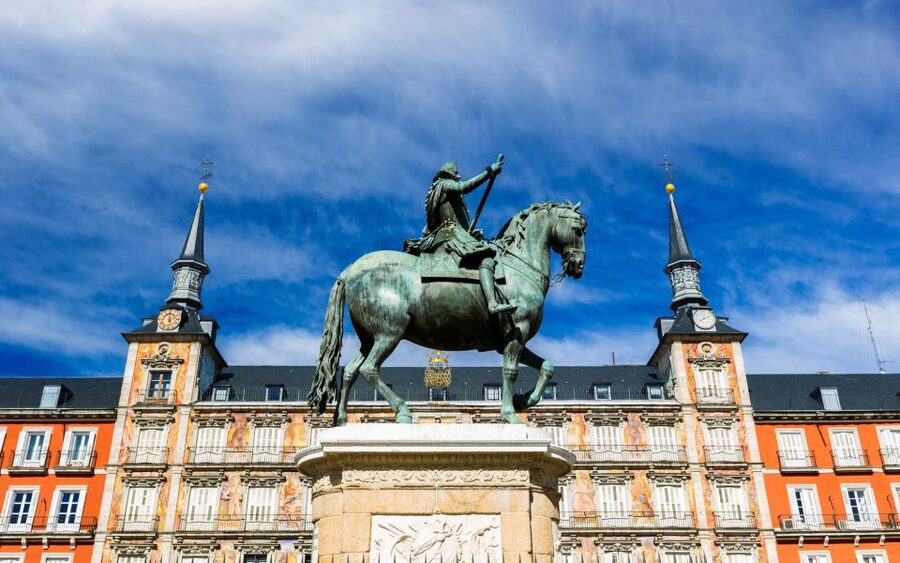
After the royal-adjacent stretch begins, you land in Plaza de Oriente, described as a garden square with a collection of 20 sculptures depicting historical kings of Spain. This is one of those places where you can walk slowly without feeling stuck. The sculptures encourage you to look around, not just forward.
A specific highlight here is the equestrian bronze of King Philip IV, designed by Galileo and Velázquez. That pairing is the kind of fact that makes architecture and public art click for many people. You see the king figure, then you connect it to the names behind the art.
Practical tip: if you are touring during busy hours, give yourself a minute to step aside for photos. The space is designed for viewing, but like many central squares, it can fill in quickly.
Almudena Cathedral and the Royal Palace exterior: what to look for
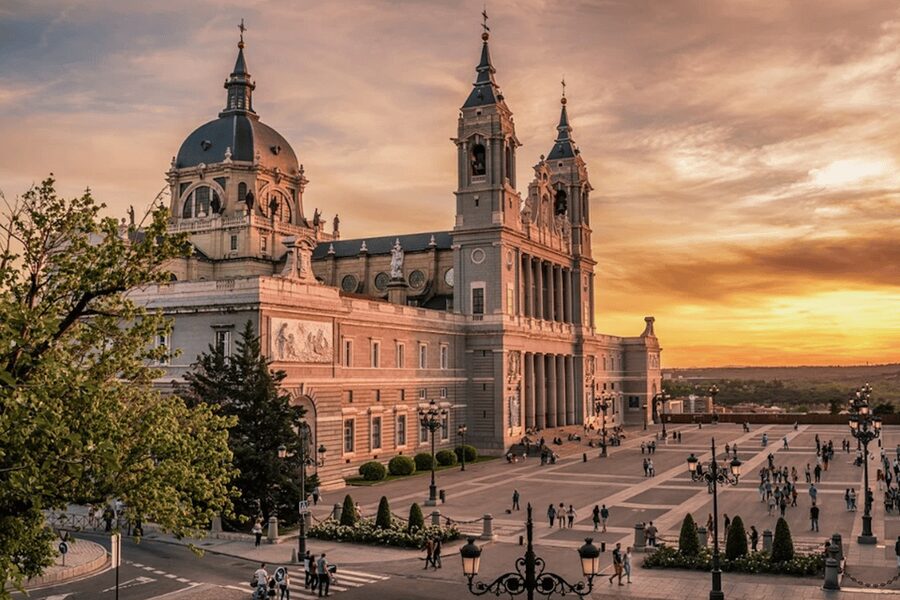
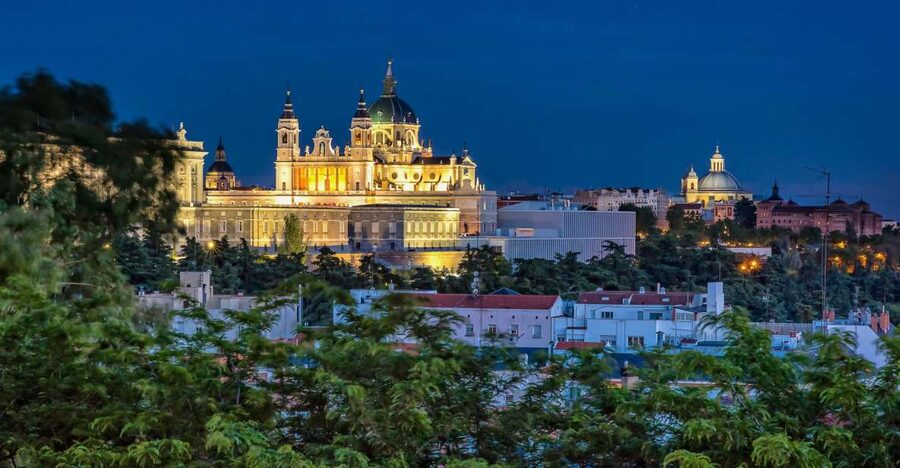
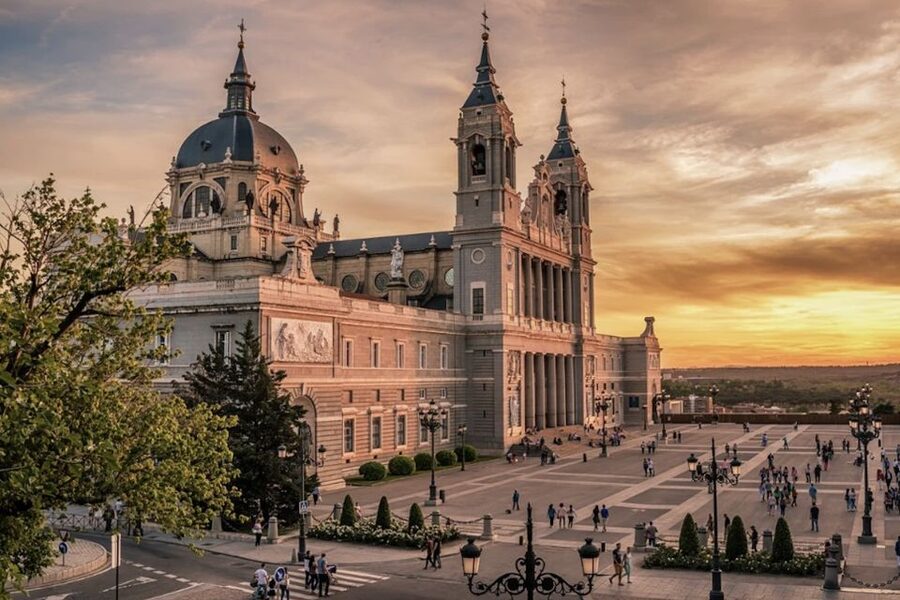
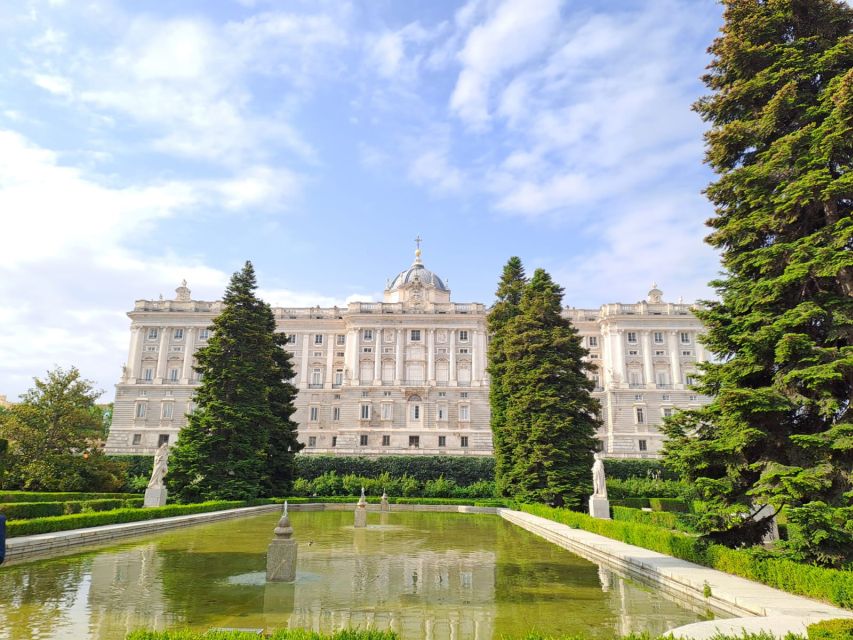
You see the outside of Catedral de la Almudena and admire its majestic Gothic architecture. The word Gothic can sound like a label, but on this walk it becomes a set of things you can spot: structure, vertical emphasis, and the overall cathedral silhouette. Even without entering, you can read the style.
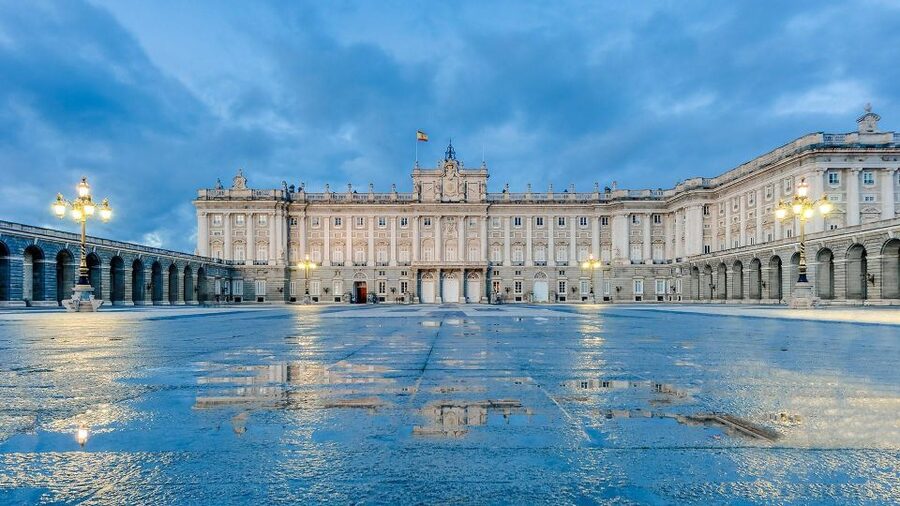
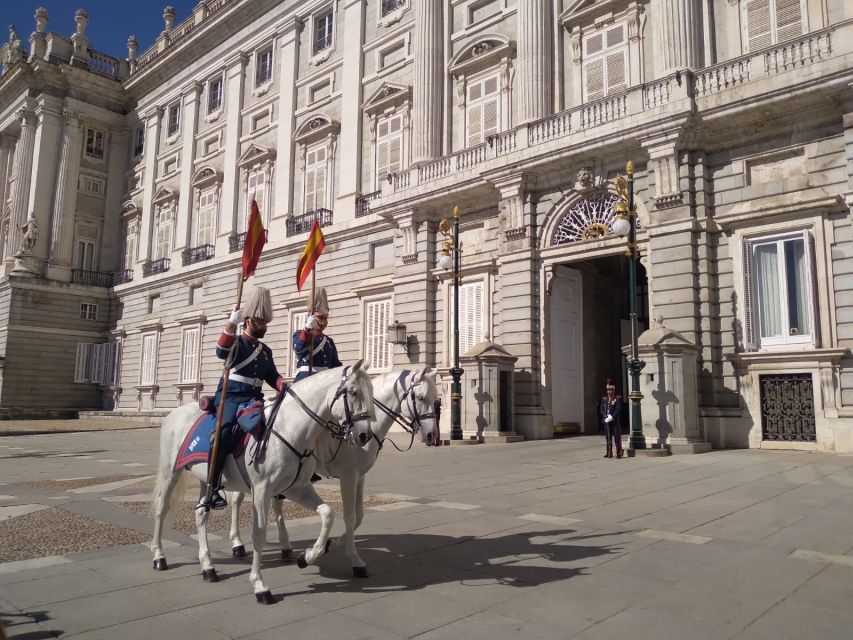
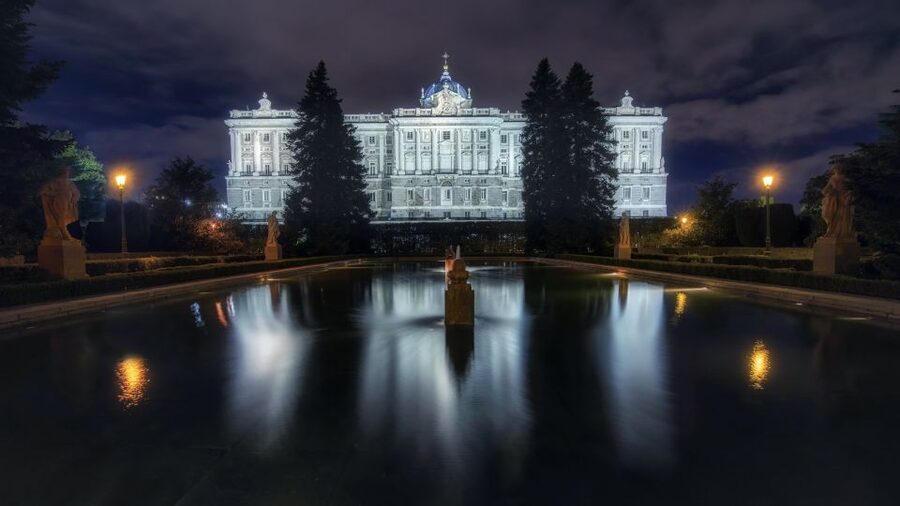
Right next to it is the Royal Palace of Madrid, which you visit for guided context from the outside. The tour is explicit that this is about the exterior, and that is actually useful. You still get the historical and artistic significance, but you avoid getting stuck in lines that can derail a short, 2.5-hour plan.
For me, the key value in this part is the proximity. You get cathedral scale and palace power in the same visual loop. That makes it easier to understand how Madrid’s ceremonial center works as a single ensemble.
Calle Mayor’s cobblestones and a 15th-century feeling
Then you get a change of pace, but not a change of focus. Calle Mayor is Madrid’s old main street, and the guided walk transports you back with cobblestones, narrow alleys, and squares that feel rooted in earlier centuries.
This stretch matters because it is not just “pretty old streets.” It is how city life worked before cars and wide boulevards. When your guide points out what you are seeing, the street becomes evidence. You start noticing where people might have paused, how the street funnels movement, and why squares became social stages.
The drawback here is also simple: uneven streets mean you will feel the ground under your shoes. If you know you get sore easily, this is the area where good footwear pays off.
Plaza de la Villa and City Hall as the old Madrid heart
Next is Plaza de la Villa, the heart of old Madrid and home to the City Hall. You also see the statue of Álvaro de Bazán, the Grand Admiral of the Spanish Armada. That adds a military and maritime layer to what might otherwise feel purely royal and religious.
Plazas like this are valuable on short tours because they connect big themes. You are not only learning who ruled Madrid, you are learning who defended and represented Spain. Bazán’s presence makes the Armada story feel grounded in real geography.
If you like history that connects across centuries, this stop gives you that bridge. It also gives you a slightly more grounded, local-feeling square compared with the palace zone.
Mercado de San Miguel for tapas and a sensible food break
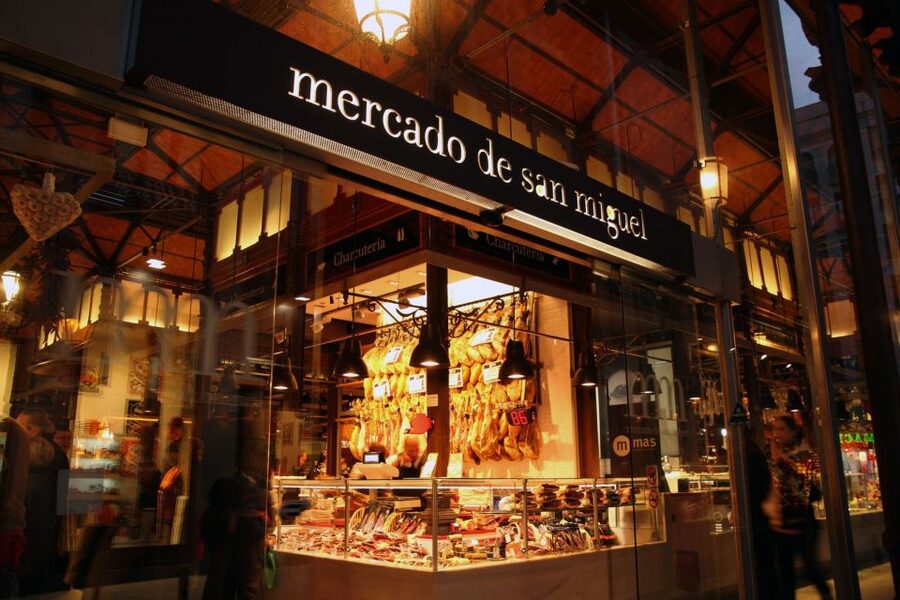
The tour stops at Mercado San Miguel, famous for tapas and delis. This is a practical inclusion. Even if you do not eat during the tour, you now know exactly where to go later without guessing.
One nice angle: a market stop works as a palate reset after heavy sightseeing concentration. By the time you reach the market, you have usually been looking at major buildings and formal squares. A food environment brings you back to everyday Madrid.
Important note: the data you have here frames it as a stop at the market, not a guided inside-only food experience. Plan to use it as an option rather than expecting a full tasting program.
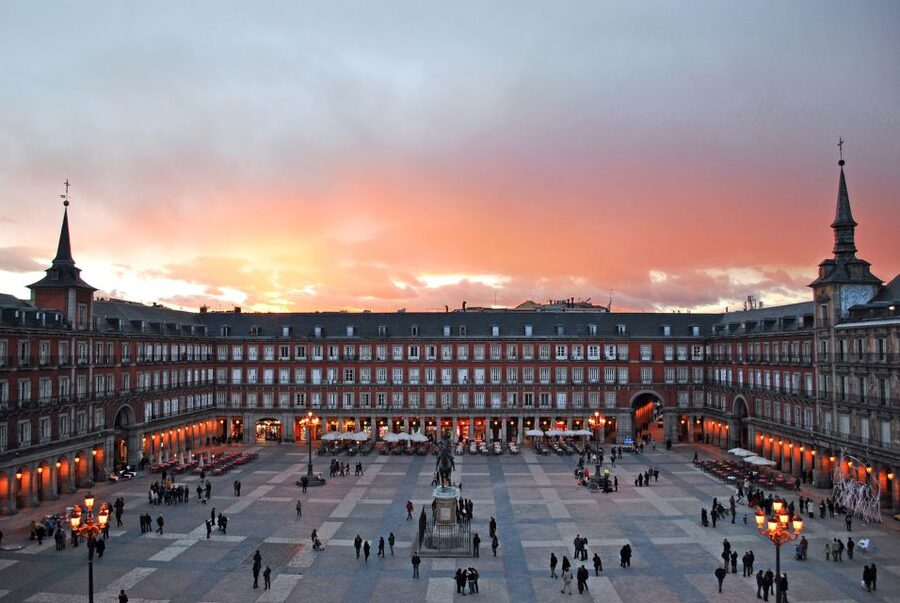
Finishing at Plaza Mayor: oldest tavern atmosphere, full-circle
You end at Plaza Mayor, and the tour frames it as a place to soak in the historical atmosphere among some of the oldest taverns in the world. This finale is well chosen. Plaza Mayor is easy to recognize from photos, but it hits harder in person, especially after the guided route has given you stories and context to attach to every corner.
Finishing in a major square also helps with logistics. You can decide what to do next based on what you are in the mood for, whether that is a relaxed café stop, a photo round, or an easy walk into your next neighborhood.
Price and value: what $30 gets you in 2.5 hours
At $30 per person for 2.5 hours, the value comes from concentration. You cover a lot of “big name Madrid” in one guided framework: Debod Temple, Royal Palace exterior views, Almudena Cathedral exterior, and central squares like Plaza de España, Plaza de Oriente, Calle Mayor, Plaza de la Villa, Mercado San Miguel, and Plaza Mayor.
You also get the guide component, which is the real differentiator on city walks. A guided explanation turns landmarks into something you can remember, and the strong feedback for guides such as Maria and Ignacio suggests this is where the tour earns its score. People repeatedly highlight excellent English, balanced pacing, and the ability to answer questions without turning the walk into a lecture.
Would I suggest this if you only have a few hours in Madrid? Yes. It is also a smart pick if you want a first-day orientation so your self-guided time afterward feels more confident.
Who should book this, and who should skip it
This tour is a great match if you want:
- A guided highlights route through Madrid’s historical center.
- Debod Temple and the royal zone without planning separate tickets or juggling maps.
- A pace that leaves room to ask questions and take photos.
It is less ideal if:
- You have mobility limitations. The tour is explicitly not suitable for people with mobility impairments.
- You dislike walking on uneven, historic streets. Calle Mayor and surrounding lanes involve cobbles and tight sidewalks, so go with comfortable, grippy shoes.
If you enjoy learning through architecture, public art, and street layout, you are in the sweet spot.
Quick practical tips before you go
- Wear shoes with good traction. The route includes cobblestones and narrow alleys.
- Bring a phone camera for Debod and the Parque del Oeste viewpoints. The photo stops are there for a reason.
- Think of this as your Madrid “map with stories.” Plan at least part of the next day to use what you learned, especially around the palace and cathedral area.
- If you are sensitive to walking time, pace yourself during Calle Mayor. Use the guided stops to rest briefly rather than pushing.
Should you book this Madrid city highlights tour?
I think it is a solid choice if you want a guided, efficient walk through central Madrid that hits the big sights and connects them with real stories. The inclusion of Debod Temple as an Egypt-to-Madrid transfer, the detail behind King Philip IV’s sculpture, and the art-meets-history pairings near Almudena and the Royal Palace make it more than a checklist tour.
If your main goal is to “see the names” and you do not care why they matter, there are cheaper ways to cover the same area on your own. But if you want the route to feel understandable, with a guide like Maria or Ignacio keeping the pace friendly and the explanations clear, this is an easy yes for a first or second day in town.
Latest Madrid reviews into the ledger





Walking Tours, compared.
Barcelona Tapas and Wine Experience Small-Group Walking Tour
Read our review →
Tapas Walking Tour with Food, Wine, and History
Read our review →
Madrid Tapas & Wine Tasting Walking Tour – Small Group Local Bars
Read our review →
Albaicín and Sacromonte Guided Sunset Walking Tour
Read our review →
Toledo Tour & Vineyard Walk with Wine Tasting from Madrid
Read our review →
Madrid Walking Tour from Puerta del Sol to Retiro Park
Read our review →
Barcelona Tapas Walking Tour: Food, Wine & History
Read our review →Browse the lists this tour appears in