
Reviewed · WALKING TOURS
Madrid: Guided Walking Tour of Monasterio de las Descalzas
A monastery tour in Madrid can feel either strict or sleepy, but this one is different, you actually get the stories that make the place click. I like how the guide brings Descalzas Reales to life, with legends and art that connect room to room. I also like that you get skip-the-line tickets, so you spend your time inside the monument, not waiting at the entrance.
The one drawback to plan around is simple: no photos inside. If you love taking pictures as your main souvenir, this will feel a little limiting.
In This Review
- Key highlights to know before you go
- First steps at Pl. de las Descalzas, 3, then straight to the facade
- The cloister where tradition still moves, including the Good Friday procession
- The main staircase, Madrid’s best reason to slow down
- Painted walls and ceilings, including the work attributed to Claudio Coello
- Hall of textile hangings and the Choir Room, the monastery’s emotional center
- Plateresque doors and art by Zurbarán, Antonio Moro, and Luca Giordano
- Legends of one of Europe’s richest convents, and why the guide’s tone matters
- Price and value for a 75-minute Madrid monastery visit
- Practical tips: no photos inside, no restrooms, and weather-proof clothing
- Who should book this tour, and who might skip it
- Should you book the Madrid guided walk of the Descalzas Reales Monastery?
- FAQ
- Where do I meet the guide for the Descalzas Reales tour?
- How long is the guided tour?
- Does the ticket include skip-the-line entry?
- Are photos allowed inside the monastery?
- What areas of the monastery will the tour cover?
- Will the tour operate in bad weather?
- Are there public restrooms inside the monument?
Key highlights to know before you go
- Skip-the-line entry: You start viewing the monastery sooner.
- Cloister + Good Friday tradition: You’ll see where a major procession passes each year.
- Main staircase: The guide points out why this spot is considered the monument’s true showpiece.
- Choir Room and textile-hanging displays: Key rooms are included, not just a quick walk through.
- Famous painters’ works: You’ll hear names like Zurbarán, Antonio Moro, and Luca Giordano.
- Plateresque doors and painted ceilings: The tour helps you notice details most people miss.
First steps at Pl. de las Descalzas, 3, then straight to the facade
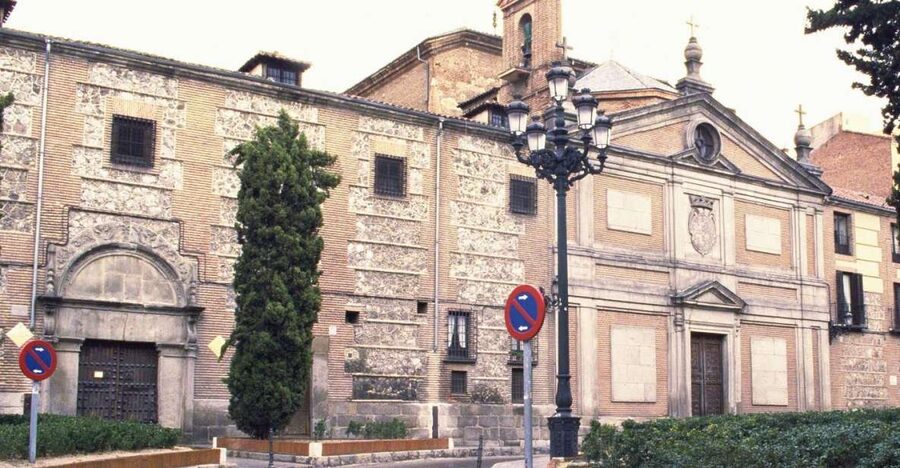
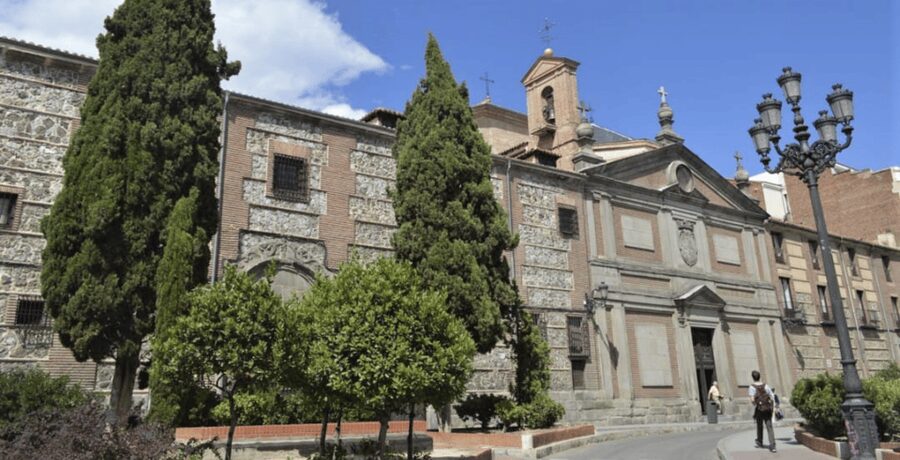
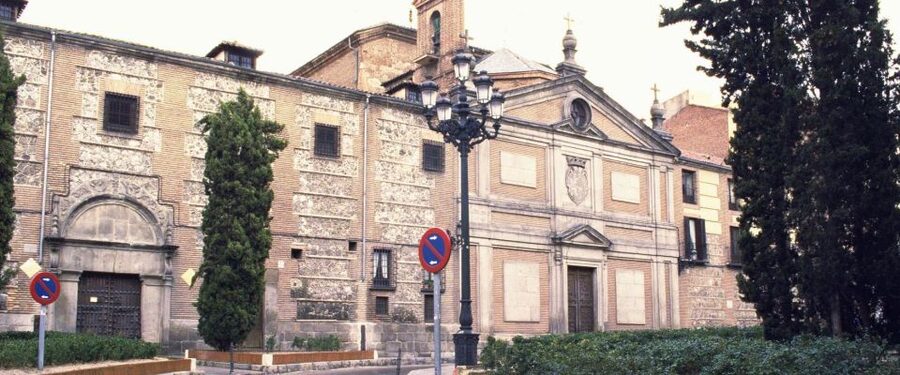
I like starting a tour at a real city doorstep instead of a museum depot, and this one begins at Pl. de las Descalzas, 3. You’ll meet right in front of the monastery entrance, next to benches and statues. The guide is easy to spot, look for an IBE TOURS umbrella or sign.
Before you even pass the threshold, you’ll get a short explanation of the building’s facade and exterior. That matters because monasteries like this can look “pretty and historic” from the street, but knowing what you’re looking at makes the details feel intentional. You also get your bearings fast, which helps you enjoy the interior layout instead of just wandering.
The pace is built for a 75-minute visit, which is long enough to see the key rooms but short enough that you’re not mentally exhausted when you reach the most impressive areas.
The cloister where tradition still moves, including the Good Friday procession
The heart of the monastery experience starts in the cloister, the central space that organizes life inside. Even if you don’t know all the religious context, the guide’s storytelling gives the cloister a sense of rhythm, not just architecture. The atmosphere here is quiet, and that quiet helps you notice the geometry and the way light moves through the courtyard.
One specific tradition you’ll hear about is the Procession of the Holy Burial, which passes through the cloister every year on Good Friday. That’s the kind of detail that makes a visit feel living, not frozen in time. Instead of thinking of the cloister as a decorative courtyard, you understand it as an active stage for ritual.
Practical note: rain can make everything feel less comfortable, but the tour runs rain or shine, so bring what you need to stay steady on your feet. Also, this is not a long walk across town, so you can keep your plans simple.
The main staircase, Madrid’s best reason to slow down
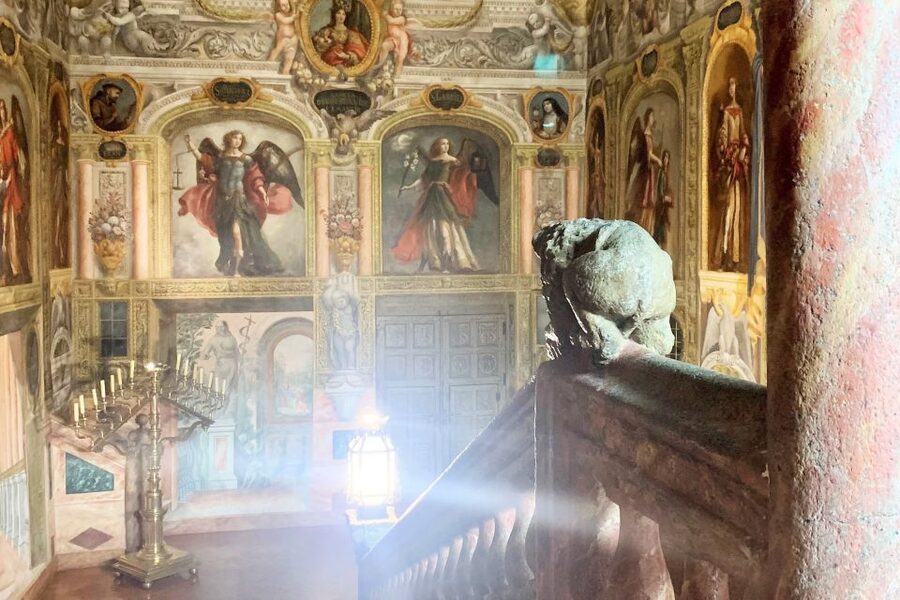
Then comes the moment I think most people remember, the main staircase. Many visitors call it the true jewel of the monument, and the guide’s job is to show you why. You’re not just looking at steps, you’re reading an entire design approach, with attention to where your eye goes as you move through the space.
Staircases in historic religious buildings often carry symbolic weight, and here the guide points you toward the elements that explain that symbolism. As you look up, the tour nudges you to notice how the architecture pulls you toward what matters most in the room.
This is also a good time to settle your expectations about timing. Since the tour is guided and structured, you’ll move when the guide says, so if you’re the type who likes to linger for photos near angles and railings, you’ll need to do that without slowing the group too much. And remember, photos are not allowed inside, so your “lingering” is about seeing, not documenting.
Painted walls and ceilings, including the work attributed to Claudio Coello
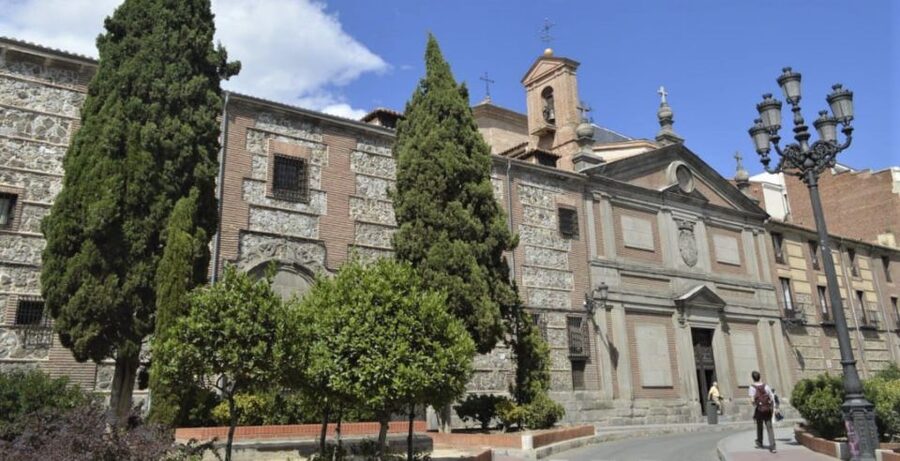
One of the smartest things this tour does is teach you how to look. You’ll notice mural paintings that were created during different periods, so the walls start to feel like layers rather than one fixed display.
Then you’ll look up at the ceiling for an impressive painting attributed to Claudio Coello. This kind of detail is worth knowing because it changes what you see. Instead of a ceiling being just decoration, it becomes a clue to the monument’s artistic network and long timeline of patronage.
You’ll also hear explanations that make the artwork feel connected to the monastery’s identity, not randomly placed “famous art.” That is the difference between seeing a room and understanding it.
Hall of textile hangings and the Choir Room, the monastery’s emotional center
After the staircase area, the tour moves you into rooms where the monastery’s interior life becomes more tangible. Two of the key stops are the Choir Room and the Hall of textile hangings (a room known for its woven wall displays).
The Choir Room is the kind of space that benefits from interpretation. Without a guide, you might treat it as “another room with old furniture.” With a guide, you start connecting the space to sound, worship, and daily rhythm. It’s still visually striking, but the bigger payoff is understanding why the room was designed to support communal prayer.
The Hall of textile hangings gives you a different kind of visual impact. The guide helps you focus on how these works function as both decoration and identity markers. You’ll come away thinking less about one single object and more about what the monastery wanted to communicate through art.
If you’re short on time in Madrid, this kind of guided selection is valuable. You’re not trying to hunt the best rooms on your own. You’re being led to the places where the monastery’s story is easiest to read.
Plateresque doors and art by Zurbarán, Antonio Moro, and Luca Giordano
One reason I’m a fan of art-focused guided tours is that they do the hard part for you. Here, the guide steers you toward Plateresque doors and other details of craft that can otherwise look like “ornament” only.
Then there’s the painting list, which is genuinely useful if you like to name what you’re seeing. Expect to hear about works by Zurbarán, Antonio Moro, and Luca Giordano. Even if you’ve only seen reproductions before, hearing these names while you stand in the room helps you connect your memory to the real scale and lighting conditions.
This is where the tour’s “legend plus art” approach works. The monastery can be described as beautiful, but the guide makes it specific: what it collected, who it reflected, and how the art ties back to power and devotion. That’s the point of hearing stories about what was once the richest convent in Europe, you’re not just collecting trivia. You’re understanding why the rooms look the way they do.
Legends of one of Europe’s richest convents, and why the guide’s tone matters
The monastery’s reputation is tied to wealth, influence, and the quiet authority of cloistered life. During the walk, you’ll learn legends and stories about the monastery when it was described as the richest convent in Europe. The guide keeps these stories grounded in what you can see, so the myths do not float off into the abstract.
I like this approach because it prevents the usual “tour-by-facts” problem. When a guide blends narrative with visual cues, your brain files everything in a more memorable way. You end up remembering not only what room you visited, but what the room “meant.”
The reviews you’ll read online tend to highlight that the guides explain clearly and add personal touches, which matters in a monastery like this. The building is complex. A good guide makes it feel like a guided conversation instead of a lecture you’re surviving.
Price and value for a 75-minute Madrid monastery visit
At $28 per person for a 75-minute guided visit, this is priced like a focused, ticket-supported attraction. The big value lever is the included skip-the-line tickets plus a live guide. If you’ve ever waited at a historic site while others pass you in an organized line, you already know how much time is really worth on a tight itinerary.
This is not a long half-day commitment, so $28 can make sense even for shorter Madrid stays. You’re also paying for interpretation. Without a guide, you might see impressive spaces and still miss the “why,” like the significance of the Good Friday procession route or what to notice in ceiling artwork.
One more small factor: the tour operates with a minimum of 7 passengers, so start times may depend on meeting that threshold. If you’re traveling at a quieter time, you might end up with a smaller group feel, which can make questions easier and the explanations more personal.
Practical tips: no photos inside, no restrooms, and weather-proof clothing
Plan around three practical realities.
First, photography is not allowed inside. That changes how you experience the tour. Your best souvenir becomes your memory, and your notes, if you keep them. Wear something comfortable because you’ll be looking up and moving slowly through different rooms.
Second, there are no public restrooms in the monument. If you’re sensitive to timing, use nearby options before your start time. This is especially important because the tour is 75 minutes, and you don’t want to feel rushed during the most impressive stops.
Third, the tour runs rain or shine. Madrid weather can switch moods fast, so bring a light rain layer or umbrella and shoes with decent grip. The meeting spot is outside, and the tour includes moving between interior spaces.
Finally, double-check your language selection. The live guide is available in French, English, and Spanish, and the tour description you see may emphasize different language options depending on your booking.
Who should book this tour, and who might skip it
I think this tour fits best when you want art and story together. If you enjoy architecture but also care about what people believed, collected, and feared, you’ll likely feel satisfied by the way legends and paintings get connected to rooms you can actually see.
It’s also a good choice if you’re traveling on a schedule. The itinerary focuses on a handful of high-impact areas, including the cloister, the main staircase, the Choir Room, and the Hall of textile hangings, so you don’t feel like you’re touring every hallway in the building.
You might consider skipping if you’re mainly after selfies and photo spots, since photography inside is not allowed. Also, if you need frequent bathroom breaks during tours, the lack of restrooms inside might be a dealbreaker for you.
Should you book the Madrid guided walk of the Descalzas Reales Monastery?
Yes, if you want a focused introduction to one of Madrid’s most striking cloistered sites, and you prefer interpretation over wandering. The combination of skip-the-line entry, clearly guided access to the key areas, and art-focused stops makes the $28 price feel reasonable for what you get.
Book it if you like learning details you can see, like the ceiling artwork attributed to Claudio Coello, the significance of the Good Friday procession through the cloister, and the famous painter names tied to works inside. Skip it only if your priority is photography or if practical constraints like no restrooms inside will stress you out.
FAQ
Where do I meet the guide for the Descalzas Reales tour?
You meet at Pl. de las Descalzas, 3, just in front of the monastery entrance door, next to some benches and statues. Look for a guide with a sign or an IBE TOURS umbrella.
How long is the guided tour?
The tour lasts 75 minutes.
Does the ticket include skip-the-line entry?
Yes. Skip-the-line tickets to the Descalzas Reales Monastery are included.
Are photos allowed inside the monastery?
No. Photography inside is not allowed.
What areas of the monastery will the tour cover?
You’ll visit key interior areas such as the cloister, the main staircase, the Hall of textile hangings, and the Choir Room. You’ll also hear about important exterior features.
Will the tour operate in bad weather?
Yes. The tour takes place rain or shine.
Are there public restrooms inside the monument?
No. There are no public restrooms in the monument.
Spanish Cities on Foot
- Barcelona Tapas and Wine Experience Small-Group Walking Tour★ 5.0 · 5,804 reviews
- Barcelona: Tapas Walking Tour with Food, Wine, and History★ 4.8 · 4,261 reviews
- Madrid Tapas & Wine Tasting Walking Tour – Small Group Local Bars★ 5.0 · 3,644 reviews
- Granada: Albaicín and Sacromonte Guided Sunset Walking Tour★ 4.9 · 2,962 reviews
- Toledo Tour & Vineyard Walk with Wine Tasting from Madrid★ 5.0 · 2,546 reviews
Walking Tours, compared.
Barcelona Tapas and Wine Experience Small-Group Walking Tour
Read our review →
Tapas Walking Tour with Food, Wine, and History
Read our review →
Madrid Tapas & Wine Tasting Walking Tour – Small Group Local Bars
Read our review →
Albaicín and Sacromonte Guided Sunset Walking Tour
Read our review →
Toledo Tour & Vineyard Walk with Wine Tasting from Madrid
Read our review →
Madrid Walking Tour from Puerta del Sol to Retiro Park
Read our review →

Barcelona Tapas Walking Tour: Food, Wine & History
Read our review →Browse the lists this tour appears in