
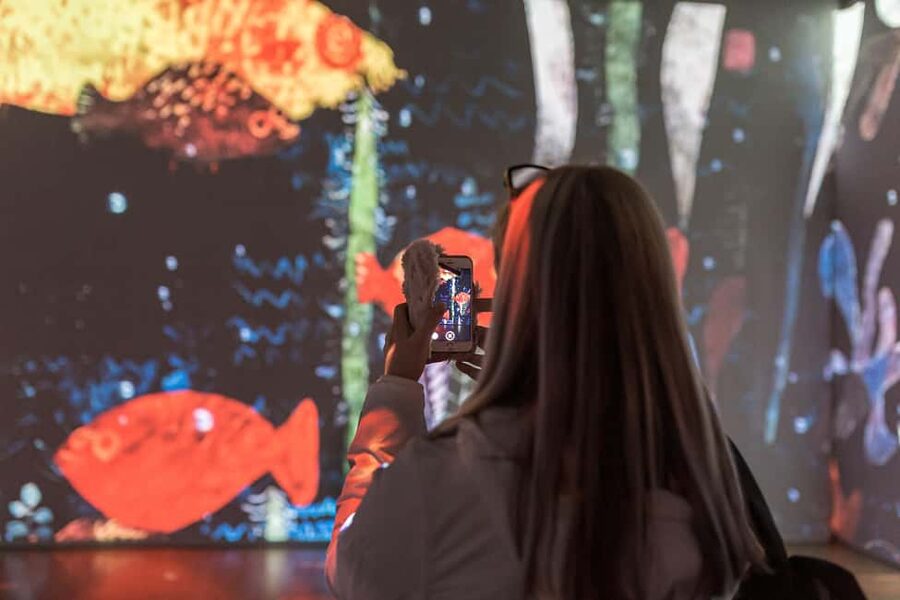
Reviewed · MUSEUMS
Madrid: Nomad Immersive Museum – De Monet a Kandisky
Art that moves, not just hangs. At Madrid’s Nomad Museo Inmersivo, you get VR glasses and a guided journey through the big art shifts from Impressionism to Expressionism. It is a modern art lesson that behaves more like a film you can walk into.
I love how the experience uses HD projections plus enveloping sound to make the masterpieces feel alive, not static. The hands-on bits also help it stick, especially the giant brush moment and the playful stop where you take a photo of your iris. One watch-out: it is show-first, artwork-second, so if you expect tons of original canvases, you may find parts underwhelming or feel the need for extra silence and focus.
Key points I’d plan around
- VR glasses that translate painting styles into something you can look inside
- A main 40-minute projection where images pulse and expand to music
- The infinite corridor built to challenge how you see space and perspective
- Iris photo moment that makes the art feel personal
- Giant brushes workshop with a winter scene you help create
In This Review
- What This Monet to Kandinsky Show Actually Gives You
- The Main Event: A Moving 40-Minute Projection With Sound
- VR Glasses: Seeing Art Styles as a Space You Enter
- The Infinite Corridor: A Perception Trick You Should Actually Follow
- The Iris Photo Moment: Turn Yourself Into Part of the Art
- Giant Brushes and a Winter Wonder Scene: Do It, Don’t Just Watch
- The Art Movements You’ll Recognize, and How to Spot Them
- Staff, Flow, and the Importance of Silence During Key Parts
- Price in Madrid: Is It Good Value?
- Who Should Book, and Who Might Want Something Else
- Practical Tips for Getting the Most Out of Your Day
- Should You Book This Nomad Museo Inmersivo Experience?
- FAQ
- How long is the experience?
- What times are available to start?
- Where do I go for check-in?
- What is included with the ticket?
- Is transportation included?
- What languages are supported?
- Is the venue wheelchair accessible?
- Is the booking refundable?
What This Monet to Kandinsky Show Actually Gives You
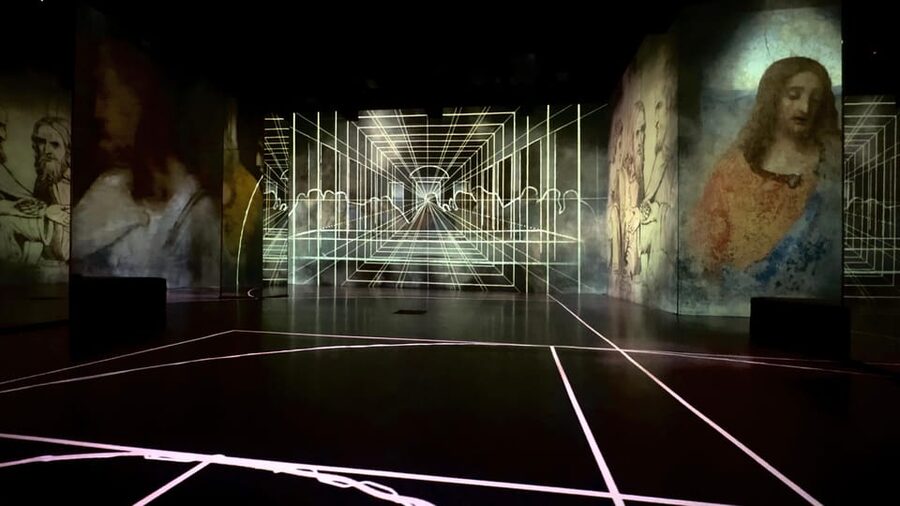
This is not a traditional museum with a quiet gallery walk and long hours in front of individual paintings. Nomad Museo Inmersivo is closer to a one-day immersive exhibition built in chapters, with you moving through scenes that borrow from Impressionism, Pointillism, Post-Impressionism, Cubism, and Expressionism.
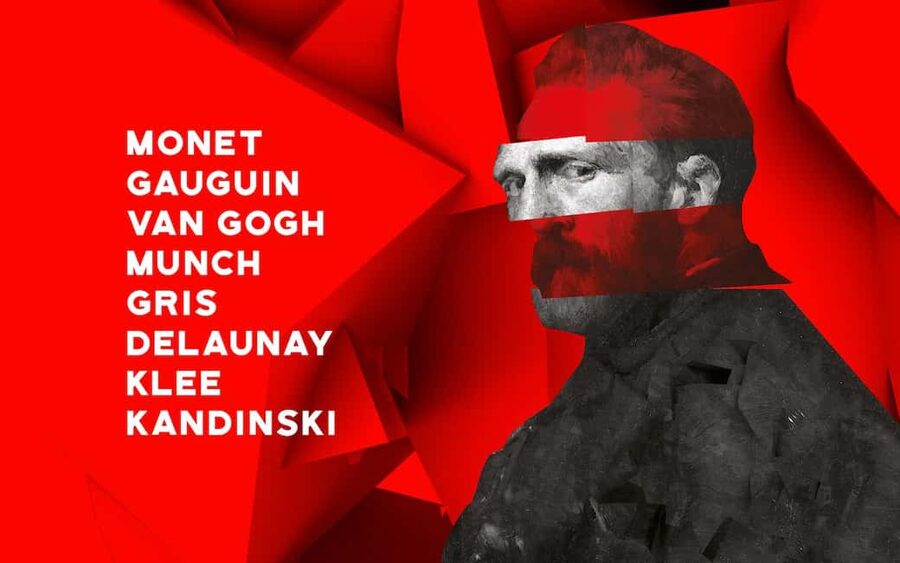
You will see work associated with major names like Monet, Gauguin, Van Gogh, Munch, Gris, Delaunay, Klee, and Kandinsky. The idea is to help you track a historical storyline: artists start by capturing light and everyday moments, then they push into intense emotion, geometry, and eventually abstraction where the goal is not copying reality, but creating a new world.
Why this matters for your decision: the show is designed to teach through your senses. If you learn best by watching, listening, and participating, you will probably get a lot from it. If you are the type who wants to stand still and study brushwork in silence for a long time, treat this more like an art-themed multimedia performance than a replacement for the Prado.
The Main Event: A Moving 40-Minute Projection With Sound
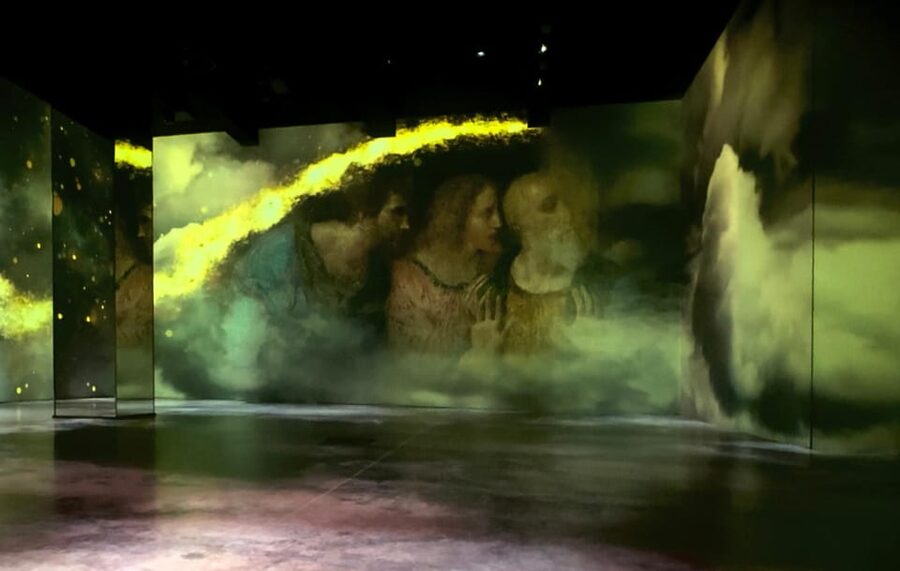
The centerpiece is a 40-minute sequence where the imagery is animated, projected in high definition, and synchronized with music and sound design. That synchronization is not a small detail. When the light, color, and motion line up with the soundtrack, it is easier to feel the point of each style shift instead of just recognizing it from a textbook.
You can expect projections that merge, glow, expand, and pulse to the rhythm of the music. Think less about viewing framed works and more about experiencing how the movements of paint can translate into motion, tempo, and emotion.
There is also an important practical side to this: some visitors feel distracted by voices or by people moving in front of the screens during key moments. So if you want the full effect, plan to treat the main projection time as a quiet, focus-required part of your day. The experience seems to work best when people are not chatting over the audio layer and not blocking the visual field.
More Spanish halls of paint and armour:
- Madrid: Prado Museum Entry Ticket
★ 4.6 · 20,699 reviews - Madrid: Reina Sofía Museum Entrance Ticket
★ 4.5 · 8,788 reviews - Madrid: Small Group of Prado Museum Tour & Optional Tapas
★ 4.6 · 2,437 reviews - Madrid: Prado Museum Guided Tour with Skip-the-Line Ticket
★ 4.5 · 2,018 reviews
VR Glasses: Seeing Art Styles as a Space You Enter
One of the headline activities is the VR portion, where you put on immersive glasses and step into new universes connected to the artistic movements covered in the exhibition. VR here is not about sci-fi spectacle for its own sake. It is used to turn “style” into environment, so Impressionism and its interest in light feels different than Cubism’s geometry or Expressionism’s emotional intensity.
What you should look for while you’re inside: how the environment changes as the exhibition moves from one style chapter to the next. VR can make you feel the difference between representation and abstraction. Instead of asking what a single painting looks like, you start noticing how the “rules” of the visuals change.
A small consideration: VR can be a bit sensory-heavy. If you are sensitive to motion or strong audio, go in with a calm mindset and take breaks when the program allows.
The Infinite Corridor: A Perception Trick You Should Actually Follow
The highlight list calls out something specific and fun, the infinite corridor. This is the part built to challenge your perception of reality. It is not just a cool visual. These kinds of spaces usually work because your brain tries to place the scene in real-world logic, then the projection and depth cues push against that assumption.
How to get the most: watch how your position changes the way you read the space. If the program guides you through a path, follow it closely. If there are areas where people passing in front of projection screens can disrupt the view, it is worth standing where staff indicate so everyone gets a clean experience.
If you like optical effects, perspective games, and “wait, that can’t be right” moments, you will probably enjoy this stop a lot. If you are the type who wants straight factual information with minimal illusions, the corridor may feel like a detour.
The Iris Photo Moment: Turn Yourself Into Part of the Art
One of the most memorable listed activities is taking a photograph of your iris. That’s a playful idea, but it also supports the exhibition’s theme. The show is about how artists moved from copying the real world to building worlds of their own. By turning your own eye into the focus, you are not just learning about perception. You are stepping into it.
What makes this moment valuable for your visit: it gives you something tangible at the end of a highly visual experience. The rest of the day is made of projection, sound, and motion. The iris photo is a personal artifact, and it helps the experience feel less like you watched a video and more like you took part.
If you care about photos, aim to be ready to follow instructions quickly. These parts tend to run on a set flow.
More Things to Do in Madrid
- Madrid: Tour Bernabéu Entry Ticket★ 4.5 · 21,573 reviews
- Madrid: Royal Palace Fast-Access Admission Ticket★ 4.6 · 13,856 reviews
- Madrid: “Emociones” Live Flamenco Performance★ 4.8 · 12,866 reviews
Giant Brushes and a Winter Wonder Scene: Do It, Don’t Just Watch

You also get a hands-on segment with giant brushes, where you help paint a winter wonder scenery. This is one of the highlights, and it is also where the experience becomes less about interpretation and more about play.
Why this is worth your time: it gives your brain a physical way to understand what art movements were doing conceptually. Impressionism is about capturing moments and light. Expressionism is about emotion. Abstraction is about building a visual language. When you use oversized tools in a guided setting, you are not recreating a masterpiece, but you are practicing the act of making marks without fear of getting it perfect.
Based on the variety of feedback, this is also where some people feel the show turns a bit more “activity time” than “museum time.” If you are going for a serious art lecture, you may want to mentally frame this as the lighter, kid-friendly portion. If you are going with anyone who enjoys making things, this is often the part people talk about afterward.
The Art Movements You’ll Recognize, and How to Spot Them
The exhibition spells out the storyline from Monet to Kandinsky, but you will get more out of it if you watch for the patterns behind the big names.
Here is a simple way to track it while you’re moving through chapters:
- Impressionism and Pointillism: look for light effects and the sense that color is doing the work, not detailed realism
- Post-Impressionism: notice stronger structure or mood, where the scene might feel less like a snapshot and more like a statement
- Cubism: watch for geometry and a shift away from one-point perspective toward fragmented views
- Expressionism: focus on intensity and emotional impact, where color and form push beyond calm observation
- The push to abstraction: by the time you reach Kandinsky’s territory, the experience leans toward creating worlds with shape and feeling, not just describing what’s there
Because the exhibition uses HD projection and animation, these patterns can feel obvious fast. That can be a win for first-timers. The tradeoff is that you are not spending long hours comparing brush texture in the way you would in a traditional museum.
If you already know art history, you might wish for more static detail or more time with certain artists. If you are brand new to the movements, it is a good way to get your mental map organized in a single day.
Staff, Flow, and the Importance of Silence During Key Parts

From what you’ll see during the experience flow, the staff role seems to be straightforward: help you check in, guide you through segments, and make sure the timing stays on track. The languages are Spanish and English, so you should be able to ask practical questions if something is unclear.
The biggest “behavior tip” is quiet focus during the projection segments. One of the most repeated real-world frictions people describe is voices pulling attention, and people walking past screens when they should be watching from the correct spot. So do yourself a favor: treat this like a performance. Keep your voice low. Follow staff directions for where to stand. Let the audio layer do its job.
This also helps you avoid the “it was fine, but I didn’t fully get it” feeling. Even a great show can lose power when the room becomes a chatter-fest.
Price in Madrid: Is It Good Value?
The ticket price is listed at $22 per person, and that matters because immersive exhibitions live in the land of “am I paying for a show or for access to a museum?”
Here is how I’d judge the value based on what the experience includes:
- You get a full immersive exhibition format for about a day, not a quick stop
- The centerpiece is a 40-minute projection sequence, with HD visuals and music synchronized
- You also get VR glasses, a corridor perception moment, an iris photo activity, and a giant brush painting segment
If you enjoy multimedia, you will likely feel the price matches the package. If you are looking for a deep traditional museum experience with lots of original works and long viewing time, this will feel more like a ticketed show than a museum visit.
Also note the experience is non-refundable, so book it only when you have a stable plan for your day in Madrid. The exhibition is designed to run on set timing, and the ticket is valid for 1 day, with starting times that depend on availability.
Who Should Book, and Who Might Want Something Else
This works best for:
- Couples and friends who want a modern, shareable art experience
- First-timers who know Monet and Kandinsky by name and want the “how we got here” storyline
- People who like participation, not just observation, especially with the iris photo and giant brush segment
- Families who appreciate hands-on moments, since there is an activity portion that can feel more playful than gallery-like
It may not be ideal for:
- Hardcore art purists who want lengthy, quiet study of originals and a lot more time with specific paintings
- Anyone expecting a museum that functions like the Prado, Reina Sofía, or a classic gallery route
- People who get easily distracted by other visitors, since the projection moments seem to reward silence and good viewing behavior
If you are pairing this with other Madrid art, I’d use it as your “learn by experience” stop, then balance it with a traditional museum day if you want the full spectrum.
Practical Tips for Getting the Most Out of Your Day
A few things that will make your visit feel smoother:
- Plan your day so you can give the main 40-minute projection real attention. Treat it like a show.
- Follow staff directions for where to stand, especially during projection moments, so people do not block the screen.
- If you get sensitive with VR or strong audio, be ready to pace yourself between segments.
- Go with a light mindset for the hands-on painting. You are there to participate, not to be graded on your brush skills.
If you want to get your money’s worth, pay attention during the transitions. The exhibition is built as chapters that guide you toward abstraction. The more you notice what changes between chapters, the more you will feel the storyline clicking.
Should You Book This Nomad Museo Inmersivo Experience?
I think you should book it if you want a structured, art-history-to-feeling experience in Madrid, with VR, a 40-minute moving projection, and hands-on moments that make the story stick. At $22, the value is strongest when you are open to the idea that this is a show built around modern technology and emotion, not a traditional gallery crawl.
I would skip or at least adjust expectations if you are chasing a classic museum feel with lots of static artwork time. This place is about sensing the shifts from Monet to Kandinsky, with sound, motion, and interactive moments doing the heavy lifting.
If that sounds like your kind of art day, book it and plan to stay focused during the main projection. That is where the experience really pays off.
FAQ
How long is the experience?
The activity is valid for 1 day. The main projection experience runs for 40 minutes.
What times are available to start?
The ticket is valid for 1 day, and you need to check availability to see starting times.
Where do I go for check-in?
Show your ticket at the reception to the Nomad Museo Inmersivo in Madrid.
What is included with the ticket?
Your ticket includes admission to the Nomad Immersive Museum.
Is transportation included?
No, transportation is not included.
What languages are supported?
The host or greeter speaks Spanish and English, and the languages listed are Spanish and English.
Is the venue wheelchair accessible?
Yes, the activity is wheelchair accessible.
Is the booking refundable?
No, this activity is non-refundable.
Latest Madrid reviews into the ledger






Museums, compared.

FC Barcelona Museum “Barça Immersive Tour” Ticket
Read our review →
Park Güell and Gaudí House Museum Entry Ticket
Read our review →
Puro Flamenco Show with Optional Museum Ticket
Read our review →
Moco Museum Barcelona: Modern & Contemporary Art
Read our review →Browse the lists this tour appears in