
Reviewed · GIRONA TOURS
Medieval Three Villages Small Group Day Trip from Barcelona
Three medieval towns in one relaxed day.
What makes this tour a good value is the mix of guided medieval walking and real free time in each place, so you get context without feeling herded. I like that it includes standout stops such as Besalú’s mikveh and Rupit’s hanging bridge, plus big countryside scenery on the drive.
The main drawback is timing and pacing. It is a long day (about 10.5 hours), and you will do some walking at elevated villages and viewpoints, so bring layers and comfy shoes.
In This Review
- Key highlights to know before you go
- Why Besalú, Rupit, and Tavertet work so well in one day
- Morning start: meeting near Palau de la Música and heading for Girona
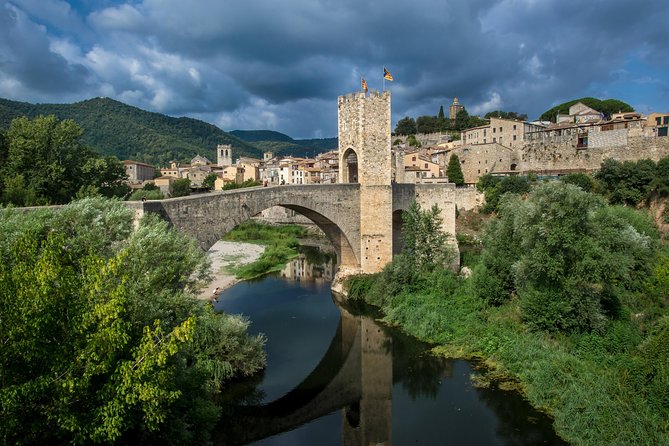
- Besalú walking tour: Romanesque bridge, mikveh, and medieval synagogue
- Castellfollit de la Roca: the tiny basalt-cliff town you pass en route
- Rupit at your pace: hanging bridge, Sant Miquel, and castle ruins
- Tavertet and the Pantà de Sau cliffs: 48 preserved homes and a Romanesque church
- The guide, group size, and why it feels smooth
- Price and logistics: what $119.72 buys you, and what to budget
- Who should book this medieval day trip from Barcelona
- Should you book it or keep shopping?
- FAQ
- FAQ
- What is the approximate duration of the tour?
- What does the tour cost?
- Where does the tour start in Barcelona?
- Where do you end the tour?
- What language is the tour offered in?
- Is hotel pickup included?
- What is included in the price?
- Is lunch included?
- How big is the group?
- What level of physical fitness is needed?
Key highlights to know before you go
- Small group, capped at 20 people, which helps your guide actually keep track of the group and adjust pacing when needed.
- Besalú is more than a postcard, with a Romanesque bridge, the 12th-century mikveh (Jewish bath), and a medieval synagogue stop.
- Rupit is your lunch and wander anchor, with cobblestone lanes, a hanging wooden bridge, and time to eat at your own pace.
- Tavertet is all about cliff views over Pantà de Sau, plus a look at preserved 16th and 17th-century homes.
- Air-conditioned van and a scenic return route, including views tied to the UNESCO Man and Biosphere area of El Montseny.
- Language is English only, so if you want guided explanation in English, this is a clean match.
Why Besalú, Rupit, and Tavertet work so well in one day
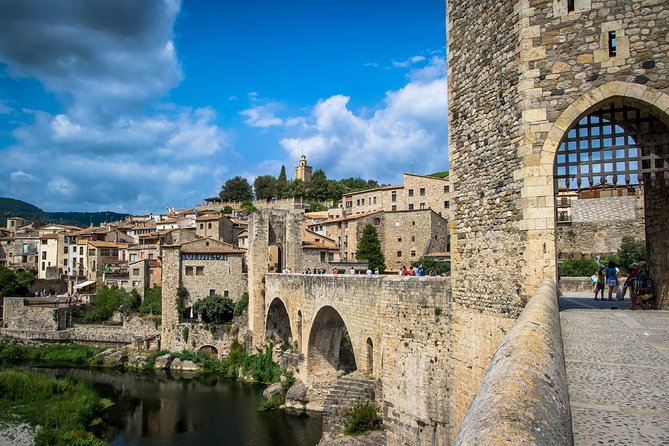
This route is smart because each stop scratches a different itch. Besalú gives you the classic medieval core and the rare chance to see Jewish heritage sites tied to a specific era. Rupit feels slower and more personal once you’re released to wander, shop, and pick a lunch spot. Tavertet then flips the mood to big views, with a short walking circuit toward the cliffs above the Pantà de Sau area.
The tour also avoids the common day-trip trap of turning everything into a quick drive-by. You get guided time for the key sights, then you get enough unstructured time to actually look around and take photos without feeling rude to your fellow travelers. That balance is why it keeps scoring high.
Do note the order matters. The biggest village time is at the start in Besalú, while Tavertet is shorter. If shopping is a priority, plan your browsing earlier rather than saving it all for the end.
A few more Girona verdicts worth reading
- Girona: Game of Thrones Small Group Tour
★ 4.9 · 816 reviews - Figueres: Dalí Theatre-Museum Entry Ticket
★ 4.7 · 802 reviews - Girona: Small Group Walking Tour
★ 4.8 · 680 reviews - Costa Brava – Kayaking and Snorkeling “Sea Caves” Tour
★ 5.0 · 567 reviews
Morning start: meeting near Palau de la Música and heading for Girona
You begin at Explore Catalunya, right by Palau de la Música in central Barcelona. The day starts early, and the morning rhythm is practical: meet your guide, use restrooms, and settle before you roll out. The vehicle is air-conditioned, which is a lifesaver once you’re out in the countryside.
From there, you head through the lush countryside on a drive that takes about 90 minutes to reach Besalú. Your guide gives a bit of context about Barcelona along the way, and then the day’s medieval story starts stacking up in your head before you ever reach the stones.
Bring patience for the road portion, but it pays off. The scenery during the drive back later includes forest views and the UNESCO setting of El Montseny, which makes the long day feel like more than just traffic.
Besalú walking tour: Romanesque bridge, mikveh, and medieval synagogue
Besalú is where the tour earns its first big “wow, okay, this is different” moment. You arrive and begin with a walking tour through the ancient town, with stops focused on medieval-era architecture rather than random photo stops. This is the part where a strong guide really matters, because you are learning what you’re looking at.
The highlights here are specific and genuinely worth your attention:
- The Romanesque medieval bridge (12th century), a signature structure for Besalú.
- The Monastery of St. Pere (11th century), giving a sense of how old the center is.
- The mikveh, a 12th-century Jewish bath. This is not a generic museum stop, it is tied to the way communities lived and ritually refreshed.
- A stop by a medieval synagogue area.
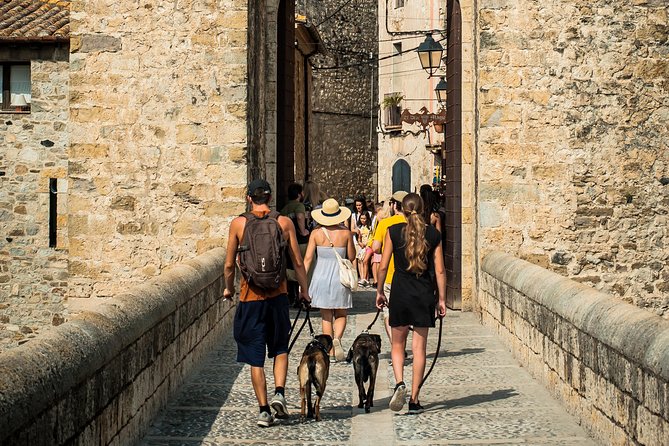
After the guided portion, you get free time to wander the narrow streets. I like this design because Besalú has a real walking rhythm. Sit with a coffee if you find a corner that feels calm, and don’t rush. Shops and small viewpoints reward a slower pace.
One practical thought: Besalú also tends to be the most “open for browsing” part of the day. If you want to buy ceramics, local food items, or simple souvenirs, do it here, not at the end of the route.
Castellfollit de la Roca: the tiny basalt-cliff town you pass en route
Between Besalú and Rupit, you stop nearby or pass by Castellfollit de la Roca, a tiny village perched on the edge of a basalt cliff. The tour description gives an impressive scale check: about 1,000 inhabitants packed into roughly 3,280 square feet (around 1,000 square meters). Even if you only see it from the right roadside angles, it helps you understand why this region attracted settlement patterns in dramatic places.
This is one of those “small moment” stops that makes the day feel like more than three towns. It connects the medieval story to the geography: Catalonia’s interior towns did not just happen by accident, they were built where landforms offered defense, routes, and identity.
When you’re on this part of the day, keep your camera ready. The basalt cliff setting frames the village in a way that is hard to recreate once you’re back home.
Girona, continued down the scoresheet:
- Game Of Thrones Walking Tour in Girona★ 5.0 · 406 reviews
- Girona History and Legends Tour Small Group from Girona★ 5.0 · 299 reviews
- Catamaran ride -Costa Brava with barbecue and drinks. Familiar.★ 4.5 · 278 reviews
Rupit at your pace: hanging bridge, Sant Miquel, and castle ruins
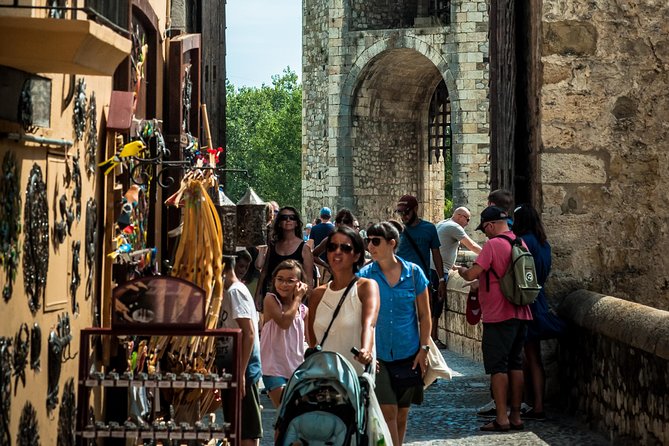
Rupit is the break in the day that makes it enjoyable instead of exhausting. You arrive around early afternoon, and you have about two hours to wander. This is not a forced lineup of rooms. It’s time to stroll the cobblestone streets, look at the 16th-century houses, and take in the town’s shape as you move.
A few anchor sights are built into the plan:
- A walk over the hanging wooden bridge, one of those details that feels charming and slightly unreal in real life.
- The Church of Sant Miquel, a baroque-era stop that gives you contrast after the earlier Romanesque vibe.
- The ruins of the Castle of Rupit on a rocky peak, which you can visit after lunch.
Lunch is at your own expense. The good news is you get flexibility, the less-good news is timing. Rupit restaurants can fill up on tour days. If you care about a specific sit-down place, I strongly suggest you check options as soon as you arrive and be ready to adjust plans.
After lunch, you can choose your vibe. Some people go straight to the castle ruins because it’s a nice post-meal walk. Others prefer a slower stroll or even a picnic approach if weather and your energy level allow it.
Dress like you’re in the mountains, because Rupit sits at elevation. Even if Barcelona feels warm, layers can suddenly matter.
Tavertet and the Pantà de Sau cliffs: 48 preserved homes and a Romanesque church
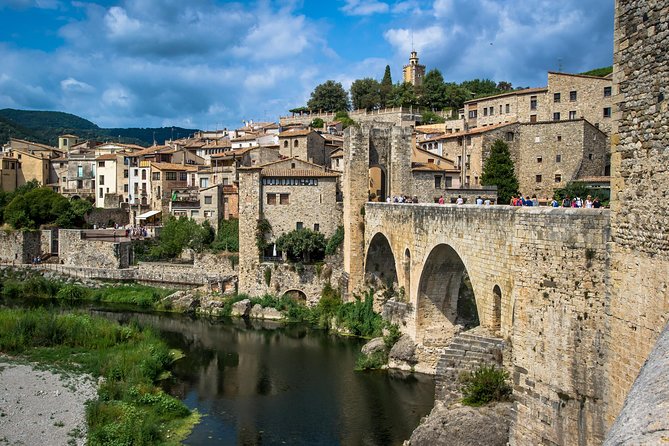
Later in the afternoon you reach Tavertet, the third medieval village, and the mood shifts to views. Tavertet is known for its cliff perspective over the Pantà de Sau lake area, and the walking portion is short enough to stay pleasant while still feeling “worth it.”
Your plan includes:
- A short walk toward the cliffs overlooking Pantà de Sau, framed by the Ter River Valley area.
- Time to explore 48 preserved homes from the 16th and 17th centuries, guided with a few village details before you’re released to look around.
- The 11th-century Romanesque Church of Sant Cristòfol.
Before you arrive in Tavertet, the drive takes you by the sandstone cliffs region of Cingles de Tavertet, and you also pass a megalithic tomb and the Iberian Wall area. Even if you only glimpse these roadside or pull-off references, it’s a helpful reminder that the Catalonia story doesn’t start in the Middle Ages.
If you are the type who loves a good viewpoint stop, this is the right ending. If you are hoping for maximum shop time at the last village, set your expectations lower. Tavertet is more about scenery and a quick village circuit than long browsing.
The guide, group size, and why it feels smooth
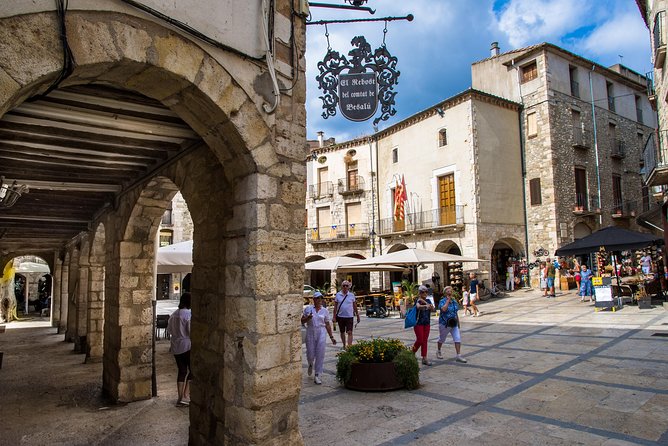
This is a small group tour, with a maximum of 20 people. In practice, that changes how your day feels. When you’re not stuck behind a line of people, you notice details faster. You can ask questions. Your guide can help with pacing and timing.
The guide is a big part of the quality. Names like Rod, Sergio, Sergio again, Berta, and Carmella show up in the guide feedback pattern, often for clear historical explanations and for staying helpful without turning it into a lecture. You also get the sense that the guides adjust when weather changes, because the medieval villages are outdoors most of the time.
One detail that matters: you do a mix of guided walking and free wandering. Some destinations need context at the start so you know what you’re looking at. Others reward a little independence. This format nails that mix.
Also, the tour runs in English only. If you want guided interpretation in English, that’s a clear win.
Price and logistics: what $119.72 buys you, and what to budget
The price is about $119.72 per person, and the included items are straightforward: a local guide and an air-conditioned vehicle. The itinerary also notes key admissions as free for the stops listed, which helps keep the day from turning into a series of add-on fees.
What you must budget for yourself is food and drinks during free time. Lunch is not included, and you’ll also likely grab a coffee either in Rupit or around the village breaks. If you want a specific lunch reservation, plan that part actively rather than winging it.
A long day also means you should budget energy. The walking is not described as extreme, but there is walking in historic cores and short climbs and viewpoints. The tour asks for moderate physical fitness level, so wear shoes you can trust.
One more logistics point: there is no hotel pickup. You meet near Palau de la Música and finish near Arc de Triomf. If you rely on taxis or metro, map it before the morning starts so you’re not figuring it out at the end of a full day.
Who should book this medieval day trip from Barcelona
Book this if you want a day that feels like real travel, not just a sightseeing checkbox. I’d send you if you like:
- Medieval architecture and the human details behind it
- Towns that are small enough to explore on foot at your own pace
- A countryside drive that adds variety between the villages
It’s also a smart choice if you’re traveling with people who want some structure but still want flexibility, because each village alternates guided segments with free time.
Skip it or consider another option if:
- You dislike long days with several stops.
- You are very sensitive to cold at elevation. Bring layers and consider a compact umbrella.
- You want a lot of time in the last village. Tavertet is scenic, but the time there is shorter.
Should you book it or keep shopping?
If you want a highly guided but not rushed medieval day, this tour is a strong bet. The biggest strength is the combination of Besalú’s heritage sites, Rupit’s easy wandering time and lunch flexibility, and Tavertet’s cliff views. You’ll finish with both architecture and scenery, and you won’t spend the whole day trapped on a bus.
I’d book this if you enjoy walking through old streets and you’re happy to plan your own lunch. It’s especially worth it when you value small group energy and clear guidance, because the “how you experience it” part is where this tour seems to score best.
FAQ
FAQ
What is the approximate duration of the tour?
The tour is about 10 hours and 30 minutes.
What does the tour cost?
The price is $119.72 per person.
Where does the tour start in Barcelona?
It starts at Explore Catalunya, C/ Palau de la Música, 1, Ciutat Vella, 08003 Barcelona.
Where do you end the tour?
You end at Arc de Triomf, Ciutat Vella, 08018 Barcelona.
What language is the tour offered in?
The tour operates in English only.
Is hotel pickup included?
No, hotel pickup and drop-off are not included.
What is included in the price?
The price includes a local guide and an air-conditioned vehicle.
Is lunch included?
No. Food and drinks are not included unless specified, and lunch in Rupit is at your own expense.
How big is the group?
The maximum group size is 20 travelers.
What level of physical fitness is needed?
The tour asks for a moderate physical fitness level.
Latest Girona reviews into the ledger


Girona Tours, compared.
Girona History and Legends Tour Small Group from Girona
Read our review →
Catamaran ride -Costa Brava with barbecue and drinks. Familiar.
Read our review →
Boat Trip to Cadaqués from Roses with STOP 1:30h/2H/ in Cadaqués
Read our review →Browse the lists this tour appears in