
Reviewed · PAELLA WORKSHOPS
Paella Cooking Class in Malaga
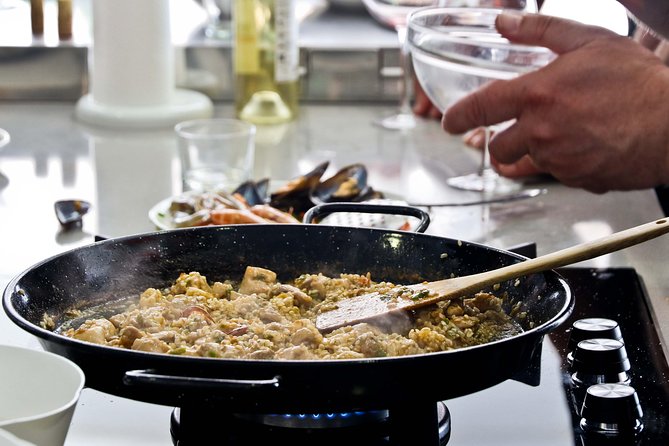
Paella starts at the market, not the kitchen. I love the Atarazanas Market walk with a real chef guiding you through ingredients, and I love the hands-on paella coaching in a modern kitchen where you actually cook, not just watch. You finish by sitting down with your creation, plus classic sides and drinks.
One thing to plan for: there has been meeting point confusion reported by a past group. It is usually fixable fast, but it can cause you to miss part of the start, so arrive a bit early and confirm the exact spot before you go.
In This Review
- Key things to know before you cook
- Where you start in Malaga, and how the market fits the lesson
- Atarazanas Market walk: olives, oils, and real local shopping habits
- The short walk to the Soho kitchen, and why it feels modern
- Gazpacho first: a chilled Andalusian starter that teaches balance
- Paella cooking step-by-step: sofrito base, then the whole pan plan
- Olive oil tasting: learning flavor without making it complicated
- Eating together: sangría, beer or wine, churros, and fruit
- Price and value: what $84.69 really covers
- Practical logistics that affect your experience most
- Who should book this paella class in Malaga (and who should skip it)
- What to ask for after the class ends
- Should you book this paella class in Malaga?
- FAQ
- How long is the paella cooking class in Malaga?
- Where is the meeting point?
- Is the class offered in English?
- Is there a vegetarian option?
- What is included in the food and drinks?
- Can adults drink alcohol during the class?
- What is the cancellation policy?
Key things to know before you cook
- Atarazanas Market ingredient hunt: your chef leads you through stalls before you step into the kitchen.
- Olive oil tasting included: you sample oils and learn how to pick flavors, not just ingredients.
- You make gazpacho before paella: a quick chilled starter that sets the Andalusian mood.
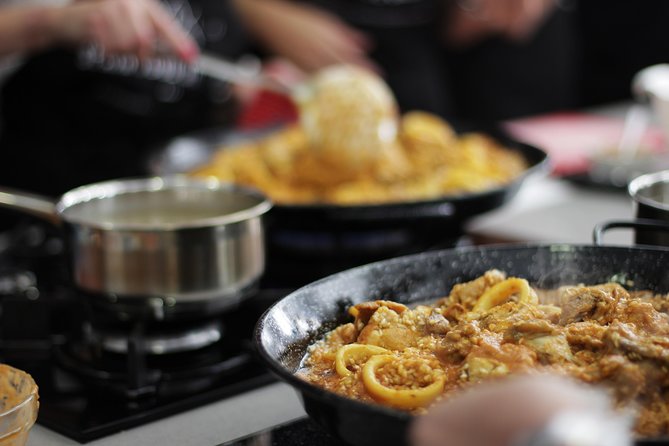
- Sofrito training for your paella: you learn how the base sauce comes together, not just what goes in.
- Small group size (max 12): you get hands-on attention while sharing the experience with others.
- Recipe help and after-class recommendations: the team shares practical guidance so you can eat well in Malaga after class.
Where you start in Malaga, and how the market fits the lesson
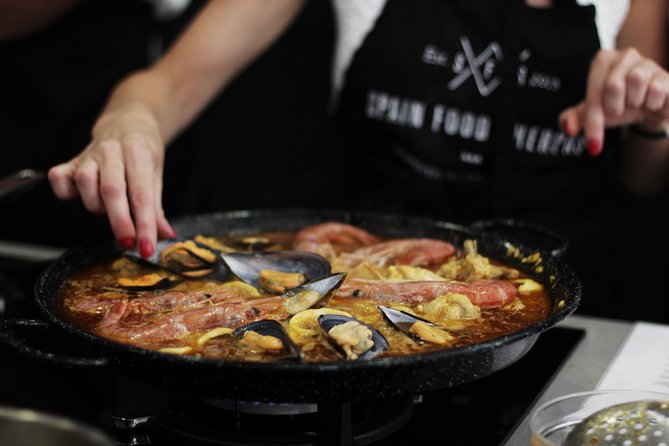
Your class begins at Kulinarea, on Avenida de Manuel Agustín Heredia 24, in the Centro area. From there, you meet your guide, then head out to the Atarazanas Market area to begin with ingredients instead of guessing later.
This start matters. Paella is not just a recipe, it is a chain of decisions about rice, timing, and flavor. When you see the produce and the key local staples first, you understand why your chef insists on certain choices when you cook.
You also get an English-speaking experience (the tour is offered in English), and the guides can be multilingual if needed. In past sessions, pairing a chef and a translator helped keep the class moving smoothly, even when the chef did not speak English.
More pans of paella under supervision:
- Málaga: Spanish Cooking Workshop with Paella and Sangria
★ 4.9 · 613 reviews - Malaga: Sailing Catamaran with Swimming and Paella Lunch
★ 4.1 · 578 reviews - Paella Cooking Class with English Guide in Malaga
★ 5.0 · 149 reviews - Paella and Sangria Workshop in Malaga
★ 5.0 · 108 reviews
Atarazanas Market walk: olives, oils, and real local shopping habits
The heart of this experience is the market walk with your chef and guide. You wander through indoor stalls while your guide talks through what is fresh and what matters for Spanish cooking, like fruit, vegetables, and cured goods.
The best part is how it connects to what you will cook later. When you learn what makes Aloreña olives special to Malaga, or why you should pay attention to the way olive oil tastes, it becomes practical. You are not just collecting trivia, you are collecting cues.
In the kitchen, that pays off. You also get food samples that show how local flavors build into a meal. Expect tastings like roasted almonds, local olives, and olive oils, plus a salty snack called tostón de bacalao. That is cateto bread with salt cod and orange, a very Malaga-style mix of savory and bright citrus notes.
Tip: ask your guide questions as you walk. People in the group in past sessions appreciated how guides like Jose and Carmen answered in a way that helped them read menus and signage afterward. If you care about ordering well later, this is your moment to ask.
The short walk to the Soho kitchen, and why it feels modern
After the market part, you move to the cooking venue, a five-minute walk away in Malaga’s arty Soho district. The kitchen setup is described as modern and clean, with space so people can cook without bumping into each other constantly.
This matters for the quality of instruction. A cramped space often turns into chaos, and then you stop learning. Here, the group size stays small (up to 12), and you work in pairs so the chef can circulate and correct technique.
Even better, you start with small bites and tastings in the kitchen before the main cooking begins. That gives you a chance to get comfortable with the flow, and it helps you understand what flavors you are aiming for.
Gazpacho first: a chilled Andalusian starter that teaches balance
Before paella, you make a gazpacho. It is a chilled soup, usually built from raw tomato, cucumber, and peppers, and it is one of the most recognizable flavors from Andalusia.
Starting with gazpacho is a smart lesson choice. It teaches you seasoning and balance early, and it reminds you that Spanish cooking often runs on freshness. Also, it cools the pace of the class in a good way, so you are not exhausted before the hot pan work begins.
Your chef gives step-by-step direction, and you learn the basics of putting it together properly. You can use this starter at home, even if your paella skills are still warming up.
More Spanish stoves with a spare apron:
- Malaga: Authentic Paella Cooking Class with Sangría★ 5.0 · 103 reviews
- Barcelona: Paella Cooking Experience & Boqueria Market Tour★ 4.8 · 3,661 reviews
- Barcelona Paella Cooking Class with Market Visit, Tapas & Sangria★ 5.0 · 2,531 reviews
Paella cooking step-by-step: sofrito base, then the whole pan plan
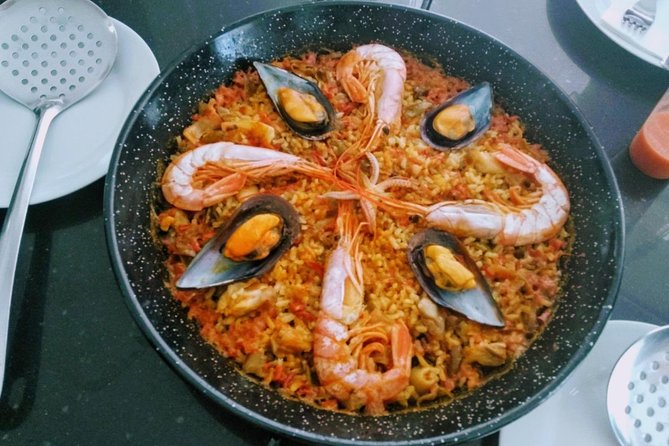
Now for the big moment: you make mixed paella with hands-on direction. The class focuses on the method, not just the ingredients list.
Here is what you learn during the process:
- How to build the sofrito base sauce
- How that base supports the final flavor
- When and how to add your paella components to the pan
The chef coaching tends to be practical and repetitive in a good way. In past classes, chefs like Pepo and Alba were praised for patient, hands-on teaching and clear directions while people cooked.
And yes, you get the key idea that paella is a controlled process. Rice and timing matter, and your chef helps you avoid the most common mistakes. You are guided through adding ingredients gradually, while the sofrito anchors the flavor foundation.
One extra benefit: you are given recipes, and you leave with the knowledge to reproduce it. In at least one review, someone asked again when recipes were not delivered right away, so if recipes are important to you, I would ask before you wrap up so you do not have to chase anything later.
Olive oil tasting: learning flavor without making it complicated
You also include an olive oil tasting as part of the experience. This is more than a snack break. It is a small lesson in how oil can change a dish, and it helps you appreciate why chefs treat olive oil like an ingredient, not a garnish.
In past classes, the tasting included sampling several oils, and people described it as part of what made the market lesson feel real. When you taste oils in the class, you better understand what you were seeing at the stalls.
If you are the type who always buys olive oil but never knows what to look for, this will help. You walk away with a more confident palate for the stuff you will keep buying.
Eating together: sangría, beer or wine, churros, and fruit
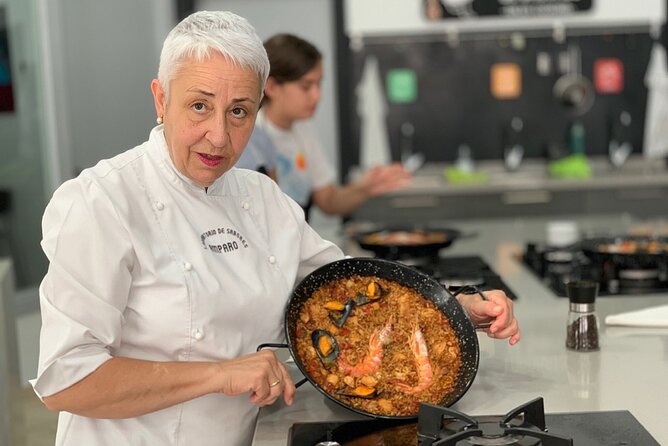
Once your paella is done, you sit down to eat. Your meal includes your paella paired with beer or regional wine, plus fresh fruit.
Many menus also include sangría. Some sessions teach a sangría approach while others focus on serving it as part of the tasting flow, but you should expect the drink during the experience. One review specifically mentioned learning sangría in the market and class, which makes the pairing feel like part of the lesson rather than an afterthought.
Dessert rounds it out with churros, plus a sweet finish that feels very Malaga and very Spain.
Alcohol note: the minimum drinking age is 18. If you are traveling with someone under that age, the class still runs, but the drinking part will be handled according to the rules.
Price and value: what $84.69 really covers
At about $84.69 per person for roughly three and a half hours, this class competes well with other food experiences in Europe because it combines multiple elements.
You are paying for:
- A market walk tied directly to what you cook
- Ingredient education, including olive oils and local items like Aloreña olives
- Hands-on instruction with step-by-step paella coaching
- Included food and drinks: gazpacho, paella, churros, plus wine or beer
- Recipe materials so you can cook at home
What makes it good value is that you leave with more than a meal. You leave with technique. If you want paella once, you can eat it in a restaurant. If you want to understand why it tastes the way it does, this kind of guided method is what you are really buying.
Also, the class is capped at 12 travelers, which helps you get corrections and guidance while you cook.
Practical logistics that affect your experience most
Small details here can make or break the day.
First, check the meeting spot ahead of time. The experience begins at Kulinarea, but there has been a reported issue where a past group ended up at an older meeting point and lost part of the start. Arrive early, and have your phone ready to verify the location.
Second, plan for the timing. The market part is not just a backdrop, it sets the ingredients you will use. If you are late, you will feel it immediately when you get to the kitchen.
Third, let them know about dietary needs. A vegetarian option is available if you advise at booking. In at least one review, the team also worked to provide gluten-free bread for a participant, which is a good sign that they try to accommodate when they can.
Who should book this paella class in Malaga (and who should skip it)
This is a strong fit if you:
- Want a hands-on cook-with-a-chef experience, not a lecture
- Like food markets and want to understand Spanish ingredients
- Care about taking recipes home and cooking again later
- Want a social group setting with a small limit of 12 people
Consider skipping or choosing carefully if you:
- Hate structured classes and prefer wandering on your own
- Need an ultra flexible schedule, because the market and kitchen timing are part of the flow
- Are very sensitive to meeting-point confusion, in which case you should confirm location details early and arrive on the dot
One more fit note. If you like practical language help, this experience can do that too. Guides have been praised for helping decipher menus and signs in another language, which is useful after you leave the kitchen.
What to ask for after the class ends
The experience includes an easy value add at the end: ask your guide for tips and recommendations for what to eat next in Malaga. That sounds small, but it is one of the fastest ways to turn a great cooking day into a great travel week.
Use the market knowledge while you wander later. If you learned what to look for in olive oils or how locals talk about ingredients, you will shop and order with more confidence.
A good move is to ask your guide what you should try that uses similar flavors to your paella. You will get answers that match what you just learned, not generic restaurant lists.
Should you book this paella class in Malaga?
If you want the best kind of souvenir, book this. You get a true Malaga market start, hands-on paella instruction, and a meal that includes gazpacho, paella, churros, and drinks, all in a small group. The price also feels fair for what is included, especially if you value recipes and technique.
My only pushback is the meeting point risk, which has shown up in at least one report. Fix that by arriving early and double-checking the exact start spot before you leave your hotel.
If you do that, you are very likely to come away smiling, full, and with the ability to cook paella at home instead of just remembering the taste.
FAQ
How long is the paella cooking class in Malaga?
The experience runs for about 3 hours 30 minutes.
Where is the meeting point?
You start at Kulinarea, Avenida de Manuel Agustín Heredia 24, Distrito Centro, 29001 Málaga, Spain. The activity ends back at the meeting point.
Is the class offered in English?
Yes, it is offered in English.
Is there a vegetarian option?
Yes. A vegetarian option is available, and you should advise at booking.
What is included in the food and drinks?
You get olive oil tasting, snacks (including Aloreña olives or roasted almonds), gazpacho, paella, wine or beer paired with the menu, seasonal fruits, and all the recipes. Churros are part of the menu.
Can adults drink alcohol during the class?
Alcohol is served with a minimum drinking age of 18.
What is the cancellation policy?
You can cancel for a full refund up to 24 hours in advance of the experience’s start time.
More Workshops in Malaga
- The Ultimate Tapas Workshop in Malaga★ 5.0 · 119 reviews
- Malaga: The Ultimate Tapas Workshop with Market Visit★ 4.9 · 108 reviews
- Seville: Flamenco Dance Class with Optional Costume★ 4.9 · 1,350 reviews
- Spanish Cooking Class Paella Tapas and Sangria in Madrid★ 5.0 · 1,340 reviews
- Tenerife: Surfing Lesson for All Levels, Photos included★ 4.9 · 1,314 reviews
Latest Malaga reviews into the ledger




Paella Workshops, compared.
Paella Cooking Experience & Boqueria Market Tour
Read our review →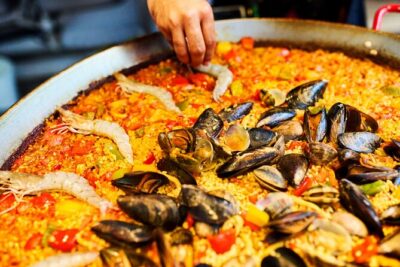
Barcelona Paella Cooking Class with Market Visit, Tapas & Sangria
Read our review →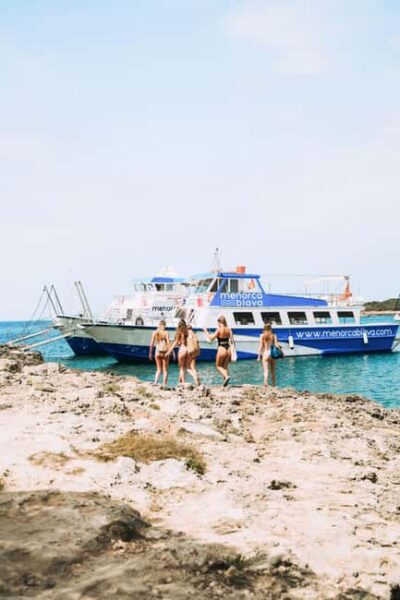
Coves and Beaches Boat Trip w/ optional Paella
Read our review →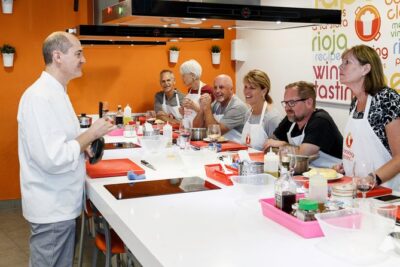
Spanish Cooking Class Paella Tapas and Sangria in Madrid
Read our review →
Barcelona Food Tour: Tapas, Paella, Sangria & 8+ Local Tastings
Read our review →
Paella and Sangria Workshop in the City Center
Read our review →
Paella Cooking Class, Wine Tasting & Central Market in Valencia
Read our review →
Girona & Costa Brava Small Group Tour From Barcelona with Paella!
Read our review →Browse the lists this tour appears in