
Reviewed · PRADO MUSEUM TICKETS
Prado Museum with Reina Sofia Museum Guided Tour
Madrid art, explained at human speed. This Prado and Reina Sofía guided combo gives you two-museum access with a small-group guide, plus museum entry already handled. You’ll move from Spanish masters at the Prado to 20th-century Spanish modern art at Reina Sofía, with a guided story that helps the paintings make sense fast.
The main trade-off is timing. The early start and ticket handling mean a lot of “waiting to begin,” so if you hate lines, come with patience and good shoes.
In This Review
- Key takeaways before you go
- Why Combine the Prado and Reina Sofía in One Morning
- Meeting Point at Monumento a Velázquez, and What to Do First
- Prado Museum Highlights: El Greco, Bosch, and Velázquez in Context
- Using Prado Time Wisely, So You Do Not Feel Rushed
- Reina Sofía: Cubism, Surrealism, and Why Guernica Hits Hard
- The Two-Museum Story: From Style Choices to Meaning
- Small-Group Promise vs Real-World Group Dynamics
- Listening Like a Pro: Audio, Pace, and How to Avoid Frustration
- Value Check: Is $81.70 Worth It for Two Museums?
- Who This Prado and Reina Sofía Guided Tour Is Best For
- Should You Book This Prado and Reina Sofía Guided Tour?
- FAQ
- Where do I meet the guide?
- What time does the tour start?
- How long is the tour?
- Does the tour include both museums?
- Where does the tour end?
- What languages is the tour offered in?
- Are food and drinks included?
- Is transportation included?
- How many people are in the group?
- Is there a cancellation or weather policy?
Key takeaways before you go
- Prado highlights with big-name Spanish masters, including El Greco, Hieronymus Bosch, and Velázquez
- Reina Sofía focused on 20th-century Spanish modern art, with Cubism and Surrealism themes
- Two museums, one guide flow, so you connect artists and styles instead of seeing everything in random order
- Small-group format is the goal, and guides like Gabi (Gabriela), Alicia, and Elena are praised for keeping the pace friendly
- Pacing beats museum overload, but you should expect not to see the entire Prado collection
Why Combine the Prado and Reina Sofía in One Morning
This is a smart Madrid plan because it tackles two different art eras in one stretch. At the Prado, you get the refined craft of classical Spanish painting. Then at Reina Sofía, the mood shifts into modern disruption, where Cubism and Surrealism do not politely behave.
I like that the guide doesn’t treat these museums like separate islands. You’ll get help spotting patterns, such as how artists build meaning through composition, symbolism, and style choices. You’ll also leave with names you can actually place, not just a photo memory.
One more practical plus: you’re not stuck deciding between museums on a single day. If you only have limited time, this combo is the most efficient way to cover major ground without turning the day into a blur.
More time with the Prado’s walls:
- Madrid: Prado Museum Entry Ticket
★ 4.6 · 20,699 reviews - Madrid: Small Group of Prado Museum Tour & Optional Tapas
★ 4.6 · 2,437 reviews - Madrid: Prado Museum Guided Tour with Skip-the-Line Ticket
★ 4.5 · 2,018 reviews - Madrid: Prado Museum Guided Tour With Fast Access
★ 4.8 · 1,785 reviews
Meeting Point at Monumento a Velázquez, and What to Do First
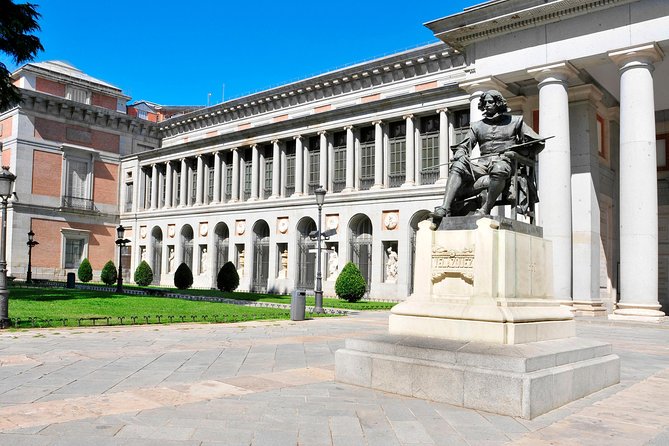
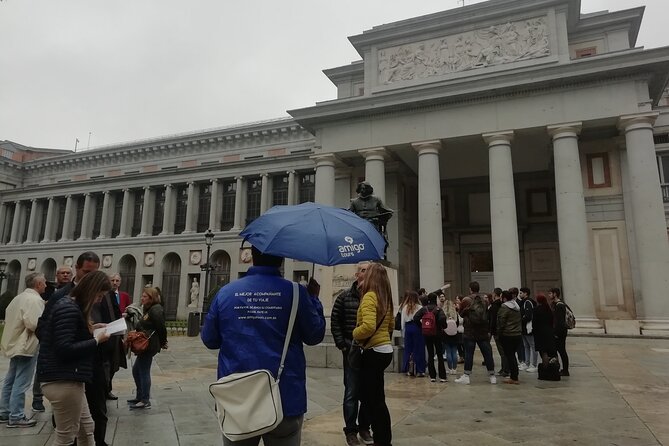
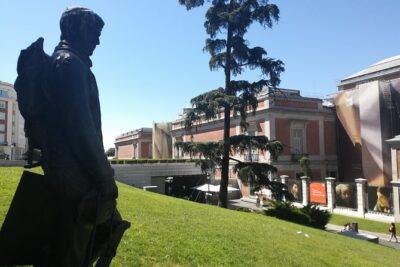
Your tour starts at Monumento a Velázquez, at P.º del Prado, 11. The meeting spot is right where you want to be if you’re already in the Prado area, and it’s an easy reference point to find.
The start time is 9:45 am, and you’ll meet your guide outside in advance of entry. This matters because the guide needs a bit of time to organize tickets and get the group sorted. It also means you should arrive a little early, even if you are used to being punctual.
Once you’re in the flow, you’ll follow your guide into the Prado. Expect the guide to set your expectations quickly, then steer you toward a selection of works that fit together thematically. The goal is to help you see “why this painting matters,” not just “what it shows.”
Prado Museum Highlights: El Greco, Bosch, and Velázquez in Context
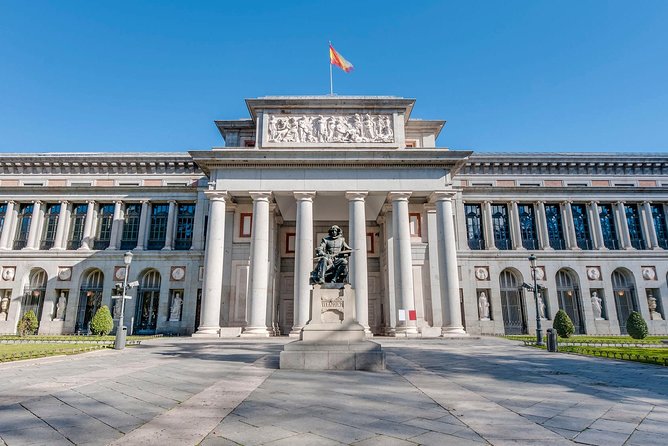
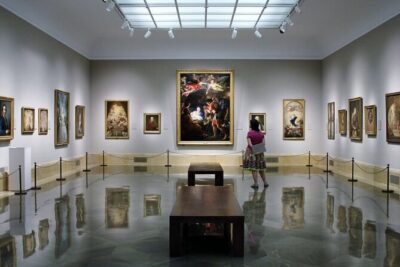
Inside the Prado, the tour is built around the museum’s role as Spain’s national art gallery. The guide focuses on masterworks and explains what makes this place important beyond its walls. You’ll also learn how the building and its collection shaped the way people encounter Spanish art.
You can expect stops that spotlight major Spanish and European names, including El Greco, Hieronymus Bosch, and Velázquez. The art here can feel overwhelming on your own, because the collection is vast and the museum is big. A guide helps you slow down on the right paintings, so you notice brushwork, structure, and visual storytelling.
A common pattern in the best moments of this kind of tour is the “what to look for” cue. Instead of just hearing a biography, you’ll be guided to observe finer details, like how a scene is arranged, how figures interact, and how style communicates meaning. That is the difference between passive looking and actually understanding.
Also, the Prado portion is scheduled for about 1 hour 30 minutes, but the guide may require additional time at the start to manage entry smoothly. That extra time is a real factor in what you can see, so it helps to keep expectations realistic.
Using Prado Time Wisely, So You Do Not Feel Rushed
Here’s the truth about the Prado: it’s huge. Even with a guided plan, you will not see everything, and you may feel tempted to do a longer self-visit later.
Some people love the Prado portion as a fast, focused introduction. The guide may spend more time on select works to explain periods and themes in depth. That’s great if your goal is understanding, but it can also reduce how many rooms you cover.
If you’re someone who wants your day to feel balanced, I’d treat this Prado segment as a highlight reel with strong context. Then, if you’re still curious, plan a return trip to see the rest at your own pace.
One practical way to make this work for you: during the Prado visit, take mental notes on what you loved most. When you later wander on your own, you’ll know exactly what to prioritize instead of getting lost in a sea of paintings.
More Spanish halls of paint and armour:
- Madrid: Reina Sofía Museum Entrance Ticket★ 4.5 · 8,788 reviews
- Prado Museum Small Group Tour with Skip the Line Ticket★ 5.0 · 1,738 reviews
- Royal Palace & Prado Museum Skip the Line Guided Tour★ 4.5 · 1,347 reviews
Reina Sofía: Cubism, Surrealism, and Why Guernica Hits Hard
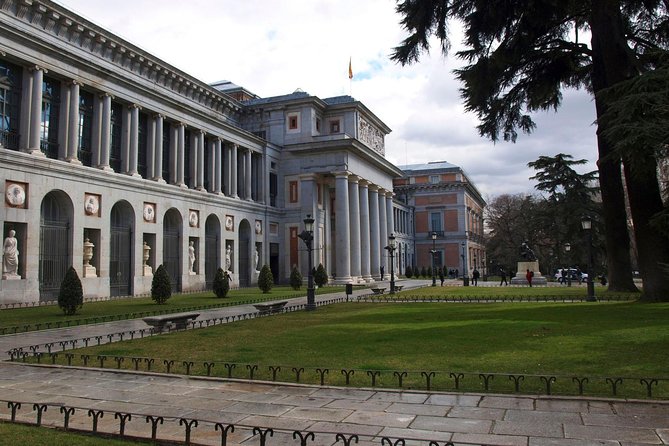
After the Prado, you go to Museo Nacional Centro de Arte Reina Sofía, which concentrates on Spanish art of the 20th century. This is where the tour gets especially rewarding if you like art that feels like it is arguing with the world.
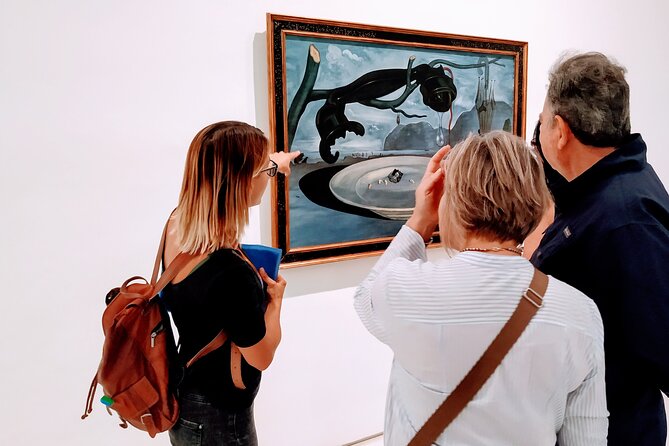
The guide leads you through key works of Spanish modern artists, often emphasizing movements like Cubism and Surrealism. This is the section where painters stop painting reality the same way. Shapes fracture, symbols multiply, and meaning becomes something you actively interpret.
In this part of the tour, you’ll hear about major names such as Dalí, Picasso, and Miró. If you have heard of one or two works but never knew how to connect them, this is a good place to learn those links. The guide also explains the artists’ lives and the media they used to convey ideas.
A huge attraction here is that the museum’s collection makes it easy to see how styles evolve under pressure from society, politics, and changing culture. Even if you do not consider yourself an “art person,” the tour helps you read what you’re looking at.
The Reina Sofía portion is about 1 hour 15 minutes for the guided stops, with the experience generally ending at this museum if your option includes it.
The Two-Museum Story: From Style Choices to Meaning
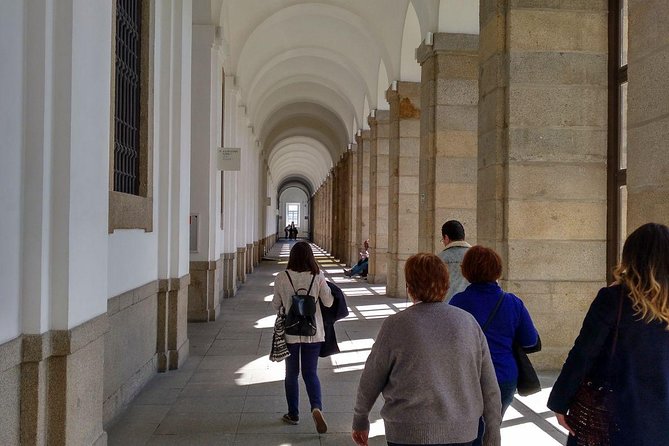
What makes this combo work is the way it builds a through-line. At the Prado, you learn how older masters used composition and refined technique to guide your eye. At Reina Sofía, you see artists using distortion and fragmentation to push back against traditional ways of representing the world.
You’ll likely walk away with a clearer sense of Spanish art as a long conversation. It is not just a timeline of famous names. It is artists responding to each other, responding to events, and responding to what audiences expect art to do.
This is also why the guide matters so much. Guides like Gabi (Gabriela) and Alicia are praised for explaining artworks in an accessible way, while still connecting pieces to broader history. Other guides such as Elena and Helena Del Pozo are noted for bringing context and letting you ask questions.
If you get a strong guide, you’ll notice how the tour feels less like a lecture and more like guided looking. You’ll leave with mental hooks, like what to notice first and how to interpret the choices an artist made.
Small-Group Promise vs Real-World Group Dynamics
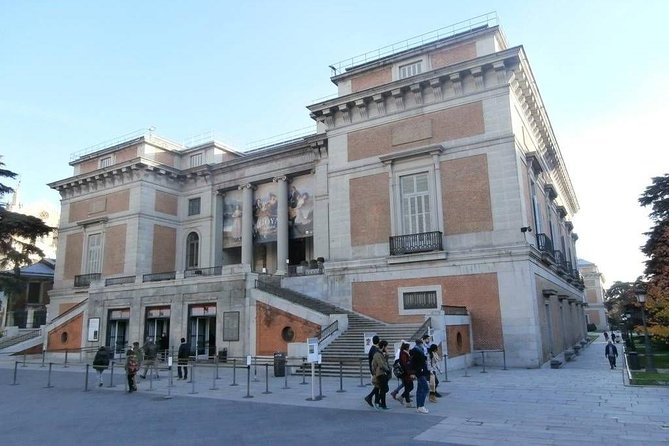
The tour is marketed as a maximum of 10 travelers, and that small-group promise is a big part of the value. When the group stays small, you get more control over pace, easier movement through galleries, and better chances to hear the guide without strain.
Still, I want you to plan for variability on busy days. One common issue people bring up is that the actual group size can feel bigger than expected at certain points, which can slow things down and make movement harder. If your ideal experience is quiet and personal, it’s wise to keep a flexible mindset for the Prado and Reina Sofía.
Also, this tour runs simultaneously in English and Spanish. That can affect flow depending on how the guide manages explanations while keeping everyone engaged. If you are sensitive to group pacing, you might find it helps to focus on following the guide’s cues rather than trying to read every label on your own.
The best way to protect your experience is to arrive ready to move. Good pace depends on how quickly everyone enters, lines up, and transitions between rooms.
Listening Like a Pro: Audio, Pace, and How to Avoid Frustration
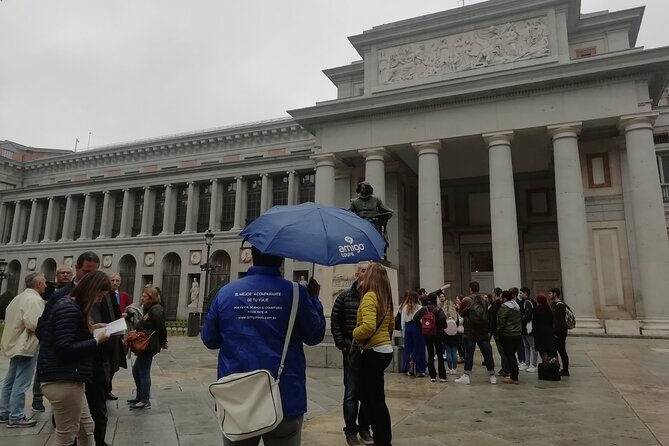
This experience involves guided commentary and, in practice, many tours like this use audio devices for clarity in large museum spaces. That makes sense in theory, because museum rooms can get loud and crowded.
But audio quality is not guaranteed. Some people report problems hearing the guide in the Prado portion and also at Reina Sofía, even when the guide was doing a good job. If hearing clearly is a must for you, bring a backup plan: position yourself closer to the guide when possible, and if you struggle, move to a better spot rather than waiting for conditions to improve.
Pacing is another key factor. If the guide focuses longer on a few works, you may see fewer rooms. If you prefer a broader scan of highlights, you might want to treat this tour as step one, then plan extra time for self-guided wandering afterward.
For the smoothest day, keep your pace light. Museums reward curiosity, but only if you do not force yourself to rush through rooms just to check boxes.
Value Check: Is $81.70 Worth It for Two Museums?
At $81.70 per person, you are paying for more than just a guide’s time. You are getting entry to both museums and help selecting the works that matter. That alone can beat the cost and hassle of buying tickets separately and trying to design your own route through two large collections.
For value, the best part is the “time compression.” Two museums in one half day saves you from dead time, like figuring out which rooms to hit first. It also saves effort, because the guide helps you interpret what you’re seeing, not just where to find it.
That said, you should judge value based on your priorities. If you are the kind of visitor who wants a broad, independent sweep of every room, you might prefer a self-guided plan plus targeted stops. But if you want an art history narrative you can actually follow, this guided combo is a strong match.
Also, the tour ends at Reina Sofía if you choose the option that includes it. That flexibility can be a big value if you plan the rest of your day around the city center.
Who This Prado and Reina Sofía Guided Tour Is Best For
This is best for you if you want the museum experience to feel understandable, not intimidating. I’d especially recommend it if you like structure, name recognition, and clear reasons for why a painting matters.
You’ll likely enjoy it if your time in Madrid is short. A single guided block helps you cover two major museums without losing your whole day to logistics.
It can also work well if you enjoy contrasts. The Prado gives you classical Spanish painting with tight visual craft. Reina Sofía shows modern Spanish art where ideas move faster than realism.
If you are traveling with service needs, the tour data says service animals are allowed. And since it’s near public transportation, it’s easier to plug into a wider Madrid itinerary without needing a dedicated taxi.
If you get one of the guides highlighted in the feedback, like Alicia or Elena, you can get a tour that feels focused and friendly, with enough context to make the masterpieces click.
Should You Book This Prado and Reina Sofía Guided Tour?
Book it if you want the quickest path to meaningful art understanding, plus museum entry without ticket stress. The combination of Prado masterworks and a focused Reina Sofía modern art story is exactly the kind of day plan that helps first-time visitors avoid feeling lost.
Hold off or choose a more flexible plan if you hate early starts, long check-in moments, or any chance of audio struggles. This kind of museum day also depends on group flow, so you should be okay with the fact that pacing might vary.
My practical suggestion: if this is your only half day for museums, take the tour. If you’re staying longer and you really want Prado depth, do this as your first museum day, then build a second day later for slow wandering. That gives you both: context now, freedom later.
FAQ
Where do I meet the guide?
You meet at Monumento a Velázquez, P.º del Prado, 11, Retiro, 28014 Madrid, Spain.
What time does the tour start?
The start time is 9:45 am.
How long is the tour?
The duration is about 4 hours.
Does the tour include both museums?
It includes entrance to the Prado Museum and, depending on the option you choose, also to the Reina Sofía Museum.
Where does the tour end?
If your option includes the Reina Sofía Museum, the tour ends at Museo Nacional Centro de Arte Reina Sofía, C. de Sta. Isabel, 52, Centro, 28012 Madrid, Spain. If not, you can stay at Prado Museum as long as you wish.
What languages is the tour offered in?
The tour is offered in English and also runs simultaneously in Spanish.
Are food and drinks included?
No. Food and drinks are not included.
Is transportation included?
No. Transportation is not included.
How many people are in the group?
The tour has a maximum of 10 travelers.
Is there a cancellation or weather policy?
Free cancellation is available up to 24 hours in advance for a full refund. If canceled due to poor weather, you will be offered a different date or a full refund.
Latest Madrid reviews into the ledger





Prado Museum Tickets, compared.

Small Group of Prado Museum Tour & Optional Tapas
Read our review →
Prado Museum Guided Tour with Skip-the-Line Ticket
Read our review →
Prado Museum Small Group Tour with Skip the Line Ticket
Read our review →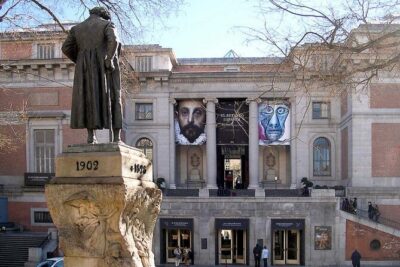
Royal Palace & Prado Museum Skip the Line Guided Tour
Read our review →
Prado Museum Guided Tour with Skip-the-Line Ticket
Read our review →Browse the lists this tour appears in