
Reviewed · LANZAROTE TOURS
Private and Guided Tour to the Salinas de Janubio with Tasting
Salt pools here look unreal. This private guided tour takes you through Salinas de Janubio, walking a 90-minute route to see how sea salt is made the artisanal, manual way, from the cookers to extraction. I also really like the Flor de Sal tasting at the end, which turns the whole visit into something you can actually taste. One thing to plan for: you do walk on foot, often in strong sun and wind, so you will want to come prepared.
It runs about 1 hour 30 minutes, it’s offered in English, and it’s just your group. At $26.62 per person, it is good value because the guided salt tour is paired with the tasting stop, and the admission ticket is marked as free.
In This Review
- Key highlights you’ll care about
- Salinas de Janubio: why this salt tour is worth your time
- Your 90-minute guided walking route
- What you learn: the hydraulic system, mills, and manual cookers
- The salt pools and lagoon: what to watch for during the walk
- End at the Bodega de la Sal: Flor de Sal tasting
- Guide quality and language: English works, but ask questions
- Weather, walking comfort, and what to pack
- Getting there from nearby Lanzarote areas
- Pairing with a black sand beach and local food
- Price and value: $26.62 for a private, tasting-focused tour
- Who should book this private salt tour
- Should you book Salinas de Janubio with tasting?
- FAQ
- How long is the Salinas de Janubio tour with tasting?
- Is this tour private?
- What language is the tour offered in?
- What will I do during the visit to Salinas de Janubio?
- What tasting is included at the end?
- Do I need good weather for the tour?
- Is the admission ticket included?
- Can I bring a service animal?
- What is the cancellation policy for a full refund?
Key highlights you’ll care about
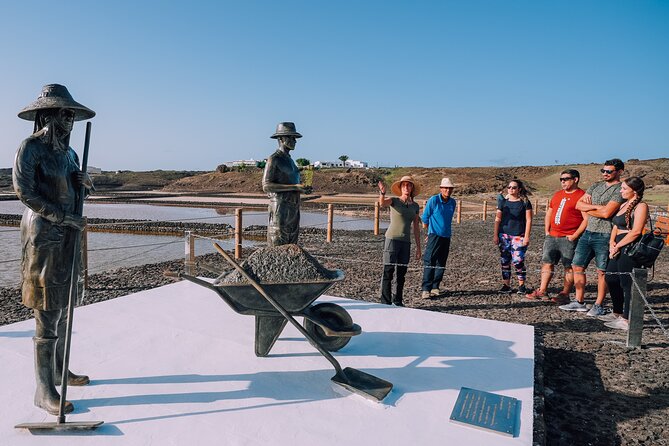
- 127 years of uninterrupted salt-making at the only salt mine in Lanzarote and the Canary Islands with this track record
- A 90-minute guided walk on foot through the salt process, from cookers to extraction
- Hydraulic layout and mills explained in a way that makes the engineering feel visible
- End at the Bodega de la Sal for a tasting focused on Flor de Sal and the Flavors of Janubio
- Great photo territory with striking colored salt pools and bird life around the lagoon
- Bring sun and wind basics because the salt fields can be bright, breezy, and exposed
Salinas de Janubio: why this salt tour is worth your time
On Lanzarote, you have no shortage of volcanic scenery. What makes Salinas de Janubio special is that it is not just a view, it is an active working site with a long, human rhythm. The tour centers on the idea that salt is made by hand, using an old-school system that still produces sea salt today.
You walk through the hydraulic layout, you see the mills for extracting water, and you get the story behind the architecture and how the salt operation fits into the surrounding area. The whole experience feels less like a quick stop and more like getting the logic of the place explained in plain language.
I also like how the visit is structured so you do not just hear about salt, you see the stages and then taste the result right after. That makes a big difference, because sea salt is one of those things people think they already understand. Here, you learn why the process matters.
More of Spain by the plateful:
- Wine Lovers: Wine Tasting Tour at El Grifo Bodega Lanzarote
★ 4.9 · 316 reviews - Madrid: Live Flamenco Show with Food and Drinks Options
★ 4.5 · 9,901 reviews - Montserrat & Cogwheel Train, Gourmet Wine Tasting & Tapas/Lunch
★ 5.0 · 6,290 reviews - Ibiza Beach Hopping Cruise with Paddleboards, Drinks and Food 6h
★ 5.0 · 5,588 reviews
Your 90-minute guided walking route
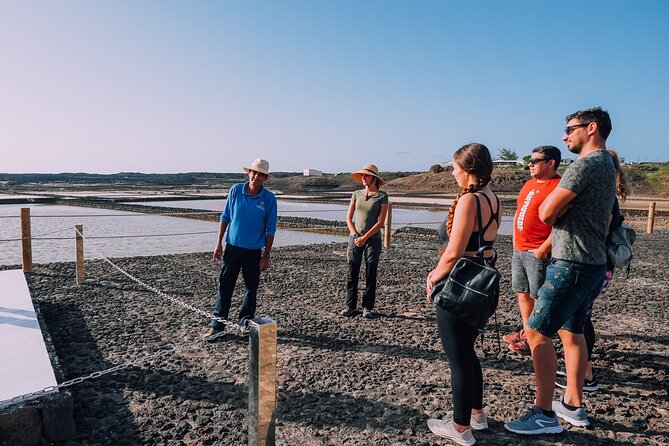
The tour’s heart is a 90-minute guided visit on foot at Salinas de Janubio. You are led through the manual salt-making process, from the cookers all the way toward extraction. Rather than rushing past structures, you get time to orient yourself and understand how water flows and why each part matters.
This is also where the “only salt mine with over 127 years of uninterrupted activity” detail becomes more meaningful. The salt fields are presented as a family operation passed down through generations, not a novelty attraction. You will likely hear how the system worked in the past and how the layout supports ongoing production.
Practical note: the walking is usually at a slow pace, but it is still walking. One guide covered details in multiple languages during a separate visit, and that extra clarity can take a little more time on the ground. Either way, plan for a full walking stop, not a sit-down museum tour.
What you learn: the hydraulic system, mills, and manual cookers
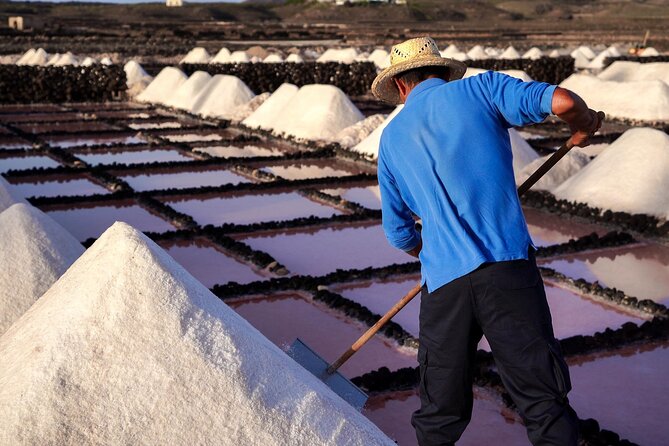
Salt-making sounds simple until you try to picture it. On this tour, you get help visualizing the practical work: water management, evaporation in the cookers, and the extraction steps that turn seawater into salt.
You will hear about the hydraulic layout, which is the backbone of the operation. Instead of vague talk, you are directed to the parts of the system that show how water is moved and used. You also learn about the mills for extracting water. Seeing that equipment in place helps connect the engineering to the landscape you are standing in.
The guide portion also highlights architecture and the way the operation has been organized for generations. It is not just, look at the pools. It is, here is how the operation is designed so people can keep working and keep producing.
If you like hands-on manufacturing stories, this is the portion you will enjoy most. It is the difference between watching a craft from a distance and understanding the process steps.
The salt pools and lagoon: what to watch for during the walk
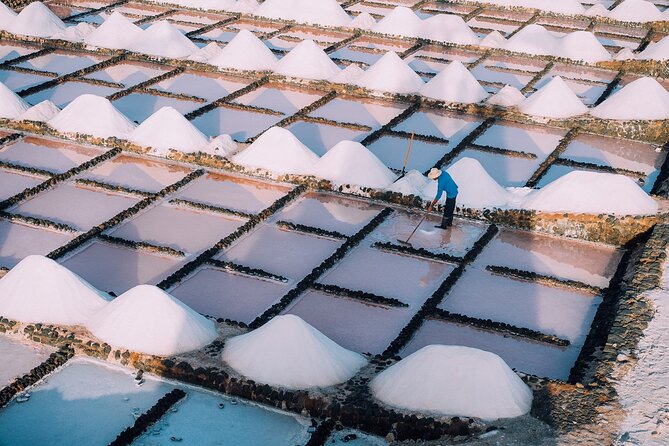
The salt fields themselves are one of the best visual payoffs. You see colored salt pools and the way different concentrations can create different tones. This is especially striking against the black volcanic ground nearby, because the contrast makes the salt colors look even more intense.
I also suggest you watch the edges. Around the lagoon, people have noted bird life, and it can add a little extra life to a bright, breezy place. Bring your camera, but also pause sometimes and let your eyes adjust. The colors are not all “one look,” they shift as you move.
Because the area can be windy, it can be hard to stand still. The good move is to time your photos with the guide stops, when you are naturally pausing anyway.
A few more Lanzarote verdicts worth reading
- Lanzarote: Guided Off-Road Volcano Buggy Tour★ 4.7 · 4,385 reviews
- Lanzarote: Full-Day Island Highlights Tour★ 4.6 · 2,660 reviews
- Lanzarote: Dolphin-Watching Sunset Cruise with Transfers★ 4.2 · 2,435 reviews
End at the Bodega de la Sal: Flor de Sal tasting
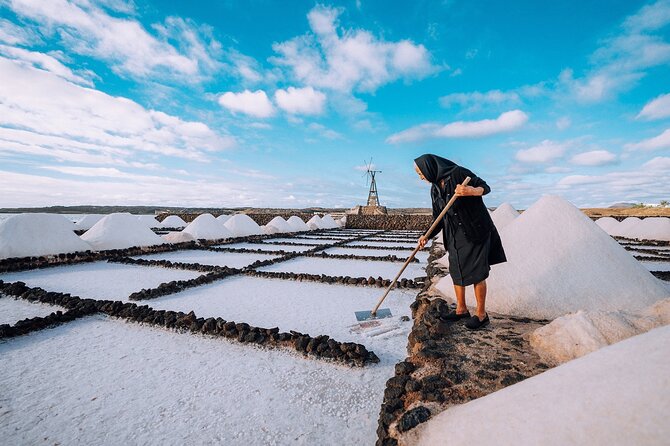
After the guided walk, the tour ends at the Bodega de la Sal. This is where the experience becomes less educational and more sensory.
You get a tasting featuring Flor de Sal and the Flavors of Janubio. Flor de Sal matters because it is associated with a delicate, surface-harvested style of salt. You taste it to learn why producers care about texture and character, not just saltiness.
In practice, the tasting stop can include pairings such as local wine and goat cheese alongside the salt. Some tours also include packaged salt to take home, which is a nice practical souvenir because it is something you can use in your kitchen, not just an item you store.
One word of caution: the tasting portion is sometimes the part that can feel a bit rushed, especially if the group language mix is complicated. If you are someone who likes to ask questions and linger, come ready with a couple of focused questions about how salt flavor changes with harvest and process.
Guide quality and language: English works, but ask questions
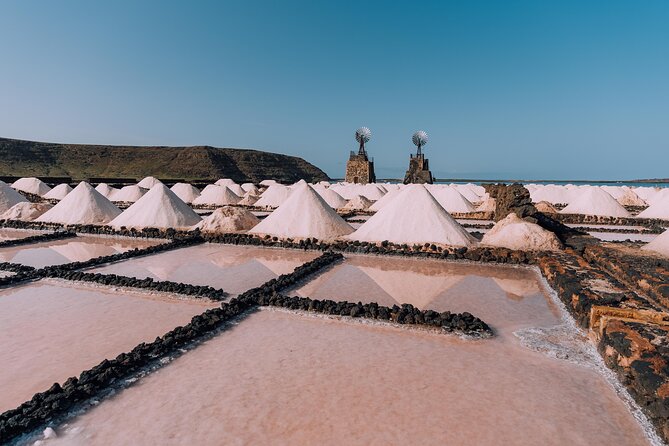
The tour is listed as offered in English. Still, your enjoyment will depend a lot on the guide’s clarity and pacing. In one positive experience, the guide Yurena was described as friendly and informative, with extra context about Canarian culture and island history beyond the salt operation itself.
Another guide named Martin received praise for providing detailed explanations and answering questions. That kind of interactive delivery makes a short 1.5-hour experience feel longer and more satisfying.
On the flip side, there are also mentions of English being patchy and of the tasting feeling rushed when explanations did not land smoothly. That does not mean the tour is bad, it means communication matters here.
If English clarity is important to you, I recommend you show up with a short list of what you want to understand, like how the cookers work, how water is managed, or how different salt types connect to the taste. A good guide will meet you there.
Weather, walking comfort, and what to pack
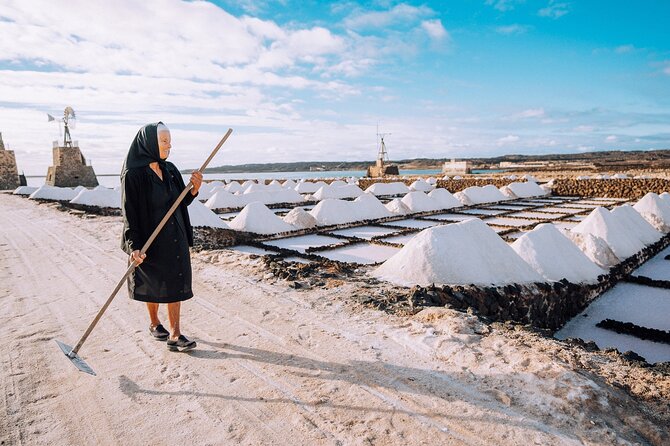
This tour requires good weather. If the experience is canceled due to poor weather, you are offered a different date or a full refund. That matters because you are outside for the walking portion.
Wind and sun are recurring practical issues. One experience specifically called out bright conditions, wind, and the need to pack smart. So take this seriously:
- water (you will want it)
- sunscreen and lip protection
- a hat
- sunglasses
Comfort is simple, but it changes everything. If you show up in light layers, you can handle the sun when it hits and the breeze when it cuts in.
Also, wear shoes you trust on uneven ground. You are not trekking, but you are moving around a working site.
Getting there from nearby Lanzarote areas
The salt mines are in Lanzarote, and the tour location is described as near public transportation. One practical tip that helps: if you are based in Playa Blanca, buses run close enough that you can reach the area without renting a car. One person noted the number 60 bus took about 10 minutes, which is exactly the kind of detail that makes a difference if you are trying to stay flexible.
If you are car-free, this is a good sign. If you are driving, it is still smart to arrive a little early so you can get oriented before the guided portion starts.
Pairing with a black sand beach and local food
A bonus to this area is that it is close to a black sand beach and an excellent restaurant, according to one of the experiences. That makes it easy to turn a 1.5-hour tour into a bigger half-day plan.
Here is a practical way to think about timing: do the salt tour earlier when the sun is less aggressive or when the light feels cleaner for photos, then drift toward the beach and food afterward. If the day is very windy, you can still enjoy the sea air near the shore while the tour is already done.
Price and value: $26.62 for a private, tasting-focused tour
At $26.62 per person, this is priced for a quick, focused, private experience. You are paying for two things in one package:
1) a 90-minute guided walk through a working salt mine
2) a tasting stop at the Bodega de la Sal featuring Flor de Sal and Flavors of Janubio
Admission is marked as free, which improves the value story. And because it is private, it is only your group, not a big shared crowd.
Is it worth it if you are short on time? Usually yes, because you get a full explanation plus a tasting result. If all you wanted was a view, you could probably find that on your own. But the salt-making process is the point, and the tasting gives you closure.
Who will feel the best match? People who like practical food and production stories, not just sightseeing. Also couples, small groups, and anyone who wants a calmer alternative to more crowded tourist stops.
Who should book this private salt tour
You should book if you want:
- a guided, step-by-step look at how sea salt is made by hand
- a tasting at the end, not just photos
- a short private outing around 1.5 hours that fits into a day
You might think twice if:
- you hate walking outdoors in sun and wind
- you strongly prefer very polished English narration and do not want any chance of communication wobble
- you are expecting a long, slow paced sit-and-read style visit
Should you book Salinas de Janubio with tasting?
In my view, this is a solid booking for anyone who likes authentic, working places. The mix of hydraulic know-how, the on-foot salt route, and the tasting stop makes the visit feel complete. And for the price, you get more than a scenic stop, you get context you can actually taste.
If you book, come ready for sun and wind, and plan to ask a couple of questions. That is where the best guides turn a simple 90-minute walk into something you remember.
FAQ
How long is the Salinas de Janubio tour with tasting?
It runs about 1 hour 30 minutes.
Is this tour private?
Yes. It is a private tour, and only your group will participate.
What language is the tour offered in?
The tour is offered in English.
What will I do during the visit to Salinas de Janubio?
You will take a 90-minute guided tour on foot where you can learn about the process of making sea salt from the cookers to the extraction, in an artisanal and manual way.
What tasting is included at the end?
The tour ends at the Bodega de la Sal with a tasting of Flor de Sal and the Flavors of Janubio.
Do I need good weather for the tour?
Yes. This experience requires good weather. If it is canceled due to poor weather, you will be offered a different date or a full refund.
Is the admission ticket included?
The admission ticket is marked as free.
Can I bring a service animal?
Service animals are allowed.
What is the cancellation policy for a full refund?
You can cancel up to 24 hours in advance for a full refund. If you cancel less than 24 hours before the start time, the amount paid will not be refunded.
Latest Lanzarote reviews into the ledger


Lanzarote Tours, compared.


Dolphin-Watching Sunset Cruise with Transfers
Read our review →
Timanfaya Park, Jameos Agua, & Cueva Verdes Tour
Read our review →
Arrecife: Timanfaya and Green Lagoon for Cruise Passengers
Read our review →
Timanfaya Park and Jameos del Agua Full-Day Tour
Read our review →
Puerto del Carmen: Dolphin-Watching Speedboat Tour with Swim
Read our review →
Tour to Timanfaya, Jameos del Agua, Cueva de los Verdes and viewpoint from the cliff
Read our review →Browse the lists this tour appears in