
Reviewed · SANTIAGO DE COMPOSTELA TOURS
Santiago de Compostela: Finisterre, Muxia & Costa da Morte
Galicia’s wild coast is the star. This full-day Costa da Morte trip links pilgrim folklore with real sea cliffs, waterfall power, and Atlantic air. You’re guided through the stops, not dumped into a bus-load of wandering.
Two things I like a lot are the Ponte Maceira pilgrim bridge stop and the Ézaro waterfall moment when the river Xallas drops straight into the sea.
One thing to keep in mind: it is a long day with multiple stops, so you may wish you had more time at Cape Finisterre or a slightly shorter ride between viewpoints.
In This Review
- Key highlights worth planning for
- Costa da Morte in One Long Day, from Santiago’s doorstep
- Ponte Maceira and the Tambre river bridge for pilgrims
- Muros stop and coffee time in a small seaside town
- Carnota viewpoints, Boca do Río, Mount Pindo, and coastal landmarks
- Ézaro waterfall on the Xallas river, one of Galicia’s standout drops
- Cape Finisterre lighthouse and Camino kilometer zero
- Fisterra lunch break and fishing-port time
- Muxía sanctuary and the sacred stones by the Atlantic
- Ponte Maceira return and keeping the day smooth
- How the pacing feels: multiple stops, not a full marathon
- Air-conditioned transport, guides, and language support that matters
- Value check on a $58, 9-hour day trip
- Weather, sea mist, and what to pack
- Who this tour fits best, and who should consider alternatives
- Should you book this Costa da Morte day trip?
- FAQ
- How long is the Santiago de Compostela to Finisterre, Muxía, and Costa da Morte tour?
- What is the price per person?
- Where do I meet the tour?
- What languages are included with the guide and audio?
- Is food or drinks included?
- Is there free cancellation?
Key highlights worth planning for
- Ponte Maceira’s medieval Tambre bridge: a classic pilgrim-feeling start, plus those old mills nearby.
- Muros and a coffee break: quick town time, then back onto the coast.
- Ézaro waterfall on the Xallas: one of Galicia’s most recognizable waterfall scenes.
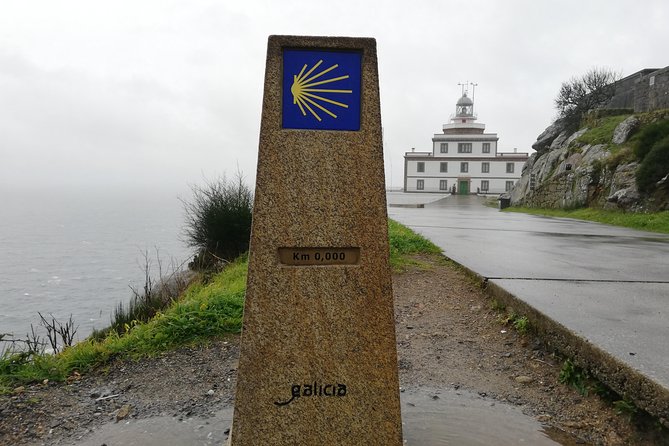
- Cape Finisterre lighthouse and Camino kilometer zero: the symbolic western end of the route.
- Muxía sanctuary and the sacred stones: a quieter, spiritual stop at the Atlantic edge.
Costa da Morte in One Long Day, from Santiago’s doorstep
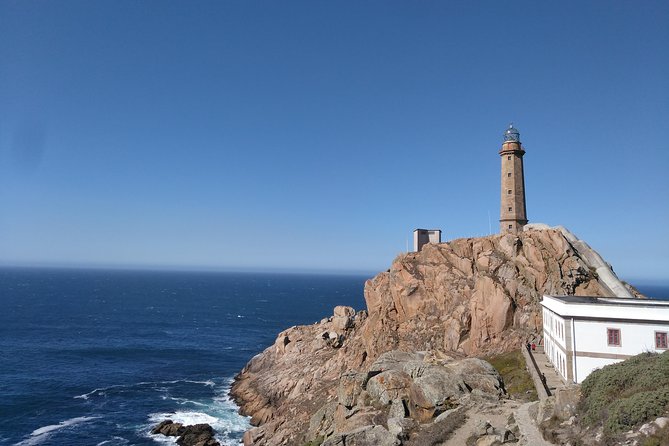
This is the kind of day trip that makes you feel like you packed a whole mini-region into one outing. You leave Santiago de Compostela, ride in an air-conditioned vehicle, and spend the day circling the coast known for myths, tides, and that dramatic, weather-driven scenery.
I like that the tour is built around short, meaningful stops rather than one endless “look, but don’t touch” viewpoint session. You get guided context for what you’re seeing, then you get time to breathe and walk on your own in places like Finisterre and Muxía.
The downside is simple: nine hours is nine hours. If you’re the type who wants to linger for hours at the “main” site, you’ll have to work with the time windows.
A few more Santiago de Compostela verdicts worth reading
- Santiago: Cathedral & Museum Tour + Pórtico of Glory Option
★ 4.7 · 2,116 reviews - From Santiago: Tour To Finisterre, Muxia & Costa da Morte
★ 4.7 · 1,842 reviews - Excursion to Finisterre + Muxia + Costa da Morte (7 stops)
★ 5.0 · 1,367 reviews - Finisterre and Costa da Morte: The Most Complete Tour of Santiago
★ 5.0 · 733 reviews
Ponte Maceira and the Tambre river bridge for pilgrims
The day kicks off with Ponte Maceira, a small stop that matters to pilgrims. It’s tied to the idea of continuing the journey toward the end of the world, and it feels appropriately in-between: not a big city spectacle, more like a meaningful checkpoint.
Here you’ll see a 14th-century bridge over the Tambre River and get a look at medieval mills along the water. This is one of those places where the photos help, but the real value is the sense of continuity, like the Camino story spills into normal Galician town life.
Time here is short, so come ready to focus. Wear comfortable shoes and plan for quick sightseeing, not a slow stroll across every angle.
Muros stop and coffee time in a small seaside town
Next, you head toward the Muros e Noia estuary area and arrive at Muros for a brief visit. You’ll have time to take in the town and get your bearings, plus there’s a 30-minute coffee tasting slot built into the schedule.
This stop is useful even if you’re not trying to become an expert on coastal towns. It breaks up the drive with something human-scale: streets, views, and a chance to reset before you hit the wild coastline points.
Just don’t expect a long “wander Muros properly” window. Think of this as a good breather and a taste of the area.
Carnota viewpoints, Boca do Río, Mount Pindo, and coastal landmarks
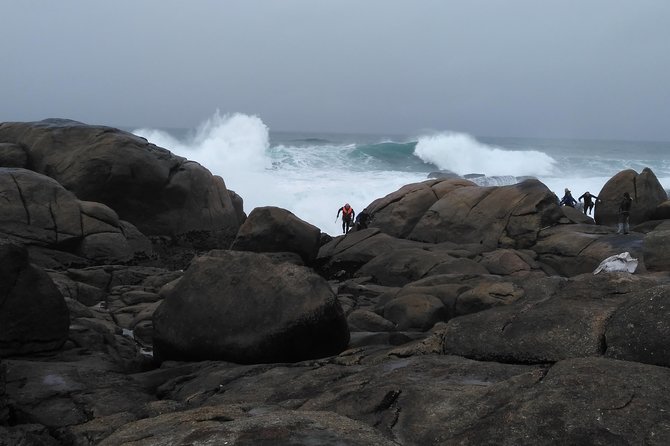
After Muros, the tour leans hard into scenery and coastal landmarks from the road. You’ll pass by spots like Carnota Beach, Lira, Boca do Río, Mount Pindo, and Cape Fisterra while the guide ties it together with context.
A bus ride can sound like a trade-off, but it works here because the coastline is the show, and the driver can place you where you can actually see. I like that the tour doesn’t just list names, it helps you understand why these points are famous in local storytelling.
One practical note: sea air and mist can make things slippery outside. Stay alert when you get out, even if the weather looks calm from the bus window.
Santiago de Compostela, continued down the scoresheet:
- From Santiago: Finisterre, Muxía & Costa da Morte Tour★ 4.8 · 721 reviews
- Santiago de Compostela Cathedral and Museum Guided Tour★ 4.6 · 511 reviews
- Visit to the Cathedral of Santiago + Portico de la Gloria Option★ 4.5 · 503 reviews
Ézaro waterfall on the Xallas river, one of Galicia’s standout drops
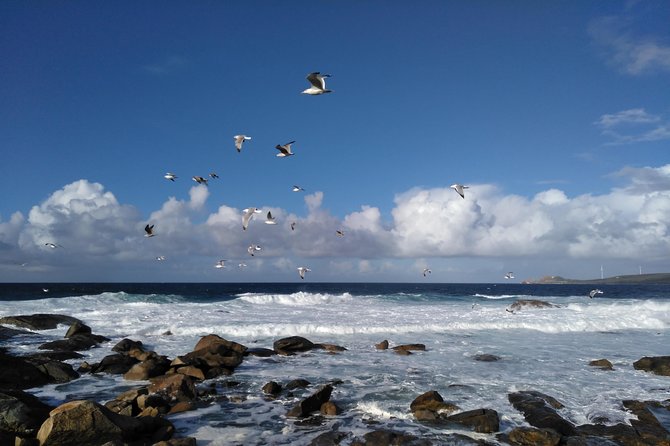
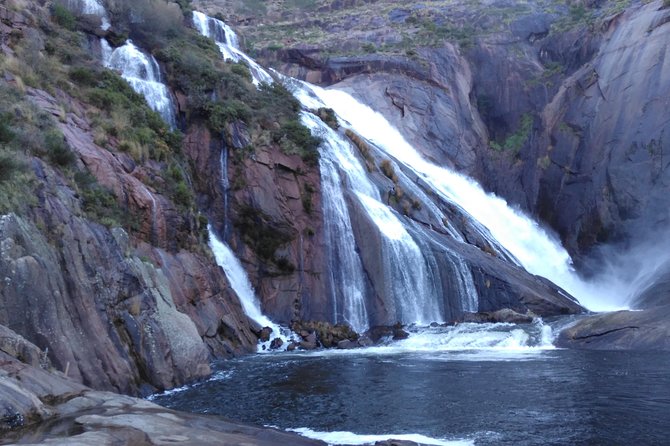
The stop at Ézaro is the closest thing this day has to a “wow, that’s real water power” moment. The river Xallas pours into the sea here, creating the Ézaro waterfall that’s famous across Galicia and described as unique in continental Europe.
Why this stop matters: it gives the Costa da Morte its dramatic physics. You’re not just looking at rock and tide, you’re seeing water do the heavy lifting.
What to consider: like much of northern Spain, weather can change the day. There have been cases where road or conditions affected the chance to see the waterfall, so if you’re hoping for a perfect view, build flexibility into your expectations.
Cape Finisterre lighthouse and Camino kilometer zero
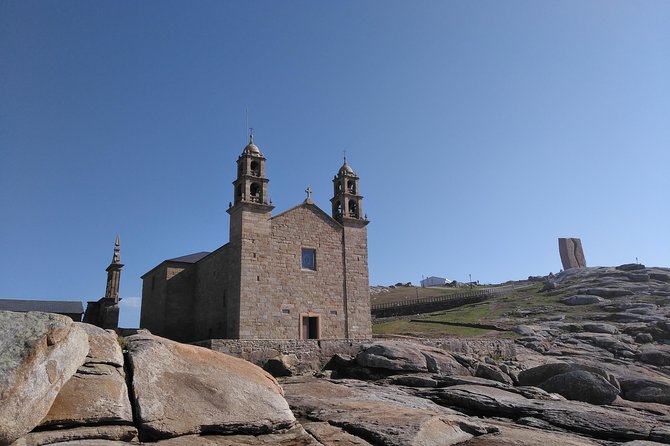
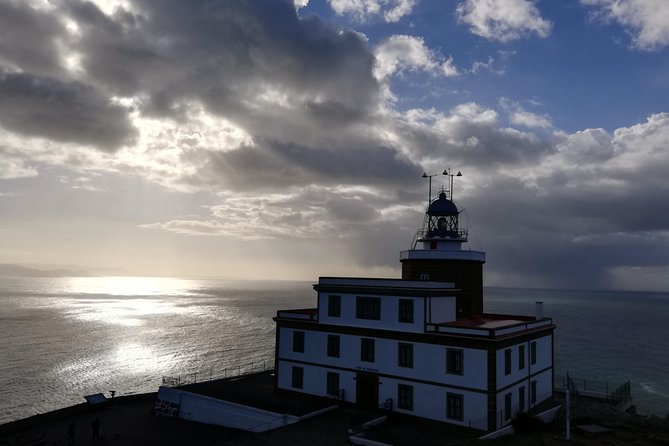
Then it’s on to Cape Finisterre, where the lighthouse and the Camino de Santiago kilometer zero are located. Even if you’ve already learned the Camino basics, this spot has a special pull because it marks the symbolic end point people talk about.
Time here is about 45 minutes for sightseeing and free wandering. That’s enough to walk around the main areas, take photos, and understand why the cape is so iconic.
If you’re the “I need to explore every path” type, you might feel the clock. One fair critique you should consider: time at Cape Finisterre can feel tight if this is the one stop you care most about.
Fisterra lunch break and fishing-port time
From the cape, you’ll reach Fisterra for lunch and more free time, with about 1.5 hours in total at this stage. The tour is not just a sightseeing run, it’s a chance to reset in a working coastal setting, including the fishing port area.
Lunch itself is not included, so plan to treat this as your meal stop where you can pick what looks good and fits your budget. The time allocation is enough to sit down, eat, and still walk a loop for photos and sea views.
I appreciate this design. It avoids the “all day, no food” trap that makes a long coach tour feel like a punishment. You still need to manage your energy because the tour continues toward Muxía afterward.
Muxía sanctuary and the sacred stones by the Atlantic
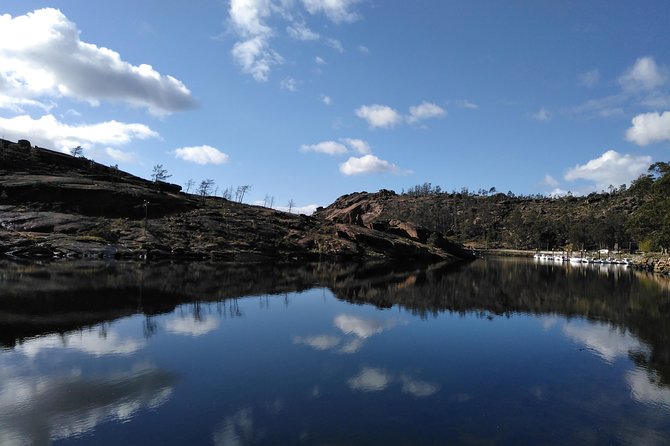
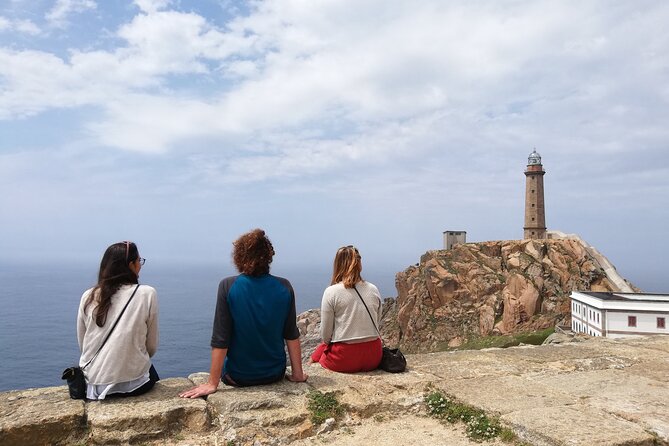
The final major spiritual-feeling stop is Muxía. You’ll visit the sanctuary at the foot of the Atlantic, where there are three stones considered sacred by Galicians.
This is a different mood from Finisterre. Instead of a cliff-and-lighthouse feeling, Muxía can feel calmer and more grounded, more about place, tradition, and the symbolism pilgrims connect with.
The guided part here includes a guided tour plus around 40 minutes free time. That balance helps, because the guide can explain what people associate with these stones, and then you can choose how long you want to linger.
Ponte Maceira return and keeping the day smooth
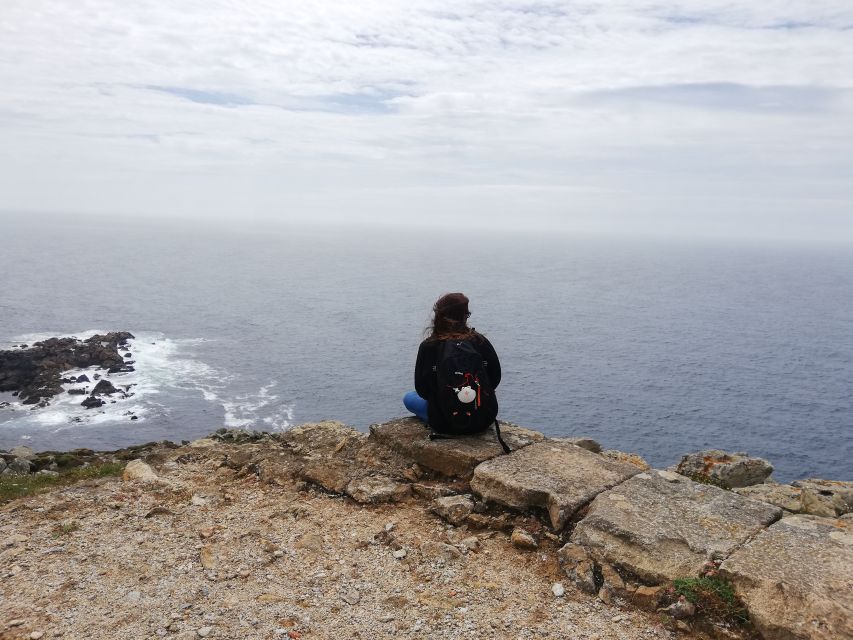
After the Muxía stop, you head back through the Ponte Maceira area again for a short sightseeing window of about 25 minutes before returning to the starting point.
This second pass can feel like a lot, but it also helps if you missed details earlier or if the light changed. You also get one more chance to connect the story of the river crossing with what you’ve seen along the coast.
The tour is designed to keep everyone on schedule. Guides tend to be focused on getting the group back into the bus quickly and efficiently, which is a big deal when you’re crisscrossing tight coastal roads.
How the pacing feels: multiple stops, not a full marathon
This day trip is a classic “bus tour with real stops” style. You’ll see a bunch of places, but each one is given a defined block of time, from quick viewpoints and towns to longer stretches at Finisterre and Muxía.
Most of the time windows feel designed to balance two needs: movement between key points, and enough time to actually do something there. For example, Muros is short, while Fisterra gives you time for lunch and walking, and Muxía includes both guided and free exploration.
Still, you should expect a packed schedule. If you’re prone to getting impatient on long rides, build in the mindset that the bus is part of the experience, not just a means to an end.
Air-conditioned transport, guides, and language support that matters
The biggest practical win is that you don’t have to manage transit yourself. This tour includes transportation by air-conditioned vehicle plus a live tour guide.
Language support is a strong point. The live guide offers Spanish, English, and Galician, and there’s also an audio guide provided in French, Korean, and German. That means you’re not stuck listening to one language while everyone else gets the narrative.
The guide quality seems to be a major driver of satisfaction, with multiple named guides praised for mixing factual context with an easy, friendly tone. Names like Andrea, Pablo, Christian, Dani, Ruben, and Cristian show up in the feedback as people who kept the day fun and understandable.
One small caution: audio quality can be inconsistent on some buses. If audio is part of how you prefer to learn, you may want to rely on the live guide when possible and treat audio as a backup.
Value check on a $58, 9-hour day trip
At $58 per person for a 9-hour day, this tour is priced like a full-service “save time and see the key sites” option. You’re paying for the vehicle, the guiding, and the organization that gets you to multiple coastal highlights in one stretch.
Is it worth it? Usually, yes, if you want to see Finisterre, Muxía, and the Ézaro waterfall without dealing with driving, parking, and route planning. You’re also buying convenience after Santiago, especially if you’d rather not rent a car for just a coastal day.
If you’re mainly chasing one place, like only Cape Finisterre, you might compare the value against DIY options. The time windows are efficient, but the tour is still a bundle. For the best value, go in wanting the whole Costa da Morte storyline, not only one checkpoint.
Weather, sea mist, and what to pack
Galicia’s coast can be moody, and that changes what you see. Even when it’s misty or rainy, the bus can be a lifesaver, letting you enjoy the views and narration without getting soaked.
For gear, keep it simple: bring comfortable shoes. You’ll be walking and stepping around viewpoints and town stops, and coastal surfaces can be slick.
Also, dress in layers. A cool sea breeze can make you feel underdressed even on a mild day.
Who this tour fits best, and who should consider alternatives
This tour is a great fit if you want an organized route with story and context. It’s especially good after Camino walking when you want to keep the connection but swap sore feet for a bus seat.
It’s also good for first-timers who don’t know the Costa da Morte landmarks well. The guide helps you understand why Tambre crossing traditions, the End of the World symbolism, and the sacred stones at Muxía matter.
If you’re a hardcore hiker or you hate coach schedules, you might feel constrained. In that case, you’d probably be happier with a slower plan where you control how long you stay at each coastal point.
Should you book this Costa da Morte day trip?
Book it if you want a single-day overview that hits the Costa da Morte’s most memorable spiritual and scenic stops, plus you want live guidance in multiple languages. I’d also book it if you prefer a structured day after walking the Camino, because this tour gives you those “big name” sites without the navigation stress.
Consider a different plan if Cape Finisterre is your one obsession and you want longer time there. The route is well organized, but some people do feel the cape portion is not as long as they’d like.
If you’re flexible and you want to experience the coastline as a connected story, this is a solid value. The day is long, but the mix of Ponte Maceira, Ézaro, Finisterre, and Muxía makes the time feel purposeful.
FAQ
How long is the Santiago de Compostela to Finisterre, Muxía, and Costa da Morte tour?
The tour duration is 9 hours.
What is the price per person?
The price is $58 per person.
Where do I meet the tour?
Meet at the TOXO TRAVEL office at Rúa dos Bautizados, 12.
What languages are included with the guide and audio?
The live tour guide is available in Spanish, English, and Galician. An audio guide is included in French, Korean, and German.
Is food or drinks included?
Food or drinks are not included. There is a lunch stop with free time in Fisterra, but you will need to pay for what you eat.
Is there free cancellation?
Yes. You can cancel up to 24 hours in advance for a full refund.
Latest Santiago de Compostela reviews into the ledger

Santiago de Compostela Tours, compared.
Santiago: Cathedral & Museum Tour + Pórtico of Glory Option
Read our review →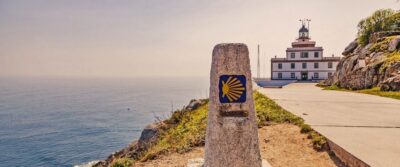
From Santiago: Tour To Finisterre, Muxia & Costa da Morte
Read our review →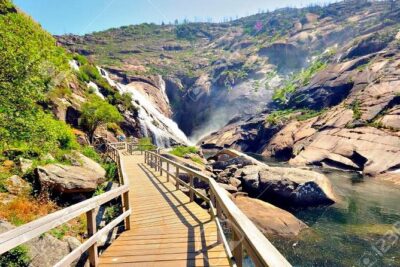
Excursion to Finisterre + Muxia + Costa da Morte (7 stops)
Read our review →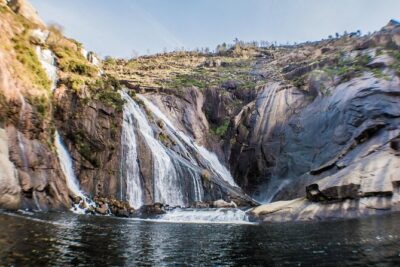
Finisterre and Costa da Morte: The Most Complete Tour of Santiago
Read our review →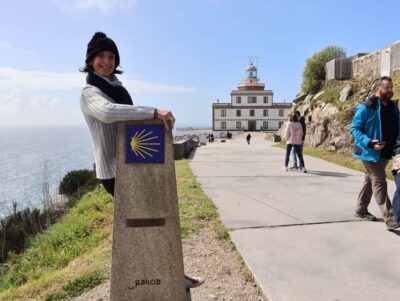
From Santiago: Finisterre, Muxía & Costa da Morte Tour
Read our review →
Santiago de Compostela Cathedral and Museum Guided Tour
Read our review →
Visit to the Cathedral of Santiago + Portico de la Gloria Option
Read our review →
From Santiago: Tour to Rias Baixas with Boat Trip and Winery
Read our review →Browse the lists this tour appears in