
Reviewed · CYCLING TOURS
Seville City Bike Tour
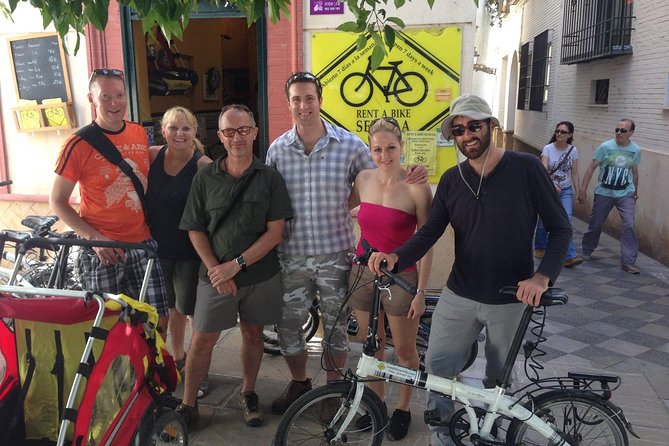
Pedal past Seville’s best photo stops fast. I love the small-group bike pace and the way the route connects landmarks with stories, plus I had a lot of fun with guides like Juan and Pablo. One thing to watch: in mid-afternoon heat, the ride can feel long, so plan a cooler start and lean on shade breaks.
This tour is a smart first-date with Seville. You get bike + helmet + bottled water, and you cover major areas without the stress of parking or figuring out routes. At $36.30 for about 2 to 3 hours, it’s good value if you want a highlights pass with real local context.
The route flows like a guided postcard: river views near the Torre del Oro, a slow, cool break in Parque de María Luisa, then more culture around the former tobacco factory and the gardens by the Alcázar walls, finishing back at Plaza de Santa Cruz.
In This Review
- Key highlights worth caring about
- Why a Seville city bike tour works so well
- Price and what you actually get for $36.30
- Getting started at Plaza de Santa Cruz (and why it’s a smart launch point)
- Torre del Oro and the Paseo de Cristóbal Colón photo stop
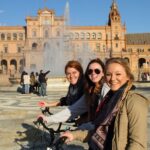
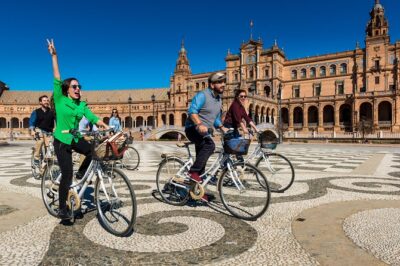
- Cooling off in Parque de María Luisa and Plaza de España
- The former tobacco factory turned University of Seville
- Alcázar wall gardens, Murillo references, and the 23-meter Colón
- Riding the old-town lanes without wearing yourself out
- Guides and pace: why your experience depends on who’s leading
- When to go and how to not suffer (especially in August)
- Quick, honest take: what this tour is best for
- Should you book this Seville bike tour?
- FAQ
- How long is the Seville City Bike Tour?
- What is the price per person?
- What does the tour include?
- Is hotel pickup or drop-off included?
- Is the tour offered in English?
- How big is the group?
- What if the weather is bad?
- Can I cancel for a refund?
Key highlights worth caring about
- Torre del Oro + Triana views from the riverside Paseo de Cristóbal Colón, with a quick Campana Cafe break for photos
- Parque de María Luisa cooling effect, where tree tunnels can drop the feel of the day
- Plaza de España and Plaza de América stops that even film fans recognize, tied to what makes Seville theatrical
- Former tobacco factory history, including the Carmen la Cigarrera connection and baroque facades
- Alcázar wall gardens and Murillo references, capped by the 23-meter Colón monument with stone caravel shapes
- Old-town lane riding, where bike lanes and pedestrian streets help you cover more without over-walking
Why a Seville city bike tour works so well
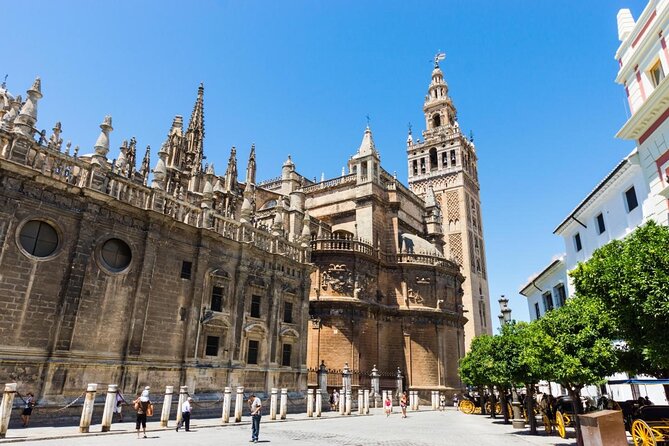
Seville has a way of pulling you forward, but its streets are also tricky. Hills show up at the wrong moment, and the best sights cluster in areas that can feel exhausting on foot. A bike tour fixes that. You move at a human speed that lets you look up and still make it to the next stop before the day turns sour.
I like how this one keeps the ride practical. You are cycling between big icons, but the stops are designed to reset your brain, not just tick boxes. Expect frequent moments where you can sit, hydrate, and take pictures, not just speed through.
The other big win is perspective. Seville is not only buildings, it is breezes, courtyards, tiles, and street angles. When you travel on wheels, you notice the small stuff: how the river opens the city view, how gardens soften the light, and how architecture changes as you move from old neighborhoods toward the university district and back into the historic core.
A few more Seville verdicts worth reading
- Seville Highlights Bike Tour (English)
★ 5.0 · 2,225 reviews - Seville: Highlights City Bike Tour
★ 4.8 · 2,168 reviews - Seville: Relaxing City Bike Tour with a Tour Guide
★ 4.8 · 1,588 reviews - Seville: City Sightseeing and Local Culture Bike Tour
★ 4.9 · 1,120 reviews
Price and what you actually get for $36.30
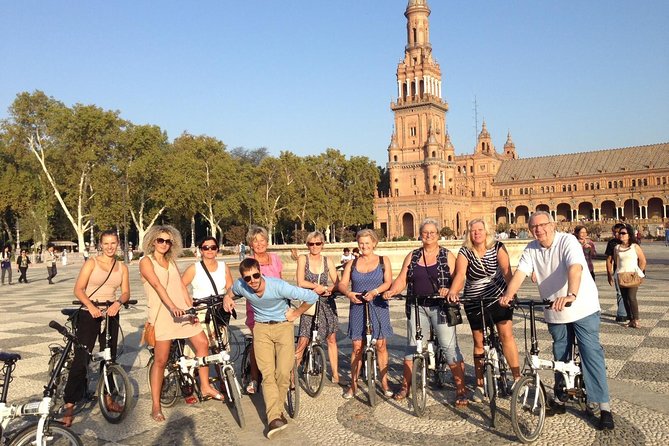
$36.30 sounds like a budget-friendly ticket, and it is, but the better question is what it replaces. This tour includes bike and helmet and bottled water, and you have a local guide handling the route. That means you are not paying separately for bike rental, or spending time negotiating where to go next.
It also has a time advantage. In roughly 2 to 3 hours, you can cover multiple zones that would easily take half a day on foot. If you have limited time, that matters more than squeezing in one extra landmark.
On the other hand, you should budget for your own snack and drinks. Food and drinks are not included. If you ride in warm weather, grab a water refill plan and expect to purchase something simple at the café stop if you want it.
Getting started at Plaza de Santa Cruz (and why it’s a smart launch point)
You meet at Plaza de Santa Cruz in the old center. This spot is convenient because it places you near the heart of Seville, where the historic lanes start making sense. The tour ends back at the same place, so you are not scrambling for a final transit plan.
Starting here also supports a good flow. You begin with classic old-town streets, then gradually shift toward the river and major garden areas. That progression matters because it helps you avoid the common mistake of burning energy on the wrong direction first.
You’ll also likely feel the group size difference. The tour caps at 15 travelers, and the experience often runs with smaller groups in practice. That usually means more room for the guide to adjust pacing and for you to ask questions without being shuffled along like a herd.
Torre del Oro and the Paseo de Cristóbal Colón photo stop
This ride has a signature moment early: the Torre del Oro, a 13th-century defensive tower tied to Seville’s maritime past. It’s the kind of landmark that looks like it belongs on a postcard, but cycling beside it gives you a better angle than most bus stops.
There is also a story that makes the tower stick in your mind. The name Torre del Oro is explained as not being about the literal gold of the Americas, but about how its glazed tiles shine over the water. When you see the reflections while you ride, the explanation makes instant sense.
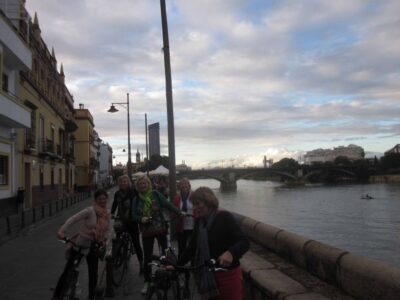
Then you roll along the Paseo de Cristóbal Colón, where the river breeze is real and the views of Triana are directly across. This is one of those “stop and breathe” segments, because you get your first wide view of the city’s geography.
A quick break at Campana Cafe fits the tour’s rhythm. It’s not a long meal stop, more like a reset so you can hydrate, use shade, and get a few clear photos before the ride turns greener.
More Things to Do in Seville
- Seville: Royal Alcázar Entry Ticket★ 4.6 · 28,378 reviews
- Seville: Live Flamenco Dancing Show Ticket at the Theater★ 4.7 · 16,396 reviews
- Seville: Alcázar, Cathedral & Giralda Skip-the-Line Tour★ 4.8 · 11,525 reviews
Cooling off in Parque de María Luisa and Plaza de España
After the river, the tour shifts into one of Seville’s best mood changes: Parque de María Luisa. Think of this as an escape from asphalt, with fountains, plazas, and paths that feel calmer by design. Expect a relaxed ride through the park, where trees and vegetation create natural shade tunnels.
This matters in practical terms. Seville can get hot fast, and the park layout helps. You feel it immediately when the air cools under the canopy and the light softens.
Inside the park, you hit the Plaza de España area and the Plaza de América. Even if you do not chase film locations, the scale and theatrical look are the point. The tour ties these spaces to pop culture moments you might recognize, including film references like Star Wars, which helps you understand why people describe the place as cinematic.
One caution: the park is huge. Even when the ride is relaxed, you will still want good posture and an eye on your line. If you have tight scheduling, prioritize the photo angles you care about most, because the guide will keep moving at a steady, comfortable pace.
The former tobacco factory turned University of Seville
Next up is a building that surprises people the first time they see it. This one used to be the first tobacco factory in Europe, and today it is tied to the University of Seville. It is monumental, and visitors often mistake it for a royal palace simply because of its scale and facades.
From the bike, you get a feel for the structure’s drama. You ride near the moat area and take in the baroque portals. It’s one of the few stops where industrial history feels just as visually impressive as palace architecture.
Here is the cultural hook the guide typically stresses. This site is linked to Carmen la Cigarrera, the famous cigarette worker from Bizet’s opera Carmen. That connection gives you a way to interpret the building beyond dates and production, like how cities turn labor stories into art and myth.
Logistically, the location works well. It sits between Hotel Alfonso XIII and Parque de María Luisa, so it feels like a bridge between the garden calm and the next wave of historic streets.
Alcázar wall gardens, Murillo references, and the 23-meter Colón
After the tobacco factory, the tour heads into gardens that feel like a stylistic shift. These spaces are described as regionalist style from the early 20th century, with narrow, shaded paths that run along the walls of the Alcázar. Cycling here is a relief because the pace feels gentler and the surroundings are quieter.
One standout stop is the Monumento a Colón. You stop by the 23-meter column, and the design includes two stone caravel shapes that look like they are sailing between the trees. It is not just a monument, it is an idea made physical, and on a bike you see it from enough angles to understand the composition.
The guide also frames this stop as the “heart” connection between areas of Seville. You are moving between the calmer mood of Santa Cruz and the more active, modern-feeling edges of the city. That makes the gardens feel like a living threshold, not just a scenery stop.
There is a final thread about art. These gardens tie to the painter Murillo, and the guide points out azulejo and water features that communicate the more romantic side of Seville. Even if you are not an art-history person, you’ll leave with a clearer sense of why the city uses tiles so confidently.
Riding the old-town lanes without wearing yourself out
At some point, the tour turns fully into what you came for: movement through the historic center, one of the largest old town areas in Europe. The big advantage is that Seville has an extensive network of bike lanes and routes that include pedestrian streets, so you are not fighting traffic at every turn.
In practice, that means you see more than you would by walking, but you still get the slow, human street details. You notice street corners, building textures, and tiny glimpses into courtyards that you might miss when you are stuck on a single viewpoint.
This part also helps first-timers learn the city’s logic. Seville is full of “wrong turns” when you are trying to navigate alone. On this tour, you learn which directions link major areas smoothly, and you start building your own mental map for later days.
Guides and pace: why your experience depends on who’s leading
The guides are often the difference between a bike tour that feels like sightseeing and one that feels like a real lesson you can carry. I noticed a pattern in the guide names people rave about, including Juan, Pablo, Daniel, Pierre, and Elena. Each seems to bring a style that mixes stories with practical tips.
What I liked most is the way the best guides manage pace. Stops happen often enough to keep you comfortable, especially in warmer months. Guides also seem willing to adjust when the group is small, which makes the tour feel less scripted and more tailored.
That said, there are small quality variations you should plan for. One rider mentioned bikes not being in the best condition, while many others praised brake performance and bike readiness. To protect yourself, do a quick check before you roll: brakes feel responsive, seat height is correct, and tires look stable. It takes a minute and saves stress later.
If you like learning history but do not want a lecture, you are in the right place. The route breaks big topics into manageable pieces, tied directly to what you are looking at outside.
When to go and how to not suffer (especially in August)
Weather matters here. The tour requires good weather, and the ride time is long enough that heat can become the main factor. One clear lesson from Seville in general: late-afternoon in peak summer can be brutal, and if your schedule forces that, you need to treat hydration like a priority, not an afterthought.
Wear light layers you can remove, use sunscreen, and bring sunglasses. Even with shade breaks, the open river segments can expose you. If you can choose your time, aim for the cooler part of the day. You will enjoy the ride more, and you’ll be able to absorb the stories without feeling drained.
Also plan your expectations about effort. This is not a strenuous cycling tour, but you still need basic comfort riding a bike and keeping steady for long stretches between stops. Most people can participate, but if you have balance concerns or severe mobility limits, you should check with the operator before booking.
Finally, remember food and drinks are on you. If you want a proper meal after, choose one near your own comfort range, not far away from Plaza de Santa Cruz.
Quick, honest take: what this tour is best for
This tour is best for three types of travelers.
First, it’s ideal if you want a first-day orientation. It helps you understand where Seville’s major zones connect, so your later self-guided wandering feels easier.
Second, it works well for people who like structure but do not want rigidity. You get a route, but there is room for shade breaks, photos, and questions.
Third, it suits history lovers who prefer stories tied to real places. The guide points out why the Torre del Oro looks the way it does, what the old tobacco factory became, and why the gardens use Murillo-linked imagery. It turns the city into something you can remember.
If you already know Seville deeply and want only the most niche corners, you might feel it is a “great highlights tour” rather than a deep specialty expedition. But for most first-timers, that is exactly the value.
Should you book this Seville bike tour?
Book it if you want a practical, time-saving way to see Seville’s biggest scenes in about 2 to 3 hours, especially with included bike, helmet, and water. It is a smart choice when you want history explained in plain language while you’re still moving.
Skip it or reconsider the timing if you are locked into peak heat and you know you struggle with long warm rides. In that case, try to schedule earlier in the day so the garden shade and café stop actually feel like a treat.
FAQ
How long is the Seville City Bike Tour?
It lasts about 2 to 3 hours.
What is the price per person?
The price is $36.30 per person.
What does the tour include?
Bottled water, a local guide, and the use of a bike and helmet are included.
Is hotel pickup or drop-off included?
No, hotel pickup and drop-off are not included.
Is the tour offered in English?
Yes, it is offered in English.
How big is the group?
The tour has a maximum of 15 travelers.
What if the weather is bad?
The experience requires good weather. If it is canceled due to poor weather, you will be offered a different date or a full refund.
Can I cancel for a refund?
Yes. You can cancel up to 24 hours in advance for a full refund.
Latest Seville reviews into the ledger


Cycling Tours, compared.
Highlights & Hidden Spots of Barcelona Bike Tour w/ Local Guide
Read our review →

3 h. Guided Highlights Bike Tour with Optional Tapas
Read our review →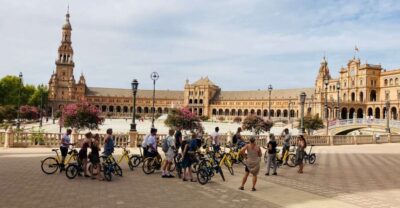
Browse the lists this tour appears in