
Reviewed · TAPAS TASTINGS
Seville Jewish Quarter Small Group Tour with Tapas and Drinks
Seville’s Jewish past hides in plain sight. This 3-hour small-group tour in English guides you through the streets of the old Jewish Quarter, tying the stories you see in front of you to what was happening around the Alcazar. You also get frequent photo moments, because the lanes and plazas really do look like a time capsule.
What I like most is the food payoff. After the walk, you head to a local tapas bar for a meal of three tapas plus two included drinks, and they handle diet needs when you flag allergies or intolerances ahead of time. One thing to consider: this is still a walking tour on uneven, narrow streets, so comfortable shoes matter, especially if the weather is poor.
In This Review
- Key highlights worth planning for
- A 3-hour walk from Plaza del Triunfo into Seville’s old lanes
- Alcazar first, Jewish Quarter second: the story behind the setting
- Susona and the Street of Death: medieval stories you can picture
- Fortified boundaries, turning points, and why walls matter
- The medieval Jewish cemetery and the curious structure preserving it
- Three cultures of the Mediterranean and how worship spaces can change
- Hidden secrets inside houses, plus the square that gave Santa Cruz its name
- Tapas and drinks after the tour: what you really get for the $71.35
- Group size, pace, and how guides keep it friendly
- Price and value for history plus a real meal
- Who should book this Jewish Quarter tour in Seville?
- Should you book this Seville Jewish Quarter small-group tapas tour?
- FAQ
- How long is the Seville Jewish Quarter small-group tour?
- How many people are in the group?
- What are included with the tapas and drinks?
- Can the restaurant accommodate allergies or intolerances?
- Where do I meet and where does the tour end?
- What is the cancellation refund timing?
Key highlights worth planning for
- Small group (max 10) for questions, slower explanations, and better photo stops
- Alcazar origin and fortified-area context so the neighborhood makes sense, not just looks pretty
- Susona and the Street of Death as story-based history you can picture while you walk
- Medieval Jewish cemetery and a strange-looking preservation structure you can actually spot
- Three-culture worship layers in one area, showing how places change over time
- Three tapas plus two drinks at the end, with vegetarian-friendly options and diet accommodations when you book
A 3-hour walk from Plaza del Triunfo into Seville’s old lanes
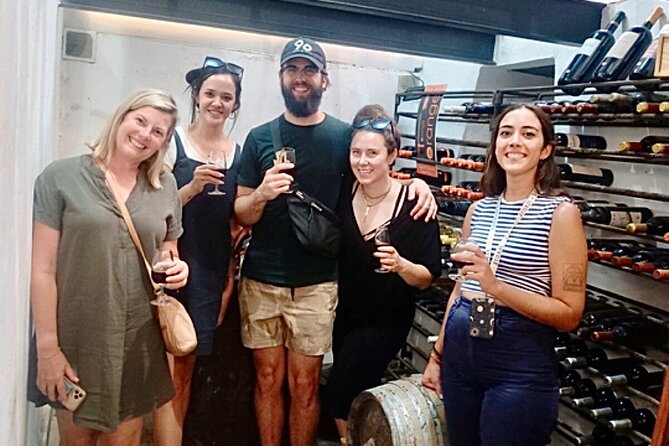
You start at Plaza del Triunfo, in the Casco Antiguo, then finish on Calle Lope de Rueda. The tour runs about 3 hours, and it is designed as a compact experience: enough time to connect the dots, not so long that you feel like you are dragging your feet through a maze.
The route is mostly on foot through a neighborhood of tight streets and small plazas. In other words, it is ideal if you enjoy walking as a way to understand a city. It is not the kind of tour where you sit on a bus and get facts sprayed at you. Instead, you move from one meaningful spot to another, and your guide keeps the pace friendly for a group size of up to 10.
A practical plus: you will be using a mobile ticket, and it is in English. If you want an evening plan that mixes history with a meal, this is one of the better “do-it-all” formats in Seville.
More Tapas Tours in Seville
- Sevilla Food Tour: Tapas, Wine, History & Traditions
★ 5.0 · 3,468 reviews - Ultimate Seville Tapas, Wine & History Small Group Tour
★ 5.0 · 1,766 reviews - Seville: Tapas Crawl
★ 4.9 · 1,705 reviews - Authentic Flamenco Show with Tapas & Wine Guided Tour
★ 5.0 · 1,476 reviews
Alcazar first, Jewish Quarter second: the story behind the setting
One of the smartest choices here is where the tour starts emotionally. You are not thrown directly into names and dates. You ease in with a welcoming introduction, then learn about the origin of the Alcazar as you head toward the Jewish Quarter.
Why that matters: the Alcazar is not just a beautiful palace you pass on your way somewhere else. It helped shape the defensive and power structure of the area. When you later learn about the fortified zone around the Jewish Quarter and the Alcazar, the neighborhood stops feeling random. It becomes strategic, planned, protected.
This is also where you begin to understand why people settled where they did, and how a city’s physical layout can influence community life. If you like history that explains the “why,” you will probably enjoy this part as much as the later legend stops.
Guides like Miguel, Valentín, and Carlos are singled out for turning place details into clear, story-shaped explanations. Even if you are not a hardcore history buff, you should still walk away feeling like the area is readable.
Susona and the Street of Death: medieval stories you can picture
As the walk goes deeper into the old Jewish Quarter, one stop leans hard into legend. You will hear one of the most intriguing medieval stories tied to the neighborhood: Susona and the Street of Death.
This type of stop is valuable even for people who usually skip folklore. Legends often preserve the emotions of a community and the way later generations remembered events. The payoff is that you can connect what you hear to what you see. When you stand in the area your guide describes, the story becomes a mental image, not a dry reading assignment.
You also get small “urban reality” moments, where the guide helps you notice how the area shifted over time. For example, the tour includes discussion of urbanistic changes that explain how the same neighborhood can look different in the 21st century. That is a big deal in Seville, where layers of history are visible but not always obvious.
If you care about photography, this is a good time to slow down. The streets and corners around these story stops can make a strong frame, especially in late light.
Fortified boundaries, turning points, and why walls matter
The tour doesn’t treat the neighborhood like a museum display. It keeps returning to practical questions: Who defended what? Who had access? What does it mean that this area was fortified?
You learn about the importance of the fortified area around the Jewish Quarter and the Alcazar. That might sound like the boring part of history, but it actually helps you interpret the neighborhood layout. Fortification shapes where people can travel, where services could be centralized, and how communities interact with the wider city.
You also get a broader sense of how the area changed through time. One stop focuses on transformations of the district, helping you understand the evolution of the neighborhood into what you see now. That makes later stops, like cemeteries and worship spaces, feel less like isolated trivia and more like connected chapters.
This is also where a confident guide helps most. People who liked Marta, Carmen, or Jose often emphasize the same thing: the information comes with context, and the pacing stays comfortable.
More tapas counters put to the test:
- Flamenco Show at Tablao El Arenal with Drink and Optional Dinner or Tapas★ 4.5 · 1,415 reviews
- The Seville Tapas Crawl Tour by Food Lover Tour★ 5.0 · 1,213 reviews
- Seville: Exclusive River Boat Tour with Tapas★ 4.3 · 802 reviews
The medieval Jewish cemetery and the curious structure preserving it
One of the highlights is the stop at the old medieval Jewish cemetery, still preserved today at a structure that is described as curious. You are not just told it existed. You see a physical remnant, which makes the history more real.
Cemeteries are emotionally heavy places, and this tour treats the topic like it belongs in a thoughtful walkthrough, not as an afterthought photo stop. If you are the type who likes to understand how communities marked life and death, this moment will likely be one of your strongest.
The tour also addresses the fact that physical remains of the Jewish community are limited. That context is important because it prevents disappointment. You come in expecting history, not a full archaeological exhibit. The guide’s job is to show you where people lived, where they worshipped, and what later happened to the spaces.
From there, you move into a larger idea: how the same kinds of spaces can shift roles over time.
Three cultures of the Mediterranean and how worship spaces can change
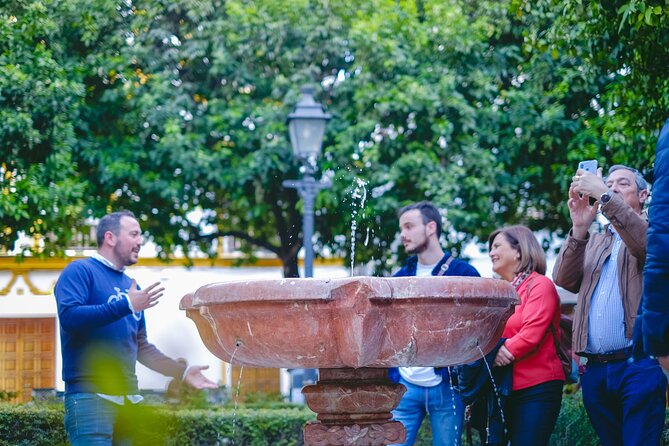
Another stop focuses on how the same location was used by the three cultures of the Mediterranean as a worship place. This theme shows up repeatedly in Seville’s historic areas: sites can be reused, renamed, and reinterpreted when power and populations change.
This part is especially useful because it trains your eye. Instead of seeing a single building or wall as one fixed identity, you learn to think in layers. If you have ever felt confused trying to read Seville’s past on your own, this is exactly the kind of explanation that makes the city click.
The tour also includes a story-driven look at what happened to the neighborhood over centuries. You learn how houses and structures were repurposed, and you get guided attention to details you might otherwise miss.
One review also mentioned a similar “you would miss this without a guide” feeling in an adjacent area near the Alcazar. That’s consistent with how this tour is structured. The guide steers you toward the parts of the neighborhood that look ordinary until someone points out what they are.
Hidden secrets inside houses, plus the square that gave Santa Cruz its name
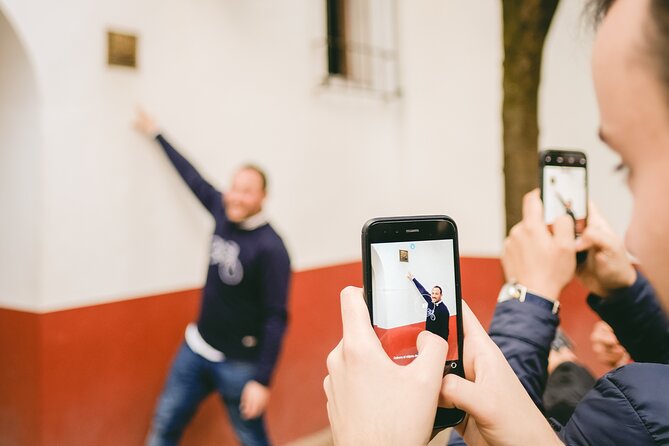
The tour doesn’t stop at what is publicly obvious. It includes the kind of “wait, that is what I have been looking at?” moments that make a guided walk worth it.
You visit the houses of the area where one hidden secret of the medieval Jewish Quarter is said to be preserved, now connected to a notable hotel. Even without going inside everything, the point is clear: some of the neighborhood’s layers are still built into how the area stands today.
Then you reach a square that gives the neighborhood its name, and you learn that the square connects to the origin of the first church of the area, later transformed across the centuries. This stop ties together a key concept: the same physical geography can serve different communities and religions as history unfolds.
If you like walking tours where the explanation follows a logical thread, this portion will feel satisfying. It turns the neighborhood from a pretty maze into a map of human change.
And yes, this is a great time to slow down for photos. Squares and transitions between lanes tend to produce the best views, especially when the light hits the stone and plaster.
Tapas and drinks after the tour: what you really get for the $71.35

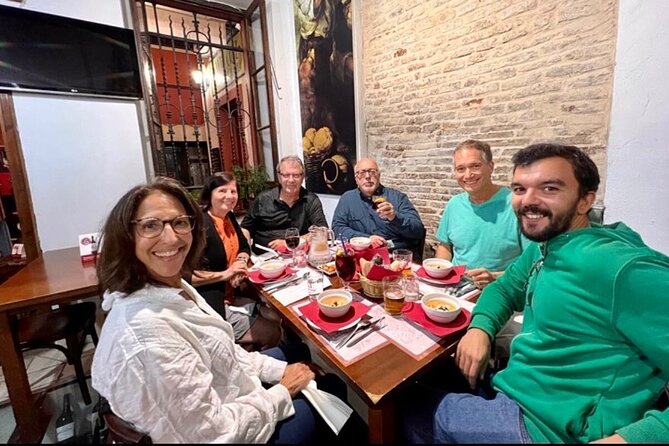
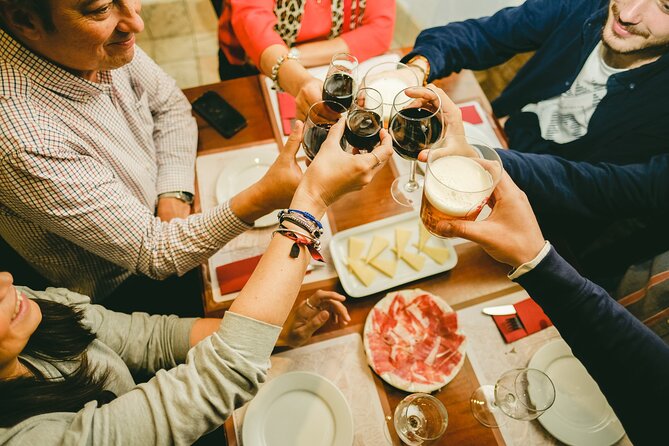
Dinner time is the grand finale. After the historic walk, you head to a local tapas bar where each guest gets a full meal consisting of three tapas plus two drinks included.
The meal is described as a three-course Andalusian-style experience. Expect traditional dishes that often mix vegetables with meat and/or fish. Examples of dishes that can appear include salmorejo, croquetas, oxtail, spinach with chickpeas, pisto, pork cheeks, aubergines, anchovies, calamari, gazpacho, mushrooms. The exact menu varies by session, but the style stays traditional.
A key value point here is that the meal is not an extra-cost add-on. It is built into the tour price, which makes the whole experience easier to budget in Seville, where food and drinks can add up quickly.
You also have real evidence this works for different diets. One person reported vegetarian-friendly selection, and another noted the restaurant accommodated gluten intolerance as well as needs like no pork or shellfish. The important practical step: if you have allergies or intolerances, you should advise at booking so the restaurant can plan.
If you are wondering about alcohol style, the tour notes Spanish wines included, and you are covered on drinks during the meal.
One more thing: this is a tapas bar meal, not a long detour to a separate wine cellar stop. So if your idea of fun is history plus good food nearby, this format fits.
Group size, pace, and how guides keep it friendly
This tour caps at 10 travelers, which is small enough for a guide to actually notice you. That matters in a walking tour because questions happen in real time. People praised guides like Valentín, Marta, and Barbara for being engaging and answering queries, not just reciting.
In terms of pacing, the experience is structured with multiple stops, but it does not feel like a marathon. One review described the walking portion as about an hour and a half, with the rest made up by storytelling and the tapas meal.
If you are traveling with kids, you should know that at least one family mentioned the guide was patient with questions and the pace worked fine. That suggests it is not an intense hike-style tour.
Tips from how the tour is designed:
- Wear shoes you trust. Narrow streets plus evening walking is not the time for fancy footwear.
- If you have a favorite theme, bring it up early, like persecution history, city planning changes, or legend storytelling.
- Take pictures at the points your guide emphasizes. Those are usually the spots where the explanation makes the best frame.
Price and value for history plus a real meal
The price is $71.35 per person for about 3 hours, and the value comes from two combined pieces: (1) guided historical storytelling in a compact area, and (2) a meal at a tapas bar with three tapas and two drinks included.
A walking tour alone often costs a similar amount in major European cities, but without built-in food. Here, you effectively pay for the guide, then also get the dinner component without having to choose a restaurant afterward. That is a practical money win, and it also removes decision fatigue, especially on a travel schedule packed with museums.
Also, the food list signals variety. Even if you do not eat meat, the format can still work. The tour description emphasizes Andalusian classics built around veggies and combinations with fish or meats, so you should not feel forced into eating only plain sides.
Think of it as a “history lesson that ends at the bar,” with enough structure to keep you moving and enough flexibility to enjoy dinner without hunting down recommendations.
Who should book this Jewish Quarter tour in Seville?
Book this if you want more than a quick glance at Santa Cruz. You are looking for a guided walk that helps you interpret what you see, including legends like Susona, the Street of Death, and the shift from Jewish spaces to later religious and cultural uses.
It also fits well if you like photography but do not want to spend your whole evening searching for angles. The tour is designed with frequent photo opportunities, and the group size helps you get those shots without sprinting ahead.
You should also consider it if you enjoy food as part of culture, not just as a reward. The final meal is traditional and specifically Andalusian, and the three-tapas format means you get variety instead of one heavy dish.
If your travel style is mostly browsing on your own and you dislike walking, you might prefer a lighter self-guided option. But if you like having a person connect the dots, this is a strong fit.
Should you book this Seville Jewish Quarter small-group tapas tour?
I think this is an easy yes if you have even a single evening where you want history, atmosphere, and food in one plan. The max 10-person size keeps it personable, and the tour covers the big emotional and physical anchors of the neighborhood, from the cemetery to the changing worship layers.
If you have dietary needs, this can still work well as long as you tell them during booking. If you are comfortable walking on narrow streets and you enjoy listening while you go, you will likely leave feeling like Seville’s Santa Cruz is no longer just scenery.
If, on the other hand, you already know the Jewish Quarter stories very well and you are not hungry for a guided walk, you might feel like you are paying for structure you do not need.
FAQ
How long is the Seville Jewish Quarter small-group tour?
It lasts about 3 hours.
How many people are in the group?
The tour has a maximum of 10 travelers.
What are included with the tapas and drinks?
Dinner includes three tapas and two drinks. The meal is described as a three-course Andalusian selection, and Spanish wines are included.
Can the restaurant accommodate allergies or intolerances?
Yes. If you have any food allergy and/or intolerance, you should advise at the time of booking, and the restaurant will be informed.
Where do I meet and where does the tour end?
The tour starts at Plaza del Triunfo and ends at Calle Lope de Rueda.
What is the cancellation refund timing?
You can cancel for a full refund if you cancel up to 24 hours in advance of the experience’s start time.
Latest Seville reviews into the ledger




Tapas Tastings, compared.

Montserrat Half-Day Tour with Tapas and Gourmet Wines
Read our review →
Montserrat & Cogwheel Train, Gourmet Wine Tasting & Tapas/Lunch
Read our review →
Barcelona Tapas and Wine Experience Small-Group Walking Tour
Read our review →
Montserrat with Black Madonna & Medieval Winery with Tapas/Lunch
Read our review →
Tapas Walking Tour with Food, Wine, and History
Read our review →
Madrid Tapas & Wine Tasting Walking Tour – Small Group Local Bars
Read our review →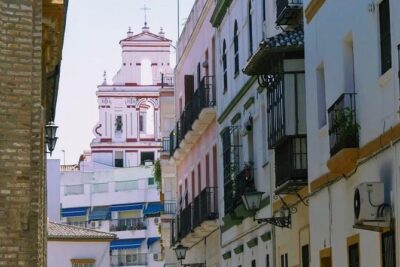
Sevilla Food Tour: Tapas, Wine, History & Traditions
Read our review →
Valencia Old Town Tour with Wine & Tapas in 11th Century Historic Monument
Read our review →Browse the lists this tour appears in