
Reviewed · WALKING TOURS
Seville Small-Group Monumental Highlights Walking Tour
Seville’s big landmarks, in one tight loop. This 2-hour, small-group walking tour strings together the sights you keep seeing on postcards, and explains how they connect. You’ll move outdoors across the old center with an English-speaking guide, using real context to make the city feel less like a list and more like a story.
What I like most is the small-group feel. You get time to ask questions, and guides (I’ve heard names like Carmen, Laura, and Carlos often stand out) keep the pace friendly instead of rushing you from stop to stop. I also love the outside-only approach: you see major monuments without burning your afternoon on ticket lines.
One thing to consider is that monument entry tickets are not included. You’ll get great viewpoints and explanations from outside, but if you want to go in, you’ll need to plan separate visits, and wind can also affect Plaza de España access.
In This Review
- Key highlights that make this tour worth it
- Why this Seville monumental highlights walk works so well
- The route, from City Hall area to Plaza de España
- Stop 1: Seville City Hall area and the 1500s city story
- Stop 2: Former mosque roots and the Giralda Tower
- Stop 3: Seville as the Port of the Indies
- Stop 4: The Real Alcázar area, and why it still matters
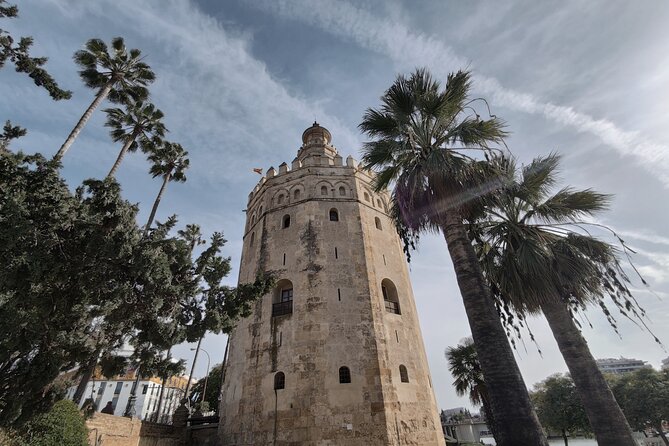
- Stop 5: The last Muslim building, a watchtower that became an entry
- Stop 6: The 1700s Tobacco factory and Seville’s industrial side
- Stop 7: The Ibero-American Exhibition and Plaza de España
- What you get, and what you will need to add yourself
- Pacing, questions, and comfort on the streets
- The value question: is $30.25 a good deal?
- Who should book this tour (and who might skip it)
- Should you book this Seville Monumental Highlights walking tour?
- FAQ
- How long is the Seville Small-Group Monumental Highlights Walking Tour?
- What language is the tour offered in?
- Are tickets to enter monuments included?
- How big is the group?
- Where does the tour start and end?
- Can Plaza de España close due to weather?
Key highlights that make this tour worth it
- Max 10 travelers means you are not swallowed by a crowd
- Outside views first so you can orient yourself fast around Seville’s center
- Giralda and former mosque context helps you understand how Seville changed over time
- Port of the Indies plus Expo 1929 set-up gives you the “why” behind modern layouts
- Plaza de España may close in high winds, so be ready for the day’s weather
Why this Seville monumental highlights walk works so well
Seville can feel like a maze at first, even when you are near the famous stuff. This tour is designed for that exact problem, it connects key points with plain explanations while you stay on your feet.
You will get a strong overview of Seville’s turning points: Moorish influence, the city’s role as a gateway for trade to the Americas, and the later urban changes tied to the 1929 Ibero-American Exhibition. Even if you only have a day, you leave with a mental map that helps everything else click.
And because it is small-group, you are more likely to notice details and ask the follow-up questions that make the history stick. Guides have a knack for turning what could be dry dates into clear cause and effect.
More Walking Tours in Seville
- Seville: Small-Group City Highlights Walking Tour
★ 5.0 · 1,204 reviews - Cultural Walking Tour of Seville Monumental
★ 5.0 · 861 reviews - Seville: Tapas, Taverns, and History Walking Tour
★ 4.9 · 676 reviews - Seville: Tapas, Taverns and History Guided Walking Tour
★ 4.9 · 515 reviews
The route, from City Hall area to Plaza de España
The walk starts at Pl. de S. Francisco, 17 in the Casco Antiguo and ends at Plaza de España, Av. Isabel la Católica. Expect about 2 hours on foot, and plan for it to be mostly outdoors.
The stops are arranged like a timeline you can walk through. You start with the city’s power and civic importance, then move into the religion and architecture layers behind the Giralda area, then on to Seville’s global trade era, and finally to later industrial and exhibition-era Seville.
If you like understanding what you are seeing, this format is a win. If you want a quiet stroll with zero explanations, it may feel a bit structured.
Stop 1: Seville City Hall area and the 1500s city story
The first stop sets the tone by explaining why Seville mattered so much in the 1500s. From this part of town, you get the vibe that Seville was not just a pretty place, it was a big-decision city tied to empire and governance.
What I like about this start is that it gives you a framework. Before you reach the big monuments, you know why the city grew, why rulers invested here, and how that momentum shaped what you will see next.
Practical tip: this is a good moment to ask anything that feels confusing. If you are wondering how Seville went from Moorish roots to Christian rule, this early context helps.
Stop 2: Former mosque roots and the Giralda Tower
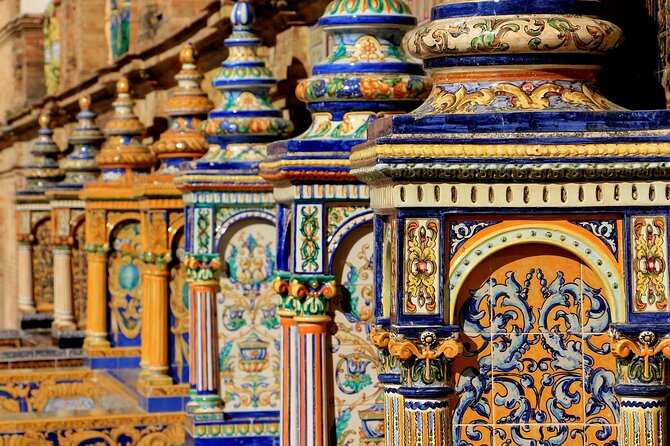
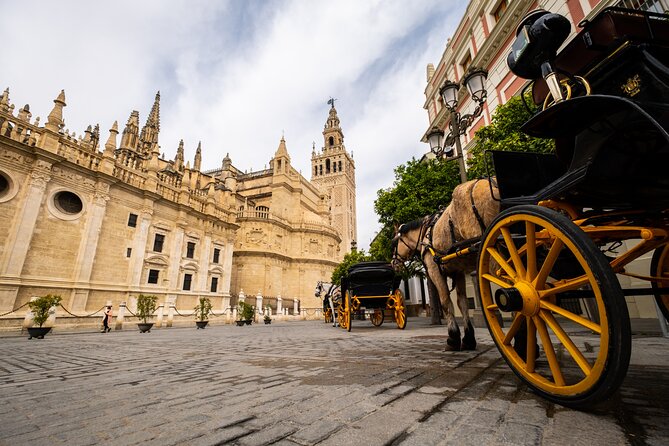
Next you get the outdoors explanations around the previous mosque and the Giralda Tower. Even if you have seen photos of the tower, the tour helps you understand it as a cultural hinge, not just a view.
This stop is where Seville’s layers start to feel logical. You learn how different cultures and religions shaped the way the city developed, and why the Giralda ended up as a landmark people still point to.
Look for the story, not just the skyline. When you understand what the site used to be, the tower becomes a symbol of change, not a random vertical landmark.
More Spanish cities taken on foot:
- Seville: Small-Group Jewish Quarter Discovery Walking Tour★ 4.9 · 499 reviews
- Seville Guided Small-Group Walking Tour★ 5.0 · 435 reviews
- Seville: Paranormal and Legends Guided Walking Tour★ 4.7 · 336 reviews
Stop 3: Seville as the Port of the Indies
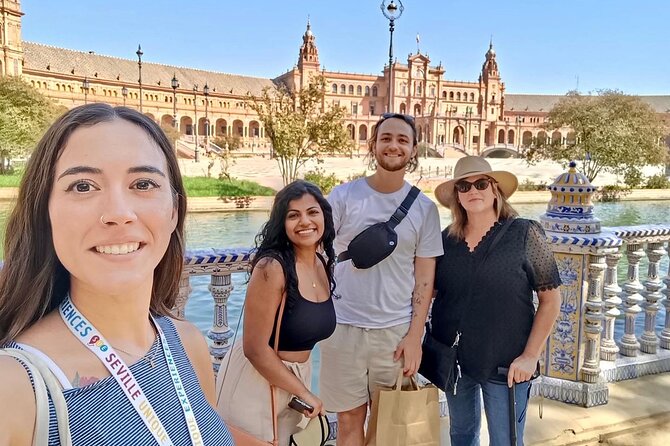
Then comes one of the most useful explanations on the whole walk: Seville as the Port of the Indies, the trade center tied to the New World.
This is the part that turns Seville from postcard scenery into economic geography. You get the idea of how wealth, shipping, and overseas connections helped shape neighborhoods, institutions, and the scale of what got built.
If you are the type who likes to connect history to real places, this stop is a highlight. It also makes later stops easier to understand because you start seeing the city as an engine, not just a museum.
Stop 4: The Real Alcázar area, and why it still matters
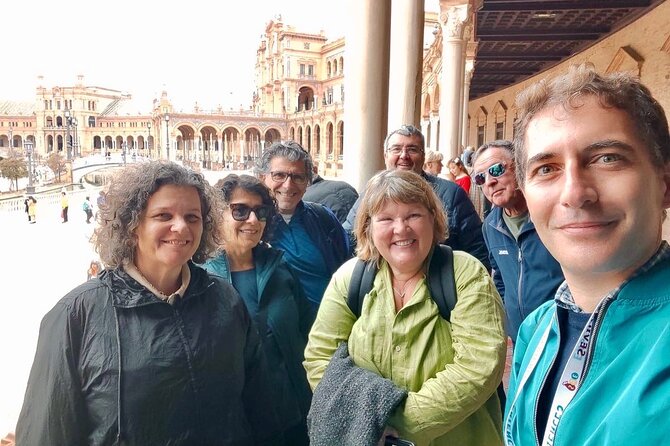
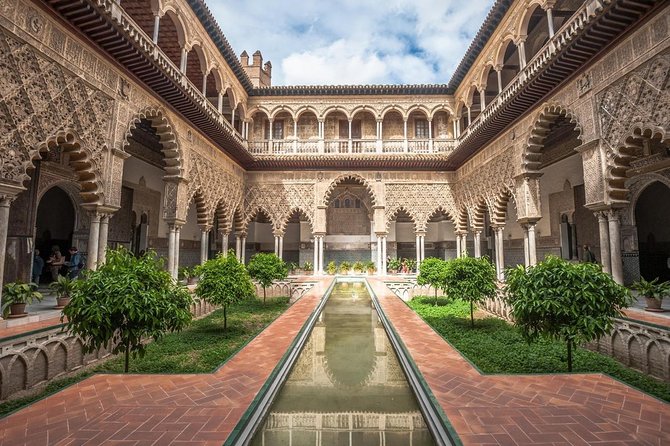
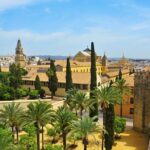
You then move to the oldest Royal Palace still in use in all of Europe, explained from the outside. The tour frames what makes it unique and why rulers kept returning to this place across centuries.
From a practical standpoint, this stop is perfect if you are deciding whether you want to add an inside visit later. The guide gives you enough context that you can make a smarter choice with your limited time.
What to watch for here: pay attention to how the palace functions in the surrounding urban fabric. Once you understand that continuity, you start noticing how Seville’s past is built into everyday streets.
Stop 5: The last Muslim building, a watchtower that became an entry
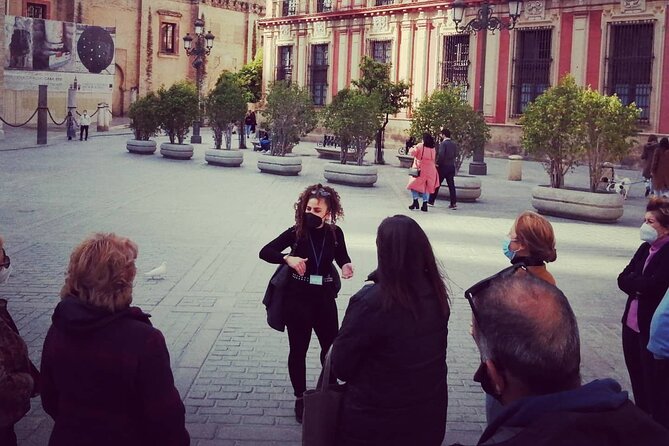
Next is the last Muslim building described as a watchtower that later became an entry point connected to the ocean. This is the kind of detail that makes a walking tour feel worth the ticket price, because it gives you one clean takeaway per stop.
It also helps you understand why Seville feels the way it does. Coastal trade, river access, and defense all mattered, and the city’s architecture carried those needs forward even after power changed.
If you like short, memorable explanations, this is one of those stops where the idea lands fast and stays with you.
Stop 6: The 1700s Tobacco factory and Seville’s industrial side
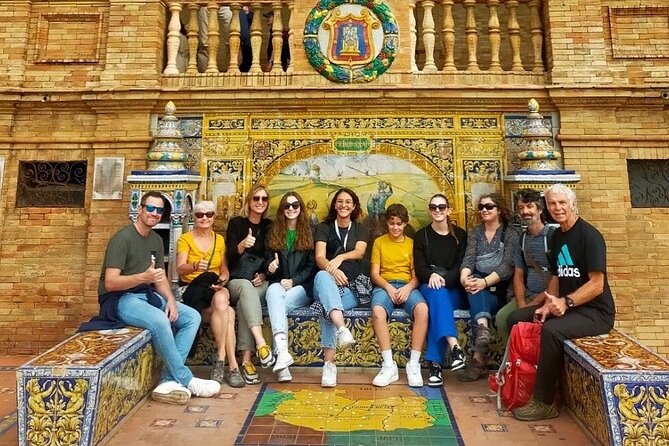
After the maritime and palace stories, you get something different: the old Tobacco factory building from the 1700s. The guide points out how it is an example of Seville’s industrial architecture.
This matters because it balances the tour. You see that Seville is not only about royal sites and grand plazas. Trade and production shaped the city too, and industrial buildings still influence how neighborhoods feel and function.
Even from the street, you get a sense of scale. It is a reminder that Seville’s story did not pause at the medieval era.
Stop 7: The Ibero-American Exhibition and Plaza de España
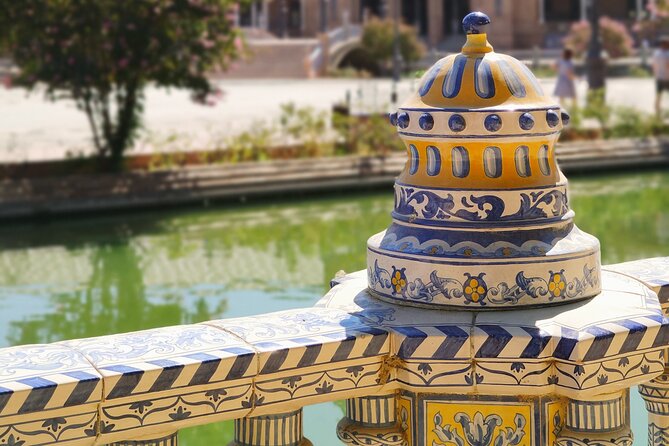
The final stop connects the 1920s and early 1900s transformation to what you see in Plaza de España. The tour explains how the Ibero-American Exhibition changed the city’s urbanism, and the plaza becomes the most visible example.
This is a great closer because it ties history to what is still here today. You stop thinking of Seville as only ancient, and you start recognizing it as a city that keeps redesigning itself.
Important weather note: the city council can close Plaza de España due to a heavy wind alert. If the plaza is affected on your day, the overall experience may shift, but the story is still the same timeline. Pack a little patience for that one.
What you get, and what you will need to add yourself
This tour includes the guided walking experience with a licensed guide in English, with a mobile ticket for the reservation. It is also capped at 10 travelers, which is a big deal for a city where the streets can get tight.
Tickets and visits inside monuments are not included. So while you will learn a lot about sites like the Giralda and the Real Alcázar, you are mainly looking and learning from the outside.
That means you should treat it as a smart “orientation plus context” tour. Then you add inside time later if you want to go deeper.
If you are planning your day, I suggest pairing this with one or two ticketed monument visits afterward. You will be able to place what you see inside into a bigger story you already understand.
Pacing, questions, and comfort on the streets
The tour is built to be doable for most people, but it is still a real walk. Plan on uneven sidewalks, sunlight exposure, and the fact that Seville is at its best when you take the time to notice details.
A strong theme from the tour experience is that guides keep things not overly rapid and answer questions even when they are small or specific. That matters because Seville history can get tangled fast, and having a human explain it in plain terms helps you sort it out.
I also like the practical care some guides are known for, including choosing shadier areas when possible so the group can breathe. If you tend to overheat, that kind of pacing makes a difference.
Practical tips:
- Wear comfortable walking shoes.
- Bring water, even if the weather looks mild.
- If you have questions, save them for the guide, you will get better answers when the context is fresh.
The value question: is $30.25 a good deal?
At $30.25 per person for roughly 2 hours, you are paying for two things: a guided explanation and the efficiency of covering multiple “must-see” areas in one go.
What makes it good value is the coverage. You are not spending your day bouncing between unrelated stops. You are learning a connected story that helps you understand why each place exists where it exists.
There is one cost trade-off: because monument entry is not included, you will likely spend more later if you want inside visits. But that is also the point. This tour helps you decide what you care about most, so your paid time inside is more targeted.
Another value factor is that it is often booked ahead. If you are aiming for a specific day or time, booking earlier is smart.
Who should book this tour (and who might skip it)
This is a great fit if you:
- want a fast Seville orientation with history you can actually use
- like asking questions and getting real answers
- plan to see multiple major sights but do not want to guess the story yourself
- are visiting with limited time and want one strong first step
You might consider a different option if you:
- only care about entering monuments and do not want outside viewpoints
- hate structured walking tours with scheduled stops
- need total silence while sightseeing
Should you book this Seville Monumental Highlights walking tour?
I would book it if you are spending one to two days in Seville and want your landmarks to mean something. The mix of Giralda area context, the Port of the Indies storyline, and the Expo 1929 link to Plaza de España gives you a clear “how Seville became Seville” map.
It is also a nice way to handle the practical reality of travel. Weather happens, Plaza de España can close with wind alerts, and you cannot always control your day. Still, the route is designed to give you value even if one final moment changes.
If you want a guided, small-group start that makes the rest of your itinerary easier to plan, this one is a very solid choice.
FAQ
How long is the Seville Small-Group Monumental Highlights Walking Tour?
It runs for about 2 hours.
What language is the tour offered in?
The tour is offered in English.
Are tickets to enter monuments included?
No. Tickets and visits inside the monuments are not included.
How big is the group?
The tour has a maximum of 10 travelers.
Where does the tour start and end?
It starts at Pl. de S. Francisco, 17, Casco Antiguo, 41004 Sevilla, Spain and ends at Plaza de España, Av. Isabel la Católica, 41004 Sevilla, Spain.
Can Plaza de España close due to weather?
Yes. The city council can close Plaza de España due to a heavy wind alert, which may affect the stop near the end of the tour.
Latest Seville reviews into the ledger


Walking Tours, compared.
Barcelona Tapas and Wine Experience Small-Group Walking Tour
Read our review →
Tapas Walking Tour with Food, Wine, and History
Read our review →
Madrid Tapas & Wine Tasting Walking Tour – Small Group Local Bars
Read our review →
Albaicín and Sacromonte Guided Sunset Walking Tour
Read our review →
Toledo Tour & Vineyard Walk with Wine Tasting from Madrid
Read our review →
Madrid Walking Tour from Puerta del Sol to Retiro Park
Read our review →

Barcelona Tapas Walking Tour: Food, Wine & History
Read our review →Browse the lists this tour appears in