
Reviewed · THINGS TO DO IN MADRID
Spanish Civil War start of 2 World War, Guernica Franco
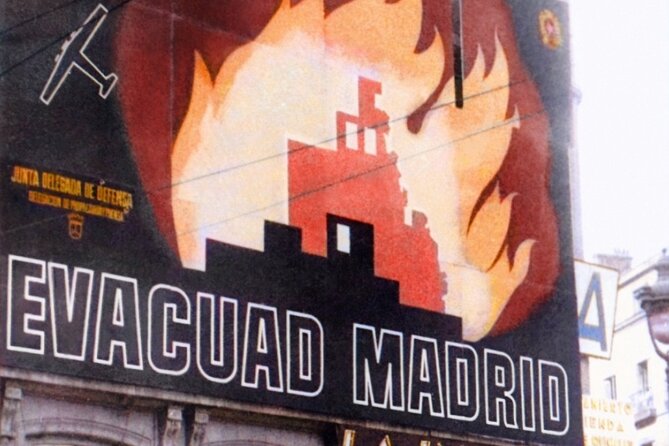
Madrid tells war stories in plain sight. This 2.5-hour walking tour strings together key moments from the Spanish Civil War and the run-up to World War II, right through central Madrid. I especially like the visual support (maps, images, audio, videos) that keeps the story clear, and the chance to see how ideas, propaganda, and real people collided in everyday places. One thing to consider: most stops are outward, street-level points of interest, so you should not expect a heavy “inside the building” tour.
I like that it stays human in scale. You’re with a local guide, you get English interpretation, and your ticket is mobile, so getting started is easy. The group stays small, max 30 people, and the pace gives you time to ask questions and make sense of what you’re seeing.
The theme is heavy, but the approach feels grounded, not gloomy for the sake of it. Expect moments tied to civilians under bombing, the split between opposing sides, and the uncomfortable afterlife of war in monuments and public memory. If you want an all-cheerful Madrid highlights tour, this is not that.
In This Review
- Key things I’d mark on your mental map
- A guided walk that makes cause and effect click
- Stop 1: Plaza del Callao and the visible scars of bombing
- Stop 2: Palacio del Senado and the moment Spain split
- Stop 3: Plaza de España, Franco, and the siege of Madrid
- Stop 4: Templo de Debod and the war of ideas, plus who paid
- Stop 5: Paseo del Pintor Rosales, Picasso, Guernica, and art under fire
- Stop 6: Cuartel General del Ejercito del Aire, music, transfusions, and what comes after
- Stop 7: Arco de la Victoria and the debate over preserving war memory
- Timing, route flow, and where the tour actually lands you
- Price and value: $3.62 per group, up to 15 people
- Who this tour fits best in real life
- Should you book this Madrid Civil War tour?
- FAQ
- How long is the tour?
- What language is the tour offered in?
- What is the price?
- Do I need to pay for site entries?
- Where does the tour start and end?
- Can I cancel and get a refund?
Key things I’d mark on your mental map
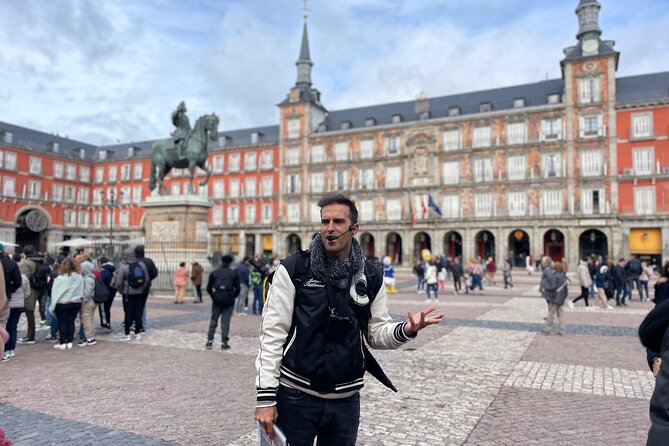
- A tight 2.5-hour route from Callao toward Moncloa, covering turning points in the lead-up to dictatorship
- Free site entries are not the point, since the tour focuses on what you can see and understand without paying extra
- Guides by name who bring clarity and heart, with examples like Victor, Maikel, Guillermo, Adria, and Chato
- War as ideas, not just battles, from propaganda themes to who paid for the conflict
- Culture and memory woven in, with stops tied to Picasso’s Guernica and what art meant under fire
A guided walk that makes cause and effect click
This is the kind of history tour that helps you stop memorizing dates and start seeing connections. The format is built around short stops, quick context, and visuals that help you hold onto the story as the city moves under your feet. You’ll get exclusive materials like maps plus images, audio, and videos that support what the guide is saying, so even if your brain needs a second to catch up, you can.
I also like the practical side. You get a mobile ticket, and the route is designed for real walking in central Madrid, with proximity to public transportation. End point is near Moncloa, so you can roll into dinner or museums without feeling stuck at the far edge of the city.
One smart extra is the personalized link to recommendations for what to do in Madrid after the tour. That sounds small, but it changes the day from a one-off activity into a plan you can actually use.
More Things to Do in Madrid
- Madrid: Tour Bernabéu Entry Ticket
★ 4.5 · 21,573 reviews - Madrid: Prado Museum Entry Ticket
★ 4.6 · 20,699 reviews - Madrid: Royal Palace Fast-Access Admission Ticket
★ 4.6 · 13,856 reviews - Madrid: “Emociones” Live Flamenco Performance
★ 4.8 · 12,866 reviews
Stop 1: Plaza del Callao and the visible scars of bombing
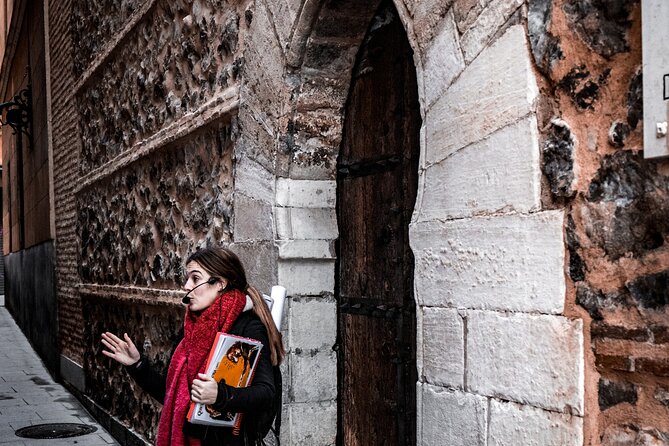
Plaza del Callao sets the tone fast, and not in a gentle way. This is about bombing in central Madrid, and about how war leaves marks on everyday life, not just on battlefields. You look at the buildings and talk through what it meant for people living and moving through the city.
What I like here is that the tour doesn’t treat bombing as an abstract tragedy. It frames it as something that shaped routines, fear, and belief. When you connect the physical damage you can see with the human impact, the rest of the route makes more sense.
A possible drawback is also obvious here. Because you’re outdoors, you might rely on your guide’s framing a bit more than you would on-site in a museum setting. If you prefer indoor artifacts, you may need to lean into the conversation and visual aids the guide provides.
Stop 2: Palacio del Senado and the moment Spain split
From the bombed city center, the tour turns to the question underneath everything: how did Spain reach civil war? At Palacio del Senado, you focus on the idea of two divided Spains. That phrase matters, because the tour treats the conflict as a clash of political and social visions, not just rival armies.
This stop also links the Spanish Civil War to the wider world. The guide frames Spain as a test range in the run-up to World War II, which helps you understand why this conflict mattered beyond Spain’s borders. You start to see the Spanish Civil War as a painful rehearsal for larger twentieth-century wars.
If you’re someone who likes big-picture context, this is a strong checkpoint. The visuals and audio support help you keep track of who believed what, and how slogans, strategy, and outside influence shaped outcomes.
Stop 3: Plaza de España, Franco, and the siege of Madrid
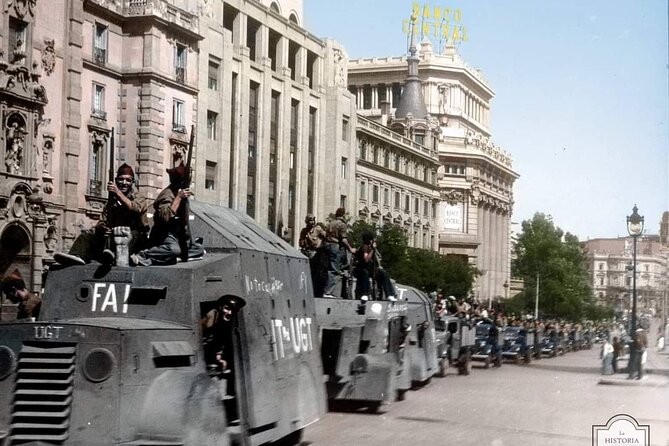
Plaza de España brings Franco into the story, and it does it with the idea of defense and endurance. You talk about the defense of the capital, including the famous long siege period of 900 days, and the sense of Madrid pushing through hardship while the conflict raged around it.
The tour also nods to life under pressure through wartime language. The stop includes discussion of wartime sayings, which is a clever way to show how people processed fear and uncertainty. When a population starts producing catchphrases and sayings, it’s a sign they’re trying to interpret reality in the middle of it.
My practical advice: pay attention to how the guide connects this stop to earlier ones. Bombing and division are not separate chapters. They build the ground for how a dictatorship takes shape, how survival becomes political, and why later monuments and memory debates can feel so raw.
Madrid, continued down the scoresheet:
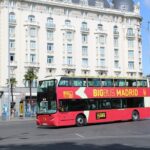
- Madrid: Panoramic Route City Tour★ 4.1 · 12,259 reviews
- Madrid: Live Flamenco Show with Food and Drinks Options★ 4.5 · 9,901 reviews
- Avila & Segovia Tour with Tickets to Monuments from Madrid★ 5.0 · 9,762 reviews
Stop 4: Templo de Debod and the war of ideas, plus who paid
Templo de Debod shifts the angle from front lines to the money and messaging behind the war. You’ll hear about who paid for the conflict, and how propaganda operated as a war of ideas. That theme is important because it explains why people fought, recruited, and convinced long before the first shots in any specific place.
You also see the Temple of Debod as part of the broader cultural layer. The stop ties it to a sculpture connected to the fallen of the Spanish Civil War, which helps you think about remembrance and what public space chooses to highlight or soften.
This is a good stop if you’re the type of traveler who thinks about ethics and interpretation, not only events. The tour nudges you to ask what stories get honored, who gets left out, and how a city carries that weight.
Stop 5: Paseo del Pintor Rosales, Picasso, Guernica, and art under fire
Here the tour brings in art, and it doesn’t treat art as decoration. You connect Picasso and Guernica to bombing of civilians, which is one of the most direct links between political violence and cultural response. You’re not just learning that Guernica exists, you’re understanding why it became a symbol.
The route also points you toward the idea of the Prado and art under fire. Even if you do not enter the museum, the framing gives you a lens for what you might later notice if you visit. Art becomes a record, a target, and a language for resistance or official messaging.
Then there’s a softer beat in the storytelling, tied to Christmas in Tregua, a breather amid violence. I like this balance because it prevents the tour from becoming one long grim line. You get a sense of how people tried to live, even when living was constantly threatened.
Stop 6: Cuartel General del Ejercito del Aire, music, transfusions, and what comes after
At Cuartel General del Ejercito del Aire, the tour leans into a different kind of history: human coping and turning points in how the world changes. You’ll hear about music, including references like They won’t happen and Sun Face, which adds a cultural pulse to a topic that could otherwise feel purely political.
Then the stop makes a striking leap to medicine with the mention of the first remote blood transfusion. Framed as life in the middle of death, that moment is a reminder that even during war, people pushed innovation and survival tactics.
The tour also ties the end of the war to the start of World War II and dictatorship. That ending matters. It reframes the whole experience you just walked through, turning it from a self-contained tragedy into a hinge in European history.
If you’re sensitive to intense topics, take your time here. This stop is not “lighter,” but it is meaningful, and the guide’s approach is designed to keep it understandable rather than overwhelming.
Stop 7: Arco de la Victoria and the debate over preserving war memory
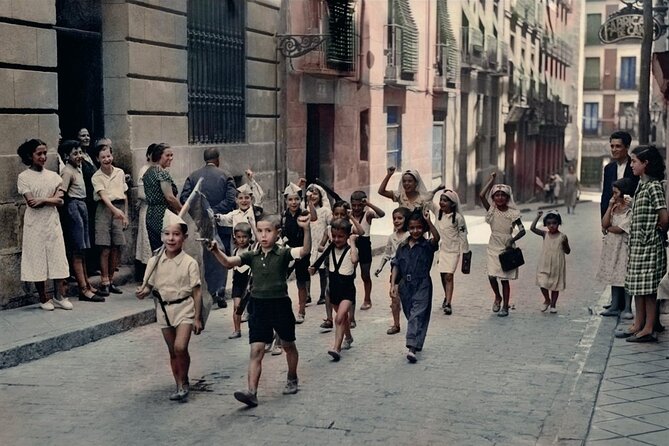
The final stretch heads to the Victory Arch, also known as Arco de la Victoria, where the tour addresses a question many cities still wrestle with. Destroy or preserve it? That debate is at the center of how public monuments work, especially when they’re tied to dictatorship and victory narratives.
At this point, everything you learned earlier clicks into place. Bombing, division, propaganda, and survival all feed into how regimes choose symbols. The guide pushes you to think about reflection of wars, not just celebration of them.
I like ending here because it gives you a last thought that follows you after the tour. You can walk away seeing the city differently, noticing how stone and placement tell stories.
If you prefer closure, this last stop might feel more like a conversation starter than an ending. That’s also the point, and it’s why it works.
Timing, route flow, and where the tour actually lands you
The tour runs about 2 hours 30 minutes. That’s long enough to connect ideas, short enough to keep energy reasonable. The schedule is paced around about 15 to 20 minutes per major stop, which is ideal for short explanations and photo moments.
You start at C. del Postigo de San Martín, 26, Centro, 28013 Madrid. The tour ends at Arco de Moncloa on Av. de la Memoria 32, Moncloa – Aravaca, 28040, and the end point is near Metro Moncloa. That matters for planning, because you can line it up with dinner, easy transport, or an evening stroll without a complicated return.
Group size max is 30 travelers. That’s a sweet spot. Small enough for your guide to read the room, big enough that it doesn’t feel like a private lecture unless it happens that way.
Price and value: $3.62 per group, up to 15 people
The stated price is $3.62 per group, up to 15 people. Yes, that’s unusually low compared to typical walking tours, and it changes the value math. What you’re paying for is not entry fees. The tour includes a local guide plus exclusive materials like maps, images, audio, and videos, and it adds a link to personalized Madrid recommendations afterward.
Even if you’re only buying one ticket, the structure signals that the provider is focusing on education and storytelling rather than building the cost around museum admissions. And since site entries are not necessary, you’re not forced into extra purchases.
If you’re budgeting tightly, this is a strong deal. If you’re willing to spend more, you still get a lot for the time because the tour is designed to help you understand the big picture while you walk Madrid’s streets.
Who this tour fits best in real life
This is a good match if you want more than surface-level Spanish history. It’s built for people who care about how a conflict shapes society, why propaganda spreads, and how war connects to later twentieth-century events.
It’s also great if you like city walking with meaning. You’re not hunting for hidden plaques. You’re looking at recognizable Madrid spaces and learning what happened there or what they represent.
Most travelers can participate, and service animals are allowed. The route is near public transportation, which helps if you want to do this as part of a bigger day.
The one “fit” consideration is the subject matter. The Spanish Civil War and the dictatorship that follows it are emotionally heavy themes. If that’s your idea of a good day, you’ll likely love it. If you want a light itinerary, you’ll feel the tone shift quickly.
Should you book this Madrid Civil War tour?
I’d book it if you want to understand Madrid’s twentieth-century story in a way that sticks. The guide-led approach, small group size, and the use of supporting materials make the history easier to hold onto than a standard lecture. Plus, you end in a transport-friendly area near Moncloa, which helps make it a practical piece of your itinerary.
I would not book it if you’re only interested in cheerful sightseeing, or if you strongly prefer interior museum time over street-level context. This is a walking interpretation tour, not a building-to-building ticket crawl.
If you’re even slightly curious about how the Spanish Civil War connects to the wider World War II era, this route is an efficient way to build that mental map.
FAQ
How long is the tour?
The tour lasts about 2 hours 30 minutes.
What language is the tour offered in?
The tour is offered in English.
What is the price?
The price is $3.62 per group, up to 15 people.
Do I need to pay for site entries?
Site entries are not necessary for this experience, and it is designed so you can understand the stops without purchasing separate admissions.
Where does the tour start and end?
It starts at C. del Postigo de San Martín, 26, Centro, Madrid and ends near Arco de Moncloa, Av. de la Memoria, 32, Moncloa – Aravaca, with Metro Moncloa nearby.
Can I cancel and get a refund?
Yes. You can cancel for a full refund up to 24 hours before the experience’s start time (local time).
Latest Madrid reviews into the ledger

Things to Do in Madrid, compared.

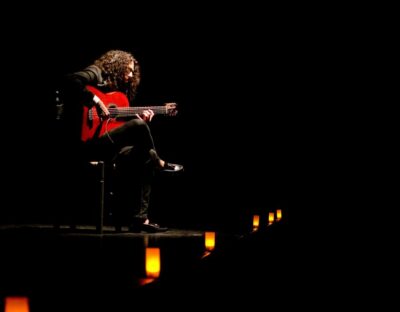

Live Flamenco Show with Food and Drinks Options
Read our review →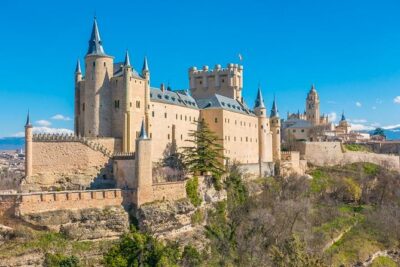
Avila & Segovia Tour with Tickets to Monuments from Madrid
Read our review →
Browse the lists this tour appears in