Reviewed · THINGS TO DO IN BARCELONA
Tarragona and Sitges Tour with Small Group and Hotel Pick Up
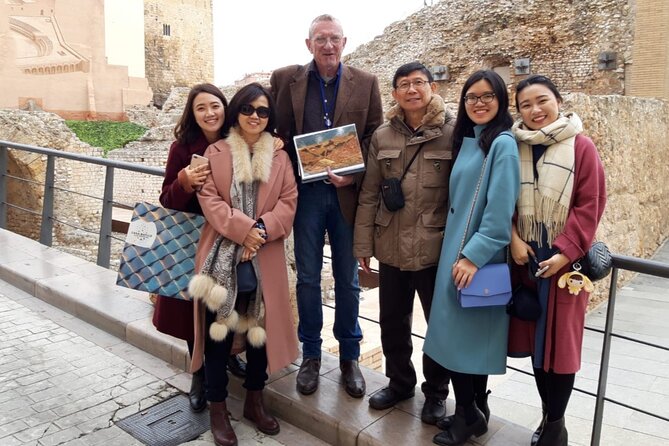
Roman ruins and a seaside break in one day. This full-day trip pairs UNESCO Tarragona sites with a Sitges walking tour and San Sebastian Beach time, all starting with hotel pickup. I especially like the small-group size and the way guides turn big-name ruins into real stories, whether you get Ramon, Eduardo, Luis, Diego, Miquel, or Lluís. The main catch is physical, you will do a lot of walking on cobbles and hills, so plan your footwear and pace.
You do not need a rental car to see beyond Barcelona. Instead, you get a smooth drive along the Costa Dorada, guided stops at major Roman landmarks, then a lighter, coastal rhythm in Sitges. One more heads-up, some spots can be affected by the calendar, including closures on religious observation days.
In This Review
- Why this combo of Tarragona and Sitges feels so smart
- Key highlights at a glance
- Getting from Barcelona to Tarragona Without the Stress
- Price and Value: What You Get for Around $120
- The Drive Along Costa Dorada, Plus a Barcelona Orientation
- Pont del Diable Aqueduct: When Roman Engineering Becomes a Photo Stop
- Antiga Casa del Consolat Tarragoni: Medieval Streets and Quiet Squares
- Amphitheatre Time: Glimpsing Tarraco’s Second-Century Drama
- Roman Walls, Cathedral Views, and the Human Tower Moment
- Mercat Central and the National Museum Area: Where Tarraco Meets Real Life
- The Sitges Shift: Old Town Lanes, Modernism, and Casa Bacardi
- San Sebastian Beach Break and Sant Bartomeu and Santa Tecla Views
- Small-Group Service: Why This Trip Gets 4.9 Ratings
- Pacing, Stairs, and Uneven Ground: What to Plan For
- Lunch, Snacks, and How to Handle Food and Drinks
- Weather Reality: December Still Works, but Plan for Closures
- Should You Book This Tarragona and Sitges Tour?
Why this combo of Tarragona and Sitges feels so smart
This tour is a one-day shortcut to two very different worlds that are close together. Tarragona gives you Tarraco, the Roman city complex, with standout architecture like the aqueduct and the shoreline amphitheatre. Sitges brings the Mediterranean side back into focus, with Modernist details, live-music energy, and a chance to cool off at an urban beach.
Key highlights at a glance
- UNESCO Tarraco, guided with specific Roman landmarks: walls, amphitheatre, and major ruins tied to the old city.
- Pont del Diable aqueduct photos before you even enter Tarragona: Roman engineering that still looks unreal.
- Amphitheatre entry included: you get inside one of the 13 UNESCO listed Roman remains.
- Sitges walking tour with Modernist stops: including Casa Bacardi and old-town lanes.
- Beach time at San Sebastian: optional swim or just enjoy the sea views.
- Small group up to 8: more questions answered and less waiting around.
More Things to Do in Barcelona
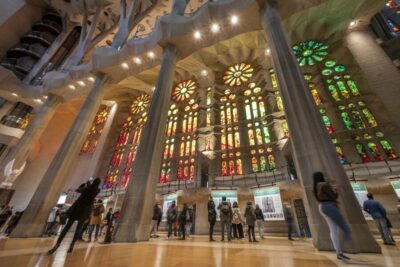
- Barcelona: Sagrada Familia Entry Ticket with Audio Guide
★ 4.6 · 105,312 reviews - Barcelona: Park Güell Admission Ticket
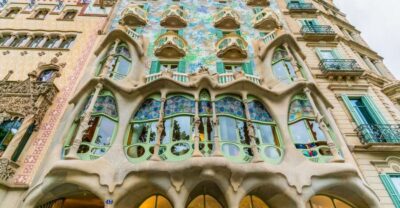
★ 4.4 · 76,534 reviews - Barcelona: Casa Batlló Entry with Self-Audioguide Tour
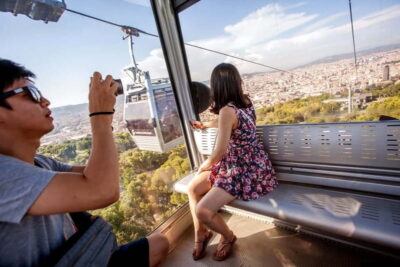
★ 4.7 · 25,359 reviews - Barcelona: Montjuïc Cable Car Roundtrip Ticket
★ 4.5 · 22,368 reviews
Getting from Barcelona to Tarragona Without the Stress
The day starts with hotel or apartment pickup anywhere in Barcelona city. Your pickup window is between 8 and 9 am, and the operator sends a message the day before with your specific time, your guide name, and a contact phone number. Then you settle into an air-conditioned vehicle and head south along the coast toward Tarragona.
This kind of route is the real value for most people. You skip driving, parking, and figuring out how to connect sights across two towns. In practice, that means more time walking with your guide and less time doing logistics.
Expect the day to feel structured but not frantic. You move through Tarragona in guided segments, then shift gears to Sitges, where you get time for views and a break by the water.
Price and Value: What You Get for Around $120
At $120.29 per person, this is priced like a guided day trip, not a budget bus ride. You are paying for three things that matter: door-to-door pickup, a professional local guide, and paid entries like the Tarragona amphitheatre (and the Tarragona circus venue as included).
Food and drinks are not included, so you will plan for lunch on your own or follow your guide’s suggestions. That is common on day trips like this, and it gives you control over what you spend. If you want a drink with your beach break, you will be buying it, not counting on it being included.
Also, the small-group cap of max 8 people is a big part of the “why.” Fewer people means your guide can explain more clearly, answer questions, and pace the group in a way that feels personal.
The Drive Along Costa Dorada, Plus a Barcelona Orientation
Before Tarragona, you get a quick orientation drive through parts of Barcelona. Along the way, you pass Catalunya Square, Barcelona Cathedral, and Passeig de Gracia, plus Gaudi landmarks like the Batlló and the Pedrera. It’s not a full Barcelona tour, but it helps you understand where you are and what you already saw on your trip.
Then the coast drive kicks in. You are moving from city energy to a Mediterranean stretch of towns. This scenic transition is one of the “quiet perks” of the day, especially if you are craving a change of pace.
If you are visiting in cooler months, the ride still feels worthwhile. One guide-led day in December was described as beautiful even with imperfect weather, and the upside was fewer crowds.
Barcelona, continued down the scoresheet:
- Barcelona: Hola Barcelona Public Transport Travel Card★ 4.5 · 20,985 reviews
- Barcelona: 24 or 48-Hour Hop-On Hop-Off Bus Tour★ 4.4 · 20,872 reviews
- Barcelona: Park Guell Guided Tour with Skip The Line Entry★ 4.7 · 17,563 reviews
Pont del Diable Aqueduct: When Roman Engineering Becomes a Photo Stop
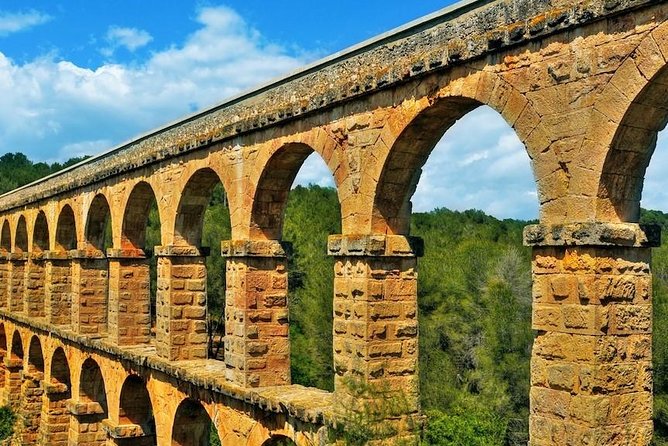
Your Tarragona story starts with Pont del Diable, the Devil’s Bridge aqueduct. It is a long aqueduct, about 217 meters high (that’s 85 feet), and roughly 217 meters long as described in the route notes. The setting is dramatic, with woodlands around it, so even before you enter the city you get an “ancient world in landscape form” moment.
This stop is also practical. It’s near the start, you get camera time, and it sets the stage for why Tarraco was powerful. The aqueduct supplied water right up until the 18th century, which makes it more than a ruin. It is part of long-term infrastructure history.
You likely get about 30 minutes here, so treat it as a short reset. Wear shoes you can walk in easily, and keep your eyes up, the best angles often come from slightly elevated spots near the path.
Antiga Casa del Consolat Tarragoni: Medieval Streets and Quiet Squares
Next you step into Tarragona’s old-town maze with a guided walk. The Antiga Casa del Consolat Tarragoni stop is built around the feel of narrow cobbled lanes and shaded squares. This is where your guide helps you imagine what it might have felt like living there during the Roman Empire or the medieval period.
This part is less about one single monument and more about reading the city. When you walk the lanes in a small group, you notice the way streets compress and open, and how those urban shapes supported daily life.
A downside is that the ground can be uneven. If you have knee issues, go slower than you think you need to, and ask your guide for a resting pace. This is the kind of tour where the stairs and slopes show up at multiple stops, not only in the obvious places.
Amphitheatre Time: Glimpsing Tarraco’s Second-Century Drama
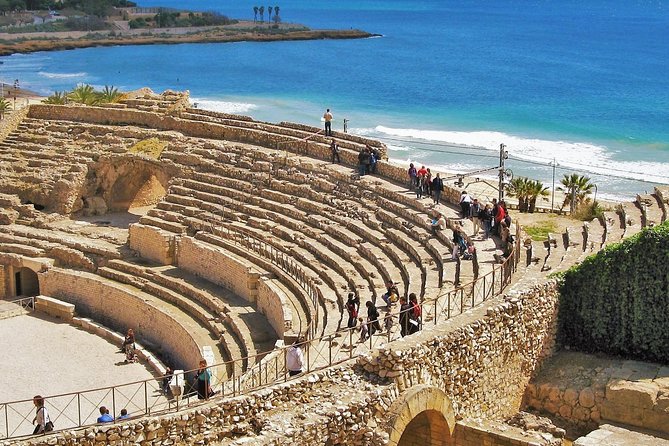
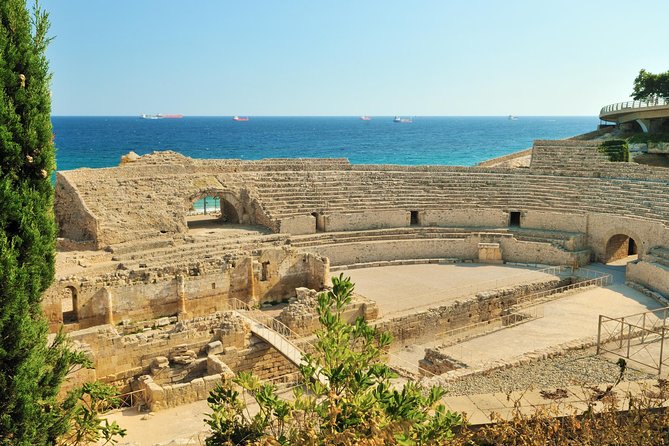
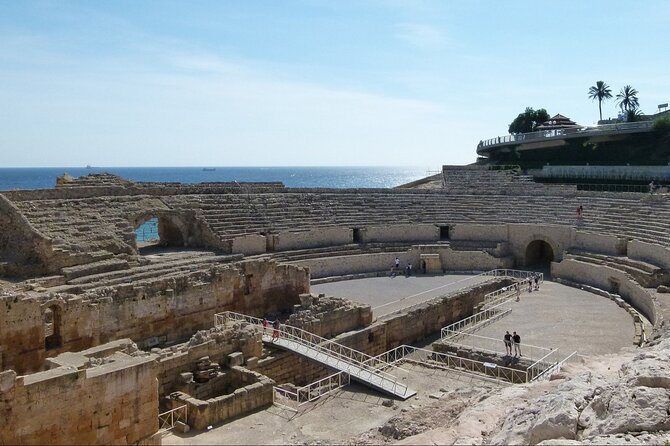
One of the biggest draws here is the chance to enter Tarragona’s amphitheatre. The tour includes admission, and the route focuses on the amphitheatre cut into the hillside near the beach. Built around the second century AD, it was used for gladiator contests and public executions.
Standing inside gives you a sense of scale that photos do not. Your guide’s storytelling is key here. When the group is small, it is easier to hear and follow the explanations, and you can step back for photos without losing the flow.
Plan for walking up and down around the amphitheatre area. Even if the group pace is comfortable, the physical setup is still on a slope. If you want the Roman drama but have limited mobility, this is the stop where you might need the most careful planning.
Roman Walls, Cathedral Views, and the Human Tower Moment
Tarragona does not just show you Roman buildings. It also shows you Roman fortification, then Catalan tradition.
You see the Roman city walls, described as the oldest construction phase of Roman Tarragona, going back to the foundation of the initial military camp or the immediately later period. This is a great “big picture” stop because walls explain strategy. They tell you where the city defended itself and how power was managed.
Then you add two more anchors:
- You look at the cathedral, described as a National Monument and a cultural good of national interest.
- You pass in front of a monument connected to castellers, the Catalan human tower tradition. The route notes describe a tower with 219 figures, about 11 meters high, and around 12 tons.
That castellers stop is more than a curiosity. It is an example of how communities build identity through spectacle, just like the Romans did with public venues. Your guide’s explanation helps you connect these patterns across centuries.
Mercat Central and the National Museum Area: Where Tarraco Meets Real Life
A surprisingly useful stop is the Mercat Central de Tarragona area. You get about an hour here, and the point is understanding the city’s heartbeat. The market is housed in a Modernist building dating to 1915 and is located just off Rambla Nova.
Markets are not just for shopping. On a guided day trip, they help you anchor what you see in everyday life. You can look at fresh, seasonal products from nearby rural areas, and that gives your Tarragona experience a present-day texture, not only ancient stone.
From there, you pass in front of the National Archaeological Museum of Tarragona. You also get to see the Tarraco Model in front of the museum, described as a scale model of Tarraco from the second century BC at its maximum splendor. This model stop is helpful when you start feeling like the ruins are scattered pieces. A model helps you place them in one coherent layout.
If you love visual learning, this is one of your best “aha” moments of the day.
The Sitges Shift: Old Town Lanes, Modernism, and Casa Bacardi
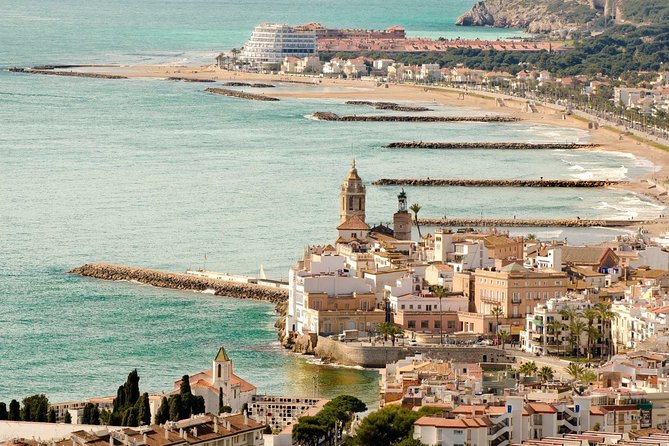
Then it is time for the Mediterranean reset. In Sitges, you get a walking tour through the streets and older corners of the town center. The focus is on atmosphere, architecture, and the artistic vibe that Sitges is known for.
You pass by Modernist highlights like Casa Bacardi and learn about the Bacardi family history. The tour also nods to the town’s bohemian feel, including shops, restaurants, and live music that spills toward the shore.
This is where I like the small-group structure most. Sitges can be a maze of little lanes, and having a guide keeps you from getting lost in the least interesting way. It also gives you the chance to spot details you might otherwise walk past.
San Sebastian Beach Break and Sant Bartomeu and Santa Tecla Views
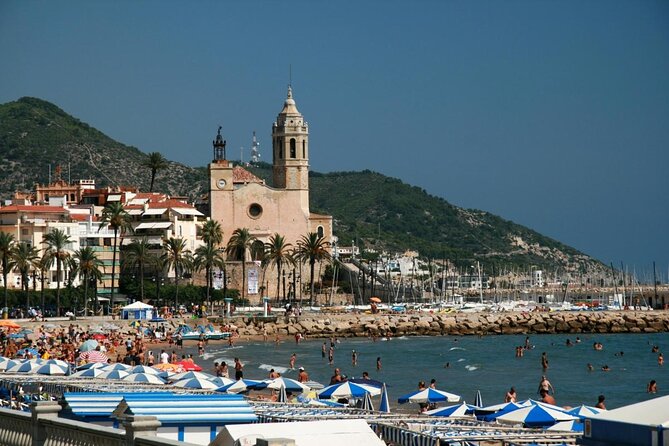
After the Sitges walking tour, you get time at Playa de Sitges and the San Sebastian urban beach area. The route notes describe the beach as one of Europe’s best urban beaches, which is a bold claim but it explains why people come here even when they do not plan to swim.
You can relax on a terrace and enjoy sea views, or take a dip if the weather allows. The key is to treat the beach time as flexible. In cooler months, you may stick to views and photos. In warmer weather, you can plan an actual swim break.
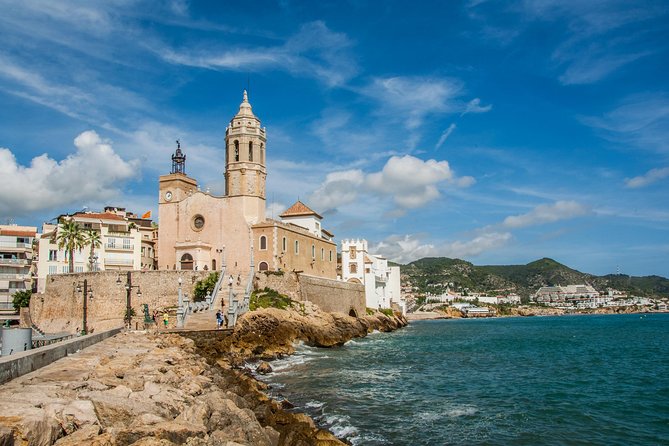
The big photo anchor is the church of Sant Bartomeu & Santa Tecla. The route notes say it was built in the 17th century and became a symbol of Sitges, with viewpoints and strong photo spots. If you want a memorable end to the day, this is the kind of stop that does it.
Small-Group Service: Why This Trip Gets 4.9 Ratings
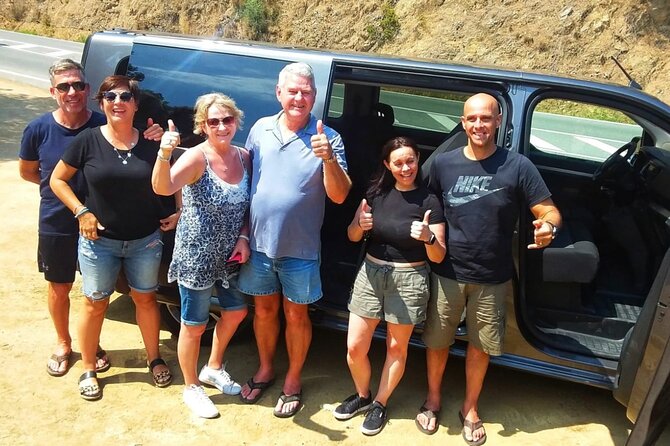
This tour is run as a small group, max 8 people, and that shows in how the day feels. The most common praise in the information you provided is the guides. Names that come up include Ramon, Miquel, Luis, Eduardo, Diego, and Lluís.
People repeatedly highlight two things: ample time at locations and clear answers to questions. That matters because Roman ruins and old-town lanes can be confusing fast. When you can ask follow-ups, the experience stops being a checklist and becomes understanding.
The guides also tend to add humor and personal perspective. That is not just entertainment. It helps you remember what you saw, because the explanation lands with real human energy, not a script.
Pacing, Stairs, and Uneven Ground: What to Plan For
Be honest about the physical side. The day includes walking tours in old towns, and Tarragona’s amphitheatre area sits on a hillside. One caution shared in the provided information specifically calls out lots of stairs and walking up and down hills over uneven surfaces.
So I recommend you pack for comfort, not looks. Wear supportive shoes with grip. Bring a small layer for the coast, even in summer, because sea breezes can feel colder near the beach.
If you have a sore hip or knee, consider taking a slower pace from the start. One person noted skipping some areas for safety. You do not want to force it and then spend the rest of the day compensating.
Your best move is simple: communicate early with your guide if you need an extra rest stop.
Lunch, Snacks, and How to Handle Food and Drinks
Food and drinks are not included. That said, you often still get a chance to stop for treats or a sit-down lunch depending on timing. The helpful part is that your guide can point you toward practical choices so you are not hunting under time pressure.
If you want a specific meal plan, set expectations before you go. Decide whether you will do a quick snack at the market area, a full lunch in Sitges, or a lighter lunch and save appetite for the evening after returning to Barcelona.
Bring water too. Even if you take breaks, a 10-hour day with walking adds up.
Weather Reality: December Still Works, but Plan for Closures
The provided information includes an example of a December day where the weather was not perfect but the tour still delivered beauty and history. Winter can also mean fewer crowds, which makes the Roman sites and Sitges streets easier to enjoy.
One caution mentioned is that some things can be closed on Saturdays for religious observation. That does not mean the entire tour fails. It means your experience may shift a bit, and the guide will likely adjust within the time available.
Your smart move is to keep flexibility. If you treat the day as a guided highlight route rather than a guarantee of every indoor site, you will be happiest.
Should You Book This Tarragona and Sitges Tour?
Book it if you want a car-free day with real guided time in Tarragona’s Roman core and a full shift to Sitges beach-town vibes. It is especially worth it when you value hotel pickup, small-group pacing, and the chance to ask questions in a tour like this.
Skip or be cautious if you have mobility limits that do not play well with stairs, slopes, and uneven cobblestones. This is not a sit-and-watch day. You will walk, and you will climb in parts of Tarragona.
If you fall into the middle category, you can still make it work by planning your pace and using the guide’s patience. Overall, based on the guide talent, the included amphitheatre entry, and the smooth Barcelona to Costa Dorada route, this is a strong value for a single day outside Barcelona.
Latest Barcelona reviews into the ledger




Things to Do in Barcelona, compared.
Sagrada Familia Entry Ticket with Audio Guide
Read our review →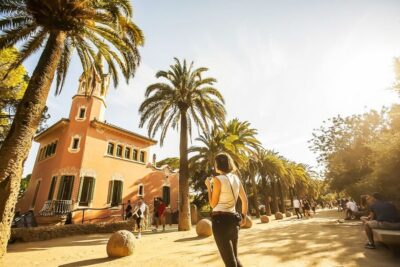

Park Guell Guided Tour with Skip The Line Entry
Read our review →