
Reviewed · WALKING TOURS
Tarragona: Roman Heritage Guided Walking Tour
Tarragona’s Roman streets have a way of snapping into focus. This 2-hour guided walking tour takes you from the old Roman walls to the Amphitheater by the sea, with a stop at the Circus area and a 3D-style audiovisual show. It is compact, but it aims to connect the monuments to how the city actually worked.
I especially like two things: the tour’s use of a large city model and 3D images to make the ruins feel organized, not random. And I like that you get entrance to the Circus, not just a photo stop, so chariot-race history comes with context. Even the guide style matters, and the explanations delivered by Adrià are known for being clear and easy to follow.
The main drawback is time. At 2 hours, the route can feel full, and if you love lingering for extra photos and questions, you may wish it ran a bit longer. Also, like any popular city-center walk, louder groups can make it harder to hear every detail.
In This Review
- Key things to know before you go
- Roman walls first, and why this hill mattered
- Historic center walk, today’s houses on top of Roman plans
- The 3D audiovisual stop that turns stones into a story
- Circus vaults and the thrill of chariot-race history
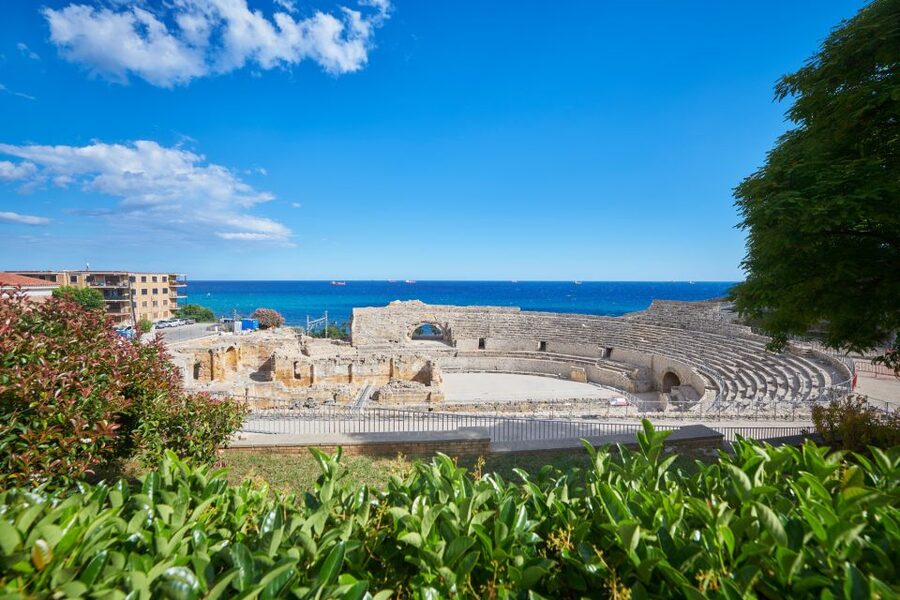
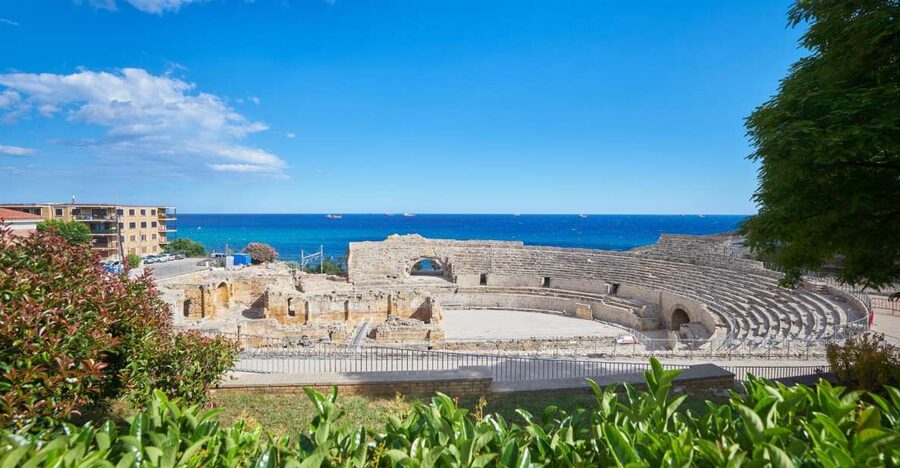
- Amphitheater by the sea, gladiators, beasts, and big views
- Price and value for a focused 2-hour circuit
- When the timing feels tight (and how to make it work)
- Who should book this Tarragona Roman Heritage tour
- Should you book this Tarragona Roman Heritage Guided Walking Tour?
Key things to know before you go
- Old Roman walls outside Italy: Tarragona’s walls are among the oldest Roman fortifications beyond the country’s borders.
- City model plus 3D visuals: you get a mental map before you look at stone.
- Circus entrance included: you visit the Circus vaults tied to chariot-race memories.
- Amphitheater plus sea views: the setting helps you understand why this site mattered.
- Tight timing: 2 hours is efficient, so comfortable shoes are non-negotiable.
Roman walls first, and why this hill mattered
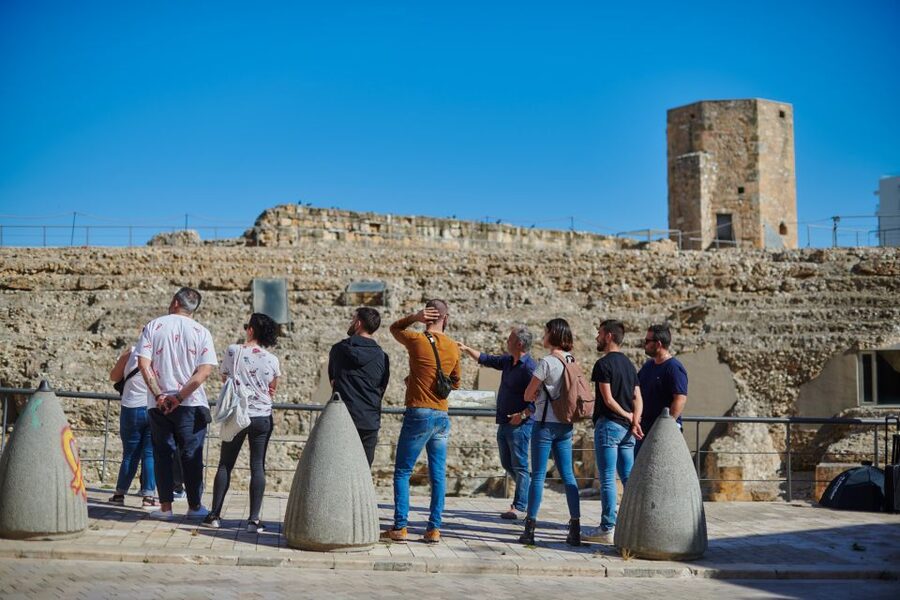
Most guided walks start with a quick intro and a promise. This one starts by showing you the logic of Tarragona, beginning near the Roman walls. The big idea is simple: Romans chose a strong vantage and a workable gateway position on a hill close to the Mediterranean, because movement by sea and control by land went together.
You’ll hear how the city fit into Roman plans for the whole peninsula. That might sound grand, but it lands well on the ground. When you’re standing by the walls, it is easier to understand why a settlement gets built where it does, and why later generations kept shaping the neighborhood around those Roman boundaries.
What I like about leading with the walls is that it gives you scale fast. You are not just looking at rocks. You’re seeing fortification thinking, the kind that says, we want this spot, and we plan to defend it. That sets you up for everything that comes after, especially the way Roman structures still echo through today’s streets.
More Spanish cities taken on foot:
- Barcelona Tapas and Wine Experience Small-Group Walking Tour
★ 5.0 · 5,804 reviews - Barcelona: Tapas Walking Tour with Food, Wine, and History
★ 4.8 · 4,261 reviews - Madrid Tapas & Wine Tasting Walking Tour – Small Group Local Bars
★ 5.0 · 3,644 reviews - Granada: Albaicín and Sacromonte Guided Sunset Walking Tour
★ 4.9 · 2,962 reviews
Historic center walk, today’s houses on top of Roman plans
After the walls, the tour moves into Tarragona’s historic center, where Roman monuments are intertwined with everyday life. This is one of the best ways to understand old cities: not by picturing a museum diorama, but by watching how modern streets thread through ancient structure.
You’ll notice how the guide points out that the street grid and building footprints are not just accidental. With the help of a large city model, the guide describes how the city used to look and explains the functions of key buildings. That model is especially helpful if you usually get lost in ruin photos, where one arch looks like another arch.
The timing here also matters. The tour aims to connect the present to the past in a quick, readable sequence. You see a feature, get the purpose explained, and then keep walking. It helps you avoid the common trap of standing still too long and walking away with a memory of impressive stones but no understanding of what they did.
The 3D audiovisual stop that turns stones into a story
One of the most practical parts of the experience happens before the final big-site moment. You’ll watch an audiovisual exhibit with 3D images. This is not the type of stop where you sit through random footage. It is meant to help you line up the places you are about to see with what they were built to do.
If you learn visually, this part is a gift. The 3D images act like a bridge from the city model to the amphitheater, so you start recognizing features before you reach them. And if you are traveling with friends who usually say they get nothing from ruins, this kind of short, structured visual explanation often flips the switch.
A small reality check: the route can be popular, and the tour groups can be larger. If you’re sensitive to noise, you may want to stand where you can hear the guide clearly during the indoor or semi-indoor audiovisual segment. It is a short moment, but it can make the rest of the walk easier.
Circus vaults and the thrill of chariot-race history
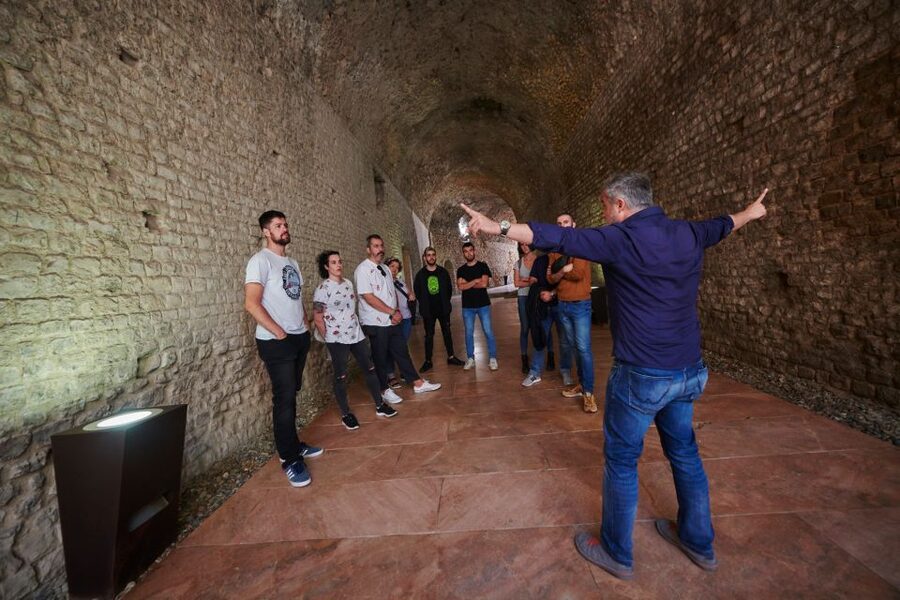
The highlights call out the Circus vaults, and the inclusion of Circus entrance means you do more than point at an exterior. This stop is about reliving the excitement of chariot races in ancient times, and about seeing how Roman entertainment was built into the city.
Even if you are not a racing fan, this is a memorable angle on Roman life. Romans did not just conquer land. They also managed crowds, spectacle, and civic identity through big public arenas. When you walk into the Circus area, you get a sense of why these events were so politically and socially useful.
I like that the tour treats entertainment as culture, not trivia. If you can follow what people came to see and why, the stones stop feeling random. Instead of thinking, here is a curved wall, you start thinking, here is infrastructure for energy, noise, and competition.
One practical note: because this is a walking tour, you are stacking impressions. By the time you reach the Circus, you’ve already been oriented by the walls and the historic-center context. That keeps the Circus stop from feeling like a standalone detour.
A few more Costa Dorada verdicts worth reading
- Madrid Essential: Historic Center, Plaza Mayor & Royal Palace★ 5.0 · 6,416 reviews
- Sevilla Food Tour: Tapas, Wine, History & Traditions★ 5.0 · 3,468 reviews
- Valencia Old Town Tour with Wine & Tapas in 11th Century Historic Monument★ 5.0 · 3,234 reviews
Amphitheater by the sea, gladiators, beasts, and big views
The finale is the Amphitheater located by the sea, and it is a smart choice. In Tarragona, the seaside location is not just pretty. It helps you imagine the atmosphere. A place designed for public spectacle makes more sense when you can also sense how the coast shaped daily movement and arrival.
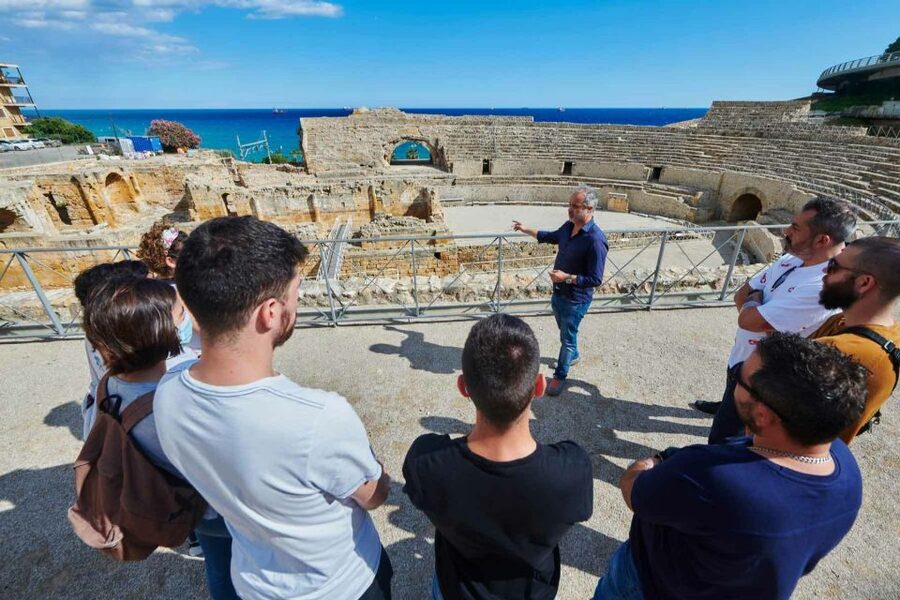
Here you learn about gladiator fights and beast hunting that took place in ancient times. You also review the stadium’s amazing history to this day. The guide’s job is to connect the violence and drama of the events to the practical reality of architecture, seating, sightlines, and crowd flow.
What makes this stop hit for many people is the combination of structure and setting. You get impressive views while standing somewhere that was built for spectacle. Even if you have seen other amphitheaters before, you’ll likely appreciate how the sea context changes the feel of the place.
If you want photos, bring a plan. The amphitheater area can give you multiple angles, but your best shots depend on where the group pauses. If you like to move around for different perspectives, do it calmly and in step with the guide’s pace, since the group moves like a team.
Price and value for a focused 2-hour circuit
The price is about $17 per person for roughly 2 hours, and you also get entrance to the Circus. For this kind of guided experience, that pricing feels aimed at value rather than “pay to stand and listen.”
Here is what you are really buying:
- An official city guide who helps you interpret the monuments, not just point them out
- A structured walk that connects walls, city layout, and major sites
- A short 3D audiovisual exhibit that makes the route easier to follow
- Circus entrance, which adds access and context
The value gets better if you like guided explanations and you tend to learn faster with a clear route. If you prefer total freedom and self-paced wandering, you may not get as much from the structure.
The biggest value tradeoff is time. At 2 hours, the tour is designed to cover the main Roman highlights without becoming a full half-day. That is great for efficiency, but it can also mean you will not have endless time at each photo spot or for extra questions.
When the timing feels tight (and how to make it work)
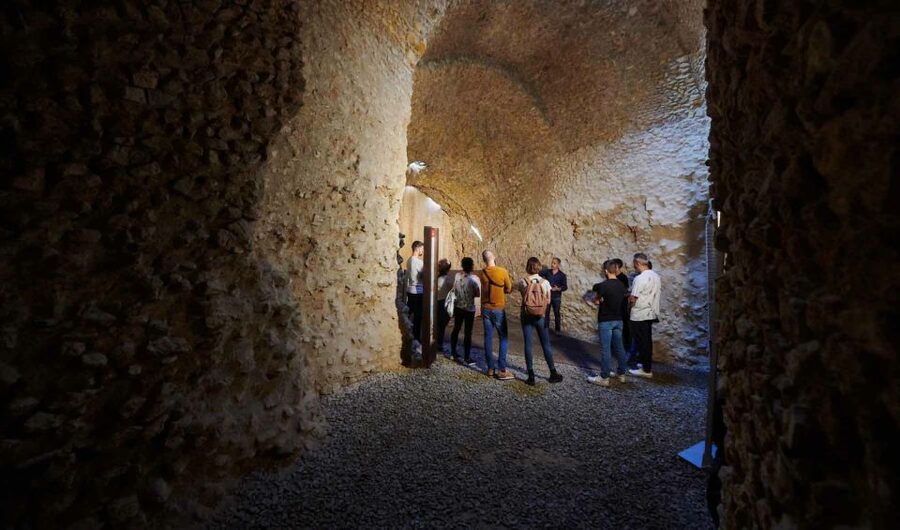
A 2-hour tour is rarely “slow.” It is “just enough.” Some people find it complete but short, and that makes sense. You’ll cover several key areas: walls, historic center, a model and 3D exhibit, the Circus area, then the amphitheater.
If your travel style is fast and curious, you’ll probably love it. If your style is slow and detail-obsessed, plan to do a little extra walking on your own afterward. Tarragona rewards that. The Roman parts do not vanish when the tour ends, so you can keep exploring with your new mental map.
Group size and sound can also affect your experience, especially in crowded city-center conditions. If it is a busy day, arrive a touch early and aim to be positioned where you can hear the guide. During the audiovisual segment, pick a spot that gives you both sight and sound.
Weather is another practical factor. One guide-run experience happened under intense rain and was still handled well. You can’t control weather, but you can control your footwear and your willingness to enjoy the ruins even when conditions are less than perfect. Comfortable shoes really do matter here.
Who should book this Tarragona Roman Heritage tour
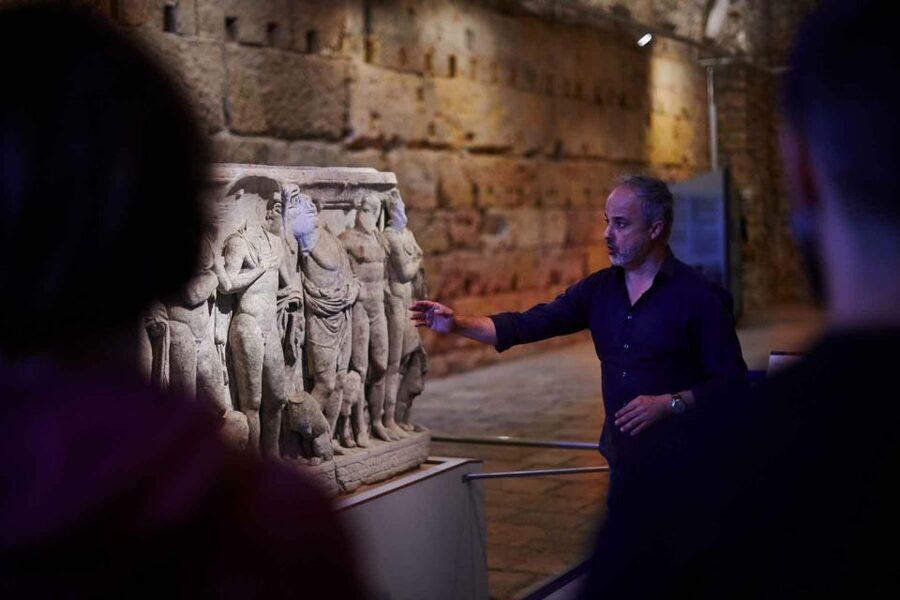
This is a strong fit if you want Roman Tarragona in a compact format. You’ll especially like it if:
- You like guided context that turns ruins into a story
- You enjoy short visual aids like a city model and 3D exhibit
- You want both a major arena site and access to the Circus area
- You are visiting Tarragona and want the Roman core without building a whole day around it
It is also a workable option for people using wheelchairs, since the tour is listed as wheelchair accessible. That said, you should still expect a walking rhythm, since it is fundamentally a guided walk.
Language is another deciding factor. The live guide speaks Catalan and Spanish. If you speak one of those, you’ll get the most out of the explanations.
If you are only interested in amphitheaters and nothing else, you might feel the Circus and walls are extra. But if you want the “why” behind the sights, the full route makes sense.
Should you book this Tarragona Roman Heritage Guided Walking Tour?
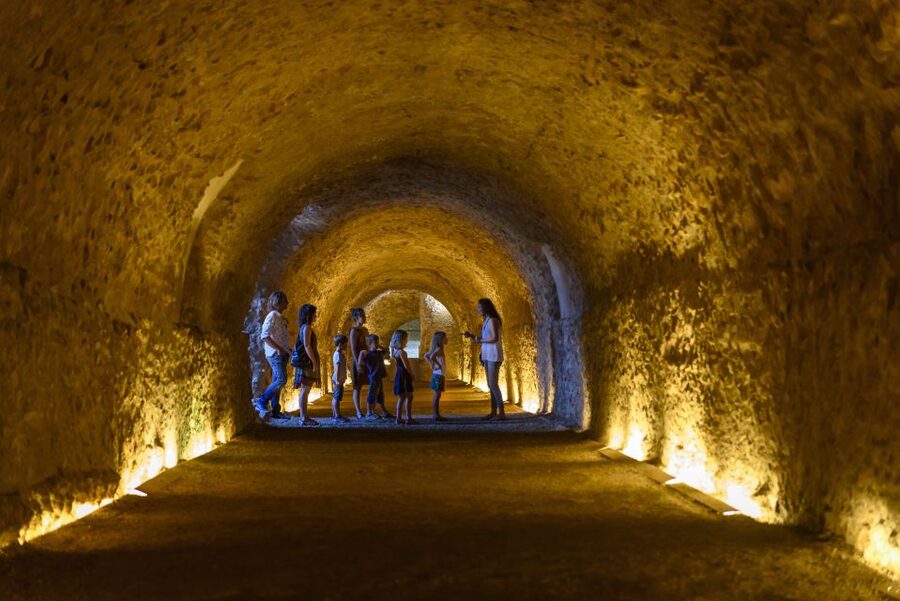
Yes, I’d book it if your goal is to understand Tarragona’s Roman layout and major entertainment sites in a structured, time-efficient way. The combination of Roman walls, Circus entrance, a 3D-style exhibit, and the sea-side amphitheater gives you both context and access for a modest price.
Skip or supplement it if you need lots of breathing room at each stop or you hate busy-group pacing. In that case, take the tour for orientation, then plan your extra time afterward for slower wandering.
Bottom line: for about $17 and two hours, this is a practical route that helps you see Roman Tarragona as a connected city, not a collection of isolated ruins.
Latest Costa Dorada reviews into the ledger





Walking Tours, compared.
Barcelona Tapas and Wine Experience Small-Group Walking Tour
Read our review →
Tapas Walking Tour with Food, Wine, and History
Read our review →
Madrid Tapas & Wine Tasting Walking Tour – Small Group Local Bars
Read our review →
Albaicín and Sacromonte Guided Sunset Walking Tour
Read our review →
Toledo Tour & Vineyard Walk with Wine Tasting from Madrid
Read our review →
Madrid Walking Tour from Puerta del Sol to Retiro Park
Read our review →

Barcelona Tapas Walking Tour: Food, Wine & History
Read our review →Browse the lists this tour appears in