
Reviewed · TEIDE VOLCANO TOURS
Teide National Park: Stargazing Experience
Teide makes the sky feel close. This 80-minute stargazing outing after sunset is built around finding your bearings fast, starting with Polaris and the celestial north pole. I like how the guide turns the night from guesswork into a clear, step-by-step sky map.
I also love the blend of Greek mythology with practical astronomy, so constellations feel fun instead of dusty. One thing to plan for: it gets cold at Teide, and you will be outside a while at altitude, so warm clothes and warm shoes are not optional.
In This Review
- Key things that make this Teide stargazing tour work
- Teide after sunset: why this dark sky feels different
- The 80 minutes plan: from Polaris to planets
- Naked-eye sky navigation you can actually use
- Telescope time: what you should look for through the scope
- Astrophoto telescope and getting images after the tour
- Where you meet: Minas de San José parking details
- Dressing for Teide: cold is part of the deal
- Price and value: is $41 worth it?
- Who should book this Teide stargazing experience
- Should you book the Teide stargazing tour in Teide National Park?
- FAQ
- How long is the Teide National Park stargazing experience?
- Where do we meet for the stargazing tour?
- What languages are the guides available in?
- What should I bring?
- Are pets allowed?
- Do I get telescope viewing, or is it just naked-eye astronomy?
Key things that make this Teide stargazing tour work
- Polaris and celestial north pole get explained early, so you can orient quickly even if you have never looked up before
- Naked-eye sky navigation includes the ecliptic and the zodiac line, not just random star spotting
- High-grade telescope views focus on standout objects and planets when conditions allow
- Greek mythology as a memory tool, linking stories to real constellation positions
- Astrophoto telescope helps turn what you see into images, and some tours share results afterward
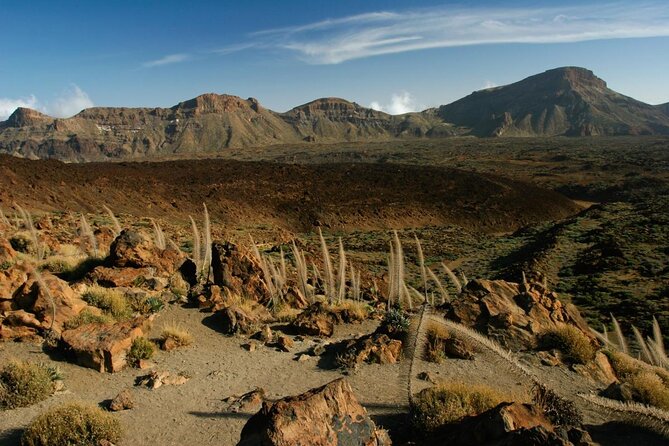
- Dark skies at Teide National Park, far from town light pollution, make stars look crisp and plentiful
Teide after sunset: why this dark sky feels different
Teide National Park in Tenerife is the kind of place where the night sky stops being a background detail and becomes the main event. The big reason is simple: less light pollution. When the sky is allowed to do its job, stars stop looking like a sprinkle and start looking like structure.
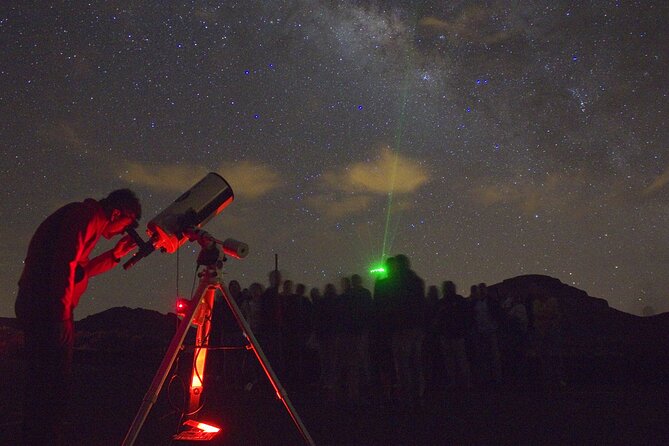
That matters because this tour is not just about looking through glass. It is about learning what you are looking at, while the sky is still bright enough to guide you. The session begins after sunset with the stars and constellations you can spot with your eyes, then moves to telescope views once you know where things live in the sky.
If you enjoy astronomy as a hobby, you will appreciate the method. If you are brand new, you will still feel like you are making progress, not merely waiting for the big reveal.
Teide again, summit and cable car:
- Tenerife: Mount Teide Tour with Cable Car Ticket & Transfer
★ 4.3 · 5,094 reviews - Teide National Park Sunset & Stargazing with Dinner (Star Safari)
★ 5.0 · 2,601 reviews - Tenerife: Teide National Park Full-Day Tour with Pickup
★ 4.5 · 1,613 reviews - Teide by Night: Sunset & Stargazing with Telescopes Experience
★ 4.5 · 1,492 reviews
The 80 minutes plan: from Polaris to planets
This is a tight, well paced experience. You are outside early, you are learning as you go, and by the time the telescopes come out, you are ready to recognize what you are seeing.
Here is the flow you should expect:
- Naked-eye orientation and constellation basics
The guide starts you off with what you can see right now, then points out key references. Polaris and the celestial north pole get discussed early, so you understand how north works in the night sky. You also learn how to read the constellations as patterns, not as a list of names.
- Ecliptic and zodiac line, plus mythology cues
Next you follow the ecliptic and zodiac line, which helps explain where planets appear in relation to familiar constellations. Then the guide threads Greek mythology through the shapes and positions of constellations. It is a clever way to remember layouts without needing a textbook.
- Telescope observations of standout targets
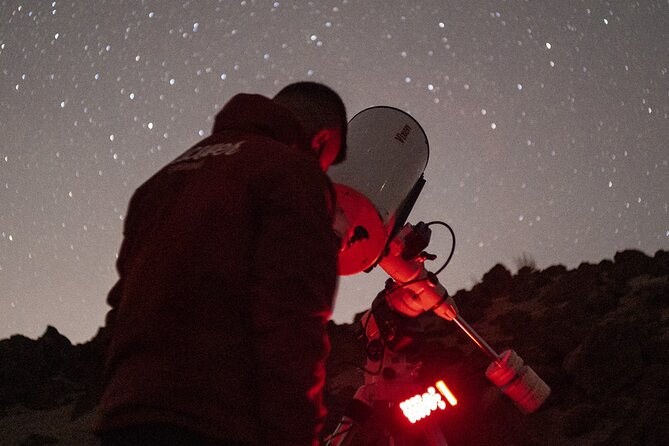
Once your bearings are set, the group shifts to telescope viewing. You will look at “the best of the night,” and on clear nights this can include bright deep-sky objects and planets.
- Astrophotography moments (astrophoto telescope)
The tour includes an astrophoto telescope, used to capture what you see and help produce images.
From the information shared by participants, you may have chances to view things like the Milky Way, star clusters, galaxies, and planets such as Jupiter or Saturn. Some nights also include views like Orion Nebula or Andromeda Galaxy, plus planetary details through the telescope when conditions line up.
Naked-eye sky navigation you can actually use
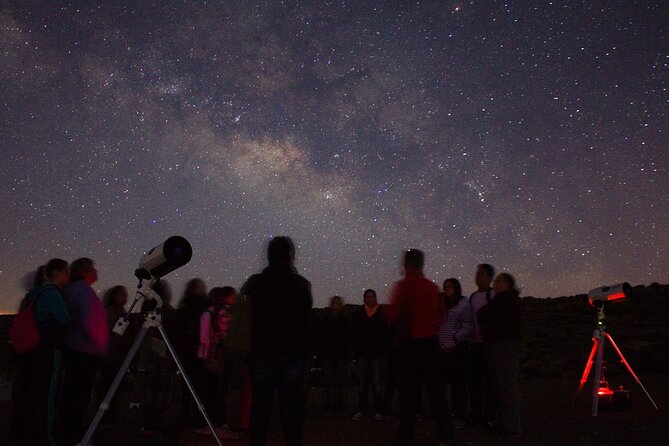
Plenty of stargazing experiences skip straight to telescopes. This one earns its keep by starting with what you can do right away, using your own eyes.
The payoff is orientation. When you learn Polaris and how to locate the celestial north pole, you stop guessing where north is. That makes every constellation lesson easier, because you can anchor the sky in something real.
Then you get the ecliptic and zodiac line, which is more useful than it sounds. It explains why certain “special” objects tend to appear along a band of the sky. Even if you do not memorize zodiac signs, you will understand the logic behind where to look when you want to find a planet.
And the Greek mythology part is not just storytelling. It gives the constellations a storyline, so your brain has hooks. It is much easier to remember a shape when it comes with a character and a meaning tied to where it appears.
Telescope time: what you should look for through the scope
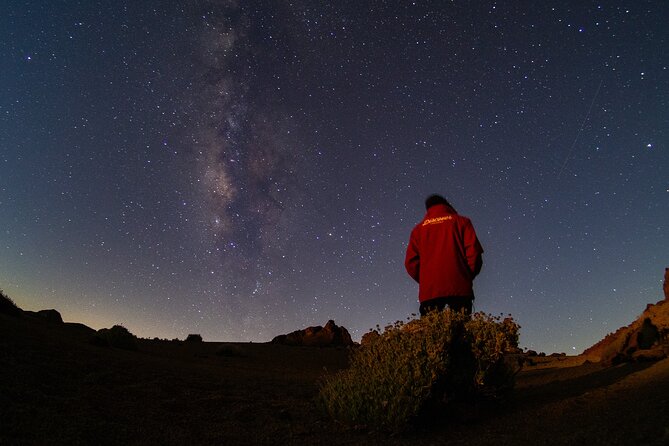
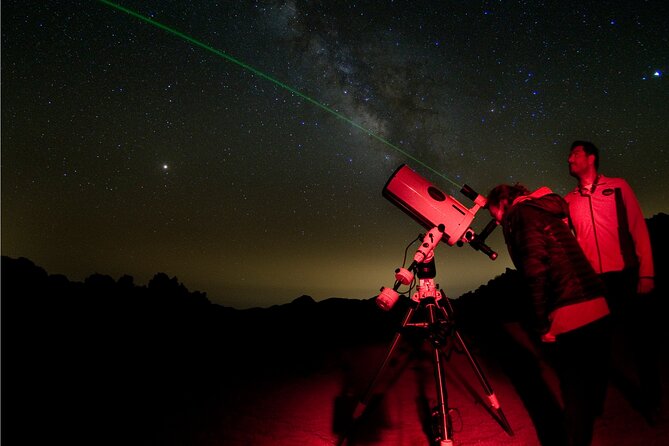
Once you reach the telescope phase, you get the “wow” factor, but with context. The guide helps connect the earlier lessons to the magnified view. That is the difference between seeing something once and understanding it for next time.
You can expect telescope observation of outstanding celestial objects, with planets often on the menu. Based on what people have reported from this tour, Jupiter and Saturn are common targets, and you may see details like moons around Jupiter (when visible and when the session timing matches). If planets are not in the best position, the telescope still focuses on notable deep-sky objects, including star clusters and galaxies.
One practical tip: when you are at the telescope, listen for what the guide is calling out. If you know what the target is, you can describe what you are seeing in real language, not just “it looks cool.” That is how this tour turns into a memory you can keep.
A few more Tenerife verdicts worth reading
- Tenerife: Snorkeling Tour in a Marine Protected Area★ 4.9 · 636 reviews
- Small Group Teide National Park Volcanic and Forest Wonders★ 5.0 · 402 reviews
- Teide National Park: Guided Large Telescope Stargazing Tour★ 4.9 · 319 reviews
Astrophoto telescope and getting images after the tour
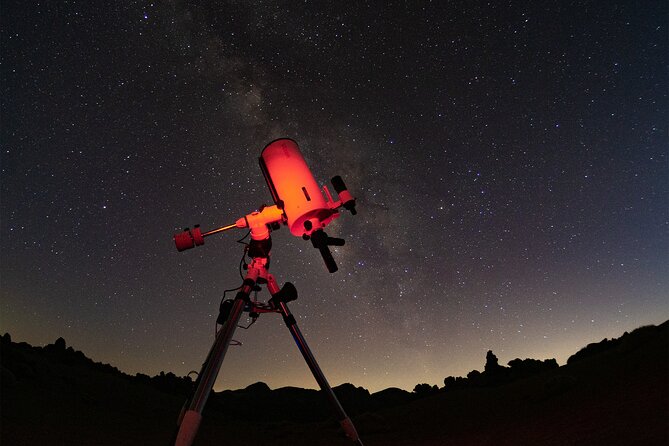
A standout value add is the astrophoto telescope. Instead of leaving with only brain images and frozen hands, you have a way to translate the view into photos.
In the experiences shared, participants mention that pictures from one star cluster and one galaxy observed were sent after the tour. You should still treat that as “you might receive images,” since timing and targets can vary by night. But it is a nice touch because it gives you something to review while the sky is still fresh in your mind.
For me, any astronomy activity that includes an image output is better value than one that ends with you just walking back in the dark. You get a reference point, and it helps you connect your learned constellations to what you actually saw.
Where you meet: Minas de San José parking details
Meet at the parking area just in front of the natural environment of Minas de San José. It is specific, and that helps when it is dark.
- If you come from the south, it is the second car park on the right.
- If you come from the north, it is the first car park on the left.
No hotel pickup is included. So plan to drive, taxi, or arrange your own transport to the meeting spot. If you arrive a few minutes early, you will have time to settle in, get warm, and not rush the start.
Dressing for Teide: cold is part of the deal
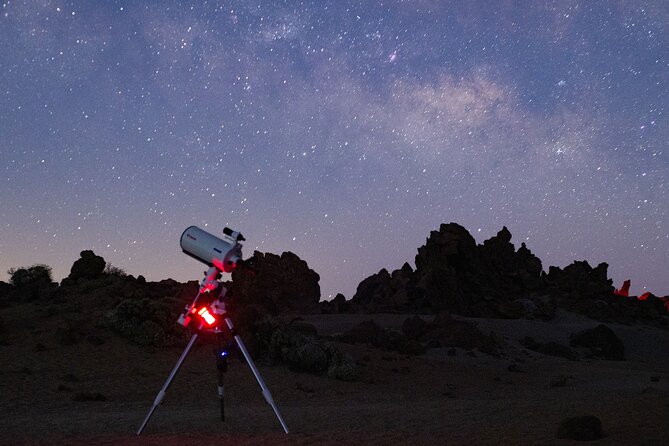
This is the one “gotcha” that can ruin the night if you ignore it. Temperatures drop quickly at altitude, and the tour runs in the evening.
What to bring:
- Warm clothing
- Warm shoes
- Comfortable shoes for standing and walking on uneven ground
- A real focus on staying warm, especially in autumn and winter
Participants repeatedly underline that being outside for about two hours can freeze you, even if you feel fine at the start. If you tend to run cold, dress like you are going hiking in winter weather, not like you are on a normal island sunset stroll.
Also keep an eye on the moon. The tour notes that you should consider the moon’s cyclical nature when booking. A bright moon can wash out faint objects and make the night sky less dramatic. If your goal is maximum “wow” from galaxies and clusters, try to choose a darker moon window when possible.
Price and value: is $41 worth it?
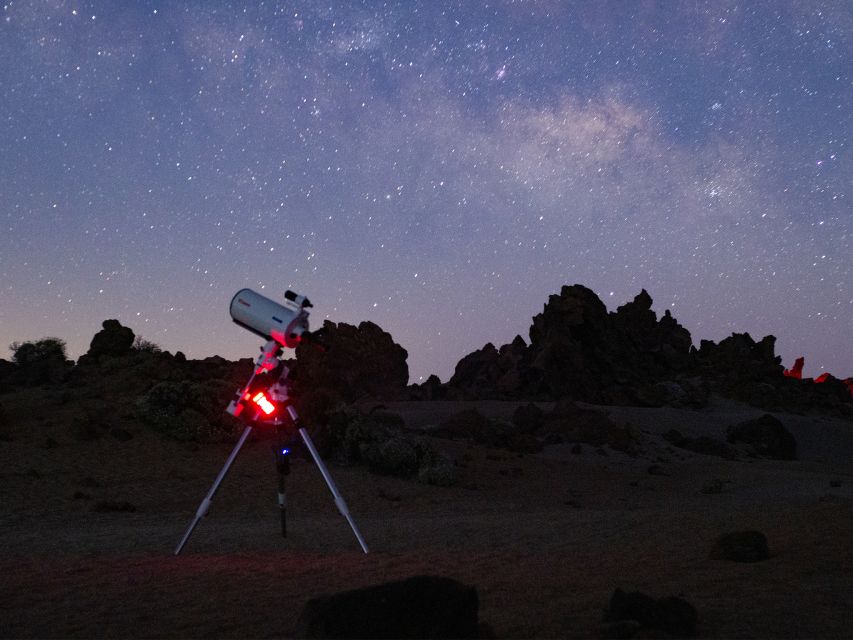
At about $41 per person for an 80-minute guided session, you are paying for three things at once:
- A professional astronomical guide
- Telescope equipment for real viewing, not just pointing
- A dark-sky location experience with insurance included
You also get structured learning: naked-eye orientation first, then telescope time when you can identify what you are seeing. That combination is what tends to make the cost feel fair. A cheaper casual “look at stars” event usually lacks the guidance that makes the night meaningful.
That said, if you are only looking for a casual photo moment and you hate cold weather, you might find the value limited. The tour works best when you are willing to stand outside, listen, and learn a few constellations and sky landmarks.
Who should book this Teide stargazing experience
This tour fits best if you want:
- A guided way to learn constellations and how to orient in the sky
- Telescope viewing for planets and standout objects
- A night that mixes science with storytelling
- A dark-sky setting in Teide National Park rather than a quick city stargaze
It may not be a good match if you have heart problems or respiratory issues. Also avoid if you have had underwater activity within the last 24 hours. And if you are traveling with pets, they are not allowed on this tour.
For minors: unaccompanied minors are not allowed, so plan on being the responsible adult in the group.
Should you book the Teide stargazing tour in Teide National Park?
Book it if you want more than star gazing. The real win is the progression: you start with Polaris and constellation navigation, you connect that to what the telescope shows, and you leave with images you can reference later if the astrophoto results are shared.
Skip it only if cold nights and standing outside for close to 80 minutes sounds miserable for you, or if health concerns make the experience unsuitable. If you can handle winter layering and you like learning even a little, this is a strong value night on Tenerife.
FAQ
How long is the Teide National Park stargazing experience?
The experience lasts 80 minutes.
Where do we meet for the stargazing tour?
Meet in the parking area just in front of the natural environment of Minas de San José. From the south, it is the second car park on the right. From the north, it is the first car park on the left.
What languages are the guides available in?
The live tour guide is available in Spanish and English.
What should I bring?
Bring comfortable shoes, warm clothing, and warm shoes. The temperature will be low, so warm layers are essential, especially in autumn and winter.
Are pets allowed?
No, pets are not allowed during the tour.
Do I get telescope viewing, or is it just naked-eye astronomy?
You start with naked-eye sky orientation and then observe celestial objects with telescopes, including planets when visible. The tour also includes an astrophoto telescope for images.
Latest Tenerife reviews into the ledger
Teide Volcano Tours, compared.
Mount Teide Tour with Cable Car Ticket & Transfer
Read our review →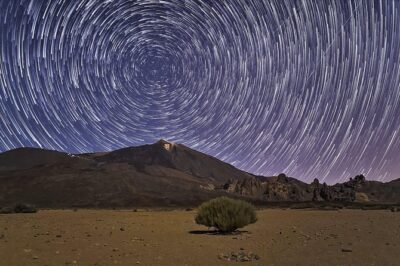
Teide National Park Sunset & Stargazing with Dinner (Star Safari)
Read our review →
Teide National Park Full-Day Tour with Pickup
Read our review →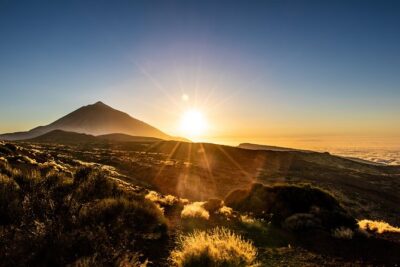
Teide by Night: Sunset & Stargazing with Telescopes Experience
Read our review →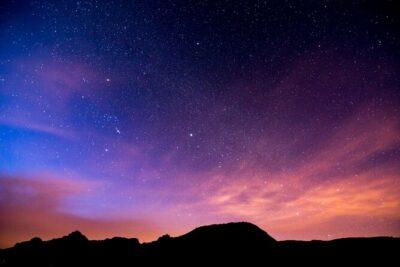
Mount Teide Summit Hiking Adventure with Cable Car
Read our review →
Small Group Teide National Park Volcanic and Forest Wonders
Read our review →Browse the lists this tour appears in