
Reviewed · THINGS TO DO IN VALENCIA
Valencia: Hortensia Herrero Art Center Ticket or Guided Tour
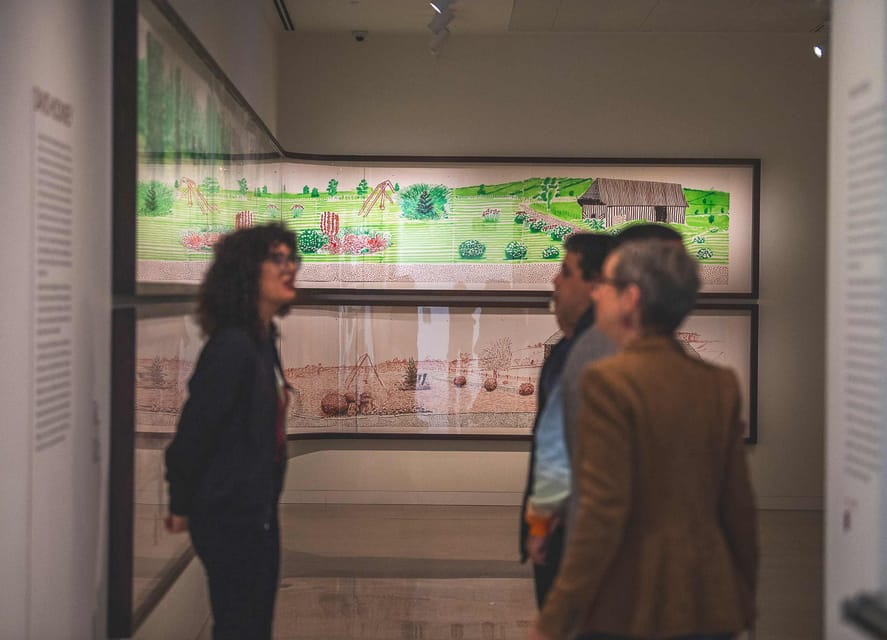
Contemporary art, staged inside a real palace. I like how the Hortensia Herrero Art Center uses the historic Valeriola Palace as the frame for modern, sometimes surprising works. You can go with an entry ticket or opt for a guided tour that helps connect art to the building itself.
I also really value the way this visit threads in archaeology, so you are not only looking at art but also at remnants of Valencia’s past. One possible drawback is the timing: at about 1.5 hours for 17 exhibition spaces, you’ll want to move with intention if you tend to read every label.
In This Review
- Key highlights to look for
- Hortensia Herrero in Valencia’s Valeriola Palace, not a white-box museum
- Two buildings, four floors each, and 17 exhibition spaces: pacing your 1.5 hours
- Main hall details that change how you see the art
- Contemporary art with big international names, plus works made for these rooms
- Where Valencia’s past shows up during the same visit
- Guided tour vs entry ticket-only: what you gain with a guide
- Price and value: is $14 good for 17 spaces in a palace?
- What it feels like in practice: how to enjoy the palace rooms
- Who should book this, and who might prefer something else
- Should you book Hortensia Herrero Art Center in Valencia?
- FAQ
- How long is the Hortensia Herrero Art Center visit?
- Is this experience entry ticket-only or a guided tour?
- What is included with the ticket?
- Where is the museum located?
- What kinds of places can you see inside?
- Which artworks and artists are featured?
- What languages are available for the host or greeter?
- Is the venue wheelchair accessible?
- What are the cancellation and payment options?
Key highlights to look for
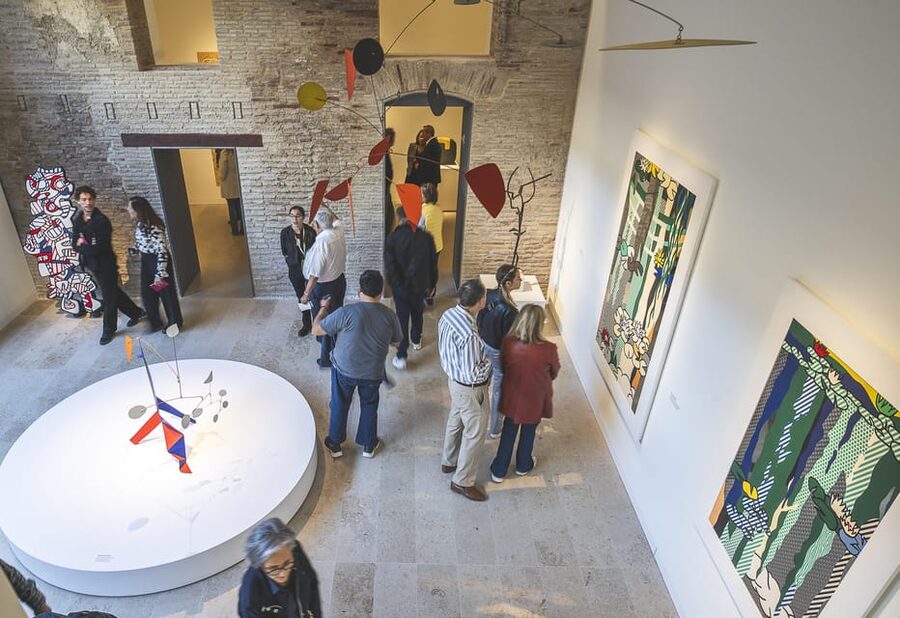
- Valeriola Palace setting, with two connected four-story buildings in Valencia’s historic center
- 17 exhibition spaces spread across about 3,500 square meters
- Major contemporary artists plus works created specifically for these palace spaces and Hortensia Herrero’s private collection
- Real archaeological remains visible during the same visit, including the Roman circus ruins and an alley from the ancient Jewish quarter
- Guided tour option in English, Spanish, French, Italian, and Catalan, or entry ticket-only for more freedom
Hortensia Herrero in Valencia’s Valeriola Palace, not a white-box museum
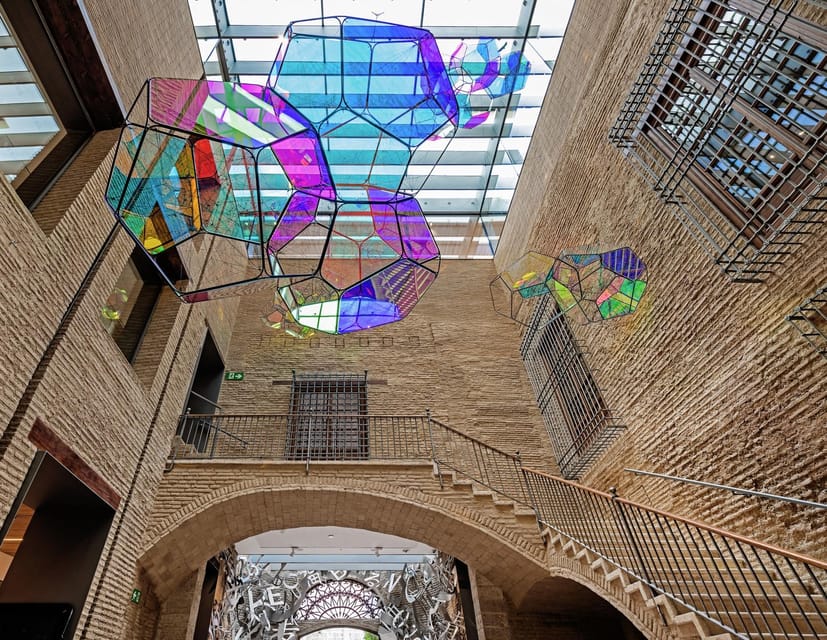
This is not your typical contemporary art stop. The Hortensia Herrero Art Center is set in the 17th-century Valeriola Palace, and the building is part of the story. Instead of art sitting inside a neutral gallery, you get a palace with its own layers, including architecture you can look at and traces of earlier Valencia you can actually see.
For you, that matters because the experience becomes more than a collection of objects on walls. You’re following a path through rooms that were built for something else, and contemporary work gets to sit in conversation with timber, masonry, and the texture of history. If you enjoy art that has a sense of place, this one clicks fast.
More Things to Do in Valencia
- Valencia: Oceanogràfic Entry Ticket
★ 4.7 · 9,893 reviews - Valencia: 24 or 48-Hour Hop-on Hop-off Bus Ticket
★ 3.9 · 5,611 reviews - Valencia: Sailing Catamaran Cruise with Sunset Option and DJ
★ 4.1 · 4,270 reviews - Valencia: Palosanto Flamenco Show Ticket
★ 4.8 · 3,876 reviews
Two buildings, four floors each, and 17 exhibition spaces: pacing your 1.5 hours
The center covers two four-story buildings with 17 exhibition spaces and about 3,500 square meters of area. That scale is the whole game, because 1.5 hours is enough time to see a lot, but it is not enough time to slow down completely in every room.
If you choose the entry ticket-only option, you control your pace, but you’ll need to stay focused. I’d plan to pick a few rooms you want to linger in and accept that other spaces will be a quick scan. If you pick the guided option, the route is likely to help you hit the most meaningful connections between artworks and architectural details.
A good mindset here: treat the visit like a short walk through a layered set of stories. You do not need to understand everything perfectly, but you should leave with a clear sense of what you responded to.
Main hall details that change how you see the art
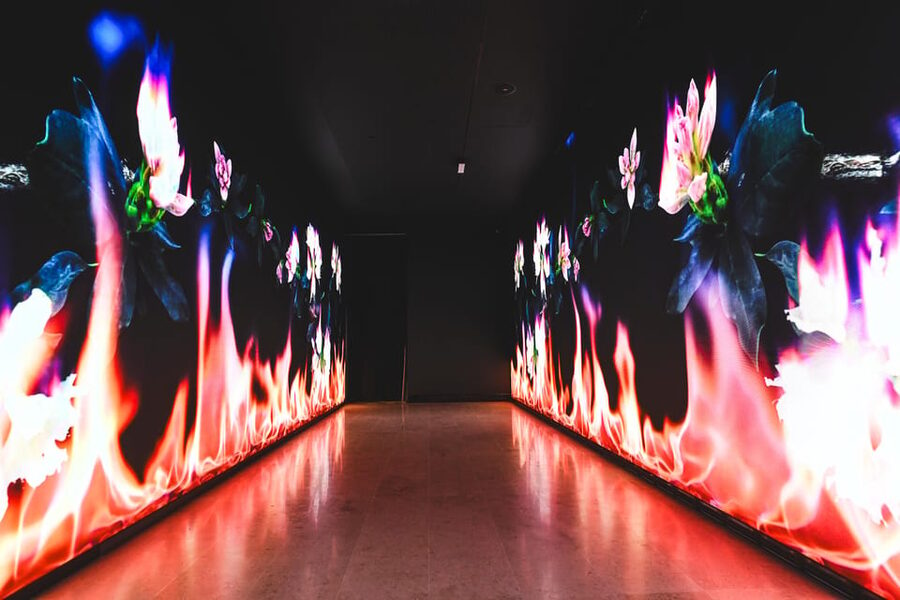
One of the most practical reasons to visit is that the museum’s setting includes very specific architectural features. The main hall is described as having original wooden beams and ceramic masonry. Those details are not decorative background, they affect how the rooms feel.
When you notice materials like old wood and ceramic work, it changes your brain’s reading of contemporary pieces. Modern art can look more intentional when it is placed beside older craft, especially if the contemporary work is designed for these particular rooms. You’ll likely find yourself switching from “What is this?” to “How does this space shape it?”
If you’re tempted to rush past the building to get straight to the famous names, I’d resist that urge. The palace elements are part of the reason this museum feels different from other contemporary exhibits.
Contemporary art with big international names, plus works made for these rooms
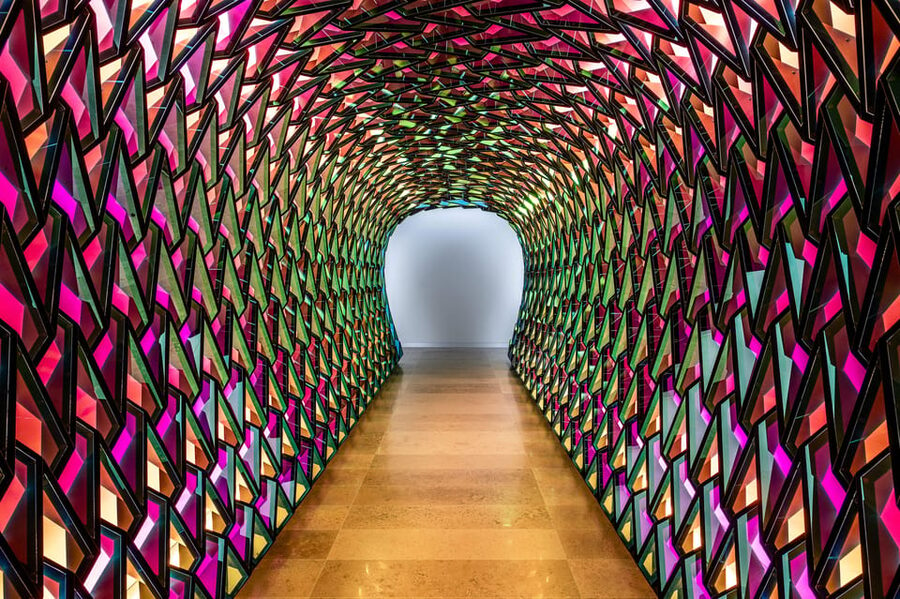
This is where the art list gets exciting. You can expect works by well-known contemporary artists such as Andreas Gursky, Anselm Kiefer, and Georg Baselitz. The museum also includes pieces connected to Hortensia Herrero’s private collection, with names like Tomás Saraceno, Jaume Plensa, Olafur Eliasson, Cristina Iglesias, Sean Scully, and Mat Collishaw.
What I like about this mix is that it signals range. Some artists are known for monumental scale or strong visual rhythm, while others lean into installations, atmosphere, and media. Because you are moving through multiple palace rooms, you are less likely to experience everything as one long sequence of similar-looking works.
You should also be prepared for multimedia and for pieces created for the palace spaces. That matters because multimedia can be more sensitive to where you stand, how long you watch, and whether you can step back and take in the room. If you want your museum visit to feel more like a dialogue than a slideshow, you’ll probably enjoy the time you spend with these works.
A few more Valencia verdicts worth reading
- Valencia: Bioparc Valencia Admission Ticket★ 4.8 · 1,841 reviews
- Valencia: Authentic Flamenco Show Entry Ticket★ 4.9 · 1,305 reviews
- Valencia: Principe Felipe Science Museum Entry Ticket★ 4.3 · 1,039 reviews
Where Valencia’s past shows up during the same visit
One of the most memorable parts is the archaeology. You can contemplate the remains of the Jewish quarter and the ruins of the Roman circus of Valencia while you’re inside the art center. The experience also references other visible remnants such as a Medieval oven and an Islamic fountain.
This matters because it turns the museum into a cross-disciplinary experience. Instead of choosing between “history” and “art,” you get both in one ticketed visit, and the building helps connect them. You’ll likely find it easier to understand why contemporary artists can be so tied to setting when you are literally stepping through an older urban footprint.
Practical tip: when you spot archaeological elements, pause. Let your eyes adjust from wall-based artwork to floor-level or architectural remnants. Even if you’re not a history buff, those moments can make the art feel less abstract.
Guided tour vs entry ticket-only: what you gain with a guide
You can book either entry only or add a guided tour, and the overall visit time is about 1.5 hours. In a museum like this, a guide can be more useful than in a simple gallery because the big value is the connection between contemporary work and the palace structure.
A good guided visit can help you:
- identify what to look for in each room, especially when artworks relate to specific spaces
- connect the artworks to the building details, like the main hall’s wood and ceramic masonry
- understand how the archaeological remnants fit into the overall experience, including the Roman circus and the Jewish quarter alley
The guide or greeter is available in English, Spanish, French, Italian, and Catalan, so language access is strong. If you prefer moving at your own speed, the ticket-only option still makes sense. You’ll just need to spend a little more effort deciding what to focus on during your limited time.
Based on the overall rating of 4.6 out of 5 (from 151 reviews), many people find the experience worth the effort. Still, with any contemporary-art setting, your taste matters. If you want straightforward viewing with minimal interpretation, the entry ticket can be fine. If you want context, guided is the safer bet.
Price and value: is $14 good for 17 spaces in a palace?
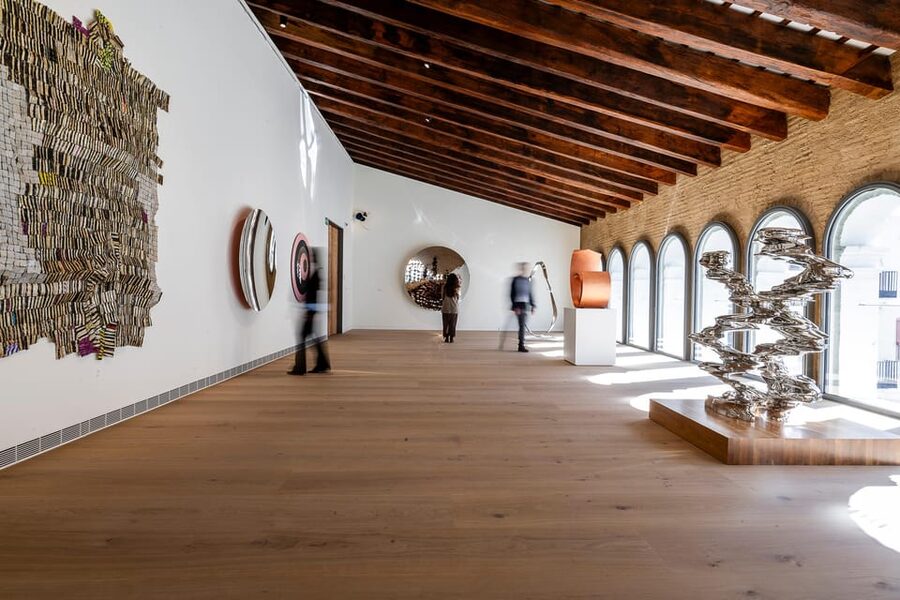
At about $14 per person for a 1.5-hour visit, the value is tied to two things: scale and uniqueness. You are getting access to a palace museum with two multi-level buildings, 17 exhibition spaces, and visible archaeology. That combination is rare, especially for the price point.
If you compare it to spending the same amount of money on a standard museum ticket elsewhere, this one offers a “two-for-one” feeling: contemporary art plus historical remnants in the same physical rooms. It also gives you flexibility with guided or ticket-only options.
To get your money’s worth, aim to do this with enough energy. If you’re doing a packed day in Valencia and you feel rushed, you may not enjoy the slower, room-by-room connections. I’d schedule it when you can actually pause for a few minutes in a handful of spaces.
What it feels like in practice: how to enjoy the palace rooms
Because the experience spans many exhibition rooms and historical elements, your success depends on your viewing style. Here’s what works for most people who enjoy contemporary art settings in real buildings.
First, pick one theme before you start. For example: “How the palace changes the art,” or “How history shows up alongside modern work.” This helps you keep meaning even when the artworks are challenging.
Second, give yourself permission to move between extremes. You’ll go from multimedia to archaeological remains, from famous names to palace-specific installations. That variety is part of the charm, as long as you don’t treat every room like it must answer every question immediately.
Third, decide upfront if you want explanation. The guide option exists for a reason, and in a 17-room space with multimedia elements, context can save you time and frustration.
Who should book this, and who might prefer something else
This works especially well if you like contemporary art that’s connected to architecture and physical place. If you also enjoy seeing history not as a photo but as actual remnants you can stand near, you’ll probably feel the added payoff.
It may feel less satisfying if your ideal museum is a calm, traditional walkthrough focused on a single style and a linear story. Contemporary work can be experimental, and the palace setting means you’re also reading the building at the same time. If you wanted a simple, easy “greatest hits” museum, you might prefer a more classic gallery format.
If you’re traveling with limited time, the 1.5 hours is a practical length. If you’re the type who wants to linger in every room and take notes, consider whether you’d rather use the extra time to visit fewer spaces more slowly.
Should you book Hortensia Herrero Art Center in Valencia?
Book it if you want contemporary art in a genuinely special container, not just a temporary exhibition space. The mix of major artists, multimedia works, and archaeological remains like the Roman circus ruins and Jewish quarter alley makes it feel like more than an art ticket.
Consider the guided tour if you want help making connections in the palace and you’re curious about why certain works are placed where they are. Choose entry ticket-only if you’re comfortable self-directing and you like to set your own pace.
Either way, you’re paying for access to a palace-sized experience, 17 exhibition spaces, and visible history, all in about 1.5 hours. For $14, that’s a solid deal in Valencia, as long as you come ready to look up, look around, and let the building do some of the talking.
FAQ
How long is the Hortensia Herrero Art Center visit?
The visit lasts about 1.5 hours.
Is this experience entry ticket-only or a guided tour?
You can choose either an entry ticket or a guided tour option.
What is included with the ticket?
The entry ticket is included, and if you select the guided tour option, the guided tour is included as well.
Where is the museum located?
It is located in the historic center of Valencia, inside the Valeriola Palace, in the Valencian Community.
What kinds of places can you see inside?
You can see 17 exhibition spaces across two four-story buildings, and you can also see archaeological remains such as the Roman circus ruins and parts connected to the ancient Jewish quarter.
Which artworks and artists are featured?
The experience includes works by artists such as Andreas Gursky, Anselm Kiefer, and Georg Baselitz, and it also includes works connected to Hortensia Herrero’s private collection, with artists such as Tomás Saraceno, Jaume Plensa, Olafur Eliasson, Cristina Iglesias, Sean Scully, and Mat Collishaw.
What languages are available for the host or greeter?
The host or greeter is available in English, Spanish, French, Italian, and Catalan.
Is the venue wheelchair accessible?
Yes, it is wheelchair accessible.
What are the cancellation and payment options?
You can cancel up to 24 hours in advance for a full refund. You can also reserve now and pay later.
Latest Valencia reviews into the ledger






Things to Do in Valencia, compared.



Sailing Catamaran Cruise with Sunset Option and DJ
Read our review →

Valencia Old Town Tour with Wine & Tapas in 11th Century Historic Monument
Read our review →
Oceanogràfic, Hemisfèric & Science Museum Combo
Read our review →

Browse the lists this tour appears in