
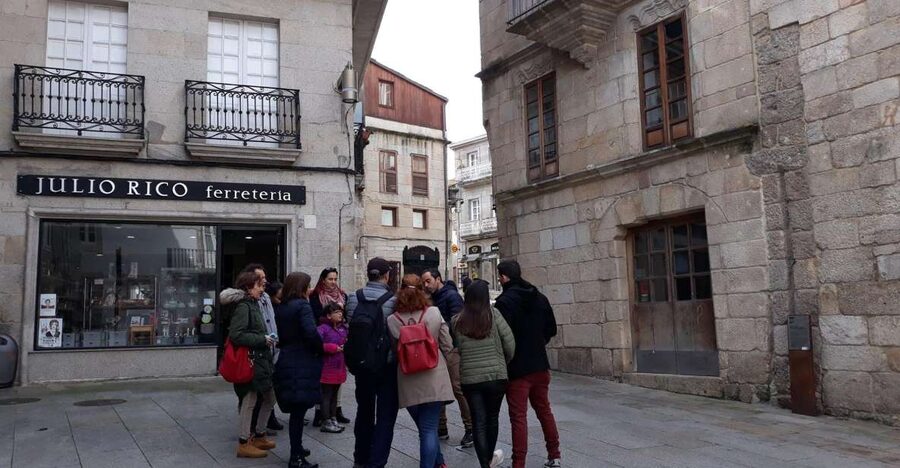
Reviewed · WALKING TOURS
Vigo: Walking Tour with local History & Culture
Vigo’s port legends start right at the square. In about two hours, you trace old streets and harbor viewpoints with local history, from O Sireno to Castelo de San Sebastián. Most of the walk gives you that Vigo plus water feeling, with the Ría de Vigo in sight.
I love how the tour pairs iconic Vigo stops with story-driven moments, like the Treasure of Rande legends and the ship-shaped thinking behind the city. I also like that you get practical local plans and food recommendations at the end, not just dates and dates.
One thing to consider: the pace is lively, and Vigo’s old center includes hills and some rocky ground, which can be tough if your legs get tired quickly or your footing is unsteady.
In This Review
- Key highlights in plain sight
- Starting at Porta do Sol and finding El Sireno without guessing
- Ría de Vigo viewpoints and the Treasure of Rande legend
- Walking Vigo’s old streets, from Rúa Policarpo Sanz to Praça da Constitución
- Castelo de San Sebastián: fortress views with real port logic
- Port of Vigo: where migration stories and sunken-treasure legends make sense
- Pacing, group size, and what to expect underfoot
- Price and what you really get for about $22
- Who should book, and who should plan an alternate route
- Should you book this Vigo walking tour?
- FAQ
- Where is the meeting point for the Vigo walking tour?
- How long does the tour last?
- How much does it cost, and is it tip-based?
- Are entrance fees included?
- What languages is the tour offered in?
- Is the tour wheelchair accessible?
- What are some of the main places you stop during the walk?
- Do you get a microphone for larger groups?
- Can I cancel and get a refund?
Key highlights in plain sight
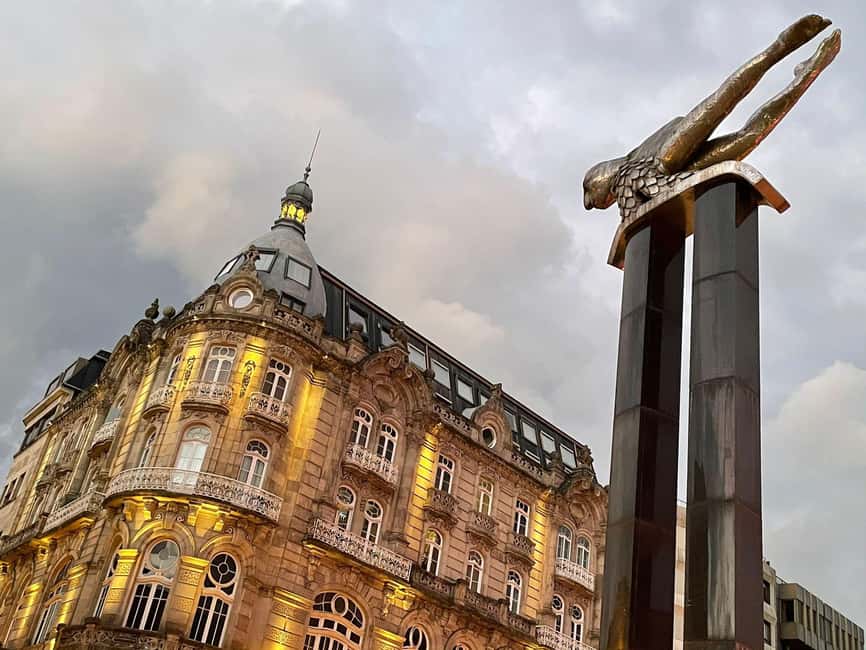
- Meet at Porta do Sol and spot El Sireno high above the ground (look for the red umbrella)
- Ría de Vigo views show up early, so you start understanding the city fast
- Treasure of Rande gets explained through legend and maritime context
- Garcia Barbon Theatre and key plazas set the culture tone without feeling rushed
- Castelo de San Sebastián adds big panorama energy and fortress history
- Port of Vigo connects Vigo’s development, migration, and sunken-treasure tales
Starting at Porta do Sol and finding El Sireno without guessing
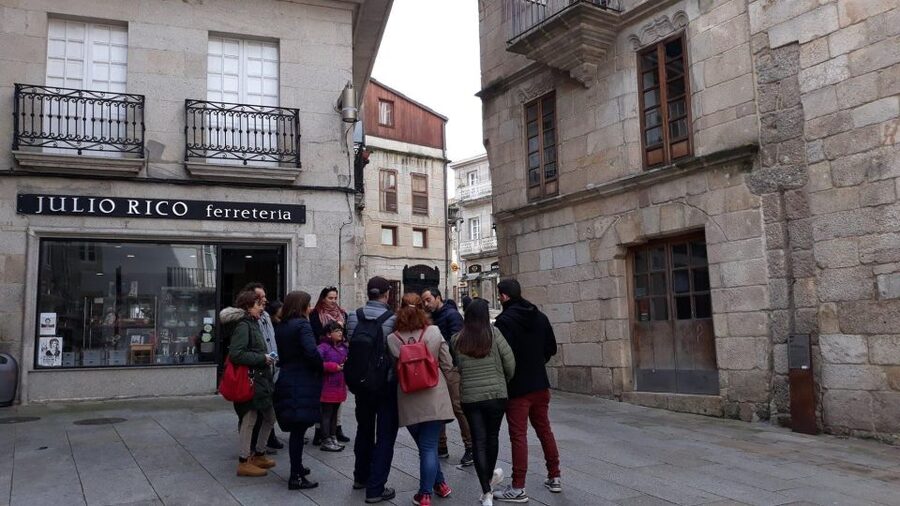
The tour begins in Praza Porta do Sol, right in the heart of Vigo. Your first job is easy, but slightly funny: the El Sireno statue is high above ground, so you can’t rely on everyone else’s head-tilt to find it. Look for a guide holding a red umbrella, and you’ll know you’re in the right place.
This first stop matters more than it sounds. Vigo’s center can feel like a maze when you arrive, but anchoring yourself at the city’s symbol gives you direction. It also sets the tone for what the guide will do throughout: connect buildings and street corners to maritime myths, social history, and real everyday Vigo.
Ría de Vigo viewpoints and the Treasure of Rande legend
One of the strongest moments comes near the start, where the route leads to a viewpoint that frames Vigo and its estuary. Even if the weather isn’t perfect, the payoff is the same: you start seeing how the city grew around water, trade, and defense. You’ll get those sweeping Ría de Vigo views for much of the walk, not just at the end.
Then comes the story thread: the Treasure of Rande. You’re not just told a myth and left there. The guide ties it into the broader vibe of Vigo as a port city, where legends of lost wealth and sunken treasures stick around because the sea is part of daily life. It’s the kind of legend that helps you understand why people remember things. When you later see the harbor area, the story suddenly feels less like folklore and more like a map for how the locals think.
If you like history that explains the present, this is a good section. If you hate legends and want only official facts, you might find it more fun than factual. Either way, it’s one of the reasons this tour feels different from a basic highlight walk.
Walking Vigo’s old streets, from Rúa Policarpo Sanz to Praça da Constitución
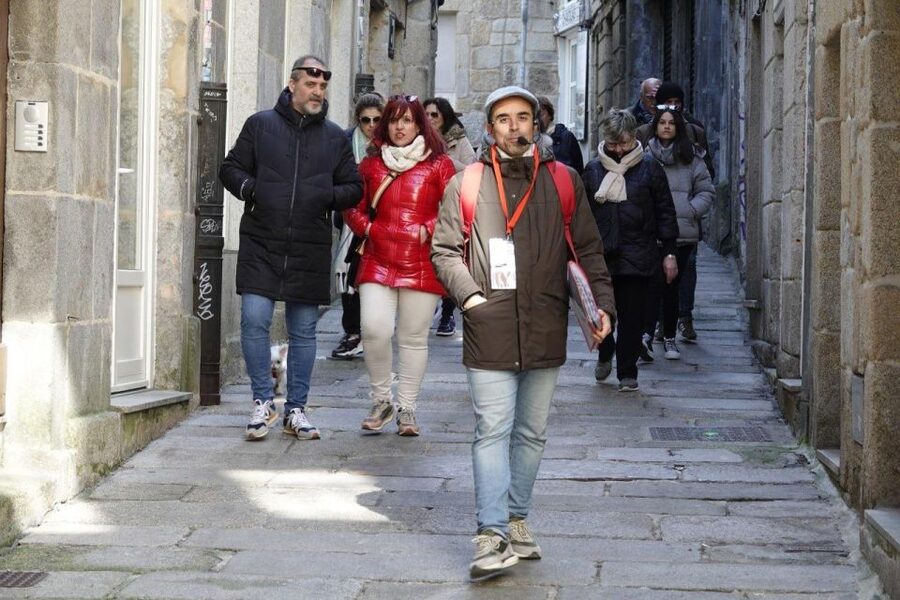
After the viewpoint, the tour moves into the historic center, and the route starts doing what walking tours should do: compress a lot of “what matters” into one manageable stretch. Expect short stops and quick explanations, with time for you to look up at facades and down at street-level life.
Here’s the vibe you’ll get as you pass through:
- Rúa Policarpo Sanz: a simple entry into the older street grid and the feel of the city before the port energy takes over.
- Garcia Barbon Theatre: a cultural landmark moment. This is where Vigo’s identity shows up through architecture and public life, not just monuments.
- Rúa do Príncipe: another street transition that keeps you oriented, while the guide adds context about famous local figures and how the city became a magnet.
- Tenda RC Celta: a quick culture stop tied to Vigo’s modern identity. It’s short, but it reminds you that the city’s story isn’t frozen in the past.
Then you reach the plazas:
- Praza da Constitución: a key square stop where you can pause and reset your brain before the next block of stories.
- Praza da Igrexa: another important square, with the guide filling in why these public spaces matter socially.
Finally, you move through Rúa Pescadería, a street that fits Vigo’s identity naturally. Even if you do nothing else, this sequence helps you understand why the port and the old town belong to the same story.
A small practical note: this portion can include stairs, uneven pavement, and occasional steep angles. It’s not a “sit and admire” tour, so wear shoes that handle cobbles and sudden changes in slope.
Castelo de San Sebastián: fortress views with real port logic
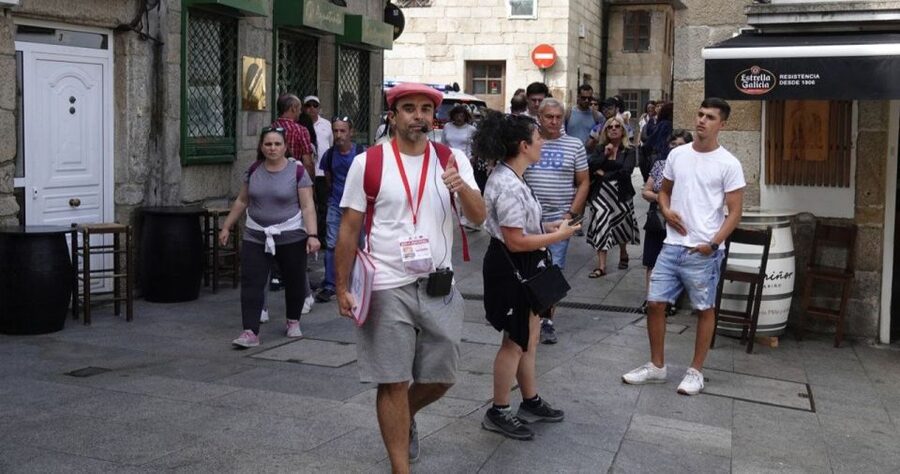
The route brings you to Castelo de San Sebastián, with a short walk into the area and then a guided visit. This is a highlight for a reason. Fortresses exist for a purpose, and here the purpose is very clear. You’re not only looking at pretty angles. You’re learning how Vigo defended itself and why the city treated the water as serious business.
The practical payoff is the view. You get perspective on the shoreline and the harbor context you’ve been hearing about since the start. Once you’ve seen the streets and squares from below, the fortress view helps you connect the dots. It makes Vigo feel like a place designed around movement, shipping, and arrival.
This is also where you’ll appreciate the tour’s pacing. The castle stop isn’t too long, but it’s long enough to make the explanation stick. If you’re the type who remembers stories best after you see the surroundings, this section is built for you.
Port of Vigo: where migration stories and sunken-treasure legends make sense
The tour ends in the Port of Vigo area, with a 20-minute guided walk. This is the part where Vigo turns into a working city in your mind. The guide explains the city’s development through its maritime role, including the migratory history that comes from being a port.
You’ll hear more about legends around sunken treasures, too. That’s not random mything. It’s a way to describe how the sea becomes part of the local identity, even in stories told on land.
This is also your best chance to ask questions. Guides often do well here because people usually have the same instinct: once you’ve seen the old town, you want to understand how it ties to today’s harbor. If your guide has a gift for story, this is where it pays off. Named guides like José Manuel, Pedro, Jorge, and Borja have been praised for turning the port topic into something you feel, not just something you hear.
Pacing, group size, and what to expect underfoot
The tour runs about two hours, and the stops are planned as quick hits, with guided segments ranging from roughly 5 to 20 minutes. That usually keeps it from dragging. It also means you won’t get long rests at each point, even if you want them.
A couple things I’d plan for:
- Hills and rocky bits are real. One key consideration is mobility. Even the short walk between highlights can feel like a workout if you’re not used to slopes or uneven ground.
- Group size affects comfort. If the group is large, you might need to position yourself well to hear clearly, even if there’s a microphone. Some people do fine. Others find it tiring.
- Weather changes the vibe. Rain and wind can make walking less fun, but the tour still runs because most of it happens outdoors. Bring a light layer and something for damp conditions if you’re visiting in cooler months.
If you prefer tours where there’s a seat at every stop, this one may feel a bit demanding. On the other hand, if you like motion and short story bursts, the structure fits your style.
Price and what you really get for about $22
The price is $22 per person for a roughly two-hour experience, and it’s tip-based, with payment handled at the end based on satisfaction. That matters because it changes how you should think about value.
Here’s the value equation this tour offers:
- You’re paying for an expert local guide plus a route that’s designed to make Vigo make sense quickly.
- You get unforgettable views of the estuary and harbor area while hearing how Vigo’s past links to today.
- You receive best-possible local recommendations for what to do, plus advice on Galician cuisine and where to go.
- You get historical documentation, including maps and historical photographs, which helps you place what you’re seeing into a timeline.
Entrance fees are not included, but that’s not necessarily a downside. A walking route like this often aims to keep you outdoors and focused on context, not ticket lines.
In plain terms: this feels like good value if you want a fast orientation plus local “what should I do next” help. If you already know Vigo deeply and only want major paid attractions, you might not use the guide as much. But for most first-timers, it’s a smart use of time.
Who should book, and who should plan an alternate route
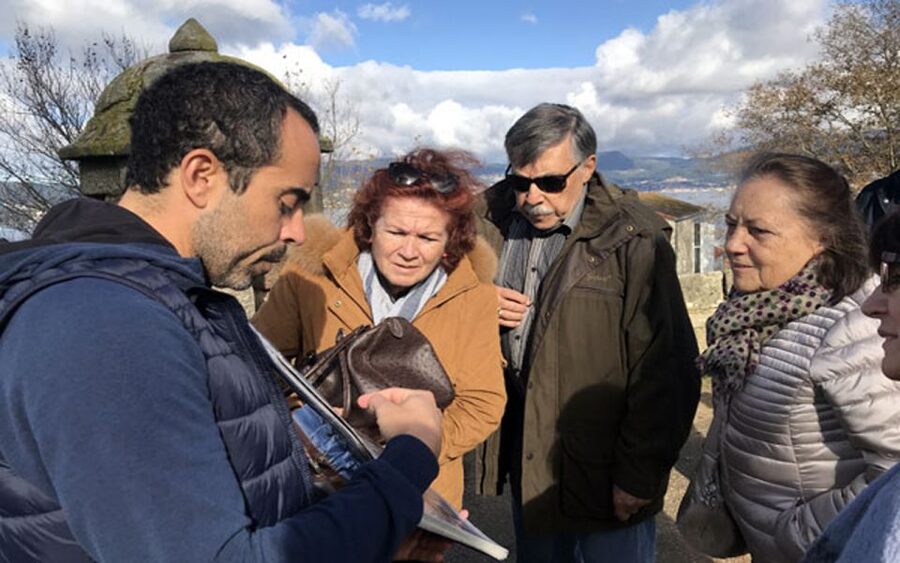
This tour fits best if you:
- Want a first-day overview of Vigo’s old town and port identity
- Like history that includes myths, legends, and the logic behind local culture
- Want practical guidance, including food stops and suggested plans after the walking portion
- Appreciate guides who bring energy. People have credited guides such as Omar Pele, Omar Perez, Miguel, Pedro, and Jorge for humor, storytelling, and clear explanations.
It may be less ideal if you:
- Have trouble with hills and uneven, rocky pavement. Even if the route is “only” two hours, the terrain can slow you down and make the day feel long.
- Need frequent seating. The stops are short and mostly outdoors, so you may not find a table right where you pause.
- Rely on a wheelchair, because the tour is wheelchair accessible, but it requires an accompanying person. If you don’t have that support, accessibility may not work the way you want.
Should you book this Vigo walking tour?
If you’re visiting Vigo for the first time, I think you should strongly consider booking this. It’s built to do three things well in two hours: give you an anchored starting point at Porta do Sol, show you the Ría de Vigo views that explain the city’s geography, and connect the old town to the port through stories like the Treasure of Rande.
Skip it or choose another option if your mobility is limited enough that hills and rocky patches would turn the walk into an endurance test. And if you hate outdoor walking in wind or rain, plan on extra layers, or check the day’s weather before you commit.
FAQ
Where is the meeting point for the Vigo walking tour?
You meet in Praza Porta do Sol, near the sculpture El Sireno. The guide is easy to spot because you should look for someone holding a red umbrella.
How long does the tour last?
The walk lasts about 2 hours.
How much does it cost, and is it tip-based?
The price is $22 per person. It is tip-based, meaning you pay at the end based on satisfaction.
Are entrance fees included?
No. Entrance fees are not included.
What languages is the tour offered in?
The live tour guide speaks English and Spanish.
Is the tour wheelchair accessible?
Yes, it is wheelchair accessible, but the tour notes that an accompanying person is required.
What are some of the main places you stop during the walk?
The route includes stops such as Garcia Barbon Theatre, Castelo de San Sebastián, Praza da Constitución, Praza da Igrexa, the Port of Vigo, and the area around Rúa Pescadería, along with several short guided and walking segments through central streets.
Do you get a microphone for larger groups?
If the group is big, the guides carry a microphone.
Can I cancel and get a refund?
Yes. You can cancel up to 24 hours in advance for a full refund.
More Historical Tours in Vigo
- Madrid Essential: Historic Center, Plaza Mayor & Royal Palace★ 5.0 · 6,416 reviews
- Sevilla Food Tour: Tapas, Wine, History & Traditions★ 5.0 · 3,468 reviews
- Valencia Old Town Tour with Wine & Tapas in 11th Century Historic Monument★ 5.0 · 3,234 reviews
- Madrid Tapas & Taverns Small Group Food & History Tour★ 5.0 · 2,664 reviews
- Barcelona Tapas Walking Tour: Food, Wine & History★ 4.5 · 1,928 reviews
Spanish Cities on Foot
- Barcelona Tapas and Wine Experience Small-Group Walking Tour★ 5.0 · 5,804 reviews
- Barcelona: Tapas Walking Tour with Food, Wine, and History★ 4.8 · 4,261 reviews
- Madrid Tapas & Wine Tasting Walking Tour – Small Group Local Bars★ 5.0 · 3,644 reviews
- Granada: Albaicín and Sacromonte Guided Sunset Walking Tour★ 4.9 · 2,962 reviews
- Toledo Tour & Vineyard Walk with Wine Tasting from Madrid★ 5.0 · 2,546 reviews
Walking Tours, compared.
Barcelona Tapas and Wine Experience Small-Group Walking Tour
Read our review →
Tapas Walking Tour with Food, Wine, and History
Read our review →
Madrid Tapas & Wine Tasting Walking Tour – Small Group Local Bars
Read our review →
Albaicín and Sacromonte Guided Sunset Walking Tour
Read our review →
Toledo Tour & Vineyard Walk with Wine Tasting from Madrid
Read our review →
Madrid Walking Tour from Puerta del Sol to Retiro Park
Read our review →

Barcelona Tapas Walking Tour: Food, Wine & History
Read our review →Browse the lists this tour appears in