
Reviewed · TAPAS TASTINGS
10 Tapas Cooking Class Experience in Madrid with Sangria
Ten tapas, one kitchen, real laughs. This hands-on tapas cooking class in central Madrid gets you working in stations with chef Gustavo (Gus) and the team, so you are cooking, not watching. I like that you end up eating a home-style dinner built from what you made, plus the free sangria to go with it. One heads-up: with up to ten tapas and a 2.5 hour slot, the pace can feel a bit quick at the start, especially if you want more slow explanations.
You meet in the Centro area at C. de la Farmacia, 6 at 4:00 pm, and the class runs for about 2 hours 30 minutes. It is English, small-group sized (max 15), and you get a souvenir apron, too.
In This Review
- Key Things to Know Before You Cook Tapas in Madrid
- Inside the Kitchen Rhythm at 4:00 pm in Madrid
- Where You Meet: C. de la Farmacia and Getting Settled Fast
- The Tapas Menu You Learn, Plate by Plate
- Salmorejo, the Cold Tomato Starter
- Idiazabal Lollipops, a Sheep-Cheese Moment
- Coca with sobrasada or vegetables
- Ajillo shrimp, garlic and olive oil done right
- Horchata torrijas, sweet comfort with a regional twist
- Spanish omelette, you choose the onion style
- Gilda skewers, salty and punchy
- Squid sandwich, a Madrid classic in snack form
- Patatas bravas, potatoes plus a spicy tomato sauce
- Sangria, homemade fruit and spices
- How the Cooking Stations Actually Work
- The Dinner Finish: What You Eat After You Cook
- Chef Coaching and Team Energy: Gustavo and the Teaching Crew
- Price and Value: Is 82.24 Worth It?
- Dietary Notes: Vegetarian, Food Limits, and Drink Age
- Who Should Book This Tapas Class in Madrid
- FAQ
- FAQ
- How long is the tapas cooking class?
- Where do I meet the group?
- Is this class in English?
- How many people are in the group?
- What time does the experience start?
- Is hotel pickup or drop-off included?
- What is included in the price?
- Is there a full vegetarian menu?
- What are the age and drinking rules?
- Should You Book 10 Tapas Cooking in Madrid with Sangria?
Key Things to Know Before You Cook Tapas in Madrid
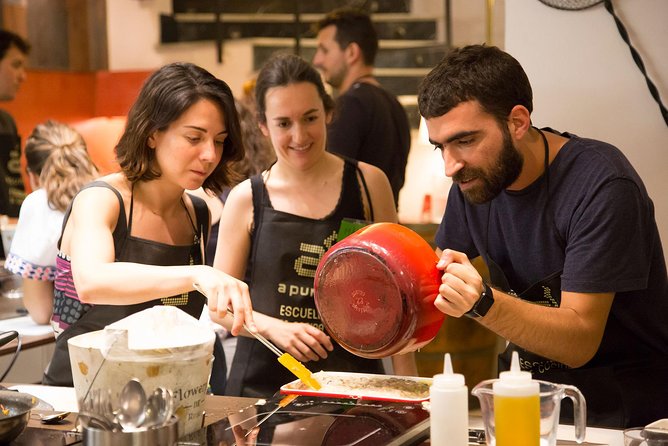
- Up to 10 tapas dishes made by the group, so you leave with a spread, not just one bite
- Small group limit of 15 keeps it personal and makes the chef’s feedback easier to hear
- English-led instruction, with hands-on station work so you are not standing around
- Salmorejo, gilda, patatas bravas, ajillo shrimp, horchata torrijas and more on the plan
- Sangria is included, plus a homemade dinner with regional wine pairing mentioned in the experience
- No full menu customization for dietary needs, so plan your choices ahead of time
Inside the Kitchen Rhythm at 4:00 pm in Madrid
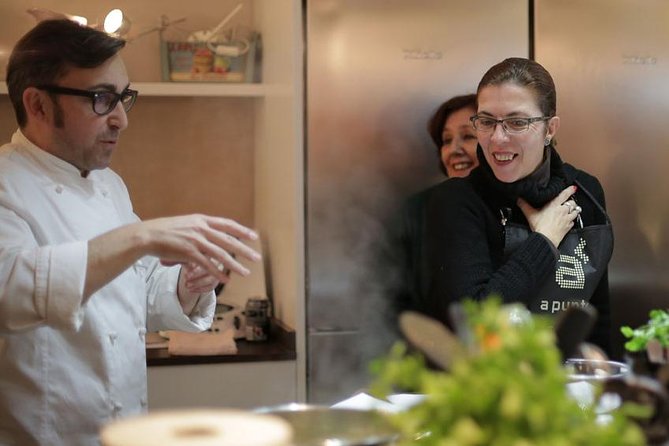
Madrid tapas are all about rhythm: small plates, shared tables, and a lot going on at once. This class matches that feel, because you are split across cooking stations while the chef keeps an eye on timing, technique, and overall flow. The upside is that you get real practice. The downside is that the group is working in parallel, so you have to stay switched on from the beginning.
The session starts at 4:00 pm and typically runs about 2 hours 30 minutes. You will be working during the cooking window, then shifting into eating mode once your tapas hit the table. Since you return to the same meeting point afterward, you do not need to solve transport puzzles at the end.
This is also the kind of activity that tends to feel easiest when you show up hungry for more than food. If you like learning why Spanish plates work, and you enjoy cooking with other people, the format fits well. The class has a maximum of 15 people, which helps a lot. In bigger classes, you often become an observer. Here, most people are active.
More Cooking Classes in Madrid
- Spanish Cooking Class Paella Tapas and Sangria in Madrid
★ 5.0 · 1,340 reviews - Paella Cooking Class in Madrid with Bottomless Wine Pairing
★ 5.0 · 985 reviews - Madrid Tapas & Paella Cooking Experience with Local Market Visit
★ 5.0 · 432 reviews - Taste of Spain: Tapas Cooking Class with Bottomless Wine Pairing
★ 5.0 · 414 reviews
Where You Meet: C. de la Farmacia and Getting Settled Fast
The meeting point is C. de la Farmacia, 6, Centro, 28004 Madrid. It is near public transportation, so you should be able to get there without a long walk. You also get a mobile ticket, which is handy because you are likely to be juggling phone maps and last-minute errands anyway.
Since the meeting is in Centro, you can usually pair this with other nearby plans. A 4:00 pm start also makes sense in Madrid, where evenings are when food life happens. You do not have to rush into a lunch-time schedule.
One practical thing: because the kitchen space supports multiple stations, you will want to get your bearings early. Put your phone away, listen the first few minutes, and decide which tapas you care about most. Some people only care about one dish, but the station model means you can still leave with at least one recipe you feel confident making again.
The Tapas Menu You Learn, Plate by Plate
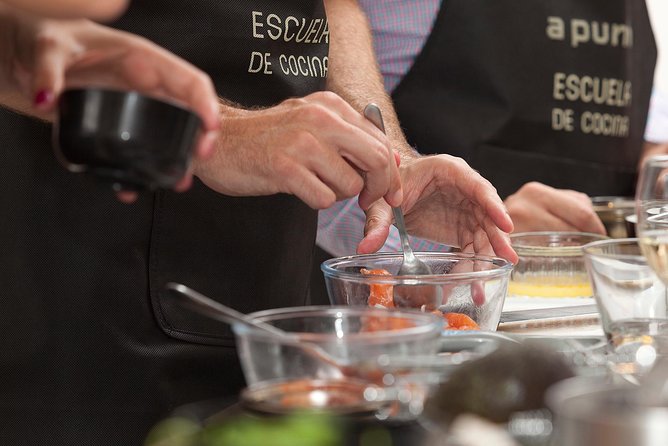
The experience is built around learning to make Spanish tapas while you are in Madrid. The plan is to craft up to ten tapas dishes, with a menu that mixes cold starters, hot plates, seafood, meat, and a dessert that uses a popular regional drink.
Here is what is on the sample menu, and why each piece matters for understanding Spanish food:
Salmorejo, the Cold Tomato Starter
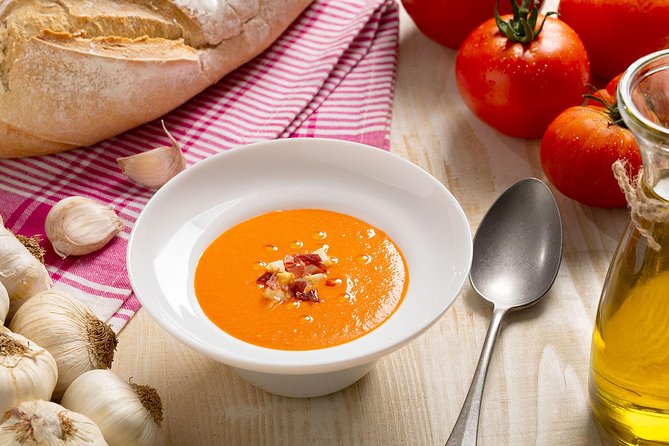
You start with salmorejo, a typical Spanish cold tomato soup. It is a good anchor dish for a cooking class because it teaches balance and texture without requiring deep frying skills or heavy timing. If you want tapas that feel approachable and not intimidating, this is the kind of dish that gives you confidence fast.
More Tapas Tours in Madrid
- Madrid Tapas & Wine Tasting Walking Tour – Small Group Local Bars★ 5.0 · 3,644 reviews
- Madrid Tapas & Taverns Small Group Food & History Tour★ 5.0 · 2,664 reviews
- Madrid: Small Group of Prado Museum Tour & Optional Tapas★ 4.6 · 2,437 reviews
Idiazabal Lollipops, a Sheep-Cheese Moment
Next are Idiazabal lollipops, described as made with one of the best sheep cheeses in Spain. The name sounds playful, and the technique is the key. Shaping cheese into lollipop form is not something you would guess you can learn in a single evening, which is why it tends to stick in your mind after the class.
Coca with sobrasada or vegetables
You will also make coca with sobrasada or vegetables, described as a Spanish pizza style typical of the Balearic Islands. This part helps you see how Spain treats the idea of handheld comfort food. Even if you do not eat it every day at home, it is useful as a template.
Ajillo shrimp, garlic and olive oil done right
For a hot seafood option, the menu includes ajillo shrimps, fresh shrimp cooked with garlic and a lot of olive oil. This is tapas at its best: simple ingredients, big flavor focus. If you like Spanish cooking that relies on good olive oil and careful garlic handling, you will probably latch onto this as one of your favorite lessons.
Horchata torrijas, sweet comfort with a regional twist
Dessert is horchata torrijas. Think of it like French toast, but made with horchata, a Levante typical drink. This is one of the smartest choices for a class menu, because it shows how Spain adapts familiar comfort food using local tastes.
Spanish omelette, you choose the onion style
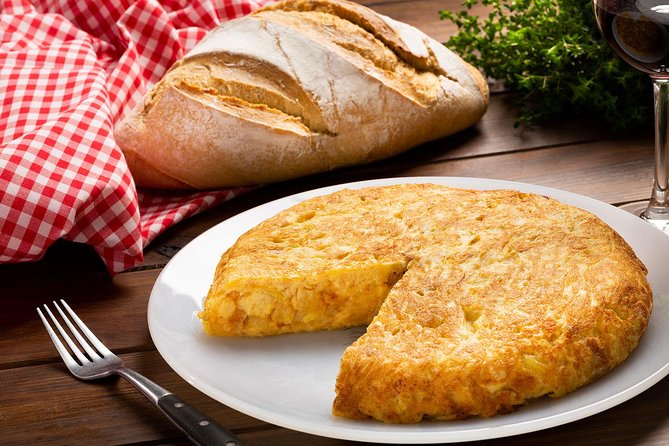
You make Spanish omelette with potatoes, and you decide whether to include onion. That choice is meaningful. It is not just about flavor. It reminds you that Spanish home cooking is often flexible. You can learn a base technique, then tune it to your preferences.
Gilda skewers, salty and punchy
There are gilda skewers, built from olives, anchovies, and much more. Gilda is all about salty punch and a flavor profile you do not forget once you have had the right bite. If you like strong cured flavors, this is the dish that usually earns repeat attention in your memory.
Squid sandwich, a Madrid classic in snack form
You also get squid sandwich, described as the very typical Madrilean sandwich made with fried squid and alioli sauce. Tapas often blur into casual street food, and this is the kind of plate that helps you understand why tapas are not just appetizers. They can be dinner energy.
Patatas bravas, potatoes plus a spicy tomato sauce
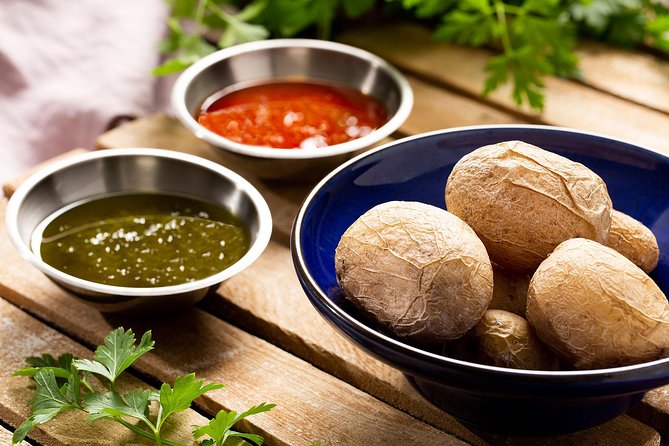
Finally, you have patatas bravas, potatoes served with a special spicy tomato sauce. This is tapas school in a bowl or plate. Once you learn how the sauce tastes and how it pairs with the potatoes, you have a go-to for your next home experiment.
Sangria, homemade fruit and spices
A sangría course is included, made homemade with fresh fruit and spices. It is both a drink lesson and a flavor lesson. You also get sangria as part of the experience, not as an optional extra.
How the Cooking Stations Actually Work
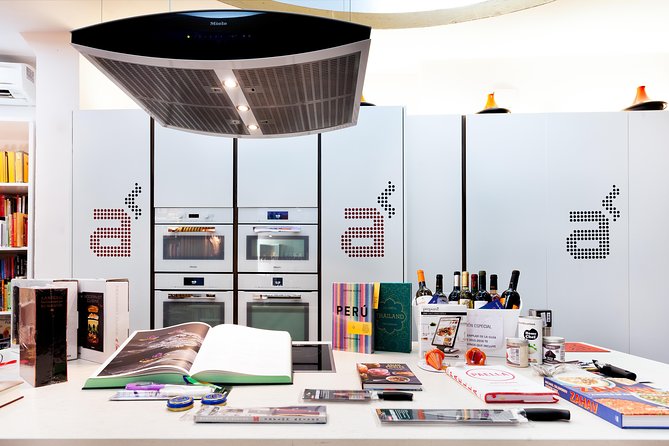
The class is designed around station work. In practice, it means you get a role in making at least one tapa, and the rest of the group is busy at other stations. The chef supervises while an assistant helps keep the kitchen clean and stocked. This is one reason people come away feeling like it was fun and not chaotic.
The best part of the format is that you are not stuck doing only prep. The activity is structured so you are actively making items that end up on the table. Many people also note that their group worked smoothly, with tasks divided clearly across the stations.
A small downside shows up in feedback, though. Because there are multiple dishes and the kitchen needs to hit a timeline, you can feel a little rushed at the start. The chef does move quickly with instructions once everyone is assigned. If you are the type who learns best by taking notes, you might want to watch closely early and ask questions right away.
Also, the space setup supports more than one group working on the same dish. That matters because you can compare your station’s outcome to what the other group is doing. It is a subtle help for learning, and it also keeps energy up, rather than letting you idle.
The Dinner Finish: What You Eat After You Cook
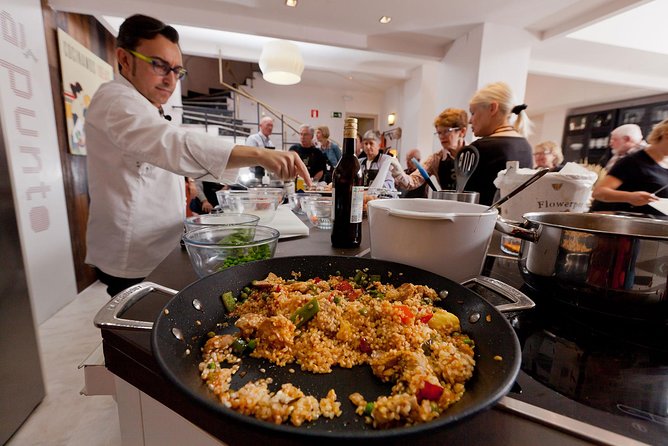
Tapas cooking classes often end with a snack. This one ends with a proper home-cooked dinner based on what you prepared. That detail changes the value. You are not paying mainly for ingredients and a half-size taste. You are paying for an evening where you cook, then sit down for a full meal built from the group effort.
Sangria is included, and the menu makes it part of the eating plan. On top of that, there is mention of pairing with a selection of regional wines during the dinner. Even if you skip wine, you should still get the sangria portion as part of the value.
One extra win: many sessions end with people taking food home. You may not count on it, but it is something that has shown up in feedback, which makes the evening feel less like a one-and-done. If you are cooking and you happen to love the end result, having extra for later can turn this into a true food memory.
Chef Coaching and Team Energy: Gustavo and the Teaching Crew
A big reason people recommend this class is the teaching style. Chef Gustavo, also called Gus in feedback, comes across as both professional and funny, with a knack for keeping everyone included. Past notes also mention that the chef blends food and small bits of history, which helps the lesson feel more grounded than just recipe steps.
You will also get help from the team. Assistants keep things moving, help with cleanliness, and support you while you work. That support matters because tapas involve multiple textures and timing needs. If you only get one person watching a group of 15, things can get tight. Here, the team structure keeps the kitchen workable.
Different instructors have been mentioned in experience accounts, including Rosa and Carmencita, plus support from others like Sandra. The key for you is what stays consistent: the cooking is interactive, and you are not left to figure everything out alone.
Price and Value: Is 82.24 Worth It?
At $82.24 per person for about 2 hours 30 minutes, the sticker price is not cheap. Still, you should judge value by what you actually get:
- All ingredients included
- Cooking class and dinner included
- Free sangria included
- Souvenir apron included
- Small group size (max 15), meaning you get actual attention
When a class includes ingredients and a full meal, the price becomes easier to justify. You would likely pay a lot more than that if you tried to recreate the same spread at home by buying specialty items like sheep cheese for lollipops, plus the labor time and kitchen setup.
One caution is drink expectations. A note in feedback mentioned that when sangria was not available, the replacement drink was a soft drink, which one person felt did not match the paid value. If you do not plan to drink alcohol, it is smart to ask what the non-alcoholic option is ahead of time, so your expectations are aligned.
Another factor: there is no hotel pickup or drop-off. You are expected to get there yourself. Since the meeting point is near public transportation, that is usually manageable, but it can affect value if you are relying on taxis.
Finally, dietary needs are handled carefully: you can advise specific requirements at booking, but they do not adapt the whole menu. There is also no full vegetarian option, although almost half the proposed tapas are vegetarian. So your value depends on how flexible you are with the menu.
Dietary Notes: Vegetarian, Food Limits, and Drink Age
This class is good for many diets, but you should read the fine print. There is no vegetarian option for the whole menu, and almost half of the tapas proposed are vegetarian. That means you will likely have non-vegetarian dishes in the plan, plus seafood.
For dietary restrictions, you can advise requirements when you book, but the menu is not fully rewritten around those needs. If you have a serious allergy, you should treat this as a case where asking direct questions is essential.
Age rules also matter. The minimum age is 14 years, and the minimum drinking age is 18. The class includes sangria, so the rules apply if minors are with you. Service animals are allowed, and the location is near public transportation.
Who Should Book This Tapas Class in Madrid
This is a smart choice if you want:
- A hands-on food activity in Madrid, not just tasting
- A small group evening with a professional chef and interactive stations
- A chance to learn several dishes, from cold starter to dessert
- A fun social vibe where you work alongside other people and eat what you make
It might be a weaker fit if:
- You need strict dietary menu customization, because the whole menu is not adapted
- You want a slow, watch-only experience, because tasks are divided across stations and the pace can feel quick at the start
- You are planning a bigger celebration, since no parties are allowed for groups bigger than 5 people
If you are coming for a couple of days in Madrid and you want one memorable food workshop evening, this is the kind of activity that gives you more than a list of places to eat.
FAQ
FAQ
How long is the tapas cooking class?
It is about 2 hours 30 minutes.
Where do I meet the group?
You meet at C. de la Farmacia, 6, Centro, 28004 Madrid, Spain.
Is this class in English?
Yes, it is offered in English.
How many people are in the group?
The class has a maximum of 15 travelers.
What time does the experience start?
The start time is 4:00 pm.
Is hotel pickup or drop-off included?
No, hotel pickup and drop-off are not included.
What is included in the price?
The price includes the cooking class and all ingredients, a home-cooked dinner, free sangria, and a souvenir apron.
Is there a full vegetarian menu?
No, there is no vegetarian option for the whole menu. Almost half of the tapas proposed are vegetarian.
What are the age and drinking rules?
The minimum age is 14 years, and the minimum drinking age is 18 years.
Should You Book 10 Tapas Cooking in Madrid with Sangria?
Yes, if you want an evening where you cook multiple classic tapas, then eat a real dinner that includes what you made, all in a small group setting. The value is strongest when you are comfortable with the menu as written, enjoy station-style cooking, and you want sangria as part of the night.
Book it especially if you like learning by doing. The chef-led setup, the focus on teaching techniques (like shaping Idiazabal into lollipops), and the mix of dishes from salmorejo to horchata torrijas make this more than a single-dish workshop. Just go in knowing the kitchen pace can move fast at the start, and plan your dietary expectations early.
Spanish Stoves, Spare Aprons
- Madrid: Half-Day Spanish Cooking Class★ 5.0 · 345 reviews
- Madrid: 10 Tapas 2.5-Hour Cooking Class★ 4.7 · 222 reviews
- Tapas & Paella Cooking Class in Madrid with a Professional Chef★ 5.0 · 177 reviews
- Barcelona: Paella Cooking Experience & Boqueria Market Tour★ 4.8 · 3,661 reviews
- Barcelona Paella Cooking Class with Market Visit, Tapas & Sangria★ 5.0 · 2,531 reviews
Tapas Counters, Tested
- Madrid: Tapas & Wine Tasting Tour with Local Guide★ 4.8 · 2,171 reviews
- Madrid Tapas & Wine Tour with Rooftop Views and Local Guide★ 5.0 · 2,047 reviews
- Madrid by Night Small Group Tour: Stories, Sights and Tapas Bites★ 5.0 · 1,956 reviews
- Madrid: Food & Wine Tour with 10 Tapas & 4 Drinks Included★ 4.9 · 984 reviews
- Madrid: Royal Palace Expert Guided Tour with Optional Tapas★ 4.5 · 887 reviews
Latest Madrid reviews into the ledger





Tapas Tastings, compared.

Montserrat Half-Day Tour with Tapas and Gourmet Wines
Read our review →
Montserrat & Cogwheel Train, Gourmet Wine Tasting & Tapas/Lunch
Read our review →
Barcelona Tapas and Wine Experience Small-Group Walking Tour
Read our review →
Montserrat with Black Madonna & Medieval Winery with Tapas/Lunch
Read our review →
Tapas Walking Tour with Food, Wine, and History
Read our review →
Madrid Tapas & Wine Tasting Walking Tour – Small Group Local Bars
Read our review →
Sevilla Food Tour: Tapas, Wine, History & Traditions
Read our review →
Valencia Old Town Tour with Wine & Tapas in 11th Century Historic Monument
Read our review →Browse the lists this tour appears in