
Reviewed · THINGS TO DO IN CORDOBA
Cordoba Monuments Intensive Tour in English Tickets included
Cordoba hits you fast.
This intensive, English-language monuments route strings together the city’s key landmarks, from the Alcázar to the Jewish Quarter and on to the Mezquita-Catedral, with audio receivers so you can actually follow the story when you are moving through busy streets.
I love the value of the setup. Tickets are included for the Alcázar de los Reyes Cristianos, the Córdoba Synagogue, and the Mezquita-Catedral, plus skip-the-line access where it matters. I also like that you get audio receivers, which makes a big difference in a compact 3 to 4 hour plan.
One thing to plan around: the Córdoba Synagogue visit depends on timing and access. It is closed all day on Mondays and closed in the afternoons on Sundays and holidays, and the narrow street leading to it can get crowded. If you cannot go inside, the tour explains the monument from the outside, and inside time is short because the building is small.
In This Review
- Key things that make this tour work well
- What this intensive Cordoba route is really about
- Starting point on Av. del Alcázar, and why the ending location matters
- Alcázar de los Reyes Cristianos: from palace to prison, with Mudéjar gardens
- Quick stops that add real context, Lovers, Maimonides, and Al-Gafequi
- La Judería streets: where the guide’s storytelling does the heavy lifting
- Córdoba Synagogue: best case, inside visit, and what happens when access is tight
- Mudéjar San Bartolomé Chapel and the Zoco for craft breaks
- Faculty of Philosophy and Letters: the old hospital that became a campus
- Mezquita-Catedral: mosque to cathedral, and why the order matters
- Price and time: is $66.54 worth it for most visitors?
- Who this tour suits best, and who might want a different pace
- Should you book this Cordoba Monuments Intensive tour?
- FAQ
- How long is the Cordoba Monuments Intensive Tour?
- What time does the tour start, and where does it begin?
- What is included in the ticket price?
- Is the tour offered in English?
- Will you always visit the Córdoba Synagogue inside?
- What happens if I cannot visit some sites due to timing or lines?
- Can I get a refund if I cancel?
Key things that make this tour work well
- Tickets included for Alcázar, Synagogue, and the Mezquita-Catedral, so you are not piecing together entry times
- Audio receivers help you hear every explanation, even when you are packed near other groups
- A smart order of stops that moves from palace and gardens, to Jewish Quarter streets, and ends in the Mezquita-Catedral
- Synagogue timing matters, since closures and lines can limit the inside visit
- Mudéjar details show up repeatedly, from the Alcázar grounds to the chapel in the old quarter
- A final finish inside the Mezquita-Catedral, giving you time to linger and take photos if you want
What this intensive Cordoba route is really about
This tour is built for travelers who want the big Cordoba hits without spending half a day doing ticket lines and figuring out where to go next. You get a guided narrative that connects why these places exist, who shaped them, and how the city reinvented itself again and again.
The “intensive” part is not about speed for speed’s sake. It is about using a tight time window well: a guided walk through the old streets, a couple of quick landmark stops that add meaning, and then two signature monuments where the guide can slow down and point out what most people miss.
Also, you do not need to rely on your phone for audio. You get receivers, so you can keep your eyes up while walking, not hunting for signal or speakers.
More Things to Do in Cordoba
- Córdoba: Skip-the-Ticket-Line Mosque-Cathedral Guided Tour
★ 4.6 · 9,634 reviews - Cordoba Mosque-Cathedral: Skip-the-Line Guided Tour
★ 4.7 · 6,610 reviews - Córdoba: Jewish Quarter, Mosque, and Alcázar Tour
★ 4.6 · 5,143 reviews - Cordoba: Mosque-Cathedral E-Ticket with Audio Guide
★ 4.1 · 2,895 reviews
Starting point on Av. del Alcázar, and why the ending location matters
The tour meets at Av. del Alcázar, 170 in the Centro area. You start at 10:15 am, and you usually end at the Mosque-Cathedral Monumental Site, near C. Cardenal Herrero, 1, inside the monument area.
That ending spot is a practical win. The Mezquita-Catedral is the kind of place where you naturally want extra minutes for photos and wandering at your own pace. Ending inside means you can shift modes from guided to self-guided without losing time finding the exit, chasing directions, or stepping outside to regroup.
Plan for walking on historic-city streets. Cordoba’s old quarter has narrow lanes, and even when stops are close, the route is still on your feet.
Alcázar de los Reyes Cristianos: from palace to prison, with Mudéjar gardens
The tour starts at the Alcázar de los Reyes Cristianos, and the guide has a lot to work with here. The building started life as a palace and fortress, served as a residence for Isabella I of Castile and Fernando II of Aragon, later functioned as a prison, and today it is protected as a Cultural Interest Heritage site (declared in 1931) and a UNESCO World Heritage part (listed in 1994).
What I love about this first stop is how it sets the tone for Cordoba. You get a “layered power” story right away. This is not just pretty architecture. It is a site that kept changing roles as rulers and eras changed.
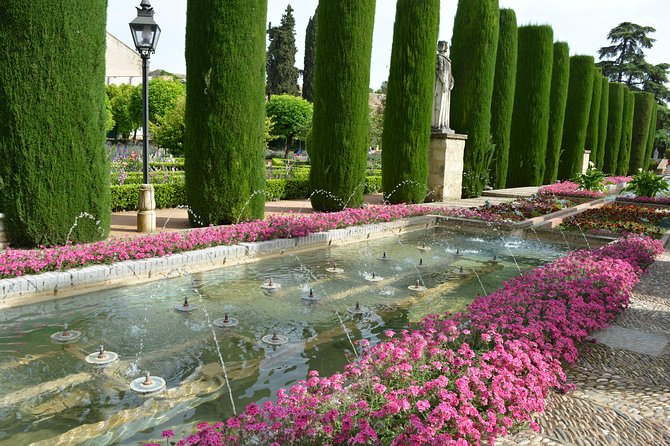
Inside, the Alcázar is described as splendid, especially when compared to the exterior’s more sober character. Expect time for the magnificent gardens and courtyards, which maintain a Mudéjar-inspired feel. Those gardens are often where your brain finally catches up after earlier sightseeing on paper. It gives you a breather before the tour moves into the tighter lanes of the Jewish Quarter.
Quick stops that add real context, Lovers, Maimonides, and Al-Gafequi
Between the big-ticket monuments, the itinerary includes short landmark stops that are easy to miss if you are sightseeing alone. These are not just statues for snapping a photo. Each one points to a thread in Cordoba’s medieval identity.
You will see the Monument to the Lovers, honoring Ibn Zaydun and Wallada bint al-Mustakfi. The monument’s design, with a statue featuring two hands, makes the story feel more human than a plaque ever could.
You also stop at the Estatua de Maimonides, celebrating Moses Maimonides, the influential philosopher and physician. Even though the stop itself is brief, it helps you understand why Cordoba mattered to Jewish intellectual life beyond monuments.
Then comes the Estatua a Mohamed Al-Gafequi. This one is a great “wait, really?” moment. Al-Gafequi was born in Córdoba in 1126 and was known for ophthalmology in medieval times. His work is linked to advances in cataract surgery and to detailed studies of eye anatomy and diseases. A two-minute stop here can make the later Jewish Quarter and medical-era context click.
A few more Cordoba verdicts worth reading
- Cordoba Mosque & Jewish Quarter Tour with Tickets★ 4.6 · 1,996 reviews
- Cordoba: Alcazar Guided Tour and Skip-the-Line Ticket★ 4.2 · 1,792 reviews
- Mosque-Cathedral of Córdoba Guided Tour with Tickets★ 4.5 · 1,649 reviews
La Judería streets: where the guide’s storytelling does the heavy lifting
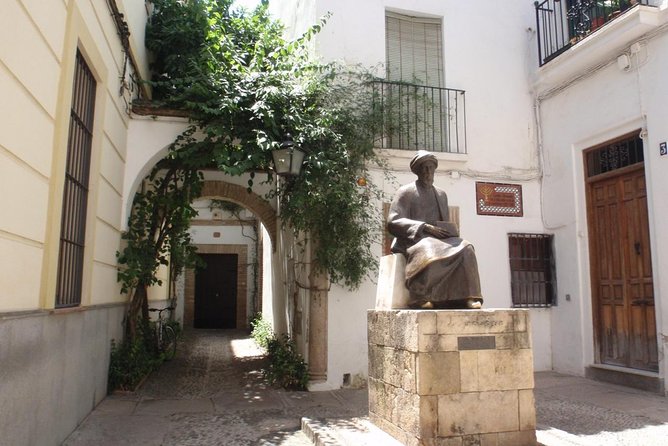
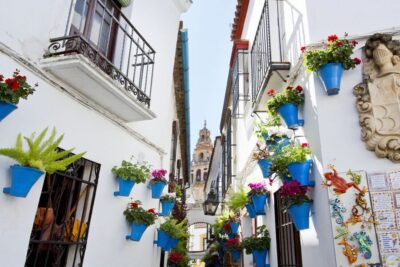
La Judería is a web of small streets in the Historic Center, northeast of the Mezquita. The tour gives you about 45 minutes in this area, and this is exactly the kind of place where a guide helps more than any map app.
In a neighborhood like this, it is easy to wander without realizing what you are passing. The guide can point out how the layout and proximity to major sites shaped daily life, religious community, and cultural exchange. You get the sense of a neighborhood as a living system, not just a postcard.
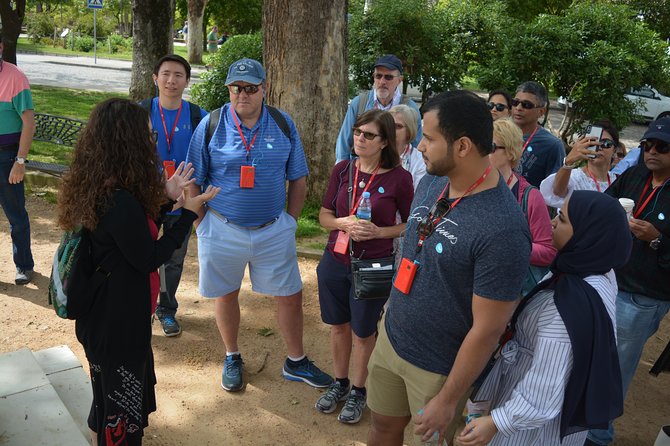
This is also where audio receivers are most useful. In narrow streets, sound can bounce around and groups can mix. The receiver system keeps the narration clear so you can stay oriented and not just follow footsteps.
Córdoba Synagogue: best case, inside visit, and what happens when access is tight
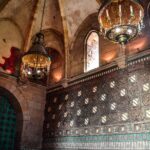
Córdoba Synagogue is one of the best-preserved medieval synagogues in Spain. Built in 1315, it features Mudejar-style decoration, and the interior impact can feel outsized because the building is small.
On this tour, you will visit the synagogue whenever possible. Real-world timing matters here in two ways:
1) Closure rules: it is closed all day on Mondays, and it is closed in the afternoons on Sundays and on holidays.
2) Lines on the narrow street: the approach lane can get crowded, and that can delay entry.
If the tour cannot go inside, the guide explains the monument from the outside. Inside time, when access is available, is usually brief, about 5 minutes, which makes sense for a small space.
My advice: if you care deeply about seeing the decoration up close, aim for a tour day that is not Monday, and give yourself a little buffer in your schedule. If lines are long, you may get the story without the full interior experience, and that changes what you take home.
Mudéjar San Bartolomé Chapel and the Zoco for craft breaks
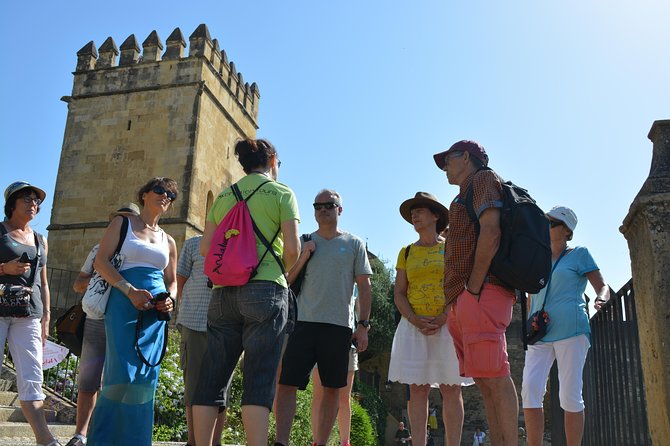
After the Synagogue area, the itinerary keeps you moving through the old quarter with two quick culture stops.
First is the Capilla Mudejar de San Bartolome, a chapel known for its Mudéjar architecture and dated to the 14th century. This is a good match for travelers who like ornament and details. Even if you are not a “chase every chapel” person, it gives you another angle on how Mudéjar style shaped multiple parts of the city.
Then you will have a stop at the Zoco Municipal De Artesania, set in a 16th-century mansion previously owned by the Armenta family. The focus here is crafts: Cordoban leather, filigree silverwork, and ceramics. Occasionally, a local guitar player adds to the atmosphere, which turns a short visit into something you can actually feel, not just look at.
Even though this stop is brief, it can break the “monument fatigue” that hits after two big sights. You shift from architecture and history to objects made by hand.
Faculty of Philosophy and Letters: the old hospital that became a campus
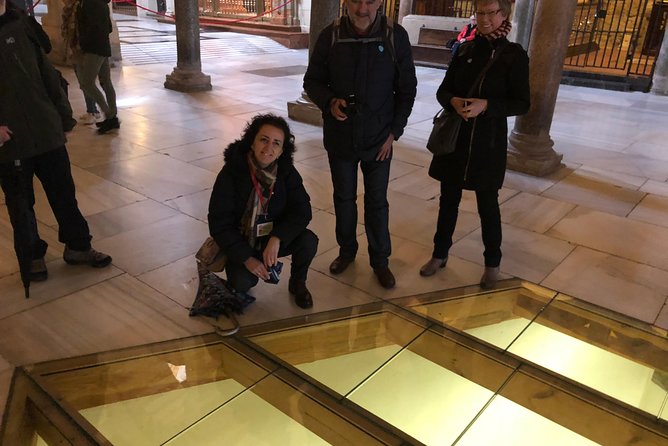
The Faculty of Philosophy and Letters is housed in a historic building that was once the Hospital del Cardenal Salazar. Over time, it transitioned from medical institution to higher education.
This stop is short, but it gives you a useful reminder that Cordoba kept repurposing buildings instead of starting over. The building became a university college under the University of Seville in 1971. It became a faculty under the newly formed University of Córdoba in 1973. Expansions and renovations happened in the 1990s, with academic programs added such as Art History, Humanities, and later Translation and Interpretation.
If you like when old cities show their modern side without losing the past, this is a nice punctuation mark before you finish with the Mezquita-Catedral.
Mezquita-Catedral: mosque to cathedral, and why the order matters
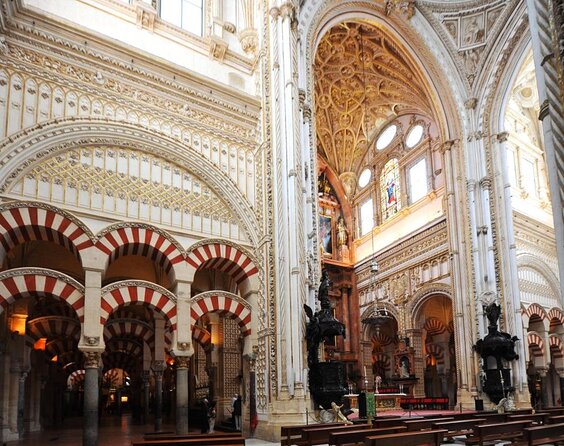
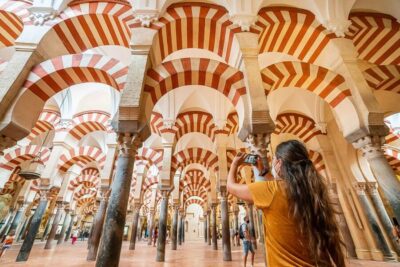
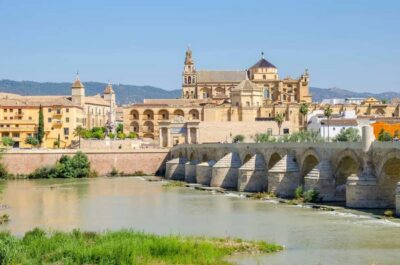
Your final major stop is the Mezquita-Catedral de Córdoba. The guide frames it as a multi-era structure: it began as the Visigoth Basilica of San Vicente, became a mosque, and later became a Christian cathedral.
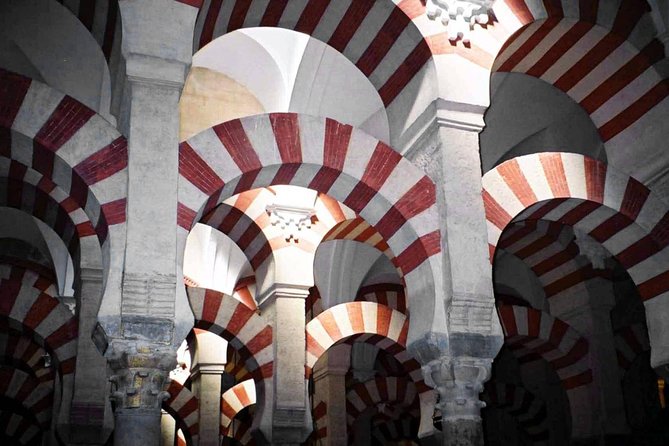
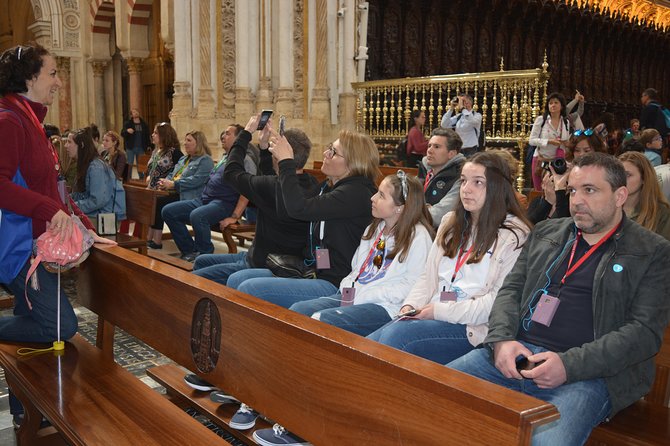
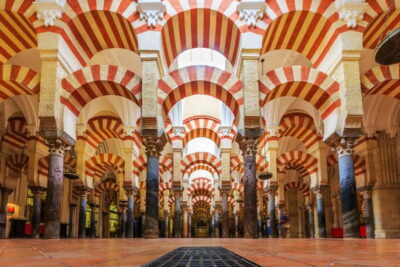
You get about 1 hour here with the included ticket, and the time matters. The Mezquita-Catedral is so visually busy, it is easy to get lost. Having the guide explain what you are seeing in sequence helps you sort the “layers” instead of just taking in patterns.
At the end, because you finish inside, you can stay longer if you want. Many travelers like to linger here after the guided portion ends, since it is one of those buildings where time stretches.
Price and time: is $66.54 worth it for most visitors?
At $66.54 per person, you are paying for two things: guided context and bundled admissions. The tour includes tickets for the Alcázar, the Synagogue, and the Mezquita-Catedral, plus skip-the-line access. You are also buying convenience, because you are not responsible for matching entry times across different monuments.
For travelers who only have a half day in Cordoba, this can feel like good value. You get a “greatest hits” list plus an explanation chain that makes those hits more meaningful.
Where value can drop a bit is when timing issues happen. Because the itinerary relies on timed entry and because groups may mix or wait at certain access points, the tour can run longer than the ideal. When that happens, the cost still covers the same included sights, but your day can feel more rushed.
If you have a strict train or bus after lunch, I would not treat this as a guaranteed on-the-dot 3 to 4 hour experience. Build in a buffer so a wait does not derail your plans.
Who this tour suits best, and who might want a different pace
This works well if you:
- Want the top monuments in one go, without planning every ticket window
- Like learning the story behind the visuals, not just reading plaques
- Appreciate audio receivers for clear narration in busy areas
- Are comfortable walking between nearby stops in the old town
It might feel less ideal if you:
- Need lots of quiet time inside monuments without interruption
- Have a schedule that cannot tolerate delays from crowded access or timed entries
- Prefer to stay longer at one main site, since this is designed to cover several major stops in a single outing
If you love architecture, you will probably like how often Mudéjar style comes up across the Alcázar and the chapel. If you love the Jewish Quarter and expect the synagogue interior, plan your day carefully around its closure schedule.
Should you book this Cordoba Monuments Intensive tour?
I think you should book it if you want Cordoba in a structured, guided format that saves you from logistics headaches. The included tickets plus skip-the-line access are a big part of the appeal, and the audio receivers are the kind of small upgrade that makes the difference between hearing the guide and missing the details.
If you are visiting on a Monday, or if you are traveling during a busy period when lines are likely, have a Plan B for the synagogue. In that case, you may see it from outside, and the small interior time can be shorter than what you hoped for.
Bottom line: if you are short on time and want a guided path through Cordoba’s most important symbols, this tour is an efficient, practical choice. If you are in Cordoba for longer and want a slower, deeper “live in one area” day, you might pair this with self-guided time after the tour, especially around the Mezquita-Catedral.
FAQ
How long is the Cordoba Monuments Intensive Tour?
It runs about 3 to 4 hours.
What time does the tour start, and where does it begin?
It starts at 10:15 am. The meeting point is Av. del Alcázar, 170, Centro, 14004 Córdoba, Spain.
What is included in the ticket price?
Included are the Alcázar de los Reyes Cristianos ticket, the Córdoba Synagogue ticket, and the Mosque-Cathedral ticket, plus audio receivers and skip-the-line access.
Is the tour offered in English?
Yes, it is offered in English.
Will you always visit the Córdoba Synagogue inside?
You will visit whenever possible. The synagogue is closed all day on Mondays, and it is closed in the afternoons on Sundays and holidays. When inside access is not possible, the guide explains it from the outside.
What happens if I cannot visit some sites due to timing or lines?
The tour includes explanations from the outside when an inside visit is not possible, especially for the synagogue.
Can I get a refund if I cancel?
Yes. You can cancel up to 24 hours in advance for a full refund. If you cancel less than 24 hours before the start time, the amount paid is not refunded.
Latest Cordoba reviews into the ledger

Things to Do in Cordoba, compared.
Skip-the-Ticket-Line Mosque-Cathedral Guided Tour
Read our review →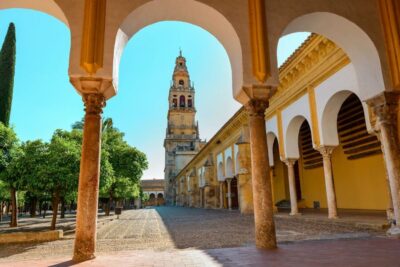
Cordoba Mosque-Cathedral: Skip-the-Line Guided Tour
Read our review →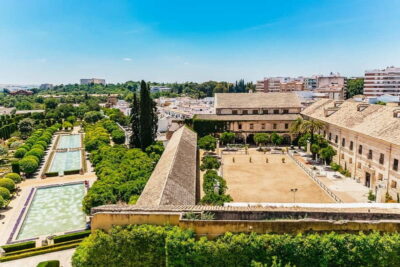

Cordoba Mosque & Jewish Quarter Tour with Tickets
Read our review →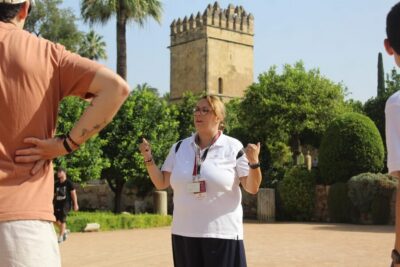
Mosque-Cathedral, Jewish Quarter and Alcázar Tour
Read our review →Browse the lists this tour appears in