
Reviewed · THINGS TO DO IN CORDOBA
Córdoba: Mosque, Jewish Quarter & Tour with Ticket
One ticket, two big Córdoba hits, zero wandering. I like how this tour pairs the Mesquita-Catedral with a smart Jewish Quarter walk, so you get the story behind the stones. The second reason I really enjoyed it is the skip-the-ticket-line entry, which matters in a place this popular. One thing to consider: the site is crowded, and the tour pace can feel packed if you love lingering for photos.
I booked this for a short stop in town, and the timing works well at about 2.5 hours. You start with the Mosque-Cathedral with a certified guide, then move through key streets and squares, ending with the Synagogue visit (when it is open). In past tours, guides like Jaime, Rafael, and Chema have been praised for making details click, especially in the Mosque-Cathedral.
In This Review
- Key things I’d zero in on
- Why this Mosque-Cathedral plus Jewish Quarter combo works
- The skip-the-line entrance: what it changes (and what it does not)
- Patio de los Naranjos and the Bell Tower moment you will remember
- Inside the Prayer Hall: arches, the mihrab, and the building’s changing logic
- The Jewish Quarter walk: how the city’s story changes street by street
- El Zoco, Plaza del Cardenal Salazar, and Calleja de la luna
- Córdoba Synagogue: when you can go in, and when you cannot
- Iglesias Fernandinas: the optional entry you should ask about
- What the guide and headsets change for you
- Shared vs private: choosing the right vibe
- Price and value: what you are really paying for
- Practical heads-up: dress code, photos, and staying after the tour
- Who should book this tour, and who might want a different plan
- Should you book it?
- FAQ
- How long is the tour?
- What is included in the price?
- Is the Bell Tower included?
- Can I visit the Synagogue on Mondays?
- What languages are the tours offered in?
- Are there dress code restrictions?
- Is it suitable for wheelchair users?
Key things I’d zero in on
- Skip-the-ticket-line entry helps you spend time looking, not waiting.
- A monolingual guide keeps the information clear and consistent.
- Headsets mean you can hear the guide in noisy sections.
- Patio de los Naranjos and the Bell Tower exterior view set the mood before the main hall.
- Jewish Quarter streets and landmarks are explained in context, not just as a photo stop.
- Synagogue access depends on the day (it is closed on Mondays), so plan for a possible outside view.
Why this Mosque-Cathedral plus Jewish Quarter combo works
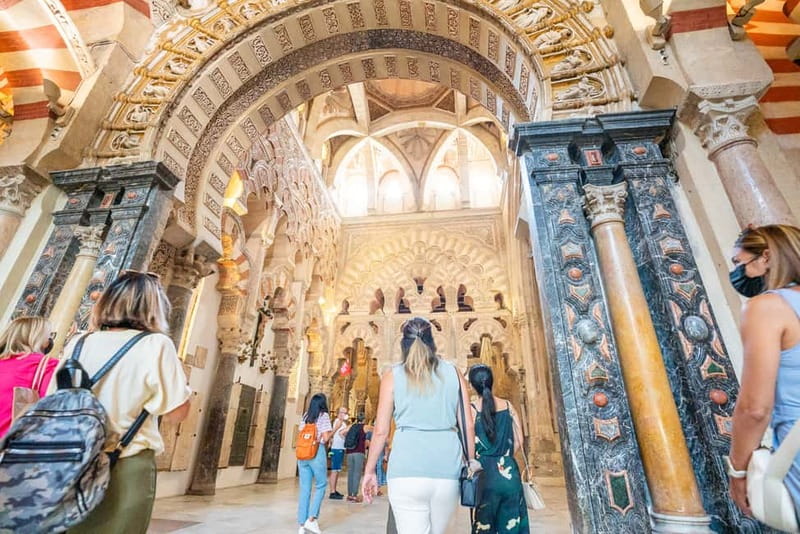
Córdoba has a way of overwhelming you fast. One minute you are staring at red-and-white arches, the next you are trying to remember why this building matters to Spain as a whole. This tour helps you get your bearings quickly by doing two high-impact areas in one tidy block of time.
At $39 per person for a roughly 2.5-hour guided experience, the value comes from what you do not have to manage: lines, confusion, and translating history yourself while you are trying to look around. You pay for a certified guide to connect the dots, plus audio equipment so you do not miss key points. That is a lot to fit into a short visit, and it is exactly what I want when I only have a day in town.
The Jewish Quarter portion is also not random. You hit a sequence of streets and landmark stops that explain how the neighborhood shaped Córdoba’s identity over time. It is one of those walks where you start noticing patterns, like street layouts and viewpoints, and it clicks that history is written into the city plan.
More Things to Do in Cordoba
- Córdoba: Skip-the-Ticket-Line Mosque-Cathedral Guided Tour
★ 4.6 · 9,634 reviews - Cordoba Mosque-Cathedral: Skip-the-Line Guided Tour
★ 4.7 · 6,610 reviews - Córdoba: Jewish Quarter, Mosque, and Alcázar Tour
★ 4.6 · 5,143 reviews - Cordoba: Mosque-Cathedral E-Ticket with Audio Guide
★ 4.1 · 2,895 reviews
The skip-the-line entrance: what it changes (and what it does not)
The best part of any Mosque-Cathedral tour is time control, because the crowds are real. This experience uses skip-the-ticket-line access through a separate entrance, so you begin with momentum instead of waiting under the sun.
Here is what the skip helps with:
- Less time stuck outside while groups funnel through
- More time inside for the guide’s explanations
- A smoother flow between the courtyard, the Prayer Hall, and the next segment
Here is what it does not fix:
- You still move through a heavily visited monument.
- Your free time to roam is limited because this is a guided walkthrough, not open-ended exploring.
So, I see it as a smart choice if you want the essentials well explained and you are okay with a guided pace.
Patio de los Naranjos and the Bell Tower moment you will remember
Before you rush into the interior, you get the courtyard stop: Patio de los Naranjos. I love this part because it slows everything down. The guide frames what you are seeing and why it matters, and you get a peaceful reset before the Prayer Hall steals the show.
Expect:
- A calm courtyard atmosphere with lots of greenery
- Time to notice the space, the light, and the overall layout
- A look at the Bell Tower, with the big detail being that entry to the tower is not included
That last part matters. If you are hoping to climb up for city views, you will need a separate plan. But even without climbing, the Bell Tower feature works as a visual anchor while your guide explains how the complex evolved.
Inside the Prayer Hall: arches, the mihrab, and the building’s changing logic
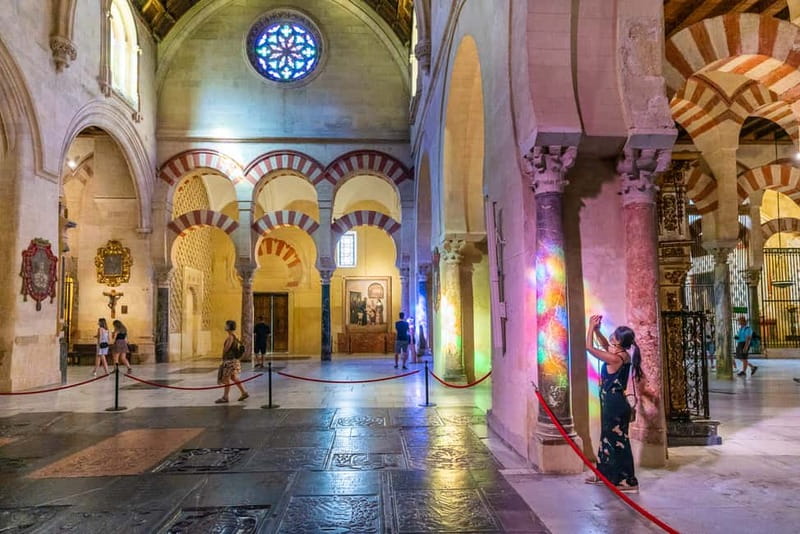
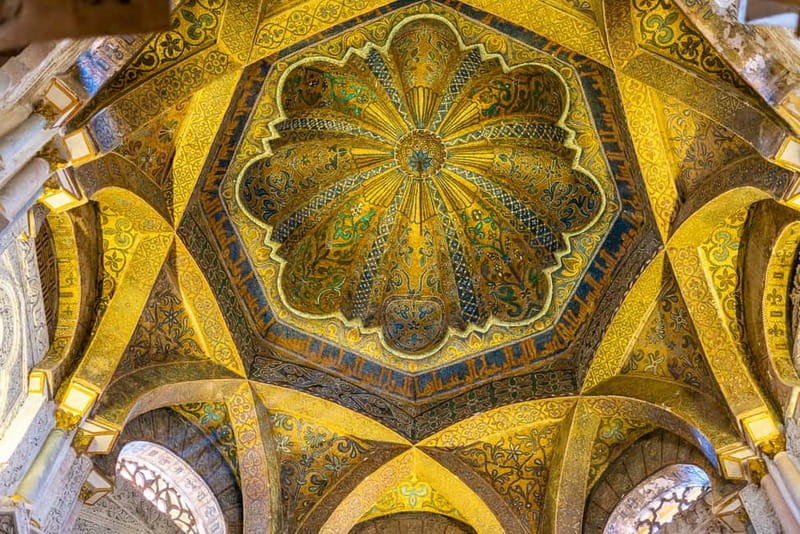
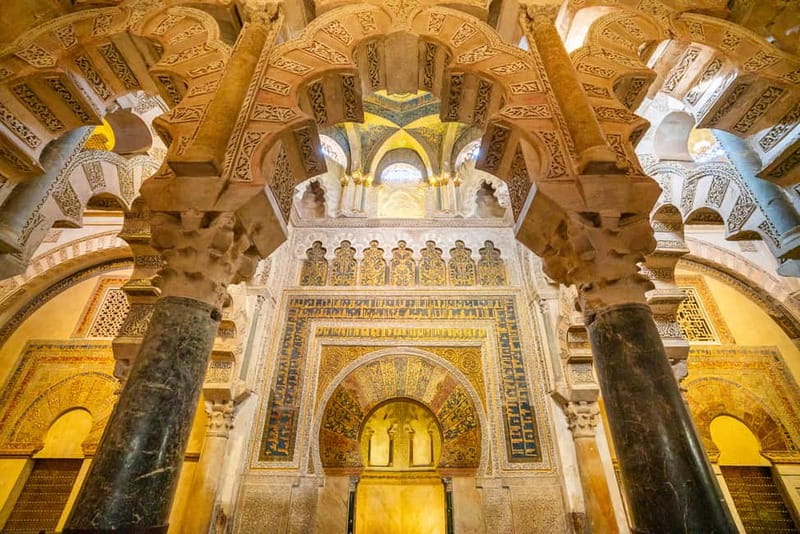
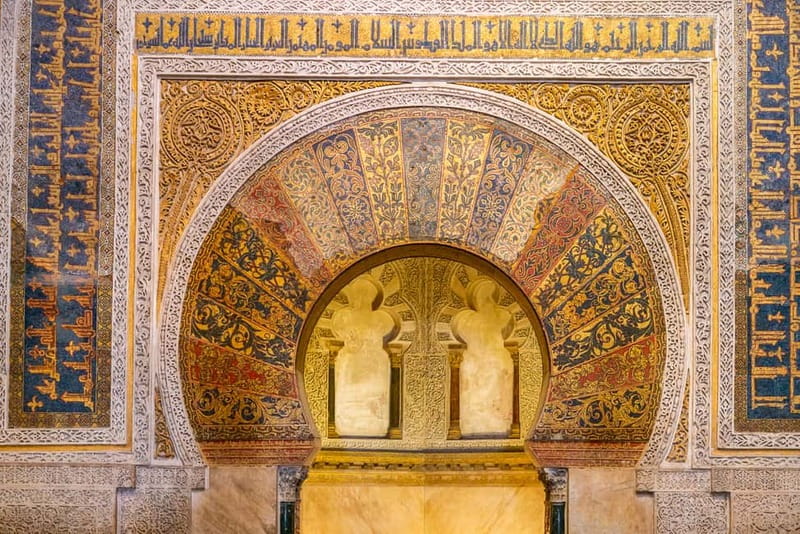
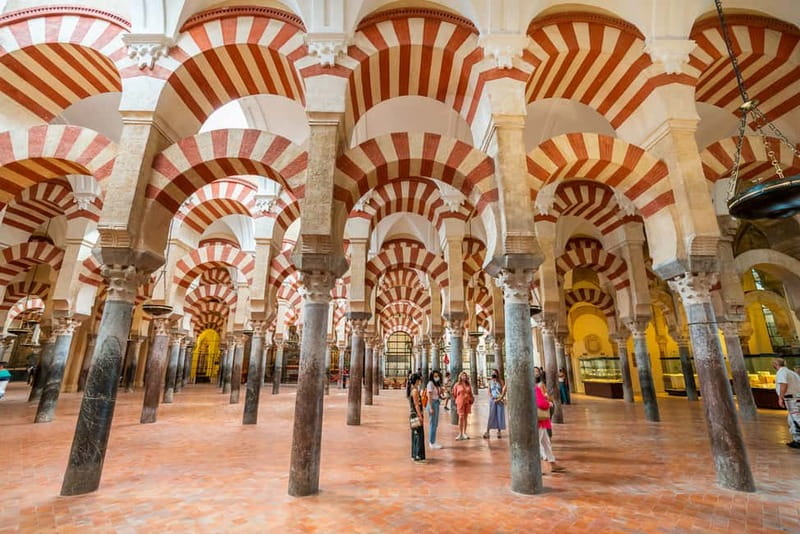
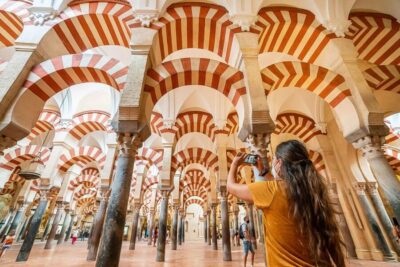
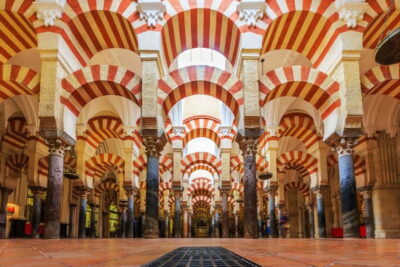
Once you enter, the tour becomes a guided walk through the monument’s most iconic moments. You will see the Prayer Hall, the mihrab, and the famous red and white arches that everyone photographs. The difference here is that the guide does not treat it like a checklist.
Instead, you get the story of expansions and alterations over time, which is what makes the architecture make sense. You are not just looking at decoration. You are learning how layers of rulers and styles left their fingerprints behind.
In practical terms, this means you will:
- Pause at key structures as the guide explains what they are
- Get pointers on hidden architectural details you might miss at full speed
- Learn why certain elements look the way they do, even though the complex changed across eras
I especially liked the way guides can bring clarity to something visually overwhelming. In the praise I saw, people singled out guides like Rafael for unpacking details that could otherwise feel mind-boggling.
One consideration: if you prefer quiet, slow, unguided time for sketching or long photography sessions, this portion might feel like it moves quickly. The Mosque-Cathedral is also crowded, and even the best guide has to keep groups together.
A few more Cordoba verdicts worth reading
- Cordoba Mosque & Jewish Quarter Tour with Tickets★ 4.6 · 1,996 reviews
- Cordoba: Alcazar Guided Tour and Skip-the-Line Ticket★ 4.2 · 1,792 reviews
- Mosque-Cathedral of Córdoba Guided Tour with Tickets★ 4.5 · 1,649 reviews
The Jewish Quarter walk: how the city’s story changes street by street
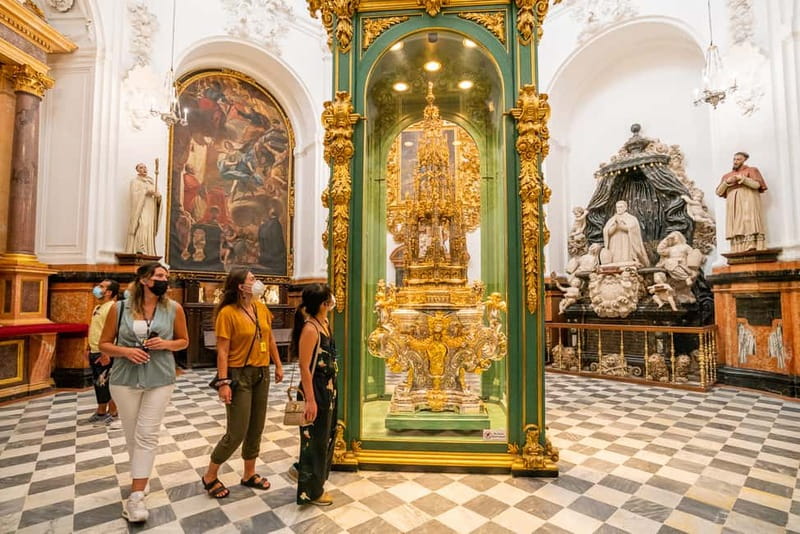
After the Mosque-Cathedral, you pivot to neighborhood history, and that is where the tour starts earning its second ticket. The Jewish Quarter is not just pretty lanes and old stones. It is a place where you can feel how cultures overlapped in Córdoba.
The walk typically begins around Calleja de la Hoguera, where your guide explains the Jewish heritage of the area and why it mattered for Córdoba’s development. From there, you move through key stops that create a clear route through the neighborhood’s identity.
What you can expect along the way:
- A route that keeps you oriented, instead of letting you drift
- Explanations about how the neighborhood functioned socially and culturally
- Landmark points that connect to bigger Spanish and Moorish-era context
If you have ever wondered how to turn a map into a story, this is the tour style that helps. Instead of listing facts, the guide points out what you should be looking for while you walk.
El Zoco, Plaza del Cardenal Salazar, and Calleja de la luna
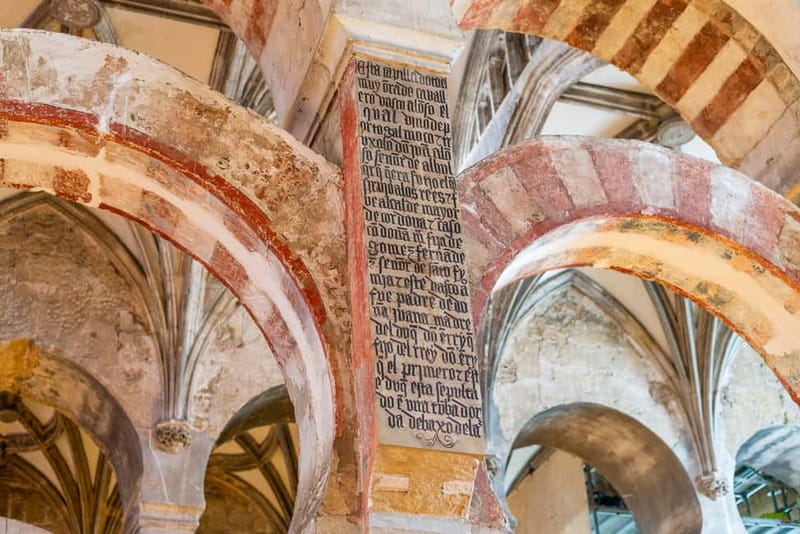
This part is where Córdoba becomes cinematic. You will pass through:
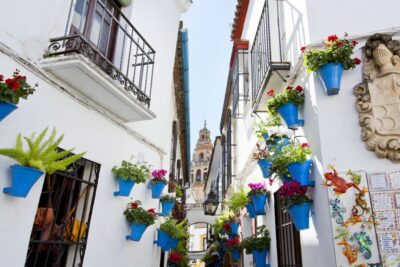
- El Zoco Municipal de la Artesanía, an artisans market area where you can browse and soak up the vibe
- Plaza del Cardenal Salazar, which works well as a brief photo and reflection stop
- Calleja de la luna, the narrow street that people remember because it feels like Córdoba compressed into one lane
You will also get mention of the souk atmosphere and a mix of sights that keep the walk from becoming one long corridor.
One of the most memorable stops is the statue of Maimónides. It is not just a photo moment. The guide uses it as a way to connect the neighborhood back to broader intellectual and cultural influence.
And yes, there are chapels and small corners along the route, like the Chapel of Saint Bartholomew, which you see as part of the guided flow.
Córdoba Synagogue: when you can go in, and when you cannot
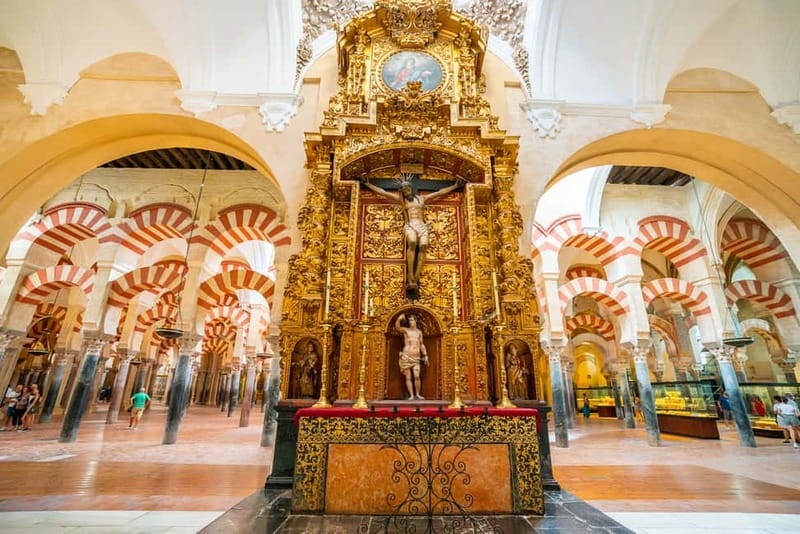
The tour includes the Córdoba Synagogue, and that is a big deal because it completes the Jewish Quarter storyline with a direct stop. The catch is important: the synagogue is closed on Mondays, so on those days you will not be able to visit inside. You can still see it from the outside.
So I recommend planning like this:
- If you are visiting on a Monday, adjust expectations and focus on the exterior and the surrounding context during your walk.
- If you are visiting any other day, you get the full experience with the interior visit.
The time in the synagogue is typically shorter than the Mosque-Cathedral, but it adds real meaning. The moment you can connect the streets you walked with the place where community life unfolded, the history feels less abstract.
Iglesias Fernandinas: the optional entry you should ask about
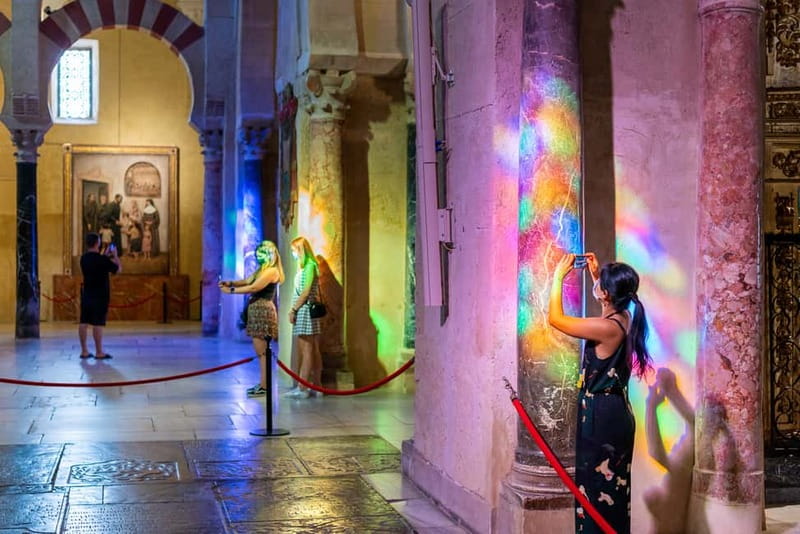
Your tour includes entry for Iglesias Fernandinas, but there is also a note that you can ask the guides for entry of it when you book. I like this setup because it gives your guide a bit of flexibility based on timing and access.
How to use this:
- If the group is moving well and you have time, ask directly whether you can include it.
- If not, you are not losing your main highlights, because the Mosque-Cathedral and Jewish Quarter are the backbone of the tour.
It is one of those “maybe extra” items that can make the tour feel even more tailored.
What the guide and headsets change for you
This tour stands or falls on the quality of the guide, and the praise you will see is strongly about presentation style. People mention guides like Jaime for being entertaining and informative, and Chema for taking time and responding to the group. There is also a recurring theme that guides can explain the architecture clearly enough that you stop feeling lost.
Two practical features help you enjoy the tour more:
- Audio equipment: you get a headset so you can hear without shouting over other groups
- Monolingual guiding: the guide does not switch between multiple languages mid-sentence, so the story stays coherent
That monolingual point is underrated. In crowded monuments, language switching can break rhythm. Here, the info stays consistent.
Small note: children under 10 are not provided with audio equipment, so if you are traveling with kids, plan accordingly.
Shared vs private: choosing the right vibe
You can pick between a shared tour and a private group. Here is how I think about it:
Choose shared if you:
- Like meeting people and keeping energy up
- Want the most efficient way to cover the highlights
- Are okay with group timing and a slightly fixed route
Choose private if you:
- Want more time at fewer stops
- Have accessibility needs that require slower movement
- Prefer a more relaxed pace, especially in crowded areas
Either way, the route is built around the Mosque-Cathedral, the Jewish Quarter walk, and the Synagogue visit when open.
Price and value: what you are really paying for
At $39 per person, the price is not just for access. You are paying for:
- Skip-the-ticket-line entry so you do not burn your limited time
- A certified guide who can explain the complex changes inside the Mosque-Cathedral
- Audio equipment that improves comprehension
- Guided interpretation of the Jewish Quarter route, including key landmarks
Entry to the Bell Tower is not included, so if that climb matters to you, treat it as a separate add-on. Also, if you are visiting on a Monday, the Synagogue visit will be limited to an outside view.
Still, for most people, the value is strong because this is a high-demand site. When you add up the effort of figuring out the best route and the cost of paying for separate tickets or guides, this format tends to be the easiest path.
Practical heads-up: dress code, photos, and staying after the tour
A few rules affect comfort, so it is smart to plan ahead.
Dress and behavior rules:
- No shorts, no short skirts, and no sleeveless shirts
- No tripods
- Unaccompanied minors are not allowed
Tour flow rules:
- You will not be able to stay inside the Mosque-Cathedral after the guided tour. In other words, plan your post-tour photo time elsewhere.
- The ground can be uneven in places, even though the experience is wheelchair accessible and there are no stairs during the tour.
Timing tip I follow in Córdoba: wear shoes you can handle on uneven surfaces, even if the route looks simple on paper. Courtyards and old streets do not forgive flimsy soles.
Also, it can be crowded. One practical takeaway from the less-perfect feedback is this: if you have trouble keeping track of your group in tight spaces, ask your guide early for a clear way to follow (some tours use flags or obvious signals, even if you have to request it).
Who should book this tour, and who might want a different plan
This tour is a great fit if:
- You want the Mesquita-Cathedral explained without feeling overwhelmed
- You have limited time in Córdoba and want a structured route
- You care about the history behind Moorish rule and how it shaped Spain
- You like having a guide point out details you would otherwise miss
It might not be perfect if:
- You want long stretches of free time for photos inside the Mosque-Cathedral
- You prefer a lighter history approach, because the guided format packs a lot into 2.5 hours
- You visit on a Monday and really want the Synagogue interior visit
Should you book it?
If your Córdoba plan includes the Mosque-Cathedral, I’d seriously consider booking this. Skip-the-line entry plus a guide who can explain what you are seeing is hard to beat when time is short. The Jewish Quarter walk adds real context, and the added Synagogue visit is a bonus when it is open.
Book it if you like structure and clear explanations, and especially if you appreciate a guide who teaches in one language at a time. Skip it or adjust expectations if you want maximum freedom inside the Mosque-Cathedral or you are visiting on a Monday when the Synagogue is closed.
FAQ
How long is the tour?
The tour lasts about 2.5 hours.
What is included in the price?
It includes Mosque-Cathedral entry, skip-the-ticket-line access, Iglesias Fernandinas entry, a tour with a certified guide, and audio equipment, along with the guided Jewish Quarter walk and Synagogue visit when possible.
Is the Bell Tower included?
No, entry to the Bell Tower is not included.
Can I visit the Synagogue on Mondays?
No. The Synagogue is closed on Mondays, so you will not be able to visit inside on that day, though you can see it from the outside.
What languages are the tours offered in?
The tour is available in Spanish, French, and English.
Are there dress code restrictions?
Yes. Shorts, short skirts, sleeveless shirts are not allowed.
Is it suitable for wheelchair users?
The tour is wheelchair accessible, and there are no stairs during the tour, but the ground is uneven in several places.
Latest Cordoba reviews into the ledger



Things to Do in Cordoba, compared.
Skip-the-Ticket-Line Mosque-Cathedral Guided Tour
Read our review →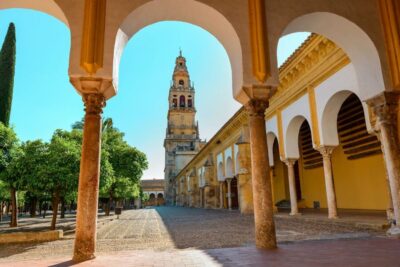
Cordoba Mosque-Cathedral: Skip-the-Line Guided Tour
Read our review →

Cordoba Mosque & Jewish Quarter Tour with Tickets
Read our review →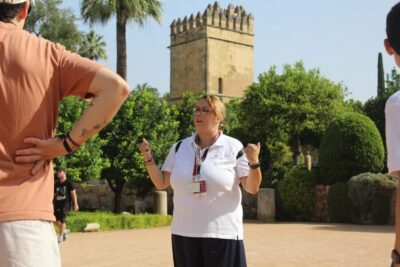
Mosque-Cathedral, Jewish Quarter and Alcázar Tour
Read our review →Browse the lists this tour appears in