
Reviewed · WALKING TOURS
Valencia: City Walking Tour with Top Attractions – ITALIAN
Valencia makes sense on foot. This 2.5-hour walk through the historic center, led by an official Italian guide, strings together Romans, the Middle Ages, and modern Valencia into one easy route. I love that you get the big landmarks without spending your time hunting tickets, and I love the guided anecdotes that turn names on a map into real places you can picture.
One thing to consider: this is mostly an outside sightseeing tour. Entry to museums and palaces is not included, so if you want to go inside specific sites, you will need extra plans.
In This Review
- Key things to know before you go
- A first-timer-friendly Valencia shortcut, in Italian
- Meeting near Plaça dels Furs, right by the Serranos vibe
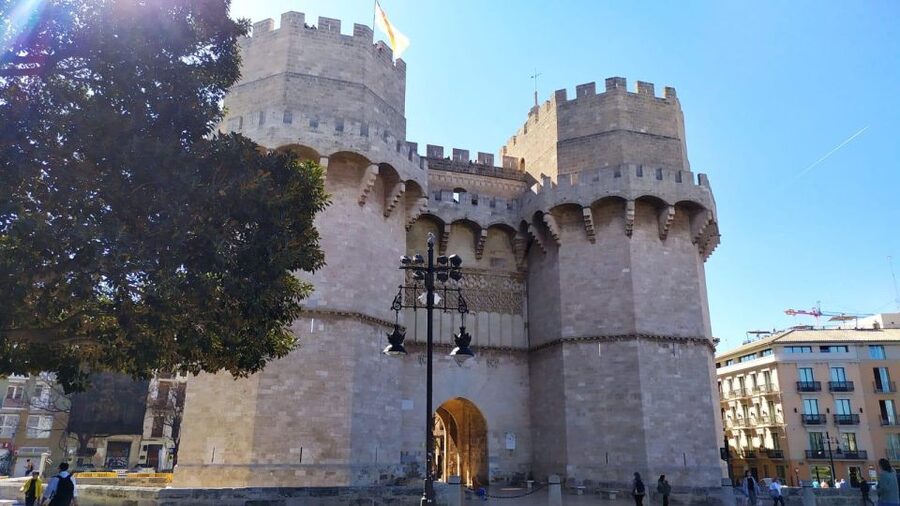
- Torres de Serranos: your timeline starts with stone defenses
- Palace of the Generalitat and Calle Caballeros: power in the middle of life
- Plaza de la Virgen and Plaza de la Reina: squares with guided meaning
- Valencia Cathedral and Micalet: iconic views, no ticket line time
- National Museum of Ceramics and Decorative Arts: learn what to spot
- Plaza del Ayuntamiento and Central Market: where stories meet real movement
- Lonja de la Seda (UNESCO): a strong finale with global recognition
- Price and value: what $17 buys you in real time
- Should you book this Italian Valencia walking tour?
- FAQ
- Where is the meeting point for the tour?
- How long is the Valencia city walking tour?
- What language is the tour guide?
- Is entry to museums and palaces included?
- What’s included in the price?
- What major sights will we see on the route?
- Is the tour wheelchair accessible?
- Is free cancellation available?
Key things to know before you go
- Official Italian guide keeps the story clear, in a language that helps you follow every stop.
- Outside-only highlights means faster sightseeing, but you will not access museum interiors as part of the tour.
- A “2000+ years” timeline covers Romans, the Middle Ages, and today in the same walk.
- Long landmark list in a short time: Serranos Towers, Generalitat, major plazas, Cathedral and Micalet, ceramics, Central Market, and UNESCO Lonja de la Seda.
- Comfort matters: you will be on your feet for 2.5 hours, so solid shoes help.
A first-timer-friendly Valencia shortcut, in Italian
If you have only half a day in Valencia, this kind of guided walk is one of the smartest ways to get oriented. You cover a core loop of the historic center, and the guide ties the sights together so the city stops feeling like a pile of separate postcards.
I also like the tone this tour seems to aim for: friendly, engaging, and packed with details you can actually use when you explore on your own later. You may even hear guide names like Maria Antonietta mentioned in feedback for making the information interesting and easy to follow, not dry or lecture-like. When the tour is going well, you leave with “I get it now” confidence.
You are paying for planning, not just walking. For $17, you are getting an official guide for 2.5 hours to steer you through a dense area where you would otherwise spend time deciding what matters. The value is best if you want a clear route plus history and practical context, without the stress of coordinating each stop yourself.
More Walking Tours in Valencia
- Valencia: Essentials and World Heritages Sites Walking Tour
★ 4.7 · 684 reviews - Valencia: Historical Walking Tour
★ 4.6 · 390 reviews - Valencia: Private Walking Tour with a Local
★ 4.8 · 298 reviews
Meeting near Plaça dels Furs, right by the Serranos vibe
The meet-up point is set behind the Torres de Serranos, near Plaça dels Furs, 5. That’s a useful choice because it anchors your morning right at one of the big entrances into the historic core. You do not waste time starting far away and then backtracking through the same streets.
Bring comfortable shoes and dress for weather. This tour is outdoors for the sightseeing, and the pacing is meant to cover a lot of ground in a short window. If it is hot, you will feel it. If it is breezy, you will feel that too. Pack accordingly and you will enjoy the walking more.
Wheelchair accessibility is listed, which is a big plus if mobility is a concern. Just note that “accessible” and “flat and perfect for everyone” are not always the same thing. If you need extra support, it is smart to plan for a slower pace and give yourself room to move comfortably in crowded plaza areas.
Torres de Serranos: your timeline starts with stone defenses
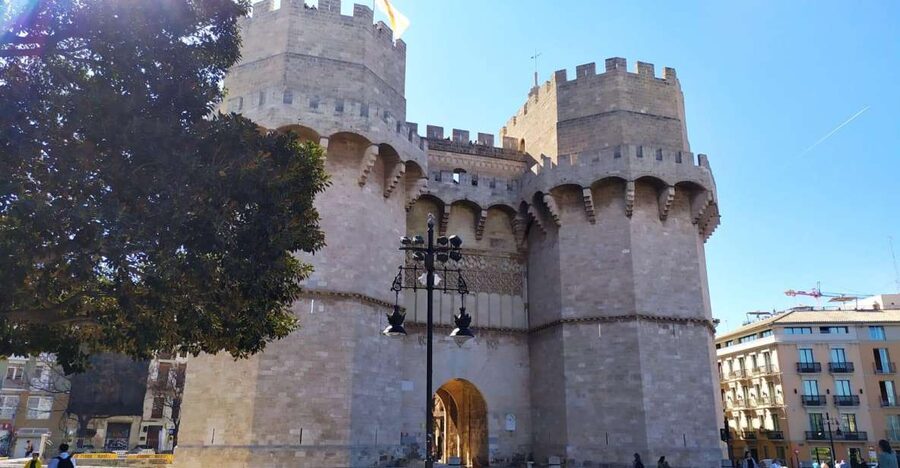
The tour begins at Plaça dels Furs, 5, and then you head to Torres de Serranos. This is where you set the tone for the whole walk. Big exterior monuments like these are perfect for an outside-guided format because the guide can point out what you are seeing at street level, then connect it to what came before.
This is also where the “more than 2000 years” idea becomes real. Valencia’s historic center grew and changed across Roman influence, the Middle Ages, and the city’s later development. When a guide lays out that timeline early, it stops you from treating each plaza as a random stop. Instead, you start to notice patterns.
What I like for your first morning: the Serranos area gives you visual landmarks and street orientation fast. Even if you later choose to wander independently, you will have a strong mental map. The trade-off is what you already know by now: you are not going inside as part of this tour, so your experience is strongest if you enjoy seeing architecture from the street and learning what it represents.
Palace of the Generalitat and Calle Caballeros: power in the middle of life
Next comes the Palace of the Generalitat, followed by Calle Caballeros. This combination works well because it moves you from a monumental building presence into the rhythm of the streets. You get the “what is this building?” moment, and then you get the “how does it sit inside everyday city life?” moment.
Calle Caballeros is the kind of street that can feel busy and easy to speed through on your own. With a guide, it becomes more than a connector. You learn what these surroundings were shaped for and why that matters. The tour promises historical context and anecdotes, and streets like this are exactly where those stories land best, because you can glance around and see the city’s layers while you walk.
A practical tip: keep an eye on signage and building details as you go. Even though the tour is narrated, your brain remembers more when you actively look. If you are the type who likes taking photos, this is a good stretch to do it. Architectural exteriors and old-street angles are your friends here.
More Spanish cities taken on foot:
- Barcelona Tapas and Wine Experience Small-Group Walking Tour★ 5.0 · 5,804 reviews
- Barcelona: Tapas Walking Tour with Food, Wine, and History★ 4.8 · 4,261 reviews
- Madrid Tapas & Wine Tasting Walking Tour – Small Group Local Bars★ 5.0 · 3,644 reviews
Plaza de la Virgen and Plaza de la Reina: squares with guided meaning
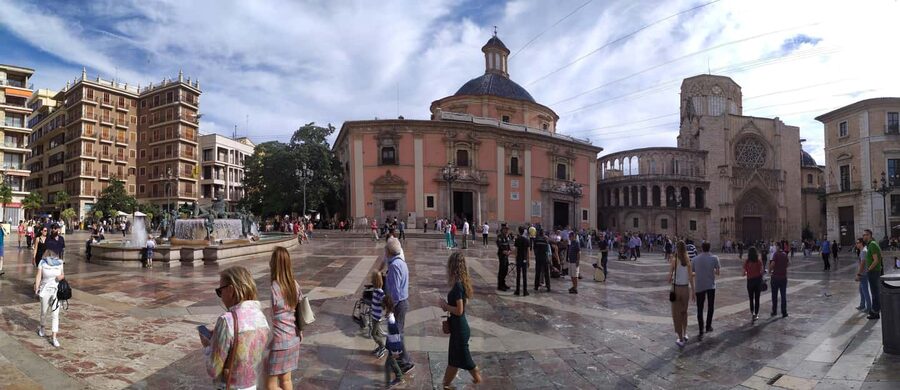
You will then hit Plaza de la Virgen and Plaza de la Reina. In Valencia, plazas are not just waiting rooms for people to meet up. They are stages, and the guide helps you see what each square is for in the city’s story.
These stops are valuable because they slow the walk down just enough for you to reset. You can stand, listen, and look around without feeling like you are constantly moving. For me, that is one of the best advantages of a guided walking tour: the stops are short, but they create breathing space and attention.
The tour is designed to keep you oriented in the historic center, and the plazas help you do that. After the walk, you will likely recognize the geometry of the area, not just individual monuments. That makes it easier to come back later for a café break or a longer wander.
The possible drawback is also connected to the “outside and in-between” format: if you prefer deep time spent inside churches or museums, you might crave more interior access. But if you like a guided route that makes the city readable from the sidewalk, these plazas are a strong fit.
Valencia Cathedral and Micalet: iconic views, no ticket line time
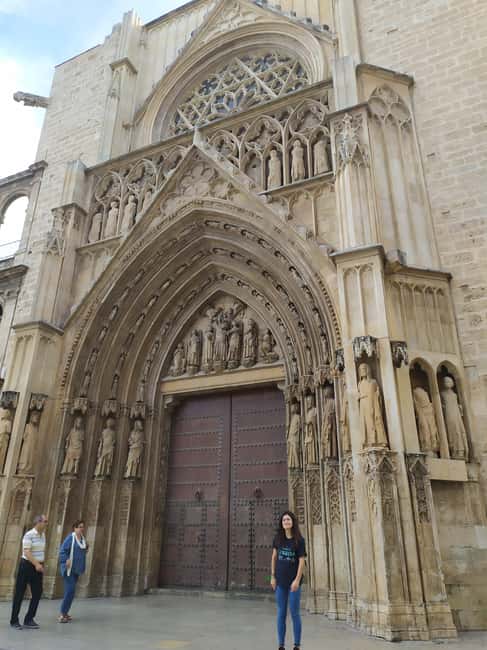
The next major cluster is Valencia Cathedral and the Miguelete Tower (often referred to as Micalet). Even when you only see these from the outside, they are big enough that your brain clicks “this is the landmark zone.” A good guide can then explain how they fit into the city’s development so you are not just looking at beautiful walls.
This stop is also a great example of why an outside-focused tour can still feel worthwhile. You are not losing your day to lines or entry procedures. You are getting the architectural sweep, the visual presence, and the story in the space around you. If you are trying to fit a lot into limited time, this is a real advantage.
What to consider: exterior viewing is not the same as climbing, entering, or reading every detail up close. If your dream Valencia day includes interior-only experiences, plan those separately. You can use this tour to set your priorities, then decide later what deserves your time and tickets.
If you are traveling with someone who wants to “see the highlights” without turning the day into a checklist of paid entries, this is the part they will appreciate most. The Cathedral and tower are naturally camera-friendly, and the guide helps you look beyond the obvious.
National Museum of Ceramics and Decorative Arts: learn what to spot
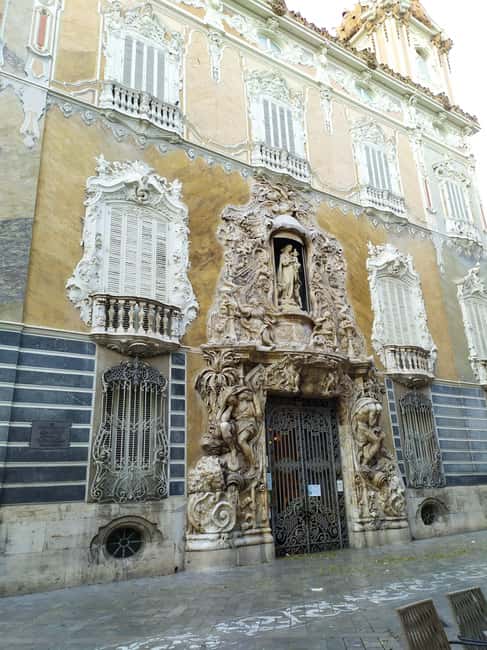
After the Cathedral area, you visit the National Museum of Ceramics and Decorative Arts. Because entry is not included, what you are really getting here is a guided orientation stop. That still has value. Ceramics are part of how Valencia visually communicates its identity, and this is the place where your guide’s explanations help you start noticing details later while you wander.
I like these “thematic stops” because they do something practical. They train your eyes. Even if you do not go inside, you learn what kind of design language to watch for. Later, when you see tiles on a façade or decorative motifs around town, you can connect the dots instead of just admiring shapes.
A small expectation-setting note: since the tour does not include museum entry, do not count on a full gallery visit during this walk. If the ceramics museum is a must for you, think of this as your primer. You will know what you want to pay attention to if you return.
Plaza del Ayuntamiento and Central Market: where stories meet real movement
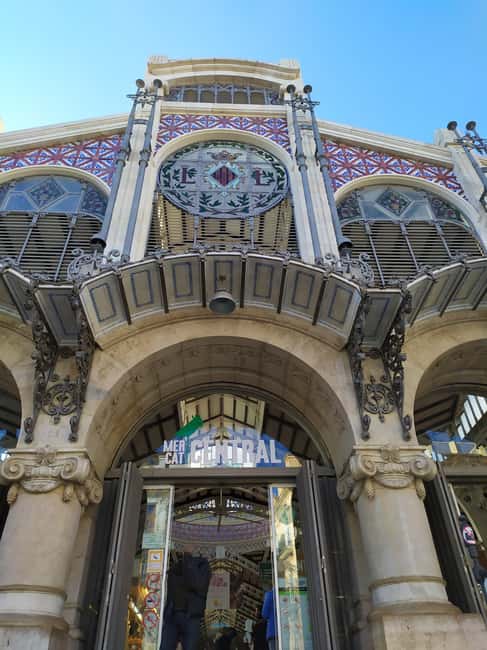
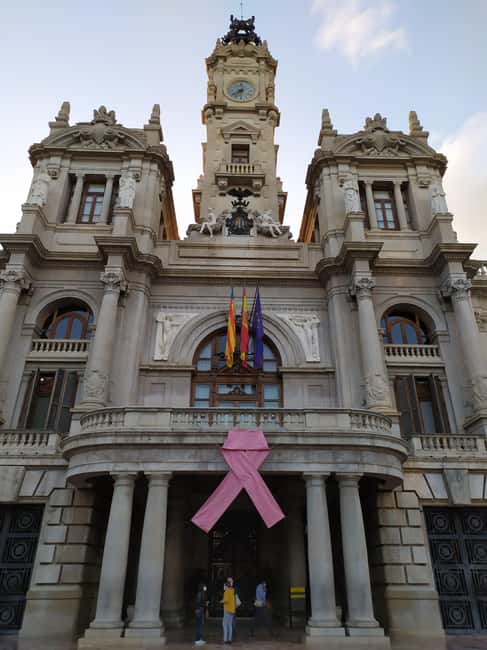
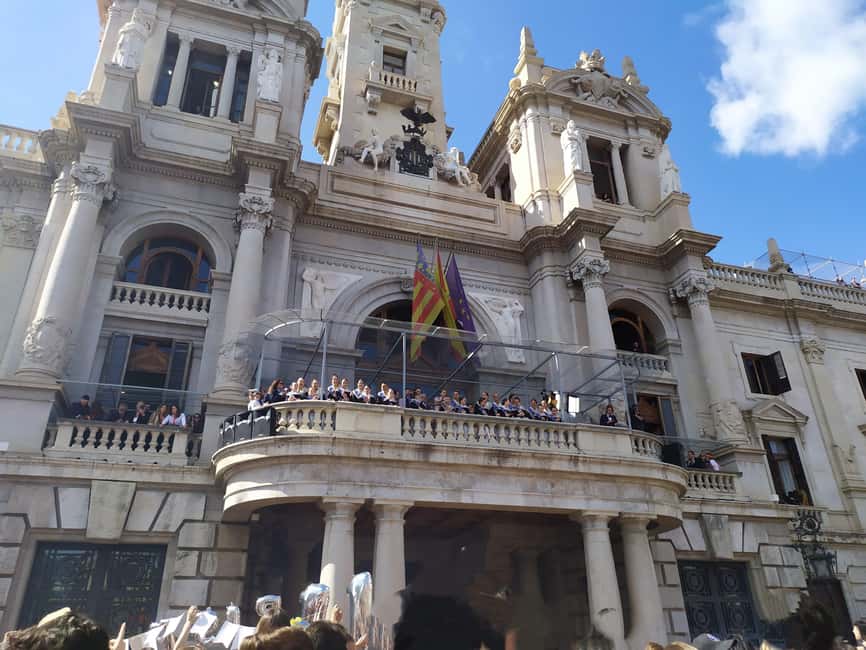
The tour then takes you to Plaza del Ayuntamiento (Town Hall) and Central Market. This is one of the best transitions in the route because it blends monument-focused sightseeing with a more everyday atmosphere.
Even without entering, a market area changes how you understand the city. Valencia feels like a living place, not just a museum district. The guide’s job is to connect the historic story to what you can still see in the present moment, and market neighborhoods are perfect for that. You get the sense of continuity, and you also get a better sense of where you might come back to eat or browse later.
Practical value for your future self: once you understand where Central Market sits in the flow of the center, you can plan food time without last-minute scrambling. If you want a smooth day, it helps to know where the action is, even if this tour does not include food.
The downside is simple: markets and plazas can be crowded, and the guided time is limited. If you want to linger, you will need a follow-up stop on your own. That said, a 2.5-hour tour is not meant to replace a full exploration. It is meant to give you momentum and direction.
Lonja de la Seda (UNESCO): a strong finale with global recognition
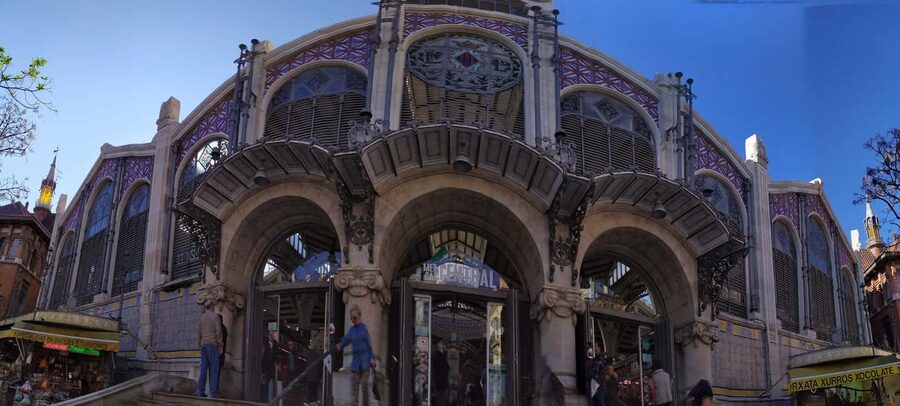
Finally, you reach Llotja de la Seda (UNESCO Heritage). Finishing with a UNESCO site is a smart choice for a walking tour, because it gives the last stop a clear “big deal” identity. Even from the outside, the guide can tie it back to the city’s historical arc, connecting trade-era significance to what you have already seen across the tour.
This is also a satisfying way to end because it feels like a conclusion. You have moved through towers, palaces, plazas, a cathedral landmark zone, a ceramics stop, and a market area. By the time you get here, you are ready for a final nod to why the historic center matters beyond Valencia itself.
If you are trying to decide between doing a guided walk versus a purely self-guided route, the UNESCO finish is a strong argument for the guided option. You get context that helps the site land emotionally, not just visually.
Price and value: what $17 buys you in real time
At $17 per person, the value is mostly in time saved and focus gained. You are paying for an official guide who can connect a lot of landmarks into a single coherent walk, covering many of the city’s big names in 2.5 hours. Without a guide, you could still visit these places, but it is easy to wander in circles, miss context, or leave without understanding what you just saw.
The other value factor is convenience. This tour keeps you moving through the heart of Valencia rather than hopping across multiple neighborhoods. It is built for orientation. You leave knowing the center’s layout, and that makes the rest of your trip easier.
One more balanced note: entry to museums and palaces is not included. So if you want a tour that functions like a combo ticket, this will not be it. Still, for many travelers, that is not a flaw. Skipping entries can mean less waiting and a smoother day, especially if you are also planning other activities.
Should you book this Italian Valencia walking tour?
I think you should book it if you want a guided way to get your bearings fast, see the top landmarks of the historic center, and learn how the city connects across time. It is especially appealing when you travel with someone who prefers walking and explanations over paying for multiple interior tickets.
Skip it or treat it as a partial plan if you mainly want museum interiors or cathedral access during the same 2.5 hours. Since the tour keeps things external and does not include entry, you will likely want to add one or two ticketed experiences on a separate outing.
If your biggest goal is to understand Valencia’s center in a short, well-paced slice, this is a good deal, and the tone from guides is clearly meant to feel friendly and engaging. When you finish, you should be ready to return on your own with sharper eyes and fewer questions.
FAQ
Where is the meeting point for the tour?
The meeting point is the piazza behind the Torres de Serranos.
How long is the Valencia city walking tour?
The duration is 2.5 hours.
What language is the tour guide?
The live tour guide speaks Italian.
Is entry to museums and palaces included?
No. Entry to museums and palaces is not included.
What’s included in the price?
The tour includes official tourist guides.
What major sights will we see on the route?
You’ll get external guided views of Serranos Towers, Palace of the Generalitat, Plaza de la Virgen, Water Court, Plaza de la Reina, Valencia Cathedral and the Miguelete Tower, the National Museum of Ceramics and Decorative Arts, Plaza del Ayuntamiento, Central Market, and Llotja de la Seda (UNESCO Heritage).
Is the tour wheelchair accessible?
Yes, the tour is wheelchair accessible.
Is free cancellation available?
Yes, you can cancel up to 24 hours in advance for a full refund.
Latest Valencia reviews into the ledger




Walking Tours, compared.
Barcelona Tapas and Wine Experience Small-Group Walking Tour
Read our review →
Tapas Walking Tour with Food, Wine, and History
Read our review →
Madrid Tapas & Wine Tasting Walking Tour – Small Group Local Bars
Read our review →
Albaicín and Sacromonte Guided Sunset Walking Tour
Read our review →
Toledo Tour & Vineyard Walk with Wine Tasting from Madrid
Read our review →
Madrid Walking Tour from Puerta del Sol to Retiro Park
Read our review →

Barcelona Tapas Walking Tour: Food, Wine & History
Read our review →Browse the lists this tour appears in