
Reviewed · EL ESCORIAL DAY TRIPS
Royal Site of San Lorenzo de El Escorial Entrance Ticket
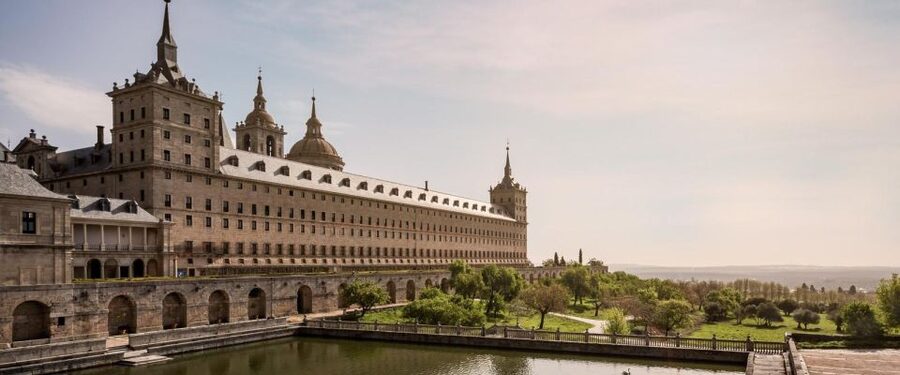
El Escorial looks stern, then rewards you inside. This San Lorenzo de El Escorial entrance ticket is a one-day ticket into the Spanish Golden Age, built for the reign of Philip II and filled with art you feel in your bones, not just your eyes.
I really like the contrast between the fortress-like exterior and the frescoes and royal decoration waiting inside, plus the maintained outdoor gardens and big mountain views when weather plays along. One drawback to keep in mind: this is an admission-only ticket, so you’ll do most of the interpreting yourself.
If you want someone to turn the stones into stories, you might want to plan for extra help on your side. And because this is a self-guided flow, you should double-check exactly where you enter so you do not waste time.
In This Review
- Key highlights to notice before you go
- El Escorial’s severe exterior, colorful interior
- Price and value: why $21 can be worth it
- Getting there from Madrid without turning your day into a slog
- Entering San Lorenzo el Real: the St. Jerome foundation
- The Basilica erected in 1574, plus the “big rooms” route
- Renaissance buildings, gardens, and the art blend you can actually see
- Juan de Villanueva’s role: when Spanish Renaissance meets design
- Royal power in the crypt and the Charles V connection
- Gardens plus Valley of the Fallen basilica and Sierra de Guadarrama views
- How to plan your one-day visit so you do not rush the important parts
- Accessibility note and who should consider other options
- Who this entrance ticket is best for
- Should you book this Royal Site of San Lorenzo de El Escorial ticket?
- FAQ
- What is the price for the Royal Site of San Lorenzo de El Escorial entrance ticket?
- How long is the experience?
- Is a guide included with the ticket?
- Does the ticket include a skip-the-line or express security check?
- Is the ticket refundable if my plans change?
- When will I receive my booking confirmation?
- Are starting times guaranteed?
- Where is this attraction located?
- Is this experience suitable for people with mobility impairments?
Key highlights to notice before you go
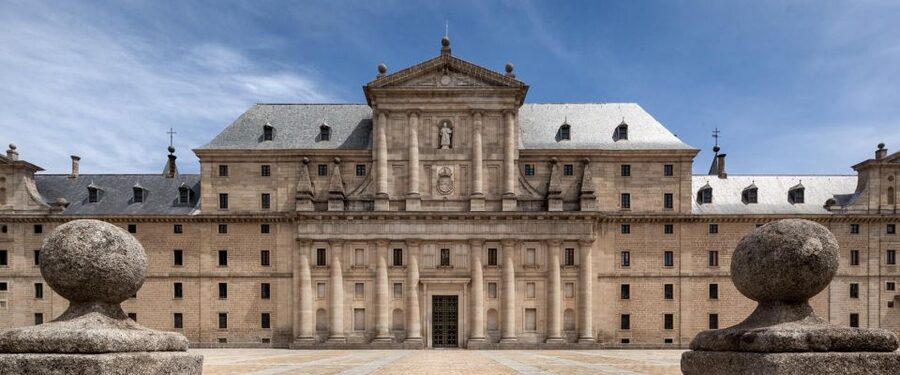
- Inside vs outside contrast: fortress exterior, colorful interiors, and a feeling of ordered power
- The monastery’s original purpose: built for monks of the order of St. Jerome
- Key stop at the heart of the complex: the Basilica erected in 1574
- Art across borders: Italian and Flemish artistic forms showing up in Renaissance-style work
- Juan de Villanueva’s influence: architect and artist Juan de Villanueva appears in the collection
- Views beyond the walls: Valley of the Fallen’s basilica and the Sierra de Guadarrama range
El Escorial’s severe exterior, colorful interior
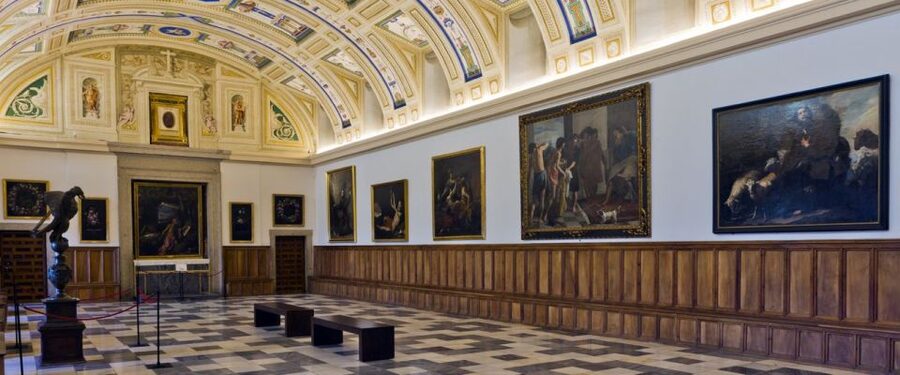
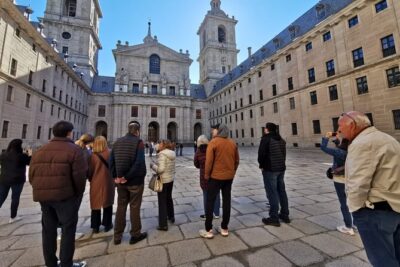
El Escorial has a reputation for looking severe from the outside, almost like a building designed to keep people in line. That is exactly why the inside hits so hard. You go from stone and austerity to rooms that feel planned, decorated, and intentionally theatrical, including frescoes and royal decorations.
I also like that the complex does not pretend to be only one thing. It was designed as a monarchy-centered spiritual site, with multiple functions layered in one place. So even if you are not a diehard art historian, you still get that sense of how Philip II wanted Spain to look, think, and behave.
And yes, the exterior can throw people off. If you arrive expecting a pretty palace first, you might feel disappointed at the start. Give it time. The payoff is in the way the interior spaces guide you.
More visits to the granite monastery:
- Escorial Monastery and the Valley of the Fallen Tour from Madrid
★ 5.0 · 2,494 reviews - From Madrid: Escorial Monastery and the Valley of the Fallen
★ 4.7 · 1,434 reviews - Escorial Monastery and the Valley of the Fallen from Madrid
★ 4.0 · 1,023 reviews - From Madrid: El Escorial and Valley’s Basilica Half Day Tour
★ 4.4 · 638 reviews
Price and value: why $21 can be worth it
This ticket is listed at $21 per person for a one-day visit. That price is mostly for admission, with an important bonus: you get skip-the-line style express security screening.
Here is how I think about value for a place like this. You are paying to enter a large, important complex without turning your day into a logistics puzzle. If you are visiting when crowds are heavier, the express security check can save your energy for the rooms that matter.
Still, you should know what is not included. There is no guide bundled here. That matters because El Escorial can be dense. If you love reading in museums and enjoy piecing together context from what you see, you will be fine. If you want someone to explain every symbol and political move, you may feel like you are missing half the show.
There is also a small practical concern from the way this is sold. When an admission-only ticket is booked through a platform, you need to be precise about entry points and timing. One wrong assumption can cost you time, even if the ticket itself is valid.
Getting there from Madrid without turning your day into a slog
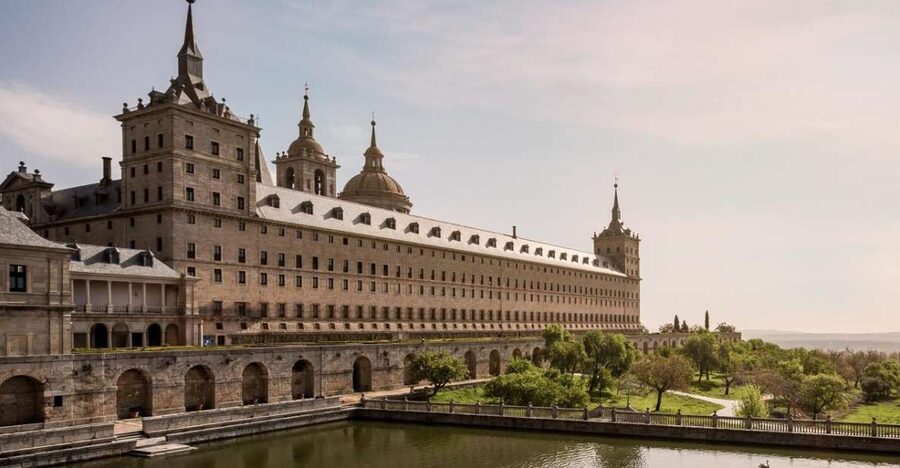
El Escorial is close enough to feel like a day-trip that does not wreck your schedule. A good pattern is train from Madrid first, then walk the last stretch uphill.
From what I’ve seen people describe, the train ride is under an hour, and the walk from the station to the monastery takes around 25 to 30 minutes uphill. That uphill walk is short enough to be manageable, but long enough that you will want comfortable shoes and a light layer, especially if you hit cold or foggy weather.
If you are visiting in winter or shoulder season, plan for slower pace. Thick fog can make exterior buildings less photogenic, but it can also make the interior feel even more dramatic. If you are thinking about photos, know this: the gardens and views can look amazing on a clear day, while fog can flatten the scenery fast.
Entering San Lorenzo el Real: the St. Jerome foundation
Once you step in, the monastery’s original mission becomes clear: this was built for monks of the order of St. Jerome. That matters because El Escorial is not just a royal museum. It is a religious complex designed around monastic life, formal order, and long-term sacred use.
As you move through the spaces, pay attention to how the site organizes movement. Monasteries often feel like they are built to control flow, and El Escorial follows that logic. You can still enjoy it as an art stop, but the structure helps you understand why the building feels so powerful.
This is also where the political layer starts to matter. The complex ties itself to major rulers, including Emperor Charles V and his wife, who once lived there. Even if you only catch pieces of that story on signage, you can feel the idea: spiritual purpose, royal authority, and national identity in one architectural plan.
More Things to Do in Madrid
- Madrid: Tour Bernabéu Entry Ticket★ 4.5 · 21,573 reviews
- Madrid: Prado Museum Entry Ticket★ 4.6 · 20,699 reviews
- Madrid: Royal Palace Fast-Access Admission Ticket★ 4.6 · 13,856 reviews
The Basilica erected in 1574, plus the “big rooms” route
One of the best anchor points for a self-guided visit is the main religious space. In this complex, you will come across the Basilica, built and erected in 1574. That date is a useful mental marker because it places the complex firmly in the heart of the Spanish Renaissance push under Philip II.
From there, you’ll want to connect the dots through the complex’s major civic and royal functions. A practical way to think about your path is to move from more spiritual spaces to more formal administrative or royal spaces. The description of what you’ll see highlights a walk through from the Library to the palace, and then into the Basilica area.
So, when you plan your time, do not just chase the biggest room. Give yourself time for the transitions between them. Those in-between spaces often show you how the whole site is meant to work as one controlled world.
Also, look for the kinds of artwork and decorations that take effort and time. El Escorial’s reputation rests on the idea that years of work went into artistic finishing. If you spot a fresco or decorative panel that feels polished and purposeful, take the extra minute and read what you can. The effort is the point.
Renaissance buildings, gardens, and the art blend you can actually see
El Escorial is described as a place where Spanish Renaissance ambitions meet artistic influence from other parts of Europe. You are told to expect a blending of Italian and Flemish artistic forms. That means the style can feel both classic and slightly international at the same time.
What I’d do as you walk: use your eyes like a map. When you see architectural details, notice their function first. Then notice the decoration second. If you reverse that order, the art becomes background. If you start with structure, the art becomes evidence.
The gardens are part of this experience too. The outdoor spaces are presented as well-maintained, and they help you break up the intensity of interior rooms. You can treat the gardens as your reset button, then head back into the complex with fresh attention.
And since weather changes quickly in this part of Spain, treat outdoor time as flexible. On a clear day, you should get stronger views. On a foggy day, the gardens still work, but the mountain view will be reduced.
Juan de Villanueva’s role: when Spanish Renaissance meets design
One named figure you should keep on your radar is Juan de Villanueva, listed as architect and artist. Even if you do not catch every detail on the first pass, having a specific name gives you a thread to follow when you see signed works or parts of the building linked to his influence.
I like encounters like this because they turn a huge complex into something you can track. Instead of thinking, This place is big and I’m overwhelmed, you think, I will spot where Villanueva fits into this story.
If you are someone who enjoys architecture, this is one of the stronger reasons to book the specific entry ticket rather than only doing a quick exterior viewing. El Escorial is the kind of site where a name like Villanueva can guide your attention to the right details.
Royal power in the crypt and the Charles V connection
The complex is tied to royalty in multiple layers. Beyond the visible royal decoration, there is also a crypt that houses royals connected to the people who once used the site.
If you want a self-guided “emotional high point,” this is a good candidate. Crypts reduce the scale of history. You are not watching power from a distance. You are stepping into a space built for memory and status that has been physically kept and protected.
And remember the Charles V link. The site description notes that Emperor Charles V and his wife once lived there. Even if you do not have every fact memorized, you can use that information to look for royal cues: formal rooms, carefully arranged spaces, and art choices that reflect official taste rather than everyday practicality.
This is where the monastery becomes more than a building. It becomes a statement about who belonged to the future of Spain.
Gardens plus Valley of the Fallen basilica and Sierra de Guadarrama views
This ticket experience is described as including views beyond the monastery itself, including the Valley of the Fallen’s basilica and the Sierra de Guadarrama mountain range.
Even if you only get short viewing moments, these stops matter because they remind you that El Escorial was not created in a vacuum. The idea of Spanish power was meant to be seen in both architecture and geography, with mountains as the backdrop for a very controlled national story.
Also, the views can change drastically by time of day and weather. Foggy, cold days can hide the dramatic mountain lines, but the mood can still work. One practical tip: if you find yourself planning around photos, aim to keep your outdoor-view time flexible, not rigid. You will get more satisfaction when you treat the conditions as part of the day.
The Sierra de Guadarrama range is a natural complement to the day. It gives you a way to switch gears after indoor Renaissance intensity.
How to plan your one-day visit so you do not rush the important parts
Because there is no guide included, you’ll want to plan a pacing strategy before you start walking. I suggest a simple mental order:
- Start with the big architectural anchor, then work outward. The 1574 Basilica is a good anchor.
- Use the Library and palace areas to understand the complex as a functioning royal-monastic world, not just a church and a few rooms.
- Save time for the artworks and decorations that look like they took long-term work. If it feels carefully finished, slow down.
- Take one break in the gardens if weather allows, then return to the interior areas with more attention.
Since the complex is large, you should also expect that your day might expand or shrink depending on how long you linger. Self-guided visits are good for that. You decide whether you want a quick lap or a deeper scan of the details.
One more practical point: if you arrive and the entrance process feels confusing, do not panic. Follow the signage and focus on getting into the main complex quickly, then you can slow down inside.
Accessibility note and who should consider other options
This activity is listed as not suitable for people with mobility impairments. That likely means the experience involves walking areas that can be hard to navigate.
If you have limited mobility, it is worth considering whether a self-guided ticket will match your needs, since there is no guide included to help you time stops or move through difficult areas. If you can manage long museum-style walking, you may be fine. If not, consider an alternative format that is explicitly accessible.
Who this entrance ticket is best for
I’d point you to this ticket if you like big architecture, Renaissance art, and the way political power shows up in buildings. It is especially good for:
- Independent travelers who enjoy signage, maps, and self-guided pacing
- People interested in Philip II’s era and Spanish statecraft through art
- Architecture lovers who want to see where Juan de Villanueva fits into the site
- Day-trippers from Madrid who want a full cultural block without committing to a long overnight trip
You may want a different option if you need a guided explanation to understand what you’re seeing, because the ticket includes admission only, not a guide.
Should you book this Royal Site of San Lorenzo de El Escorial ticket?
Book it if you want an efficient, ticket-in-hand way to get into one of Spain’s most politically loaded religious complexes. The price is reasonable for admission, and the express security check is a real practical benefit when you have a limited day.
Do not book it on autopilot if you hate self-guided museums or if you expect staff to act like a narrator. This is made for you to walk, look, and connect the dots yourself. If you prefer someone to explain every chapel and symbol, you might pair this with a separate guide for context.
If you plan your pacing, wear good shoes for that uphill approach from the train, and give the interior time to change your first impressions, you’ll come away feeling like El Escorial was more than just stern walls and stone corridors.
FAQ
What is the price for the Royal Site of San Lorenzo de El Escorial entrance ticket?
The ticket price is listed as $21 per person.
How long is the experience?
The experience is listed as 1 day.
Is a guide included with the ticket?
No. The admission ticket is included, but a guide is not included.
Does the ticket include a skip-the-line or express security check?
Yes. It includes an express security check.
Is the ticket refundable if my plans change?
No. The activity is non-refundable.
When will I receive my booking confirmation?
After you purchase, you receive a booking confirmation within 48 hours.
Are starting times guaranteed?
Starting times depend on availability, and you can check the available times when booking.
Where is this attraction located?
It is located in the Community of Madrid, Spain.
Is this experience suitable for people with mobility impairments?
No. It is listed as not suitable for people with mobility impairments.
Latest Madrid reviews into the ledger





El Escorial Day Trips, compared.
Escorial Monastery and the Valley of the Fallen Tour from Madrid
Read our review →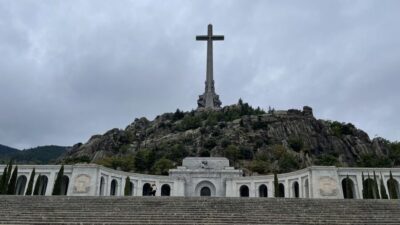
Escorial Monastery and the Valley of the Fallen
Read our review →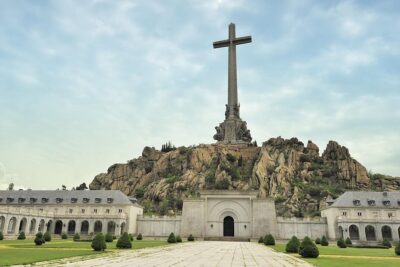
Escorial Monastery and the Valley of the Fallen from Madrid
Read our review →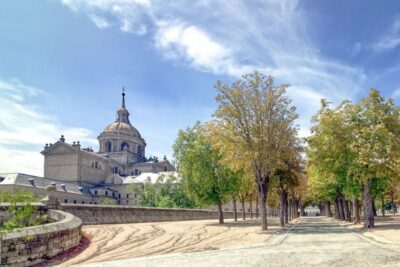
El Escorial and Valley’s Basilica Half Day Tour
Read our review →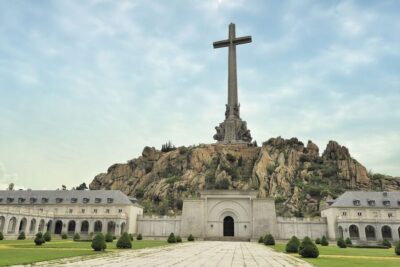
Browse the lists this tour appears in