
Reviewed · CADIZ TOURS
Andalusian Horses Dance Show
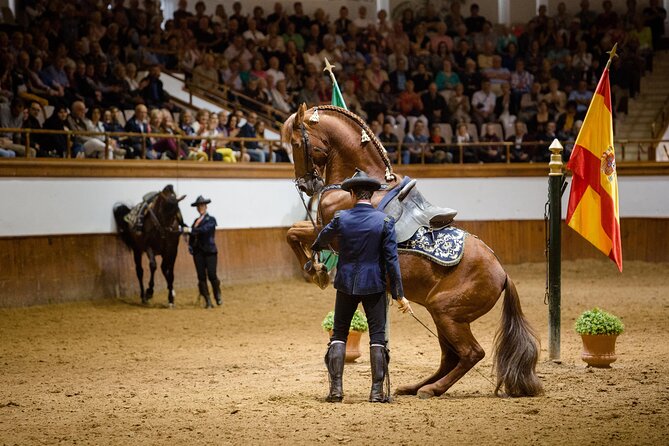
Horses do ballet in Jerez. What makes the Andalusian Horses Dance Show special is how it strings together multiple styles of Andalusian horsemanship in one tight performance at the Royal Andalusian School of Equestrian Art in Jerez. I especially love the way the horses and riders shift gears, from collected classical dressage into more dramatic work like doma vaquera.
You’ll also really appreciate the range, because you are not just watching one discipline. You get moments like work in hand (horses performing Haute École style exercises from ground cues) plus carriage driving with classical harness. The main drawback to consider is seating: tickets are sold by category, so you cannot choose a specific row or seat, and a few seats may have a restricted view of parts of the arena.
In This Review
- Key Things To Know Before You Go
- A 90-Minute Hit of Andalusian Horse Art in Jerez
- Where the Show Happens: Fundacion Real Escuela and the Royal School Grounds
- What You’ll See First: Doma Vaquera and the One-Hand Skills
- Classical Dressage Segments: The Colts to Airs Above the Ground
- Work in Hand: When the Horse Answers From Ground Cues
- Carriage Driving and Classical Harness: Old School, Sport Style
- The Carrousel Finale: Horses and Riders in Unison
- Price and Seating Reality: Is It Good Value?
- Getting There: Timing, Parking, and the Taxi Trap
- Who This Show Fits Best (and Who Might Not)
- Should You Book the Andalusian Horses Dance Show?
- FAQ
- What time does the Andalusian Horses Dance Show start?
- How long is the show?
- Where do I redeem my voucher for tickets?
- What is included in the price?
- Can I choose my seats?
- Is photography or filming allowed?
- Is the show suitable for most people and families?
Key Things To Know Before You Go
- A mix of 6 to 8 choreographies per show, chosen from a set repertoire that includes doma vaquera, classical dressage, carriage driving, work in hand, and a carrousel finale
- Category seating, no seat selection, so higher seats often mean a safer view
- Weather matters, since the arena can get warm in summer
- Spanish-only narration is possible, so bring the mindset that you will mainly read the action, not translate the program
- Arrive early if you can, because the grounds and warm-up moments can be part of the fun
- No photos or filming unless you are an authorized professional, so plan to enjoy with your own eyes
A 90-Minute Hit of Andalusian Horse Art in Jerez
If you want a trip that feels both traditional and genuinely fun, this show is a smart pick. It runs about 1 hour 30 minutes, which is long enough to see real variety, but short enough that the experience stays sharp and focused.
This is one of those Andalusia experiences where the details matter. The horses are not just jumping through tricks. You’ll see rhythm changes, collected movements, and precision work that comes from a long equestrian tradition. The music and pacing keep it watchable even if you are not a hardcore horse person.
I like that the show is designed as a sequence of different choreographies, not one long routine. That matters because the spotlight keeps moving. One segment is built around control and tempo, the next one leans into athletic showmanship, and the finale snaps it all together in the center of the arena.
A few more Cadiz verdicts worth reading
- Jerez de la Frontera: How the Andalusian Horses Dance
★ 4.6 · 6,168 reviews - El Salobre: Horse Riding Adventure with Transfer Options
★ 4.5 · 2,034 reviews - Jerez de la Frontera: Andalusian Horse Dance and Museums
★ 4.7 · 1,289 reviews - Jerez: Yeguada de la Cartuja Carthusian Horses Tour
★ 4.8 · 970 reviews
Where the Show Happens: Fundacion Real Escuela and the Royal School Grounds
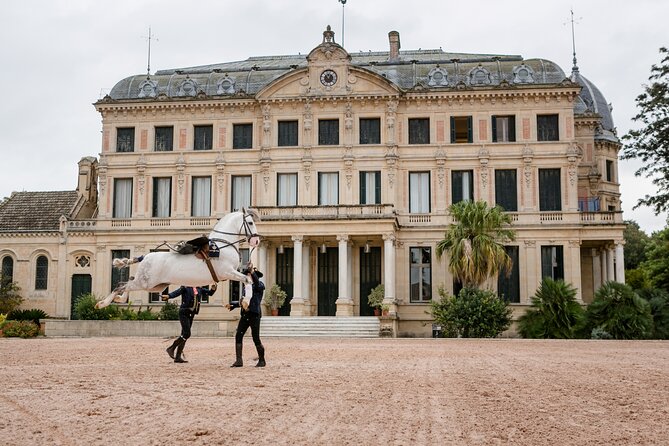
Your ticket is for the show at the Royal Andalusian School of Equestrian Art, inside the Fundacion Real Escuela Andaluza del Arte Ecuestre in Jerez. The ticket redemption point is listed at Av. Duque de Abrantes, s/n, 11407 Jerez de la Frontera, Cádiz, Spain.
I’d plan to arrive with a little breathing room. People recommend giving yourself 30 to 45 extra minutes to look around the grounds. If you get there early, you can sometimes catch horses in the warm-up area, which adds context before the main choreography begins.
You’ll also find an on-site cafe. It is a nice fallback if you want a drink or a quick bite without trying to coordinate food plans around show timing.
One more practical note. The arena can feel warm in summer. Bring a fan if you have one. Even if you do not love crowds, this kind of venue usually gets lively, so comfort helps your enjoyment.
What You’ll See First: Doma Vaquera and the One-Hand Skills
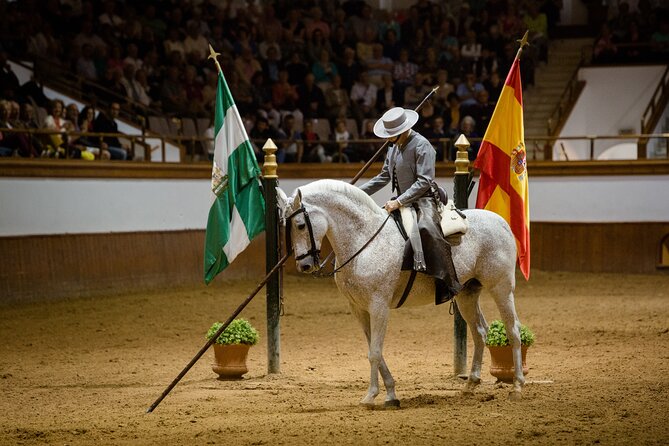
The show format can vary by day, but it often starts with a segment that highlights the Andalusian tradition in a very recognizable way. One big highlight is doma vaquera, which is based on techniques developed through traditional cattle-herding work.
In doma vaquera, the horseman rides with one hand, using the arena to demonstrate skills like switching rhythm from trot to later galloping. Then you get movements like pirouettes and arreones, which are sudden bursts into a gallop.
What I love about this segment is how it communicates toughness and control at the same time. The movements look elegant, but you can also sense the practical origins. It feels like watching a trained craft, not just stage performance.
If you are coming with kids, this is often a good early anchor. The rhythm changes are easy to follow. You can tell when the rider cues something and when the horse responds.
Classical Dressage Segments: The Colts to Airs Above the Ground
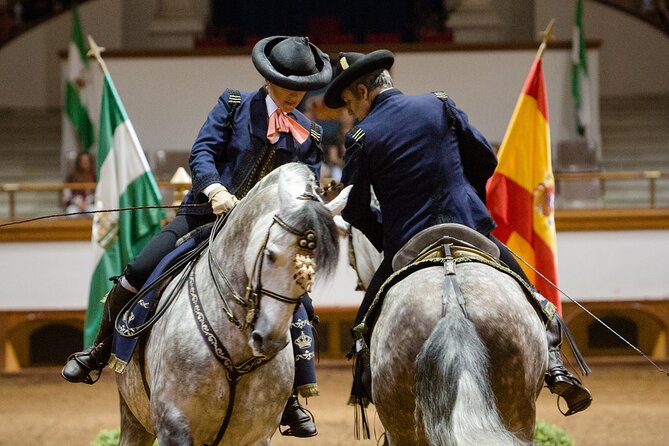
After the vaquera style, the show typically moves into classical dressage choreography. This is where the tone becomes more ballet-like. Horses perform advanced equestrian exercises to classical music, and the choreography names give you a clue about what to watch for.
Some of the dressage repertoire you might see includes:
- The Colts
- Airs on Horseback
- Pas de Deux
- Passage and Piaffer
- Domino on Horseback
- Airs above the ground
- Fantasy
The practical takeaway for your viewing is this. Dressage here is not abstract. You will see the horse working in collection, then transitioning into more demanding movements that require balance and precise timing. When the music swells or changes, pay attention to whether the horse’s steps tighten, lighten, or shift into a different gait pattern.
Also, watch the partnership. The rider’s body and position are part of the language. Even when you do not fully understand every technical term, you can feel when the horse is responding to subtle cueing.
If you love music, this part hits hard. The show is not silent and the sound design supports the choreography. Several people mention how much the music and grace mattered to them. I agree. It gives the movements extra meaning.
Cadiz, continued down the scoresheet:
- Tarifa: Whale & Dolphin Watching in the Strait of Gibraltar★ 4.7 · 835 reviews
- Cadiz: City Sightseeing Hop-On Hop-Off Bus Tour★ 4.1 · 753 reviews
- Cultural excursion for one day to Tangier with ferry included★ 4.0 · 577 reviews
Work in Hand: When the Horse Answers From Ground Cues
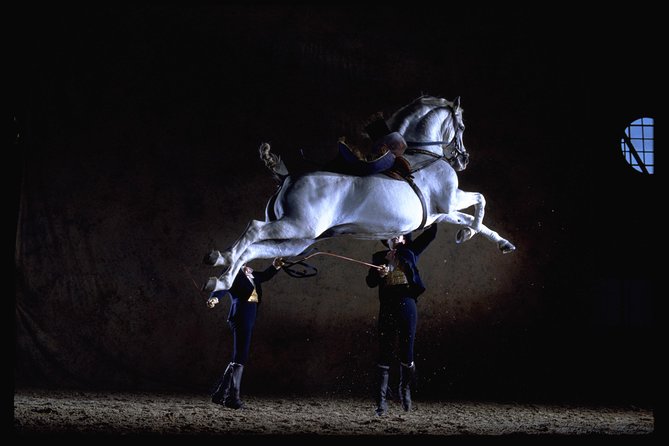
One of the most impressive parts of the show for many first-timers is work in hand. This is where you see that training does not only happen when the rider is seated. The horse obeys instructions even when the handler is not in the saddle, carrying out classical Haute École style dressage exercises.
The listed exercises include:
- levades
- caprioles
- courbettes
- piaffe (between pillars)
- the Spanish walk
- long reins
This segment is also a good reality check on what makes the whole experience valuable. You are not only watching athletic horses. You are watching a system of communication and discipline that has been refined enough to show off in public.
From a viewer’s angle, here is what helps. Look for consistency in how quickly the horse responds and how smoothly it returns to the next figure. The better the training, the less the horse looks like it is guessing. It looks like it knows exactly what comes next.
Carriage Driving and Classical Harness: Old School, Sport Style
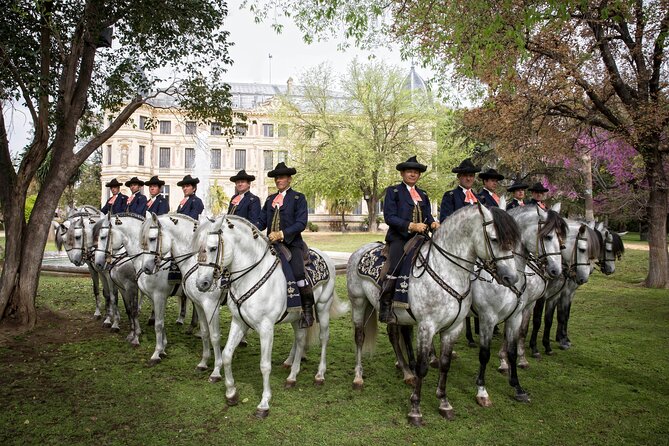
Then comes carriage driving. Horses draw carriages in classical harness, and the coachman demonstrates the style with skill and coordination.
This is a fun change of pace because it adds motion and a different visual frame to the arena. The choreography also adds variety, since you are watching a different kind of teamwork. The horse is still central, but now there is a vehicle and a driver’s line of control to watch.
The show’s explanation also notes that carriages were originally for transport but are now used for sport and exhibitions. In other words, this segment is not pretending history is happening again. It is honoring tradition while showing modern performance discipline.
If you are thinking about whether to go as a family, this is often a hit for kids. It reads visually right away: horse plus carriage equals clear excitement, even if you do not catch every term.
The Carrousel Finale: Horses and Riders in Unison
The carrousel finale is the grand closer. In this segment, a group of horses and riders perform advanced equestrian exercises in unison in the arena. It is designed as a coordinated end point, pulling the style together like a closing chord.
This part is worth your attention even if you feel a little tired. It is where you get the cleanest sense of the scale and polish of the training. Individual movements matter earlier, but unison matters most here.
One thing that can affect how much you enjoy this finale is your seat. A few people specifically warn that certain seats can have restricted views of parts of the arena. If you have a choice between better sightline categories, aim for higher seating when possible. And if you end up lower, stay flexible. Watch the segment as the whole picture, not just one corner.
Price and Seating Reality: Is It Good Value?
The price is listed at $33.43 per person, and that includes entrance to the show. That pricing is what makes this one of the easier Andalusia add-ons, especially if you are already in Cadiz and want a structured half-day moment.
Is it a bargain? For what you are getting, it usually feels fair. You are paying for:
- admission to a specialized equestrian performance
- multiple choreography segments in one ticket
- trained horses and riders demonstrating different disciplines
The biggest value risk is not the ticket price. It is seating. Because tickets are sold by category and you do not get to pick exact rows or seats, you could end up with a view that blocks part of the arena.
Here’s my practical advice. If your goal is maximum viewing comfort, choose the category that gives you the best odds for a clear sightline. And when you arrive, take a minute to orient yourself in the arena before each segment. It sounds basic, but it helps you catch what is happening even if your exact angle is not perfect.
Also plan on enjoying it even if you do not understand every Spanish cue. Many people note that narration can be Spanish-only, while announcements may use multiple languages. So keep your eyes on horse and rider action. The choreography does a lot of the teaching on its own.
Getting There: Timing, Parking, and the Taxi Trap
The show start time is 12:00 pm, with roughly 1 hour 30 minutes total duration. If you can, arrive early enough to settle in before the first segment begins.
Transportation is the place where people either glide or get annoyed.
Parking: some visitors find it easy, and others say signage and ticket-window instructions could be clearer. One tip that shows up in feedback is to avoid people trying to direct you to paid parking. In at least some cases, parking is free nearby. So, scan the area first before you hand over cash to a stranger with a plan.
Taxis: expect taxis to be pricey, especially from places like cruise ports. One traveler described a taxi ride that cost more than expected and suggests using Uber if it’s available. If you are flying solo or with a small group, also consider whether public transport makes more sense for you.
If you are coming by train, double-check you are getting off at the correct Jerez stop. One review described a wrong stop due to the listing referencing two different towns, leading to an expensive correction by cab. That is the kind of avoidable mistake that can steal your budget fast.
Who This Show Fits Best (and Who Might Not)
This show is especially good if you love any of these:
- classical discipline and precision
- horses and horsemanship as performance
- variety, because you will see multiple styles rather than one
It is also a strong family-friendly option. The show is built to be watchable for all ages, and segments like carriage driving and the unison carrousel finale tend to land well with kids.
Who might hesitate? If you need lots of spoken English narration to understand every segment, you may feel less satisfied. The performance can rely on Spanish narration, and if you do not speak Spanish you will need to enjoy it visually.
If you are the type who hates sitting still for an hour, remember the show is structured into sections. You will see enough change to stay engaged.
Should You Book the Andalusian Horses Dance Show?
Yes, I think you should book it if you want a high-impact, traditional equestrian experience in a short window. For the price of $33.43, you get a full program of horse and rider choreography, including doma vaquera, classical dressage moves like Passage and Piaffer, plus work in hand and carriage driving. That range is hard to replicate with another single ticket in Andalusia.
Book it with one mindset adjustment: view quality can depend on seating category. If possible, choose the category that gives you the best chance for a clear arena view. And go early, bring a fan in warm weather, and plan to enjoy the action first, translation second.
If you like horses but want a more talk-through explanation, this may still be worth it, just know you will learn by watching.
FAQ
What time does the Andalusian Horses Dance Show start?
It starts at 12:00 pm.
How long is the show?
The duration is approximately 1 hour 30 minutes.
Where do I redeem my voucher for tickets?
Tickets are redeemed at the Royal Andalusian School of Equestrian Art, Av. Duque de Abrantes, s/n, 11407 Jerez de la Frontera, Cádiz, Spain.
What is included in the price?
The admission ticket includes entrance to the show How the Andalusian Horse Dance.
Can I choose my seats?
No. Tickets are sold by category, and row and seat numbers are allocated based on order of purchase or booking.
Is photography or filming allowed?
No. Filming, recording, and taking photographs are not allowed unless you are an authorized professional.
Is the show suitable for most people and families?
It is described as a family-friendly option and most travelers can participate.
Latest Cadiz reviews into the ledger

Cadiz Tours, compared.
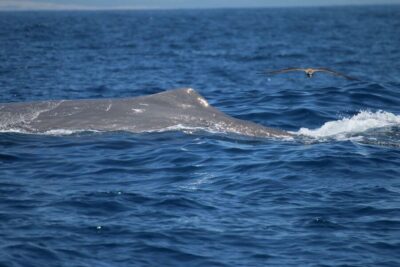
Tarifa: Whale & Dolphin Watching in the Strait of Gibraltar
Read our review →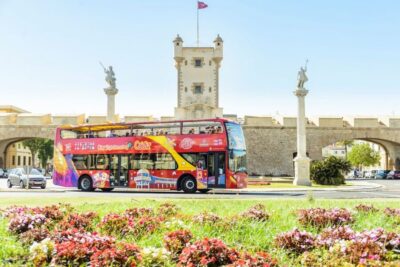

Cultural excursion for one day to Tangier with ferry included
Read our review →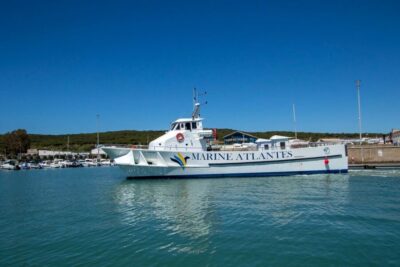
Barbate: Dolphin and Whale Watching in Cape Trafalgar
Read our review →
Walking Tour through Cádiz: Stories from the hand of a local guide
Read our review →
Tangier Private Tour with Ferry & Lunch from Tarifa
Read our review →
English Cádiz Tour: Walking Tour with Local Guide
Read our review →Browse the lists this tour appears in