
Reviewed · JEREZ TOURS
Jerez de la Frontera: How the Andalusian Horses Dance
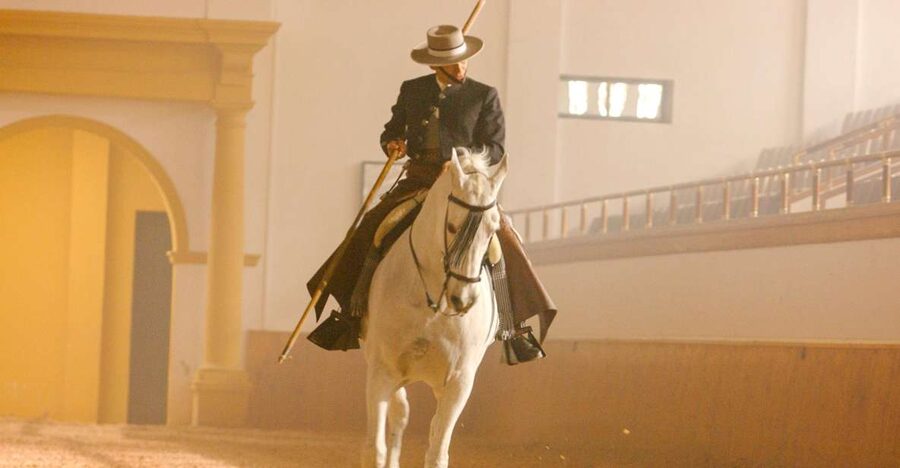
Horses, music, and precision in one show. I love the way the Andalusian horses and riders move through classical training, turning dressage into something you can feel in your chest. I also love the 18th-century costumes, which make the whole performance look like living theater. One possible drawback: the venue is strict about flash photography and recording, so you’ll have to watch, not document.
This isn’t a random “horse demo.” At the Fundacion Real Escuela Andaluza del Arte Ecuestre in Jerez de la Frontera, you sit down and get a polished program built from several real equestrian disciplines, including Doma Vaquera and classical Haute Ecole work. With a duration of about 90 minutes to 2 hours and a price that’s relatively easy to fit into a short Andalusia trip, it’s one of those evenings that feels like it has real craft behind it.
And if you care about authenticity, this is about the horses and the training, not gimmicks. I’d just plan for a straightforward show schedule and limited control over your exact seat position, since tickets are sold by category.
In This Review
- Key points to know before you go
- Arriving at the Royal Andalusian School of Equestrian Art in Jerez
- Your 90-minute show: how the program flows
- Doma Vaquera and classical dressage: spotting the real skills
- Pas de Deux and the charm of Haute Ecole on horseback
- Carriage driving: a different kind of athleticism
- Work in hand: when the rider is off the horse
- Carrousel: the finale with group harmony
- Music, 18th-century costumes, and why it feels like more than sport
- Tickets, seating categories, and where your money goes
- What rules to respect once you’re inside
- If you’re in town for the Four Equestrian European Schools galas
- Is this the right fit for your trip?
- Should you book How the Andalusian Horses Dance?
- FAQ
- How long is How the Andalusian Horses Dance?
- Where do I check in for tickets?
- What do I need to bring?
- Can I take photos or videos during the show?
- Are pets allowed inside the venue?
- Do I need a printed voucher?
- Are seat numbers guaranteed?
- What kinds of routines are performed?
- Is the venue wheelchair accessible?
- Can the program change?
Key points to know before you go
- A full equestrian ballet, not just one routine, with 6 to 8 different choreographies in a single show
- Doma Vaquera + classical dressage, with moves like pirouettes, arreones, passage, piaffer, and more
- Hands-free obedience in work in hand, including levades, caprioles, courbettes, and the Spanish walk
- Carriage driving with classical harnesses, a different side of horse training you do not see every day
- Traditional costuming and quintessential Spanish music, built to look and sound 18th-century
- Great viewing from many seats, since the show is set up for watching close action across the arena
Arriving at the Royal Andalusian School of Equestrian Art in Jerez
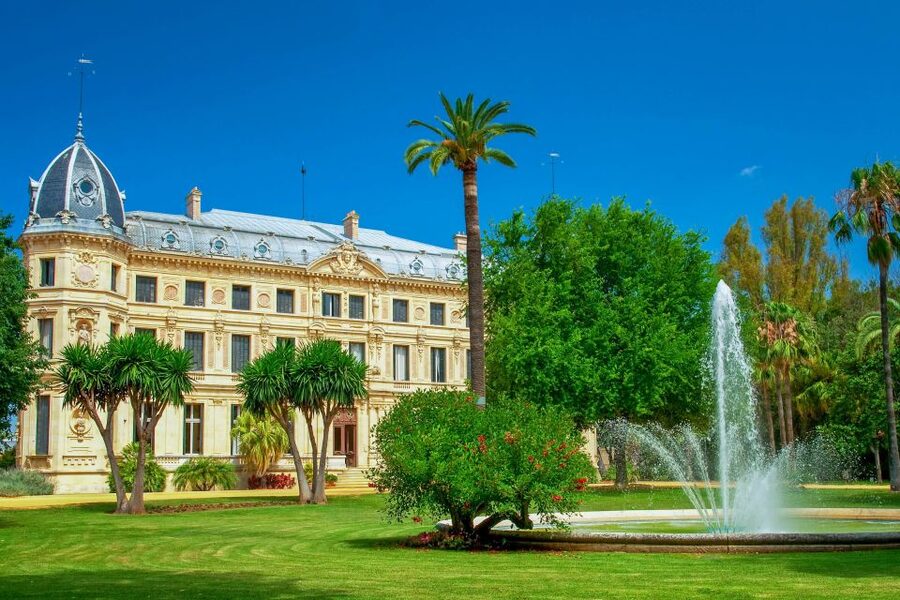
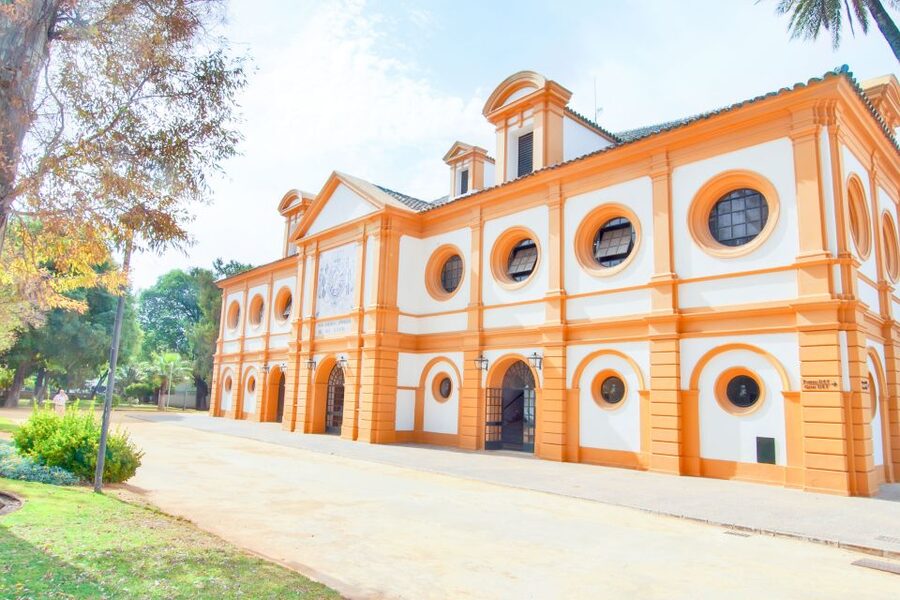
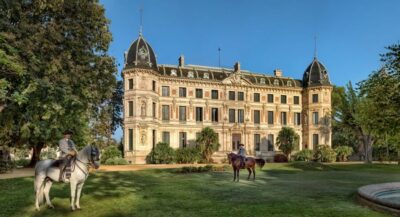
The show takes place at the Fundacion Real Escuela Andaluza del Arte Ecuestre, in Jerez de la Frontera. Your ticket check happens at the Reservation Box Office at the Royal Andalusian School of Equestrian Art Foundation, so go there first and keep your paperwork ready.
I like this venue because it’s more than a one-off theater setup. It’s a working equestrian school, and that comes through in the way the horses and riders move, with routines that feel like practiced communication rather than staged tricks. If you have time before the performance, you’ll usually appreciate getting your bearings on the grounds.
Practical tip: bring your passport or ID card. The rules are clear about ID being required, so don’t assume you can use just a phone photo.
A few more Jerez verdicts worth reading
- Jerez de la Frontera: Andalusian Horse Dance and Museums
★ 4.7 · 1,289 reviews - Jerez: Yeguada de la Cartuja Carthusian Horses Tour
★ 4.8 · 970 reviews - El Salobre: Horse Riding Adventure with Transfer Options
★ 4.5 · 2,034 reviews - Tenerife: Horseback Ride with Instructor
★ 4.4 · 836 reviews
Your 90-minute show: how the program flows
Most performances run about 90 minutes to 2 hours, depending on the day’s schedule. Each show includes 6 to 8 choreographies selected by the school from their repertoire, so you are not just watching one “best hits” routine.
What makes the flow work is the mix of styles. You get classical dressage for technical elegance, Doma Vaquera for that rural Spanish energy, carriage driving for variety, and work in hand for moments that make you stare at the stage like, wait, the rider is not even mounted.
A big point for first-timers: don’t expect a spoken narrative. The show communicates through movement, music, and choreography. If you go in knowing the main disciplines, you’ll track everything much faster.
Doma Vaquera and classical dressage: spotting the real skills
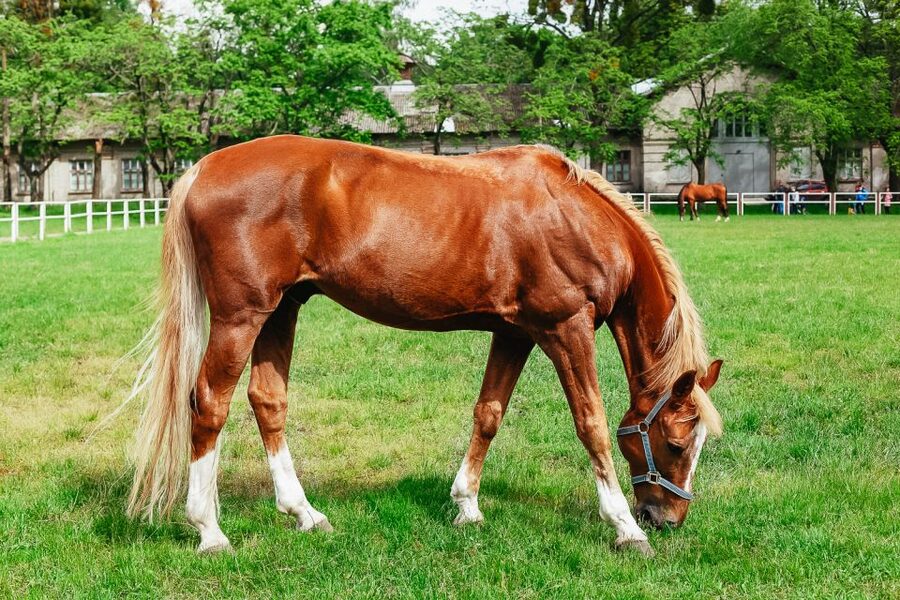
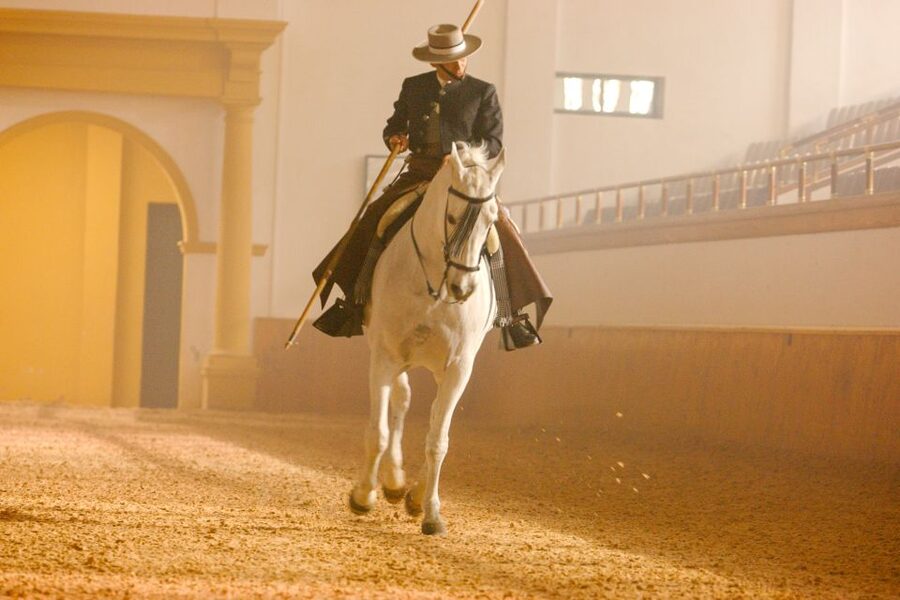
Doma Vaquera is one of the core building blocks. It’s based on traditional cattle herding, and in the show you see the rider use one hand while controlling rhythm through trotting and galloping. You’ll also see pirouettes and arreones, which are basically sudden bursts into gallop, built into the ride like punctuation marks.
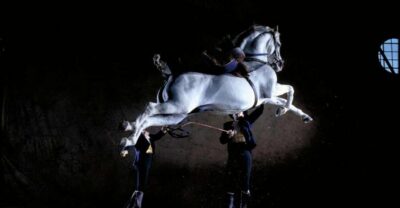
Classical dressage brings the more advanced “picture-perfect” exercises. The program may include pieces like The Colts, Airs on Horseback, Pas de Deux, Passage and Piaffer, Domino on Horseback, Airs Above the Ground, and Fantasy. Even if you don’t know the terms, you can watch for the markers: collected movement, precise transitions, and the horse carrying itself with strong balance.
Here’s how I think about it for you: classical dressage is where you see control over time. The horse slows down, steps underneath itself, and holds positions that look effortless but are actually hard work. If you like performances with clear technique, this is the section that usually sticks with people.
Pas de Deux and the charm of Haute Ecole on horseback
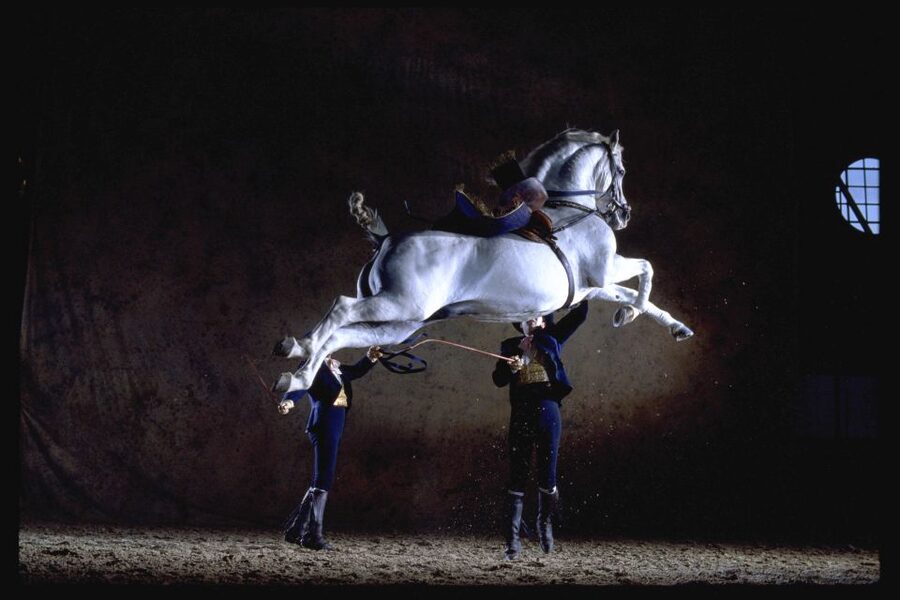
One of the most fun parts is Pas de Deux, where rider and horse feel choreographed like dance partners. Even without a technical background, you can spot the coordination because the movement timing feels intentional and symmetric, like the horse is responding to tiny cues.
Then the show moves into Haute Ecole concepts through pieces that highlight advanced exercises. Depending on what the program includes that night, you may see the horse perform higher-level movements and elevated coordination. This is where the arena suddenly feels smaller, because you realize how exact the training must be to pull off clean transitions again and again.
I also love that the school mixes “wow” with real discipline. Instead of trying to shock you with random stunts, the performance shows what horses can do when training builds communication, balance, and confidence.
Jerez, continued down the scoresheet:
- Jerez: Royal Andalusian School of Equestrian Art Admission★ 4.6 · 882 reviews
- Jerez: Bodegas Fundador Guided Tour with Tasting Session★ 4.8 · 714 reviews
- Jerez: Guided Winery Tour with Wine Tasting★ 4.4 · 636 reviews
Carriage driving: a different kind of athleticism
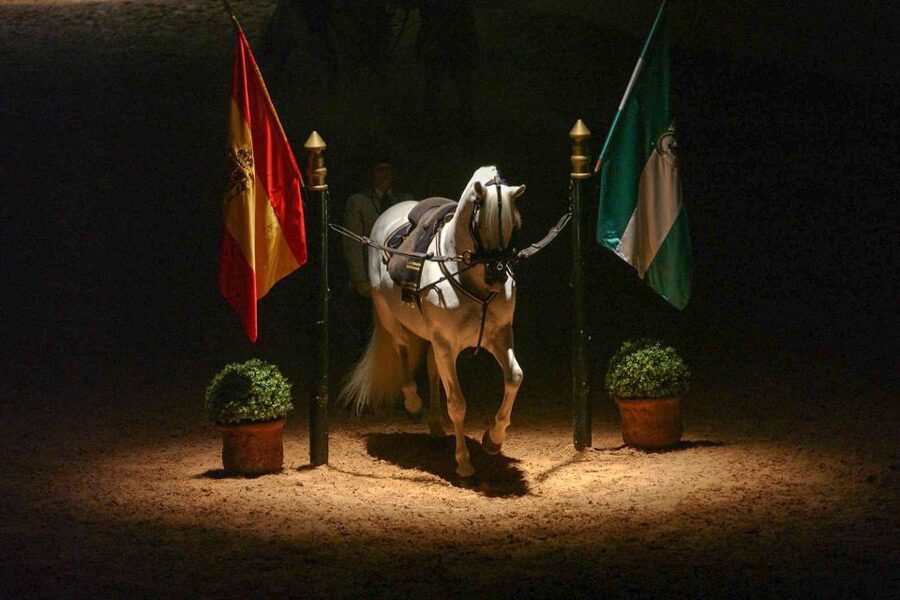
Not every equestrian show includes carriage work, which is why I think it’s such a good value add here. You can watch horses draw carriages using classical harnesses, originally designed for transport but now used for sport and exhibitions.
What you’re really watching is control from the driver and the horse’s ability to respond under harness. The coachmen demonstrate driving skills, and the whole section gives you a change of pace after the mounted work. If you’ve never seen carriage driving before, it’s a smart “second lens” on the same training system.
This matters because it broadens what you think of as possible. You start with dressage, then you realize the same careful training habits carry over to pulling, steering, and staying synchronized in harness.
Work in hand: when the rider is off the horse
This is one of the most memorable categories in the program: work in hand. Here, you see a horse that obeys even when the rider is not in the saddle. The performance includes classical Haute Ecole exercises such as levades, caprioles, courbettes, piaffe (between pillars), plus the Spanish walk.
I like this segment because it changes the question from Can the horse do movements? to Can the horse follow refined instructions through body language and training cues? When this works, it looks like the horse is thinking along with the handler.
Expect to focus closely during this portion. The action is still dramatic, but the proof is in the precision and how quickly the horse responds to changes.
Carrousel: the finale with group harmony
The end of the show brings a carrousel, where a group of horses and riders perform advanced equestrian exercises in unison. This is a fitting conclusion because it compresses everything you’ve seen into one coordinated “group statement.”
For you, it’s the easiest part to remember: you can feel the rhythm shift across multiple horses at the same time. Even if one choreography is technical and another is dramatic, the carrousel gives you a clean emotional landing point.
Music, 18th-century costumes, and why it feels like more than sport
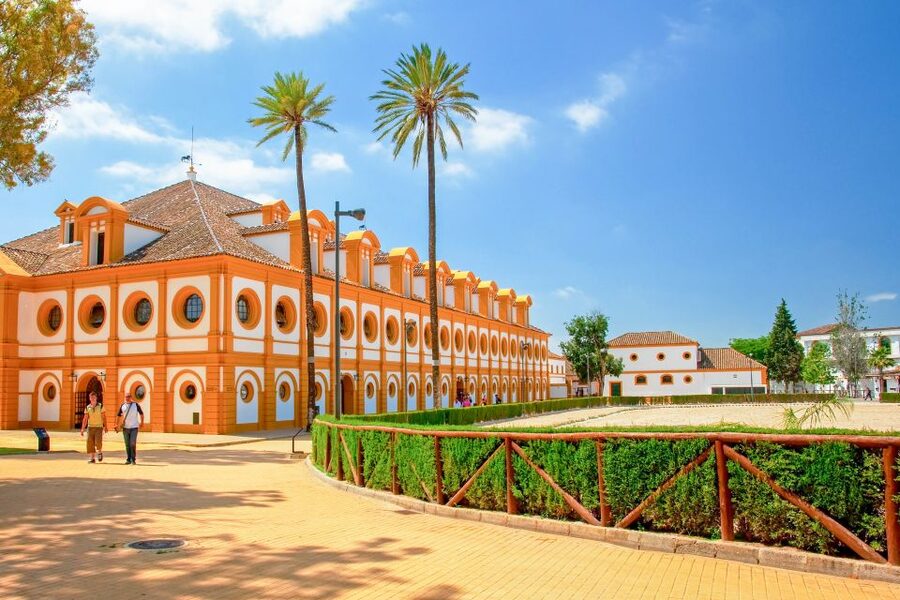
A lot of equestrian shows are good, but they can feel plain. This one doesn’t. The choreography is accompanied by quintessential Spanish music, and the riders wear traditional 18th-century style costumes.
That costume choice matters because it shapes how you interpret movement. Classical dressage in modern clothing can feel clinical. In historical dress, it reads more like performance tradition and cultural style, which fits the school’s approach.
Also, the show itself is choreographed, meaning it’s built to be seen in real time from the audience seat, not just a routine performed for training notes. If you enjoy cultural theater as much as technique, this production style is a big plus.
Tickets, seating categories, and where your money goes
The price listed is about $31 per person, and the duration is 90 minutes to 2 hours. That’s decent value for a full equestrian program with multiple disciplines. You’re paying for a live show with trained horses, riders, music, and the setup of an entire arena performance.
One thing to know: tickets are sold by category. You can’t pick a specific row or seat number. Seating is assigned according to the order of purchase or booking, so go early when you can.
Price tip from a practical perspective: if your priority is visibility, plan to buy sooner rather than later and choose the category that best fits your comfort with viewing distance.
What rules to respect once you’re inside
The venue has clear limits to protect the animals and the experience for everyone. You cannot use flash photography, and audio recording is not allowed. The rules also say no glass objects, no pets, and no weapons or sharp objects.
You also need to present your printed voucher at the ticket office. And management can alter or change the program, so keep your expectations flexible.
Small practical note: if you like souvenirs, don’t plan on a last-minute gift stop assuming you’ll have unlimited time. One person noted the gift shop closed early after a tour, so if shopping matters, check timing on arrival.
If you’re in town for the Four Equestrian European Schools galas
There’s a special schedule option on June 30 and July 1 at 9 p.m. for a historical event marking the schools’ 50th anniversary. The Four Equestrian European Schools from Austria, France, Spain, and Portugal perform together for the first time, and the Abu Dhabi International Riding School joins under supervision and training of the Royal Andalusian School of Equestrian Art.
If you happen to be in Jerez at those dates, it’s the kind of moment that turns a great show into a once-in-a-while event. You’d likely feel the added excitement because each school brings its best numbers into one outdoor arena performance.
Is this the right fit for your trip?
This show is a strong match if you want a clear cultural evening in Andalusia that mixes art and training. It’s also a good choice if you like watching disciplined craft, because the program includes multiple disciplines and a range of horse skills, from mounted to work in hand and carriage driving.
It may be less satisfying if you’re only looking for casual “horse spectacle” with lots of interaction, because this is structured equestrian ballet. You’ll get performance and technique, not a chat with trainers on stage.
If you’re short on time, it’s also a manageable evening because the duration is tight and you can slot it into a Jerez day without committing to a full day out.
Should you book How the Andalusian Horses Dance?
Yes, I’d book it if you’re in Jerez and you can handle rules like no flash and no recording. The value is strong for the length and the variety, and the program includes the standout categories that people remember: Doma Vaquera, classical dressage pieces like Pas de Deux, work in hand, and the closing carrousel.
Choose this show over a generic equestrian experience if you care about real training, because it’s built from disciplines that require serious control from both horse and rider. Just be smart about your expectations: it’s a polished arena performance, not a hands-on experience, so plan to sit back and watch closely.
FAQ
How long is How the Andalusian Horses Dance?
The show lasts about 90 minutes to 2 hours.
Where do I check in for tickets?
Go to the Reservation Box Office at the Royal Andalusian School of Equestrian Art Foundation.
What do I need to bring?
You should bring a passport or ID card.
Can I take photos or videos during the show?
Flash photography is not allowed. Audio recording is also not allowed.
Are pets allowed inside the venue?
No, pets are not allowed.
Do I need a printed voucher?
Yes, you must present your printed voucher at the ticket office.
Are seat numbers guaranteed?
Tickets are purchased by category, and you do not select a specific row or seat number. Seats are allocated according to order of purchase or booking.
What kinds of routines are performed?
The program can include Doma Vaquera, classical dressage (with choreographies such as The Colts, Pas de Deux, Passage and Piaffer, and more), carriage driving, work in hand, and a carrousel.
Is the venue wheelchair accessible?
Yes, the experience is wheelchair accessible.
Can the program change?
Yes. The management reserves the right to alter or change the program.
Latest Jerez reviews into the ledger
Jerez Tours, compared.
Jerez de la Frontera: Andalusian Horse Dance and Museums
Read our review →
Royal Andalusian School of Equestrian Art Admission
Read our review →
Bodegas Fundador Guided Tour with Tasting Session
Read our review →
Jerez de la Frontera: Sherry Winery Tour with Tasting
Read our review →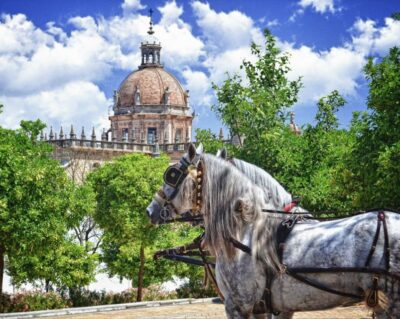
Bodegas Álvaro Domecq Guided Tour with Wine Tasting
Read our review →Browse the lists this tour appears in