
Reviewed · JEREZ TOURS
Jerez: Yeguada de la Cartuja Carthusian Horses Tour
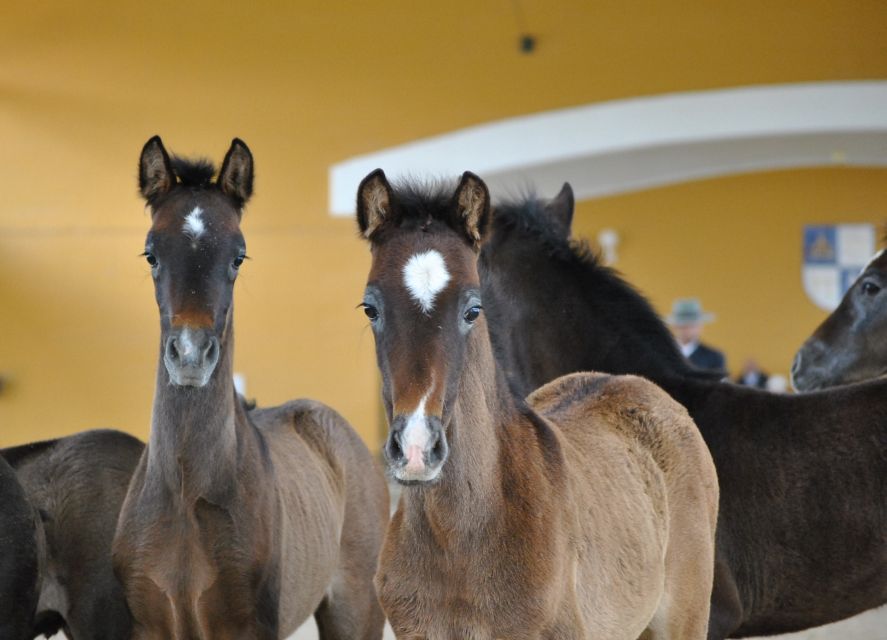
Horses in motion, up close in Andalusia. The Yeguada de la Cartuja tour gives you a guided walk through the stud farm and ends with a dressage show, where the breeding program is explained in a way you can actually follow. I also like that you get to see the horses at different stages, including free-running young colts and this year’s foals, not just the show horses sitting politely in the background.
The main consideration is logistics: Fuente del Suero is a bit out of the way, and some people have had trouble with directions if they rely on Sat Nav. Still, the meeting point is straightforward, the parking is plentiful, and the 2.5-hour format makes it an easy add-on around Jerez.
In This Review
- Key highlights you should plan around
- Why Jerezs Cartuja stud farm feels like a living classroom
- The 2.5 hour flow, from paddocks to the dressage arena
- Free-running colts, mares, and stallions: what you’ll really see
- Carthusian breeding, explained in plain human terms
- Dressage exhibition in the main arena: where training becomes visible
- Value near $22: what you get for the time
- Logistics for Fuente del Suero: parking, timing, and directions
- What to bring, what to avoid, and practical on-site rules
- Who should book this experience, and who should skip it
- Should you book the Yeguada de la Cartuja tour?
- FAQ
- How long is the Yeguada de la Cartuja horses tour?
- Where do I meet for the tour?
- What is included in the ticket price?
- Is horse riding included?
- What will I see during the guided tour?
- Will there be a dressage show?
- What languages are tours available in?
- Is the activity wheelchair accessible?
- Are there any rules about pets or recording?
Key highlights you should plan around
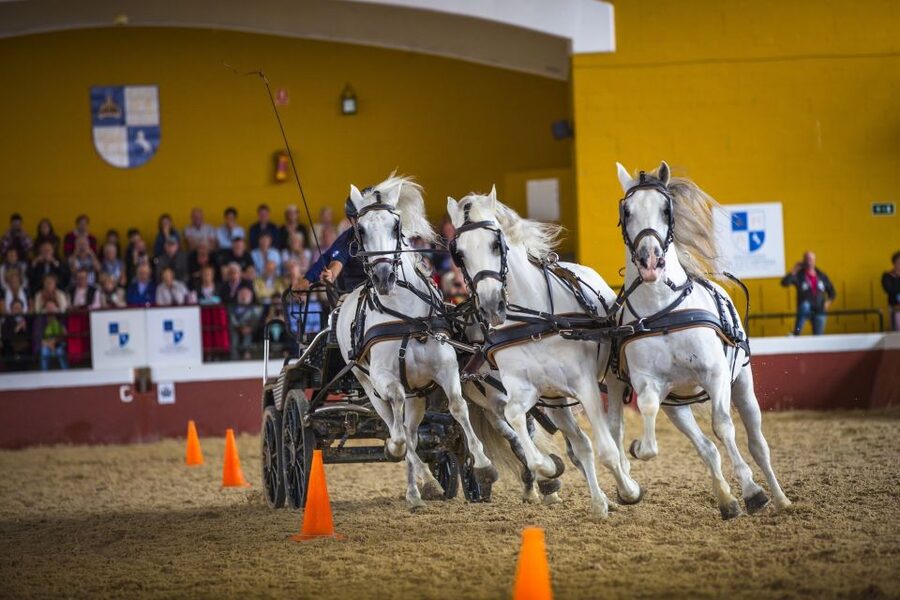
- Free-running horses on the farm: you’ll see colts, mares, and stallions moving in an outdoor setting.
- Foals this year: the program focuses on young horses, so you’re not only watching adults train.
- Carthusian lineage, stage by stage: the guide explains the horses’ lives across different phases.
- A dressage exhibition in the main arena: the show ties the breeding and training together visually.
- English, Spanish, or German guidance: the tour guide language options make it work for mixed groups.
- Up-close interaction time: some visitors report time to pet and stroke the horses during the tour.
Why Jerezs Cartuja stud farm feels like a living classroom
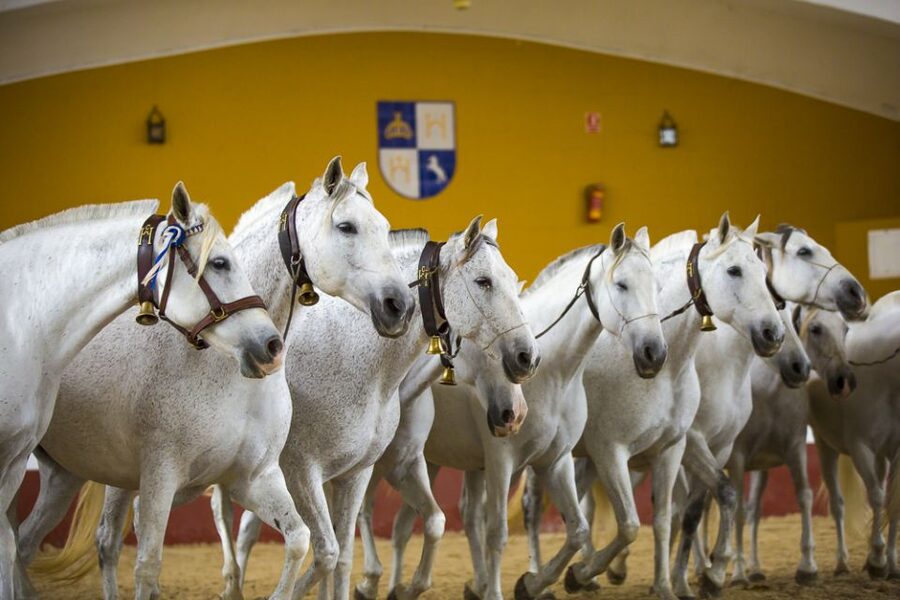
This stop near Jerez is built around one goal: preserving and improving the Cartujano line of Andalusian horses tied to Carthusian breeding. The stud farm sits at Fuente del Suero, next to the historic Monastery of La Cartuja, and that location matters. In the 15th century, the monastery became the center for breeding Jerezano horses, and the tradition has continued without a break. When you hear the story on site, it’s easier to understand why the horses here have a specific reputation in Spanish equestrian culture.
Also, the stud farm’s setting is practical, not just pretty. The area is known for the climate and fertile lands that support raising horses, and the farm has more than 200 of these thoroughbred Andalusian horses in its reserve. That scale changes the experience. You’re not looking at a single display paddock for an audience, you’re seeing a working breeding operation designed for long-term animal care and selection.
You should expect a hands-on feel even though it’s a show experience. The tour is guided, but you’re walking and watching horses in motion, then switching gears to a structured dressage performance in the arena. It’s the rare mix of “what you’re seeing” and “why it’s happening,” without turning into a lecture that puts you to sleep.
A few more Jerez verdicts worth reading
- Jerez de la Frontera: How the Andalusian Horses Dance
★ 4.6 · 6,168 reviews - Jerez de la Frontera: Andalusian Horse Dance and Museums
★ 4.7 · 1,289 reviews - El Salobre: Horse Riding Adventure with Transfer Options
★ 4.5 · 2,034 reviews - Tenerife: Horseback Ride with Instructor
★ 4.4 · 836 reviews
The 2.5 hour flow, from paddocks to the dressage arena
The experience is planned for about 2.5 hours, with a guided tour plus an exhibition in the main arena. That timing is ideal if you want something meaningful without burning an entire afternoon. You’ll move from farm areas where horses are kept and exercised, to the show setting where training and movement are presented.
In many departures, the structure feels like: guided walk first, then you settle in for the dressage exhibition. Guides also make time for questions, which matters because the subject can be technical. Whether you’re starting from zero or you know your way around Andalusian terms, a good explanation turns it from “cute horses, cool show” into “now I get how breeding and training connect.”
Language support is another part of the flow. The tour guide is available in Spanish, English, and German, and people have been particularly happy when they get their preferred language. Some names that have come up for previous departures include Andre, Caroline, Linda, and Viv, and the common thread is clear, friendly explanations and staying engaged with the group.
Two small practical tips help the experience run smoother. First, wear comfortable shoes and plan for outdoor walking. Second, arrive with a bit of buffer so you’re not the one sprinting to find your group, because seating for the show can be assigned and movement during the exhibition may not be possible.
Free-running colts, mares, and stallions: what you’ll really see
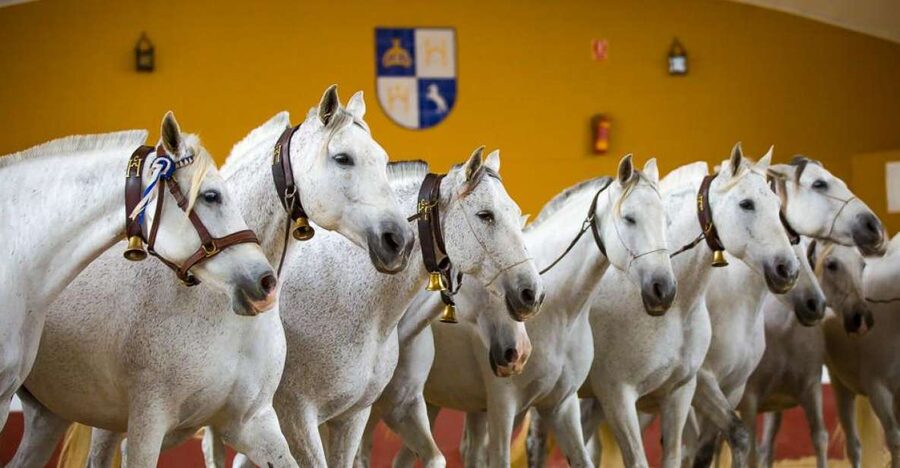
The farm tour focuses on seeing the horses as they live and train. Instead of only viewing animals behind rails, you’re looking at free-running colts, mares, and stallions in an open outdoor environment. That change is huge. Movement lets you read posture, confidence, and energy, and it also helps you understand the temperament that makes a horse suited for a long training path.
One of the most memorable parts is the emphasis on different life stages. The tour is designed to explain the Carthusian lineage as it relates to the horses across their development. You’ll hear how the horses are raised and managed in phases, not just how they perform once trained. Then the show portion adds another layer by showing how the work comes together in dressage.
The foal moment is a big deal here. You’ll see the current batch of foals as part of the experience. Seeing young horses in the arena context helps you connect the dots between “what they are now” and “what they may become,” even if you only have a short visit.
A note on interaction: some visitors report time to pet and stroke the horses during the tour. The key is to follow staff guidance and respect the boundaries of the animals and their routines. If you go in expecting a casual grab-and-go cuddle session, you might be disappointed, but if you go in expecting controlled, supervised interaction time, it fits well with what the experience is built to do.
Carthusian breeding, explained in plain human terms
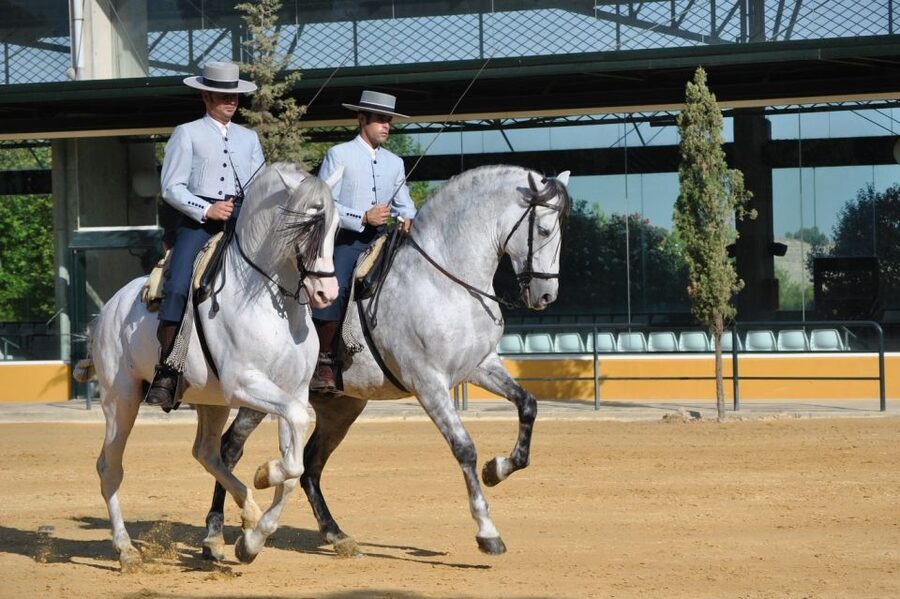
If you care about horses but feel lost when someone starts throwing around breeding details, this tour is built for you. The guide explains the Carthusian lineage in stages, and that approach makes it less abstract. Instead of a dry timeline, you learn how the breeding program thinks about the horses as living animals across development.
Guides also tend to connect the dots between training and relationships. Based on what visitors describe, you can expect discussion of the mother-colt connection and how care choices support healthy growth. Even if you only catch pieces, the structure still lands because you’re watching young horses, then watching the more trained animals later during the exhibition.
It also helps that the tour isn’t just about facts. It’s a storytelling walk through why this breed matters in Spanish culture. The Carthusian monastery becoming a breeding hub in the 15th century is a key story point, and the farm today continuing that work is the payoff. You’re not only hearing about the past. You’re seeing horses currently in the program.
Here’s a practical mindset to bring with you: treat the tour like a guided translation. The horses are the main text, the guide helps you read them. When you do that, the experience clicks fast.
Jerez, continued down the scoresheet:
- Jerez: Royal Andalusian School of Equestrian Art Admission★ 4.6 · 882 reviews
- Jerez: Bodegas Fundador Guided Tour with Tasting Session★ 4.8 · 714 reviews
- Jerez: Guided Winery Tour with Wine Tasting★ 4.4 · 636 reviews
Dressage exhibition in the main arena: where training becomes visible
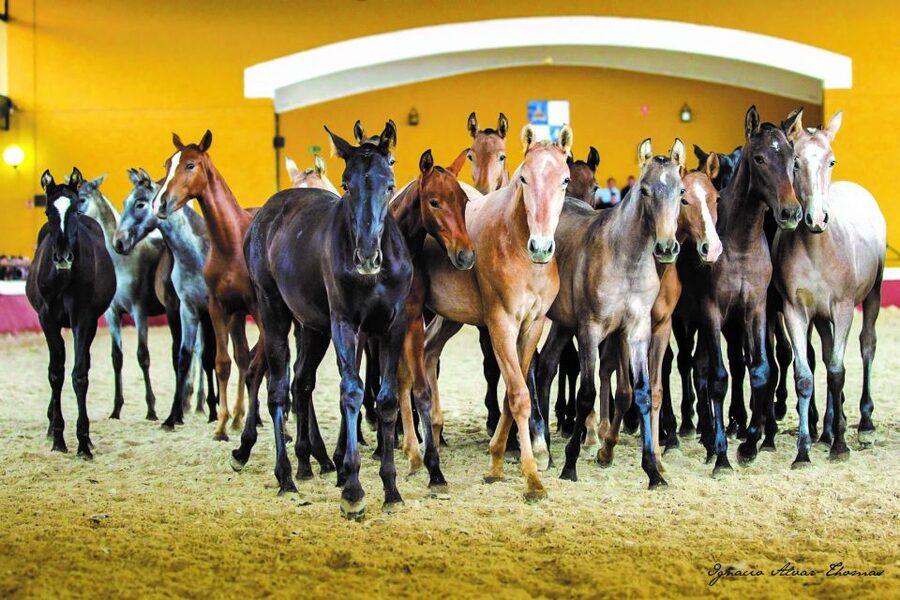
After the farm walk, you shift into a dressage exhibition in the main arena. This is where the day stops being a viewing tour and starts being a performance. Dressage can feel abstract until you see the control, rhythm, and responsiveness in a live setting. Watching it after seeing horses earlier in the day makes a difference. You understand what you were looking at and how it connects to training goals.
The show also functions like a grand finale. Many visitors describe it as unique, powerful, and well worth the wait. The horses look especially elegant in an outdoor arena, and the structure gives you a clear read on how breeding and training show up in movement.
One logistics detail matters here: seating can be assigned, and once the show starts, you likely won’t be able to move. That’s not a reason to skip the tour, it’s just a reason to arrive on time and take the best seats available at check-in.
Value near $22: what you get for the time
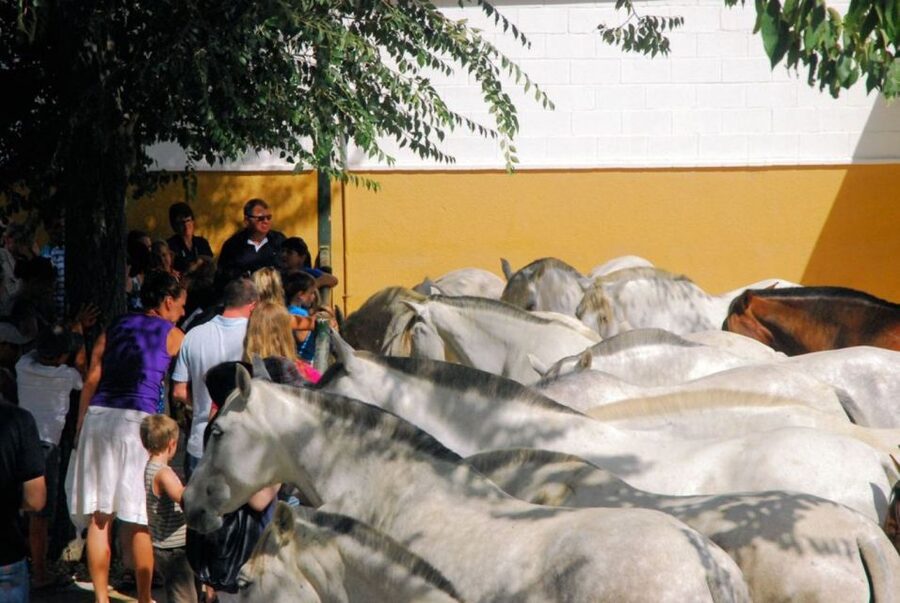
At about $22 per person, this tour is priced like a solid half-day attraction, not a full-day expedition. You get two major components included: a guided tour and an exhibition show in the main arena. That combo is where the value comes from. You’re not paying for only a performance, and you’re not paying for only a farm walk. You get both, in one visit.
It’s also good value because the schedule is tight. The experience lasts about 2.5 hours. For many people staying in the Jerez area, that’s the sweet spot. You can fit it into a day without feeling like you’re spending half the vacation waiting for buses or trying to coordinate a long transfer.
What’s not included is equally important. There’s no food and drink, no transportation to the farm, and no horse riding. If you’re hoping for lunch on site or a riding session, you’ll need to plan that separately. On the other hand, if your goal is to see the breeding program and watch the dressage, this price hits the right target.
Logistics for Fuente del Suero: parking, timing, and directions
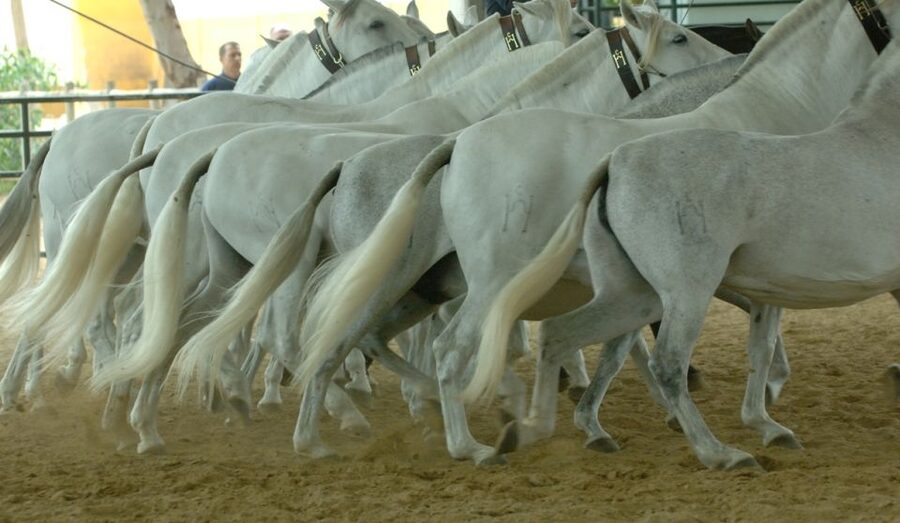
This farm is in the countryside, so getting there is part of the adventure and part of the headache, depending on your transport. The meeting point is at the Yeguada Cartuja ticket office in Finca Fuente del Suero, and there’s plenty of parking space. If you have a car, you’ll likely feel a lot less stress.
If you rely on Sat Nav, leave yourself buffer time. Some visitors report that Sat Nav can send people to the wrong area and cause delays. The safest approach is to follow the address and signage for the ticket office, not a generic nearby school or unrelated destination that looks similar on maps.
Timing matters in small ways. Groups are called, and if you’re late, you may not end up with your exact language tour group. One visitor described joining a different language group because their original group had already started. That’s not ideal, but it’s also proof that the operation keeps moving and staff will try to place you.
Finally, remember the show seating rule. Tickets can include a seat assignment, and once the exhibition begins, you may not be able to switch sections. If you care about visibility, choose seats carefully when you check in.
What to bring, what to avoid, and practical on-site rules
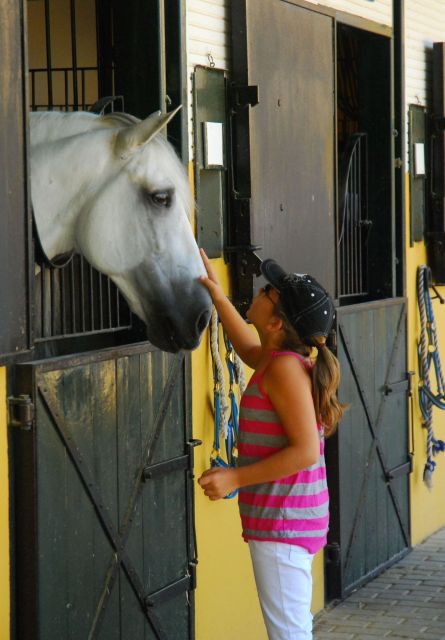
The basics here are simple and worth following. Wear comfortable shoes and comfortable clothes. You’ll be outdoors, and good footwear keeps you from turning the tour into a foot-sore marathon.
Bring a face mask or protective covering as requested. If you forget, you might still manage, but it’s the kind of small item that can derail an otherwise smooth experience.
You should also know the restrictions. Video recording is not allowed. Pets are not allowed, but assistance dogs are allowed. If you’re traveling with a pet, plan an alternative for that day because the rule is firm.
These rules aren’t there to spoil fun. They’re there for safety and to keep the animals calm during the day’s structured events.
Who should book this experience, and who should skip it
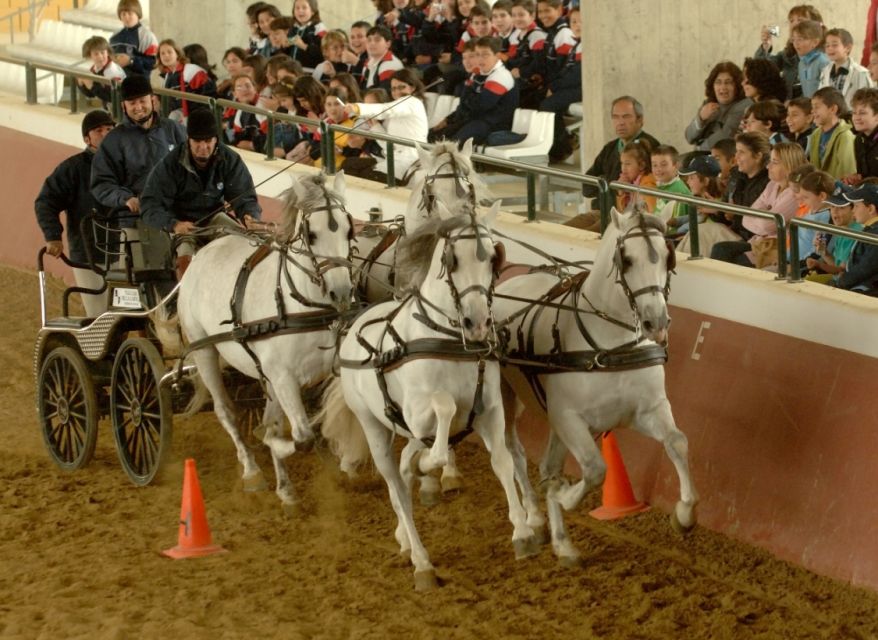
This is a great match if you:
- Love horses and want to see a major Cartujano breeding reserve in action.
- Want a short, guided experience that ends with a proper dressage show.
- Prefer structured explanations with a live guide in English, Spanish, or German.
- Like the idea of seeing foals and adult horses in the same visit.
This is less ideal if you:
- Want to ride horses. Horse riding is not included.
- Need food included. No food or drink is provided.
- Really rely on filming. Video recording is not allowed.
- Plan to travel with pets. Pets are not allowed.
Families should note one practical caution. Some visitors recommend it for all ages but say very young children may find it a bit long or that the walking and arena sitting can feel like a lot for toddlers. For school-age kids and teens, it often works well because they can see real horses and real movement, not just stalls and static displays.
Should you book the Yeguada de la Cartuja tour?
If your goal is to see the Cartuja breeding program up close and then watch the horses perform with polish, I think this is an easy yes. The value comes from the combination: a guided farm tour plus a dressage exhibition in one 2.5-hour block, with English, Spanish, and German guidance available.
You should book with a little extra planning if you’re coming without a car. The farm is out of town, and directions can be tricky if you trust Sat Nav too much. If you solve that with earlier departure time, a map check, or a driver you trust, the rest feels smooth.
FAQ
How long is the Yeguada de la Cartuja horses tour?
It lasts about 2.5 hours, including the guided tour and the dressage exhibition.
Where do I meet for the tour?
You meet at the Yeguada Cartuja ticket office, located at Finca Fuente del Suero, near Jerez.
What is included in the ticket price?
The ticket includes a guided tour and an exhibition show in the main arena.
Is horse riding included?
No, horse riding is not included.
What will I see during the guided tour?
You’ll see free-running colts, mares, and stallions, plus this year’s foals, as part of a guided visit focused on the Carthusian lineage and breeding.
Will there be a dressage show?
Yes. You’ll watch a dressage exhibition in the main arena.
What languages are tours available in?
The live tour guide is available in Spanish, English, and German.
Is the activity wheelchair accessible?
Yes, it is wheelchair accessible.
Are there any rules about pets or recording?
Pets are not allowed (assistance dogs are allowed). Video recording is also not allowed. You’re also advised to bring a face mask or protective covering.
Latest Jerez reviews into the ledger
Jerez Tours, compared.
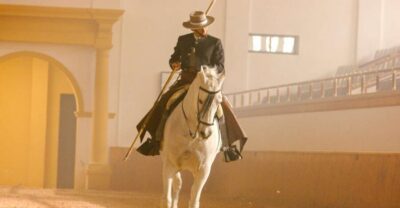
Jerez de la Frontera: How the Andalusian Horses Dance
Read our review →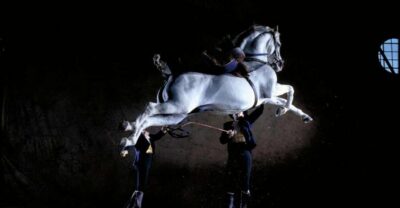
Jerez de la Frontera: Andalusian Horse Dance and Museums
Read our review →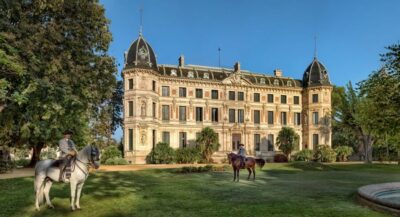
Royal Andalusian School of Equestrian Art Admission
Read our review →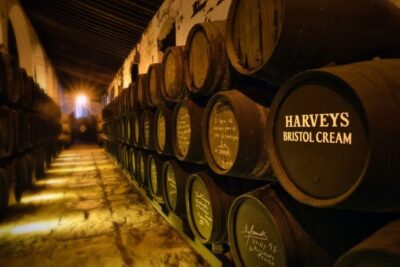
Bodegas Fundador Guided Tour with Tasting Session
Read our review →
Jerez de la Frontera: Sherry Winery Tour with Tasting
Read our review →
Bodegas Álvaro Domecq Guided Tour with Wine Tasting
Read our review →Browse the lists this tour appears in